The Chicago singer, guitarist, and producer who led The Impressions through the golden age of soul, then built his own label and a landmark solo catalog, shaping the sound of soul and funk for generations.
The Short Version
Who Is He?
Curtis Mayfield (born in Chicago in 1942) was one of the central figures of American soul music, a singer, songwriter, guitarist, arranger, and producer whose work spans the 1950s vocal-group era through the 1990s. He first reached a wide audience as the leader and chief writer of The Impressions, then launched a solo career in 1970 that placed him among the most important architects of soul and funk.
Two things make him singular. First, his voice: a light, floating falsetto that became one of the most recognizable sounds in soul. Second, his craft: he wrote, arranged, and produced his own records, played a distinctive electric guitar tuned to an open F-sharp chord, and ran his own Chicago label, Curtom Records, giving him rare creative control over every part of his music.
His 1972 soundtrack to the film Super Fly stands as one of the defining records of the funk era, and his influence runs through soul, funk, and hip hop. To understand the sound of Chicago soul, you start here.
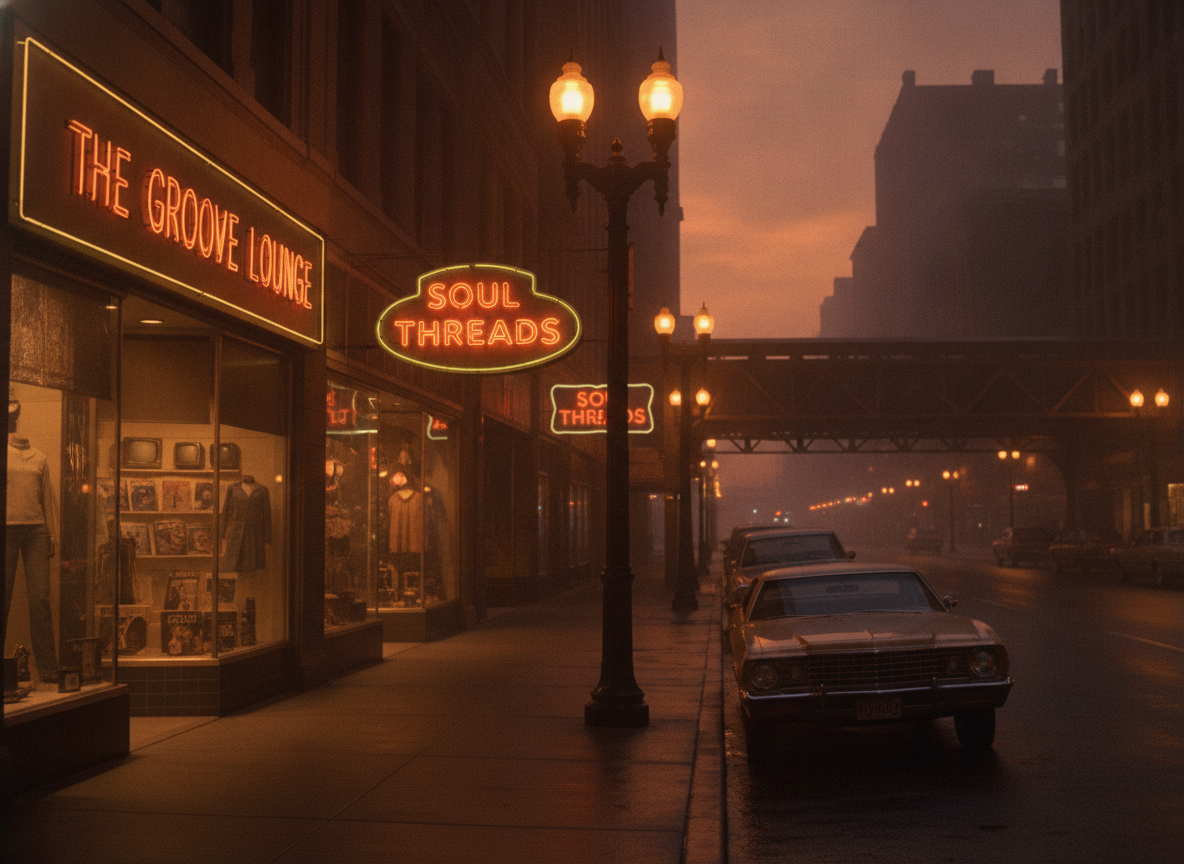
Chicago, the city whose soul scene Curtis Mayfield helped define.From a Chicago Vocal Group to His Own Label
The Story
Mayfield's career runs from teenage vocal harmony through group leadership, label ownership, and a solo run that redefined what a soul record could carry.
Writing, arranging, and producing his own records gave Mayfield rare creative control.
1956–1958
The Impressions
Mayfield joined a Chicago vocal group that became The Impressions, teaming with singer Jerry Butler. After Butler left, Mayfield stepped forward as the group's lead voice and principal songwriter.
1961–1968
Golden-age soul
With Mayfield writing and arranging, The Impressions recorded a long run of hits, including "Gypsy Woman," "It's All Right," "People Get Ready," and "We're a Winner," pairing gospel-rooted vocal harmony with his airy guitar and horn arrangements.
1968
Curtom Records
Mayfield co-founded his own Chicago label, Curtom Records, taking control of his publishing and production and building a home for his and other artists' work.
1970
Going solo
He left The Impressions for a solo career, and his debut album Curtis introduced the fuller, funk-inflected sound, longer arrangements, and expansive production that would define his 1970s work.
1972
Super Fly
His soundtrack to the film Super Fly became a commercial and artistic landmark, a fully realized funk-soul album whose grooves, string arrangements, and wah-wah guitar shaped the era's sound.
1973–1990
The Curtom years
Mayfield kept releasing albums and producing film soundtracks and other artists throughout the decade. A 1990 stage accident left him paralyzed, ending his performing career but not his writing.
1996–1999
Late work and legacy
He recorded a final album, New World Order, in 1996, singing lines lying down in the studio. He was inducted into the Rock and Roll Hall of Fame and remains a foundational influence on soul, funk, and hip hop.
Four Songs, One Education
Start Here
Mayfield's catalog is deep. These four tracks are the fastest way to hear the range, from soaring soul anthem to funk landmark. Watch in order.
01 · The Anthem
"Move On Up" (1970)
The exuberant highlight of the solo debut Curtis, built on a driving rhythm, bright horns, and Mayfield's soaring falsetto. The single edit is the fastest way in.
02 · The Groove
"Superfly" (1972)
The title track from the Super Fly soundtrack: wah-wah guitar, congas, and swirling strings over a deep funk pocket, one of the defining sounds of the era.
03 · The Hit
"Freddie's Dead" (1972)
The instrumental-led single from Super Fly, a slow-burning funk groove that became one of Mayfield's biggest chart successes and a showcase for his arranging.
04 · The Deep Cut
"Pusherman" (1972)
A sinuous, jazz-tinged groove from Super Fly, showing the loose, atmospheric side of Mayfield's funk and his gift for a hypnotic rhythm bed.
The Landmark Records
The Albums 6 to start with
Mayfield's solo run in the early 1970s is one of the great stretches in soul. These six albums are the pillars, and the gold-topped card is the best place to begin.
1970
Curtis
The solo debut. Longer, richer, and funkier than his group work, it introduced the full solo sound and includes "Move On Up," making it the ideal entry point.
The second solo album deepens the formula with lush arrangements and extended grooves, including "Get Down" and "Beautiful Brother of Mine," a bridge to the funk of the soundtracks.
The masterpiece. A film soundtrack that works completely on its own, from "Superfly" to "Freddie's Dead" to "Pusherman," and one of the definitive funk-soul records ever made.
A cohesive, string-laden album that many hold to be his most consistent full-length statement, tying together the horns, funk grooves, and falsetto of his best work.
Two YouTube Music playlists: a First Listen of the signature songs to bring you in, and a Deep Cuts set of the longer, headphone-reward pieces for when you want to sink in. (Ideally, though, hear these albums whole.) Hit the button on either card to play it.
Mayfield wrote, arranged, and produced his own music, but his sound was built with a close circle of Chicago singers, players, and arrangers gathered around his Curtom label.
The horns, strings, and rhythm section that framed his falsetto.
The ImpressionsVocal groupThe Chicago harmony group Mayfield led and wrote for through the 1960s, including singers Sam Gooden and Fred Cash, the foundation of his career
Jerry ButlerCo-founding vocalistMayfield's early singing partner in The Impressions and a lifelong collaborator whose smooth baritone helped launch the group
Curtom RecordsLabel and house bandThe Chicago label Mayfield co-founded in 1968, home to his solo records and the session players who backed them
Johnny PateArrangerThe arranger and conductor who shaped the horn and string charts on much of Mayfield's Impressions-era work
Riley Hampton & the session playersArrangement / rhythm sectionThe Chicago arrangers and studio musicians whose strings, congas, and rhythm beds framed the solo albums and soundtracks
The Roots of the Sound
Influences
Mayfield's music grew from the church and the Black vocal traditions of mid-century America: gospel quartets, doo-wop harmony, and the crossover soul of the singers who came just before him. Here is where it started.
Soul
Sam Cooke
The model for a gospel-trained singer crossing into secular soul. Cooke's smooth phrasing and songwriting were a template for Mayfield's own melodic gift.
Mayfield spoke thoughtfully about songwriting, production, and his Chicago roots. His filmed conversations are worth seeking out.
Interview · Archive
Mayfield, In Conversation (1994)
A candid archival interview in which Mayfield reflects on his career, his approach to songwriting and production, and the Chicago scene that shaped him.
Interview · Documentary
The Filmed Portraits
Documentaries and archival broadcast footage capture Mayfield across his career, from the Impressions years through the solo era. Search YouTube for clips and conversations.
Once the landmark albums have you, Mayfield's world opens into the Impressions catalog, the later soundtracks, and his lasting reach into other genres.
The Impressions. the 1960s group records where Mayfield first honed his writing and arranging, essential context for everything that followed.
The soundtracks. beyond Super Fly, Mayfield scored and produced other film soundtracks through the 1970s, extending his funk-soul sound to the screen.
The productions. his work on Curtom for other artists shows Mayfield the producer and label-builder, shaping records well beyond his own name.
The samples. Mayfield's grooves became a deep well for hip hop and dance producers, and tracing those samples is its own way into the catalog.
The Way to Listen
Do yourself one favor: put on Super Fly from start to finish, then the debut Curtis. Hear how the arrangements build, and how much the guitar, strings, and falsetto are doing at once. Mayfield made records to be heard whole.