How four English musicians fused Delta blues, English folk, and sheer volume into the heaviest, most mythologized band of the 1970s, and left behind a catalog still treated as scripture by guitarists and drummers alike.
The Short Version
Who Are They?
Led Zeppelin were an English band formed in London in 1968: Jimmy Page on guitar, Robert Plant on vocals, John Paul Jones on bass and keys, and John Bonham on drums. They took the blues they idolized, folk they loved, and volume no one had tried before, and turned it into something new.
Two things make them singular. First, the range: inside a single album they could move from crushing riffs to delicate acoustic folk to Eastern-tinged epics, never staying in one lane. Second, the chemistry: Page's riffs and production, Plant's wail, Jones's musicality, and Bonham's titanic, swinging drums, a combination no other band has managed to replicate.
They released eight studio albums between 1969 and 1979, sold hundreds of millions of records, and effectively ended when John Bonham died in 1980. The surviving members refused to continue as Led Zeppelin without him, cementing their reputation as a band that would rather stop than dilute itself.
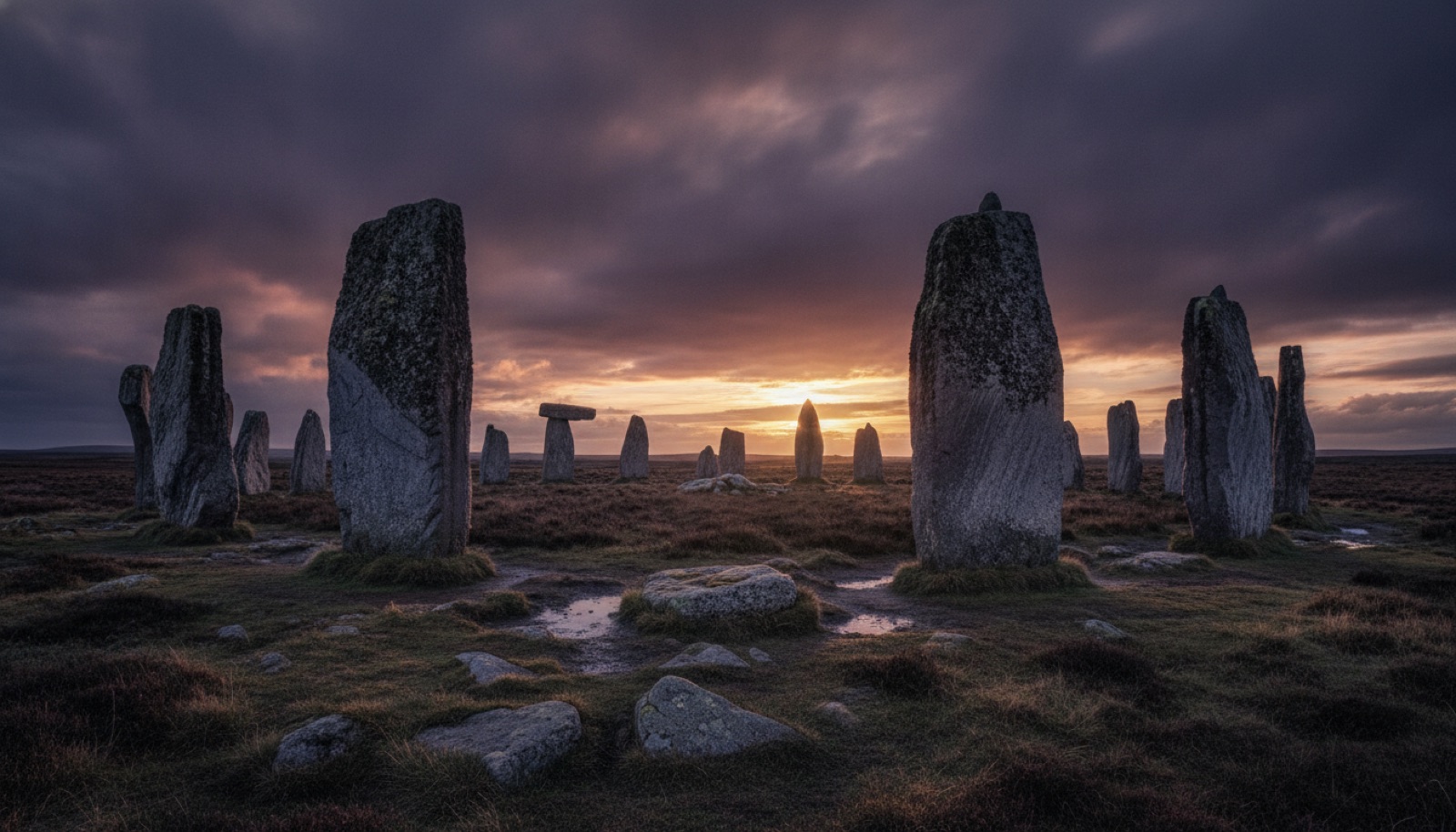
The mystic, folkloric imagery that runs through their album art and songwriting.From The Yardbirds to Bonham's Death
The Story
Their history is short by classic-rock standards, twelve years, and almost impossibly dense with landmark records.
The scale and volume of the live shows that built the legend.
1968
Out of the wreckage of The Yardbirds
Session guitarist Jimmy Page, the last guitarist in The Yardbirds, needed a new band to fulfill tour dates. He recruited bassist and arranger John Paul Jones, a session-scene veteran, and on a tip found singer Robert Plant and drummer John Bonham in the Midlands. They called themselves the New Yardbirds, then Led Zeppelin.
1969
Led Zeppelin and Led Zeppelin II
Two albums in one year. The debut fused blues covers with originals like "Dazed and Confused." II, largely written and recorded on the road, delivered "Whole Lotta Love" and turned them into stars, despite brutal reviews from critics who didn't yet understand what they were hearing.
1970
Led Zeppelin III, and the retreat to Wales
Page and Plant retreated to a remote Welsh cottage, Bron-Yr-Aur, and returned with a record steeped in acoustic folk alongside the expected riffs, a sign the band refused to be boxed in.
1971
Led Zeppelin IV
Released with no title or band name on the cover, just four symbols, it became one of the best-selling albums in history. "Stairway to Heaven," "Black Dog," and "Rock and Roll" turned it into the definitive Zeppelin statement.
1973
Houses of the Holy
A more playful, genre-hopping record, reggae, funk, and prog textures folded into the hard rock, that showed the band's range was still expanding even at the height of their fame.
1975
Physical Graffiti
A sprawling double album, widely considered their creative peak, home to the Eastern-modal epic "Kashmir" and the elegiac "Ten Years Gone." The tours around it were among the biggest in rock history.
1975–1977
Tragedy strikes the Plant family
A car crash in Rhodes left Plant seriously injured and the band's tour plans in chaos. Worse followed in 1977 when Plant's five-year-old son Karac died suddenly during a US tour, devastating the singer and darkening the band's final years.
1979
In Through the Out Door
Their final studio album, leaning more on Jones's keyboards, arrived after years of personal turmoil and lineup uncertainty as the band tried to regroup.
1980
John Bonham's death, and the end
Bonham died on September 25, 1980, after a day of heavy drinking. Weeks later the surviving members announced they could not continue as Led Zeppelin without him, ending the band rather than replace their drummer.
Three Videos, One Education
Start Here
Led Zeppelin are best experienced loud, but these three, spanning the riff, the ballad, and the epic, are the fastest way into what made them legendary. Watch in order.
01 · The Riff
"Whole Lotta Love" — 1969
The song that made them stars: a bone-crushing riff, a psychedelic breakdown in the middle, and Plant's wail turned into a genuine call to arms. Still the fastest way to explain the band's impact to a newcomer.
02 · The Epic
"Stairway to Heaven" — 1971
Perhaps the most famous song in rock history: eight minutes that build from a folk-tinged acoustic figure into one of the greatest guitar solos ever recorded. Overplayed on classic rock radio for decades, and still remarkable on close listen.
03 · The Spectacle
"Kashmir" — live at Knebworth, 1979
A hypnotic, Eastern-modal march built on a single droning riff, performed here at one of the band's final, biggest UK shows. It shows exactly why "Kashmir," not "Stairway," is the song most musicians who love this band point to first.
The Studio Catalog
The Albums 6 to start with
Led Zeppelin made eight studio albums in eleven years, and nearly all of them reward a full front-to-back listen. The gold-topped cards are the essential entry points; the red marks the raw, blues-drenched debut.
1969
Led Zeppelin
The debut: raw blues covers reimagined at volume alongside furious originals like "Communication Breakdown" and the sprawling "Dazed and Confused." Recorded in about thirty hours.
Written and cut largely on the road, this is where the sound became a phenomenon. "Whole Lotta Love," "Ramble On," and "Heartbreaker" turned them into arena headliners within a year.
The acoustic detour: written in a remote Welsh cottage, it balances "Immigrant Song" against gentle folk pieces like "That's the Way." Divisive on release, beloved since.
The masterpiece, released with no title on the cover. "Black Dog," "Rock and Roll," "Stairway to Heaven," and "When the Levee Breaks" make this the obvious front door into the band.
A playful, genre-hopping record that pulls in reggae ("D'yer Mak'er"), funk ("The Crunge"), and prog ("No Quarter") without losing the band's identity.
The double-album peak: fifteen tracks spanning the hypnotic "Kashmir," the mournful "Ten Years Gone," and the funk-rock stomp of "Custard Pie." Widely cited by fans as their greatest achievement.
One curated YouTube Music playlist, the Essentials, covering the riffs, the folk, and the epics in one sitting. (Ideally, though, hear these albums whole.) Hit the button below to play it.
Page and Plant rarely gave interviews at the height of the band's fame, which makes the ones that exist worth seeking out.
Interview · Telerama
Jimmy Page, on the Remasters
Shot in Paris in 2014 around the reissue of the band's first three albums, Page speaks candidly about his guitar tone, the making of those early records, and how the songs came together.
A period interview from the band's own archive, capturing Plant mid-tour during the Physical Graffiti era, reflecting on fame, the road, and where the band was headed.
Few bands reward obsession like Led Zeppelin. Once the eight studio albums have you, the world around them is enormous.
The folkloric, mythic imagery that surrounds the band's legacy.
The Song Remains the Same (1976) — the band's own concert film and soundtrack, part performance, part surreal fantasy sequences for each member.
How the West Was Won (2003) — a live triple album assembled from 1972 US shows, widely considered the definitive document of the band at its live peak.
Celebration Day (2012) — the film and live album of the band's 2007 reunion show at London's O2 Arena, with Jason Bonham on drums in his father's place.
The BBC Sessions — early studio performances for BBC radio, capturing the band before their sound had fully calcified into what it became.
The Way to Listen
Do yourself one favour: put on Led Zeppelin IV from start to finish, with headphones, no phone, no shuffle. Then do the same with Physical Graffiti, in one sitting if you can manage it. These are albums built to be heard whole.