How a bar-band kid from the Jersey shore turned working-class life into stadium-sized rock and roll, wrote some of the most enduring anthems in American music, and built one of the great live bands ever to take a stage.
The Short Version
Who Is He?
Bruce Springsteen (born in Long Branch, New Jersey, in 1949) is the great chronicler of working-class American life, a songwriter and bandleader known to the world simply as "The Boss." He came up in the bars and boardwalks of the Jersey shore, and he built a body of work about cars, jobs, escape, faith, and the distance between the promise of America and its reality.
Two things make him singular. First, the songs: dense, cinematic story-songs early on, then leaner anthems that a whole stadium can sing back to him. Second, the live show: with the E Street Band behind him, a Springsteen concert runs three hours or more and is widely held to be one of the most powerful experiences in rock and roll.
Across five decades he has moved from romantic epics to stark solo folk to arena rock and back again, and he is still writing, still recording, and still touring. To understand American rock, you come through here.
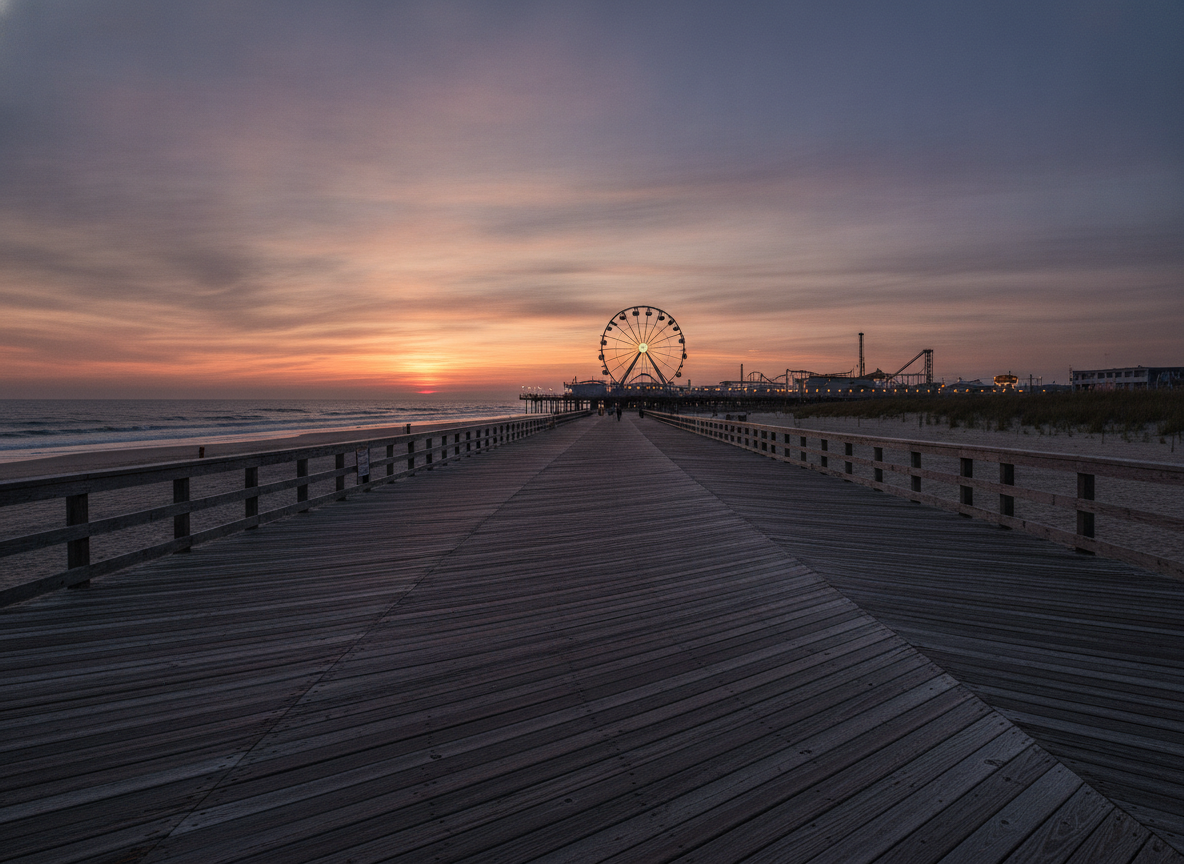
The Jersey shore boardwalks and back roads, the ground Springsteen's music grows from.From the Jersey Shore to the Stadium
The Story
Springsteen's career is a long climb from the shore-town bar circuit to global fame, marked by bold turns between the intimate and the enormous.
Cars, highways, and the pull of escape, the recurring engine of his songs.
1972
Signed to Columbia
A young Springsteen was signed as a wordy singer-songwriter and cut two ambitious, densely packed albums, Greetings from Asbury Park, N.J. and The Wild, the Innocent & the E Street Shuffle, that sold modestly but built a fervent following.
1975
Born to Run
The make-or-break breakout. A widescreen, Spector-inspired wall of sound about getting out of town, it made him a star and landed him on the covers of Time and Newsweek in the same week.
1978–1980
Darkness and The River
After a legal battle kept him from recording, he returned harder and plainer with Darkness on the Edge of Town, then the sprawling double album The River, balancing bar-band joy against grown-up disappointment.
1982
The Nebraska turn
He recorded a batch of stark, haunted songs alone on a four-track cassette in his bedroom and released them almost untouched as Nebraska, a spare acoustic record about desperate people that stands as his boldest artistic swerve.
1984–1985
Born in the U.S.A.
The blockbuster. Seven hit singles, a global stadium tour, and a title track so anthemic that many missed its bitter portrait of a forgotten Vietnam veteran. Springsteen became one of the biggest stars on earth.
1989–1999
Solo years and reunion
He dissolved the E Street Band for a time, made introspective and folk-leaning records including the Oscar-winning "Streets of Philadelphia," then reunited the band at the end of the decade to triumphant tours.
2002–now
Elder statesman
From the post-9/11 The Rising through a Broadway residency, a memoir, and continued albums and tours, he has become a revered elder of American music, still capable of the three-hour show.
Four Songs, One Education
Start Here
The catalog is deep and spans very different modes. These four songs are the fastest way to grasp the range, from the widescreen breakout to the stark solo turn to the stadium anthem. Watch in order.
01 · The Breakout
"Born to Run" (1975)
The wall-of-sound anthem that made his name: a full-throated romance about escape, engines, and one last chance. The essential Springsteen starting point.
02 · The Rallying Cry
"Badlands" (1978)
The lean, driving opener of Darkness on the Edge of Town: defiance set to a relentless beat, a song about holding on to hope against the odds. Pure heartland rock.
03 · The Stark Turn
"Atlantic City" (1982)
From the bedroom-recorded Nebraska: a hushed, ghostly tale of a desperate man and a dying town that shows the quiet, haunted side of his writing.
04 · The Blockbuster
"Dancing in the Dark" (1984)
His biggest hit, a restless synth-driven anthem about frustration and the itch to change your life, and the song that carried Born in the U.S.A. to the top of the world.
The Landmark Records
The Albums 5 to start with
Springsteen has released some twenty studio albums. These five are the pillars, the records that define the catalog and cover its full emotional range. The blue-topped card is the best place to begin.
1975
Born to Run
The breakthrough, and a perfect place to start. Eight songs of cars, girls, and desperate escape wrapped in a huge, layered production, from "Thunder Road" to the epic "Jungleland." One of the great American rock albums.
Leaner and tougher, made after a long legal exile. The romance of Born to Run gives way to grown-up reckoning on "Badlands," "The Promised Land," and "Racing in the Street."
A sprawling double album that swings between rowdy bar-band rockers like "Hungry Heart" and quiet heartbreak like the title track, capturing the full width of his range in one set.
The great swerve. Recorded alone on a home cassette machine and released almost raw, a spare, chilling set of songs about outlaws and lost souls. His most daring and quietly devastating record.
The blockbuster that made him a global superstar, home to seven hit singles including "Dancing in the Dark," "Glory Days," and the fiercely misread title track. Stadium rock at its peak.
Two YouTube Music playlists: a First Listen of the signature songs to bring you in, and a Deep Cuts set of the longer, headphone-reward pieces for when you want to sink in. (Ideally, though, hear these albums whole.) Hit the button on either card to play it.
Springsteen fronts one of the greatest bands in rock history. The E Street Band is not a backing group but a family of players whose sound is inseparable from his, forged over decades of legendary live shows.
Three-hour shows and a band built to make an arena feel like a bar, the heart of the Springsteen legend.
Clarence ClemonsSaxophoneThe towering "Big Man," whose soaring sax solos defined the early sound and whose bond with Springsteen was central to the band's mythology until his death in 2011
Steven Van ZandtGuitarSpringsteen's longtime foil and consigliere on guitar, arranger of horn parts, and a key voice in the band's shore-bar spirit
Max WeinbergDrumsThe powerhouse behind the kit since 1974, whose thunderous, precise playing drives the anthems
Roy BittanPianoThe pianist whose cascading, cinematic lines shape "Thunder Road," "Jungleland," and much of the classic-era sound
Garry TallentBassThe steady, rooted bass player who has anchored the low end from the very beginning
Danny FedericiOrgan / keyboardsThe organ and accordion player from the earliest days, a warm signature color in the sound until his death in 2008
Jon LandauProducer / managerThe critic-turned-producer who co-produced the landmark albums and became Springsteen's longtime manager and closest collaborator
The Roots of the Sound
Influences
Springsteen built his art from classic rock and roll, folk storytelling, and the grand pop productions of the early sixties. Here is where it started.
Folk / Rock
Bob Dylan
The model for the ambitious, image-dense songwriter. Springsteen's early wordy epics owe a direct debt to Dylan's mid-sixties electric writing.
The patron saint of the working-class ballad. Guthrie's plainspoken songs about ordinary Americans run straight through Nebraska and Springsteen's folk records.
Springsteen is a thoughtful, candid talker about craft, class, and the making of the myth. His long-form interviews are worth seeking out.
Interview · Profile
Springsteen at Home
A reflective conversation on his New Jersey farm, ranging over the roots of the songs, the price of fame, and the working life behind the music.
Interview · Archive
The Long Conversations
From career-spanning television profiles to his solo Broadway show and the reflections in his memoir Born to Run, Springsteen has spoken openly about craft, class, and doubt. Search YouTube for extended interviews and clips.
Once the landmark albums have you, Springsteen's world opens into decades of live recordings, later masterworks, and reinventions.
The live records. the essential Live/1975-85 box and countless official archive concert releases capture the three-hour show that is the true heart of the legend.
Tunnel of Love. the intimate, searching 1987 album about marriage and doubt, a quieter masterpiece often overlooked between the blockbusters.
The Rising. his 2002 response to September 11, a communal record that reunited the E Street Band and reasserted his role as a national voice.
Springsteen on Broadway and the memoir. the stripped-down solo Broadway show and his candid autobiography, both titled around Born to Run, are the best windows into the man behind the myth.
The Way to Listen
Do yourself one favor: put on Born to Run from start to finish, then Nebraska right after. Hearing the biggest sound he ever made against the smallest is the fastest way to understand what makes him great.