How a rail-thin kid from rural Alabama, sick and self-taught, wrote the plainest and most devastating songs in country music, then burned through fame in six short years and died at twenty-nine, leaving a body of work that every songwriter since has had to reckon with.
The Short Version
Who Is He?
Hank Williams (born Hiram Williams near Georgiana, Alabama, in 1923) is the foundational songwriter of American country music. In a recording career that lasted barely six years, he wrote and cut a run of songs so direct and so durable that they became the bedrock the whole genre was built on, and a template for popular songwriting far beyond country.
Two things make him singular. First, the economy: he could carry an entire lifetime of loneliness in three chords and a handful of plainspoken words, with nothing wasted. Second, the ache: a high, cracking voice that sounded like it meant every word, backed by the spare, swinging sound of his band the Drifting Cowboys.
He lived hard, struggled with chronic back pain and drink, and died in the back seat of a car on New Year's Day 1953. The legend has hardened into myth, but the songs are the real inheritance. To understand country music, and a good deal of American song, you start here.
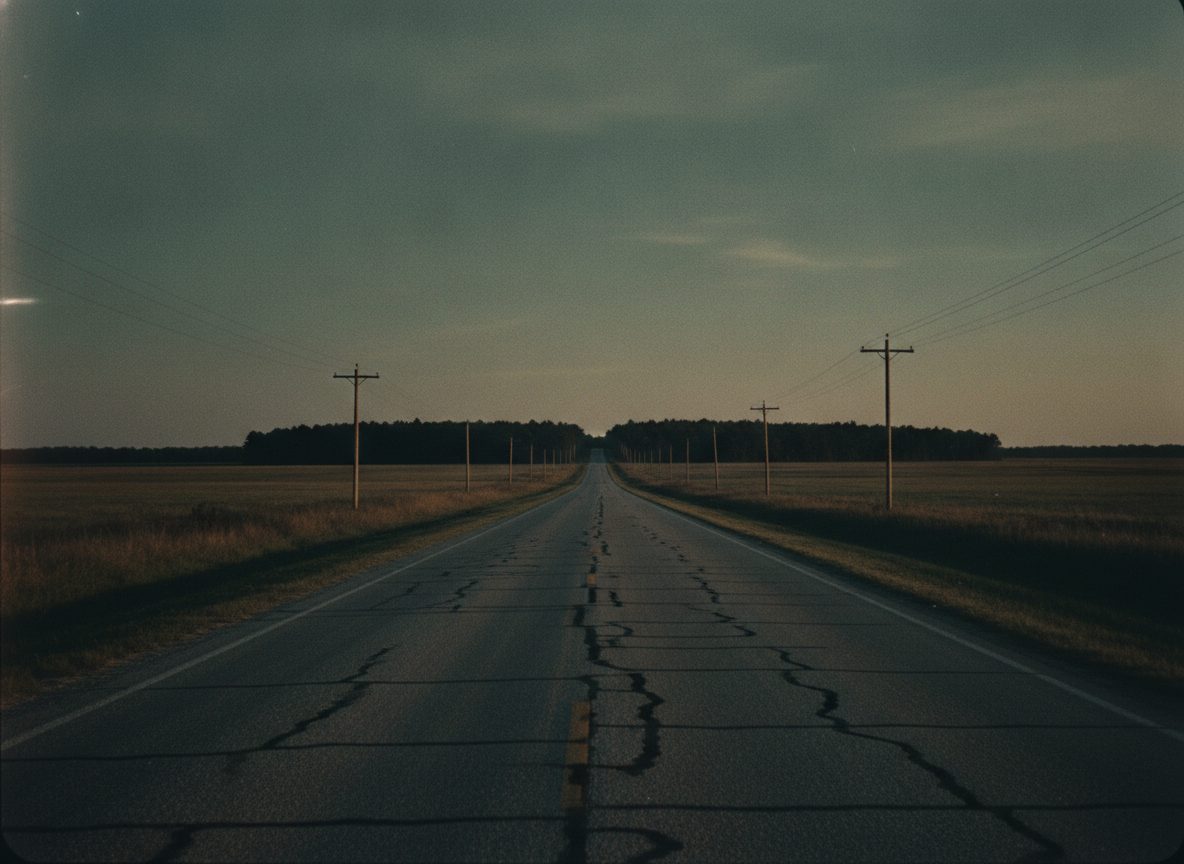
The lonesome highway and the honky-tonk, the ground Hank Williams's songs grow from.From a Rural Alabama Boyhood to the Grand Ole Opry
The Story
Hank Williams's life is a short, steep arc: hardscrabble beginnings, a meteoric climb to the top of country music, and a swift, sad fall, all compressed into twenty-nine years.
The honky-tonks of the Deep South, where the songs and the sound were forged.
1923–1937
Alabama beginnings
Born into rural poverty and often sickly, young Hiram learned guitar from a Black street musician named Rufus "Tee Tot" Payne, who taught him the blues chords and phrasing that would run under everything he wrote.
1937–1946
The Drifting Cowboys
As a teenager he formed his band, the Drifting Cowboys, and worked the honky-tonks and radio stations of southern Alabama, sharpening a lean, hard-swinging sound and a voice built for heartbreak.
1946–1947
Fred Rose and Acuff-Rose
A meeting with Nashville publisher and producer Fred Rose changed everything. Rose signed him, refined his songs, and steered him to MGM Records, launching the recording career that would define country music.
1949
The Opry and "Lovesick Blues"
His barnstorming take on "Lovesick Blues" became a smash and earned him a debut on the Grand Ole Opry, where the crowd reportedly demanded six encores. He was suddenly the biggest star in country music.
1949–1952
The immortal songs
In a burst of a few short years he wrote "I'm So Lonesome I Could Cry," "Cold, Cold Heart," "Hey Good Lookin'," "Your Cheatin' Heart," and dozens more, defining the honky-tonk sound and crossing over onto the pop charts.
1950–1952
Luke the Drifter
Under the alter ego Luke the Drifter he cut a series of somber, spoken recitations, moral and religious tales kept separate from the honky-tonk hits so jukebox operators would not stock the wrong side.
1952–1953
The hard, short end
Chronic pain, drink, and pills unraveled him. Fired from the Opry and divorced, he died in the back of a car en route to a show on New Year's Day 1953, at twenty-nine. His final single, "I'll Never Get Out of This World Alive," was already on the charts.
Four Songs, One Education
Start Here
Williams's catalog is a run of singles, not concept albums, so the songs are the way in. These four are the fastest route to understanding him, from barnstorming hit to the loneliest song ever written. Listen in order.
01 · The Breakout
"Lovesick Blues" (1949)
The yodeling, show-stopping hit that made him a star and earned those six Opry encores. Not one of his own compositions, but the record that opened every door. The essential starting point.
02 · The Masterpiece
"I'm So Lonesome I Could Cry" (1949)
Widely held to be the finest song he ever wrote, and one of the loneliest in all of American music. Spare imagery, a whippoorwill, a falling star, and a voice on the edge of breaking.
03 · The Good Time
"Hey Good Lookin'" (1951)
The other side of Hank: bright, flirtatious, and irresistibly catchy. Proof that the man who wrote the saddest songs could also write the most joyful ones, and that both came just as easily.
04 · The Standard
"Your Cheatin' Heart" (1953)
Recorded in his final months and released after his death, it became his signature and a country standard covered by hundreds. The plain, unbearable arithmetic of a broken heart in three verses.
The Essential Collections
The Albums 5 to start with
Williams worked in the singles era, so there is no run of studio LPs to climb. The way in is through the collections, which gather the singles that made him. The blue-topped card is the best place to begin.
Collection
40 Greatest Hits
The definitive single-stop introduction. Every essential song in one place, from "Lovesick Blues" to "Your Cheatin' Heart," in strong sound. If you own one Hank Williams record, make it this one.
A tighter, twenty-track distillation for those who want the core without the full survey. All the landmark sides, nothing to skip, an ideal first afternoon with the catalog.
One of the era's proper albums, gathering the bluesier, harder-swinging honky-tonk sides. A window into how deep the blues that Tee Tot Payne taught him runs beneath the country surface.
The somber other self. Spoken, moralizing recitations issued under his Luke the Drifter alias, kept apart from the hits. Strange, sincere, and unlike anything else in the catalog.
The deep dive. A sweeping box that gathers the studio masters, radio sides, demos, and rarities in one place. Far more than a beginner needs, and exactly where the obsession leads.
Two YouTube Music setlists: a First Listen of the signature songs to bring you in, and a Deep Cuts set of the recitations and lesser-known sides for when you want to go further. Hit the button on either card to play it.
Williams was the singular voice, but the sound and the career were shaped by a small circle of players, a producer, a publisher, and the institutions that carried him to the country audience.
An acoustic guitar, a band, and three chords: the whole machinery of the honky-tonk sound.
The Drifting CowboysBacking bandHis touring and recording group, whose lean, swinging honky-tonk sound, steel guitar, fiddle, and rhythm framed nearly every record and defined the genre's template
Fred RoseProducer / co-writerThe Nashville publisher and producer who signed Williams, refined and sometimes co-wrote his songs, and shaped his recordings for MGM
Acuff-Rose PublishingMusic publisherThe pioneering Nashville firm, co-founded by Roy Acuff and Fred Rose, that published Williams's catalog and helped build the modern country-music business
MGM RecordsRecord labelHis label from 1947 on, which issued the singles that made him a national star and, later, the archival releases that preserved the legacy
The Grand Ole OpryRadio institutionThe Nashville radio stage whose 1949 broadcast made him a star nationwide; his 1952 firing for unreliability marked the beginning of the end
The Roots of the Sound
Influences
Williams built his art from the music around him in the rural South: the "singing brakeman" who fathered country song, the blues taught to him on a street corner, the family who defined country harmony, and the gospel he sang in church. Here is where it started.
Country
Jimmie Rodgers
The father of country music and Williams's foundational model. Rodgers's blue yodels and rambling, blues-tinged ballads set the template for the singing country star that Hank inherited.
As a boy Williams learned guitar and phrasing from Rufus "Tee Tot" Payne, a Black Alabama street musician. That country-blues foundation, in the tradition of players like Blind Lemon Jefferson, runs under everything he wrote.
Country music's first family and the source of its songbook and harmony. Their deep well of folk and gospel material shaped the tradition Williams was raised on and drew from.
The reigning king of the Grand Ole Opry when Hank arrived, and his publishing partner through Acuff-Rose. Acuff's emotional, sincere delivery was a model for the kind of star Williams became.
The sacred music of the rural church runs all through Williams, from "I Saw the Light" to the Luke the Drifter recitations. The close-harmony gospel tradition, sung by groups like the Golden Gate Quartet, is part of his DNA.
Williams died before television made stars talkative, so almost nothing of him survives on film beyond a few performance clips. What remains is the recorded radio work and the documentary record built around him.
Archive · Radio
The Mother's Best Recordings
In 1951 Williams cut a series of morning radio shows for the Mother's Best Flour company, singing, joking, and speaking between songs. These broadcasts are the closest thing to hearing him in conversation.
Documentary
The Filmed Portraits
Documentaries and the surviving performance footage, along with the 2015 biopic I Saw the Light, are the best windows into the man and the myth. Search YouTube for the archival clips and conversations with those who knew him.
Once the hits have you, Williams's world opens into radio archives, alter egos, and the long shadow he casts over everyone who came after.
The Mother's Best Recordings. the 1951 radio broadcasts, released in expanded form, that capture him loose and live, running through gospel, standards, and his own songs between the ads.
Luke the Drifter. the somber spoken recitations issued under his alias, moral and religious tales that reveal the deeply serious side beneath the honky-tonk hits.
The Complete Hank Williams. the sprawling box set of masters, demos, and radio sides, the destination for anyone who wants every surviving note.
The long shadow. hear the inheritance in Bob Dylan, Neil Young, and Tyler Childers, all of whom trace a direct line back to these songs.
The Way to Listen
Do yourself one favor: put on 40 Greatest Hits from start to finish, then sit with I'm So Lonesome I Could Cry alone in a quiet room. Hank Williams wrote in the plainest words in American song, and the plainness is exactly where the depth lives.