How a tubercular railroad brakeman from Mississippi fused the blues with hillbilly song, cut a handful of records in six brief years, and became the founding father of country music.
The Short Version
Who Was He?
Jimmie Rodgers (born in Meridian, Mississippi, in 1897) is known as the Father of Country Music. A former railroad brakeman who learned songs from the Black work gangs and hoboes he rode with, he stepped up to a microphone in 1927 and, in barely six years of recording, laid the foundation for nearly everything country music would become.
Two things make him singular. First, the blue yodel: a soaring, bluesy falisetto break that became his signature and welded together two traditions, the twelve-bar blues of the Deep South and the ballads of the rural white South. Second, the persona: he was the Singing Brakeman, a working man with a guitar, and he gave country music its first star and its first archetype.
He recorded through worsening tuberculosis and died in 1933 at just thirty-five, days after his final session. Every country singer who followed, from Hank Williams to Merle Haggard, traces a line back to him. To understand American roots music, you start here.
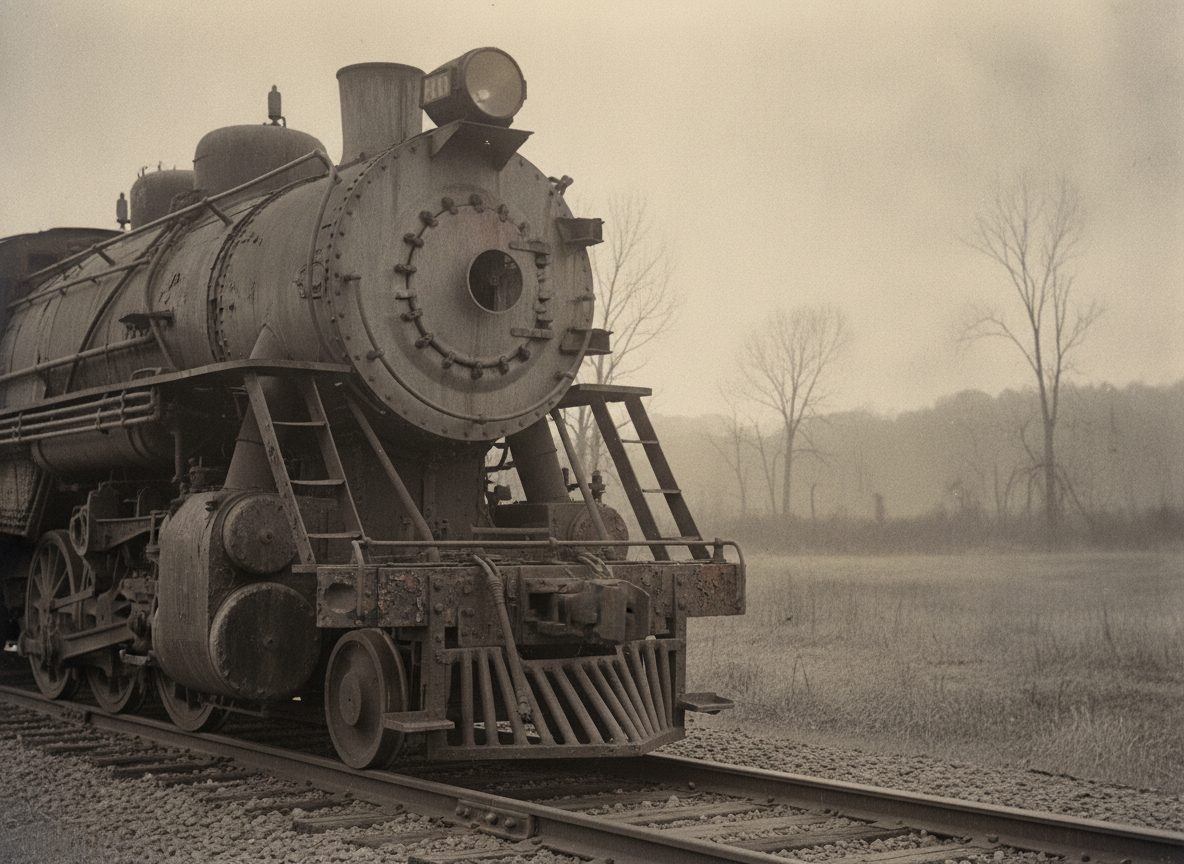
The railroad and the blues, the ground Jimmie Rodgers's music grows from.From a Meridian Rail Yard to the Bristol Sessions
The Story
Rodgers's career is astonishingly short, a single burst of recording crowded into the last six years of a hard life, yet it reshaped American music for the century that followed.
A workingman, a guitar, and songs learned on the rails.
1897
Meridian, Mississippi
Born into a railroad family, Rodgers lost his mother young and grew up around the rail yards. He took work on the railroad as a water boy and later a brakeman, absorbing the songs of the Black laborers who worked the lines.
1924
Tuberculosis
Diagnosed with the tuberculosis that would kill him, Rodgers could no longer keep up the brutal work of railroading. He turned to music full time, drifting through medicine shows, tent shows, and small-time performing across the South.
1927
The Bristol Sessions
Producer Ralph Peer of the Victor company set up a temporary studio in Bristol, on the Tennessee and Virginia line, to record local talent. Rodgers made the trip and cut his first sides. The same sessions also discovered the Carter Family, and the event is often called the Big Bang of country music.
1927–1928
Blue Yodel
Back in the studio for Victor, Rodgers recorded "Blue Yodel (T for Texas)," a blues shot through with his yodeling break. It became a runaway hit, sold hundreds of thousands of copies, and made him a national star almost overnight.
1929–1931
The Singing Brakeman
At the height of his fame he starred in a short film as the Singing Brakeman, toured widely, and cut a steady stream of records, from railroad songs and sentimental ballads to jazz-tinged sides, one of them backed by a young Louis Armstrong.
1932–1933
The final sessions
Weakened by advancing tuberculosis and the Depression's blow to record sales, Rodgers kept recording, resting on a cot between takes at his last New York sessions in May 1933. He died two days after the final one, at thirty-five.
1961
The first inductee
When the Country Music Hall of Fame opened its doors, Jimmie Rodgers was among the first three names enshrined, honored as the Father of Country Music. His shadow still falls over every corner of the genre.
Four Songs, One Education
Start Here
Rodgers recorded roughly a hundred and ten sides, all of them between 1927 and 1933. These four are the fastest way to hear how the blue yodel, the railroad, and the blues came together. Listen in order.
01 · The Landmark
"Blue Yodel No. 1 (T for Texas)" (1927)
The record that started it all. A loose, swaggering blues capped with Rodgers's yodeling break, it sold in the hundreds of thousands and defined a whole new kind of American song. The essential starting point.
02 · The Rambler
"Waiting for a Train" (1928)
The definitive Rodgers hobo song: a drifter stranded far from home, framed by warm little swing-band touches. It captures the restless, riding-the-rails spirit at the heart of his myth.
03 · The Charmer
"In the Jailhouse Now" (1928)
A sly, good-humored tale of a gambling rounder gone wrong, delivered with a wink and a yodel. It shows the playful, vaudeville side of Rodgers and became a country standard covered for generations.
04 · The Standard
"Mule Skinner Blues" (1930)
Also known as "Blue Yodel No. 8," a work song built on a rolling blues that has been reworked by everyone from Bill Monroe to Dolly Parton. Proof of how far Rodgers's songs would travel.
The Landmark Collections
The Albums 3 to start with
Rodgers made 78 rpm singles, not albums, so his catalog reaches us today through reissue compilations. These three collections, all drawn from his 1927 to 1933 Victor recordings, are the pillars. The blue-topped card is the best place to begin.
1927–1933
The Essential Jimmie Rodgers
The ideal on-ramp. Forty of his most important sides, from "Blue Yodel (T for Texas)" to "Waiting for a Train," gathered in one place. Everything a newcomer needs to hear the range and the myth.
A tighter, seventeen-track overview from the label that owns the originals. A leaner, well-remastered introduction if the fuller Essential set feels like a lot at once.
Everything, in order. All 145 surviving sides Rodgers cut for Victor, the whole six-year burst of work. The deep-dive destination once the essentials have you hooked.
Two YouTube Music setlists: a First Listen of the signature sides to bring you in, and a Deep Cuts set of the railroad songs and blue yodels for when you want to sink in. Hit the button on either card to search them out.
Rodgers was a solo performer, usually just a voice and a guitar, but a handful of key figures shaped the records and the moment that made him. Here is the world around the Singing Brakeman.
Bristol, Victor, and a producer with a portable studio changed everything.
Ralph PeerProducer / VictorThe talent scout and producer who recorded Rodgers at Bristol and oversaw his Victor sessions, building the publishing model that would underpin the country music industry
The Bristol Sessions1927 · The Big BangPeer's temporary Bristol studio, where Rodgers cut his first sides and the Carter Family were discovered in the same run, often called the founding moment of recorded country music
The Carter FamilyBristol peersDiscovered at the same Bristol sessions, they became country's other founding act; Rodgers later recorded a set of joint sides with them for Victor
Louis ArmstrongGuest cornetPlayed on "Blue Yodel No. 9" in 1930, a striking meeting of the blues, jazz, and hillbilly worlds Rodgers moved so easily between
The Victor sidemenSession playersOn many sides Rodgers was framed by small studio groups, from Hawaiian steel guitar to jazz bands and jug-band players, a restless mix that widened the sound of early country
The Roots and the Legacy
Influences
Rodgers drew his sound from the deep well of Southern vernacular music, the blues he learned on the railroad, the work songs and pop tunes of his day. And his own influence ran forward through every generation of country that followed. Here are both ends of the line.
Blues
Bessie Smith
The Empress of the Blues embodied the classic blues sound Rodgers absorbed and reshaped. His blue yodels bend the same twelve-bar form into a new hillbilly frame.
The wandering Texas songster whose recorded country blues, cut in the same years, shared Rodgers's mix of rambling narrative and raw guitar. The two traditions were closer than the record bins suggested.
Country's other founding act, discovered alongside Rodgers at Bristol. Where he gave the music its rambling blue soul, they gave it its close-harmony hearth and home. Two halves of one beginning.
The clearest heir to the throne. Williams took Rodgers's blend of blues feeling and plainspoken country song and carried it to the next generation, proof of how far the Singing Brakeman's shadow reached.
Rodgers died in 1933, decades before television, so no filmed interviews exist. What survives are his recordings, a single short film, and the documentaries and archival footage that have kept his story alive.
Archive · Film
The Singing Brakeman on Film
In 1929 Rodgers starred in a short film as the Singing Brakeman, performing a few of his songs in a staged rail-depot setting. It is the only surviving moving footage of him and the closest thing we have to seeing him perform. Search YouTube for the clip.
From the Bristol Sessions to his final New York recordings, documentary features and archival profiles trace how a railroad brakeman became country music's first star. Search YouTube for the biographical footage and interviews with the artists he shaped.
Once the essential sides have you, Rodgers's world opens into the whole birth of recorded country music.
The Bristol Sessions. the 1927 recordings that launched both Rodgers and the Carter Family, widely available as compilations and essential listening for the founding moment of the genre.
The Blue Yodels. Rodgers cut thirteen numbered "Blue Yodels," a running series that is the purest distillation of his blues-meets-country invention. Hear them in sequence.
The tributes. artists from Merle Haggard to Bob Dylan have recorded whole albums saluting Rodgers; Haggard's Same Train, a Different Time is a loving, deeply knowledgeable homage.
Do yourself one favor: put on The Essential Jimmie Rodgers and let the first handful of sides play in order. Notice how the yodel turns a blues into something brand new. Nearly a century on, you are hearing the exact moment country music began.