How a blind street singer from the Texas cotton country became the first great star of the country blues, cutting records that taught a whole generation of guitarists what the music could be.
The Short Version
Who Was He?
Blind Lemon Jefferson (born near Wortham, Texas, around 1893, died in Chicago in 1929) was the first commercially successful male country-blues singer, and one of the most influential musicians in the history of American music. Blind from an early age, he made his living singing and playing guitar on the streets of Dallas before his records carried his voice across the country.
Two things set him apart. First, the guitar: his playing was fast, unpredictable, and conversational, answering his own singing with agile runs rather than a steady strum, a style that shaped nearly every Texas guitarist who followed. Second, the voice: a high, keening, deeply expressive delivery that could cut through a noisy street corner and still sound intimate on a scratchy 78.
Between 1926 and 1929 he recorded roughly a hundred sides for Paramount, sold in huge numbers, and became a template for the blues as a recorded art form. To understand where the country blues comes from, you start here.
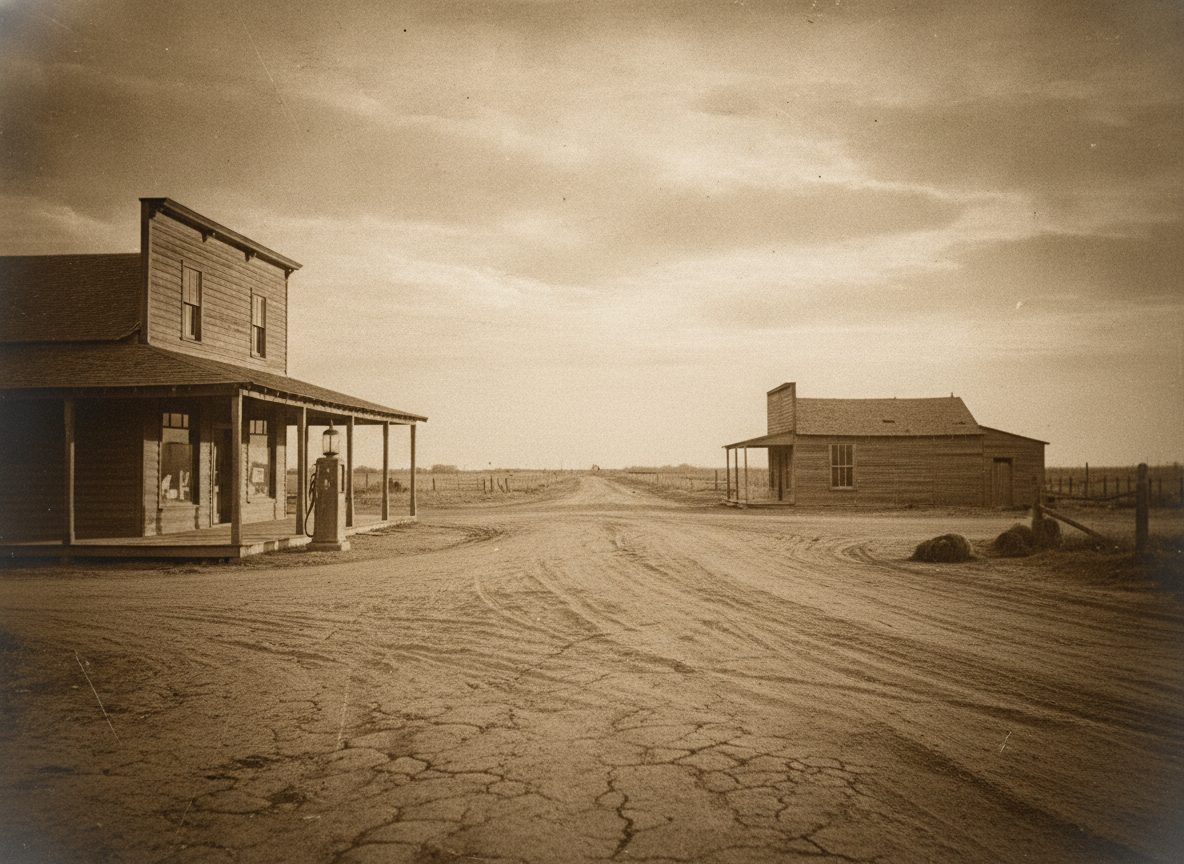
The Dallas street corners and country crossroads where the music was made.From a Texas Crossroads to the Paramount Studios
The Story
Jefferson's life is thinly documented, pieced together from a handful of facts and a great deal of legend. What survives is the music, and a story that runs from the cotton fields of central Texas to the record labels of the industrial North.
An agile guitar and a high, carrying voice, the whole of his art.
c. 1893
Born near Wortham, Texas
Born blind, or losing his sight very young, into a family of sharecroppers in Freestone County. Music offered one of the few livelihoods open to a blind man in the rural South, and he took to the guitar early.
c. 1912–1917
The streets of Dallas
He moved to Dallas and worked the Deep Ellum district, playing for tips on street corners and in barrelhouses. He reportedly crossed paths with a young Lead Belly, and the two are said to have played together around Dallas.
1926
First recordings for Paramount
A Dallas talent scout connected him to Paramount Records in Chicago. His debut blues sides were an immediate success, and Paramount had found the country-blues star the young record business had been waiting for.
1926–1929
The hit-making years
He recorded roughly a hundred sides in three years, among them "Black Snake Moan," "Matchbox Blues," and "See That My Grave Is Kept Clean." His records sold in the tens of thousands and made him one of the best-known blues artists of his day.
1929
Death in Chicago
He died in Chicago in the winter of 1929, at around thirty-six. The exact cause is uncertain, wrapped in the same fog that surrounds much of his life. His body was returned to Texas for burial.
1980s onward
Rediscovery and the canon
Reissued and studied for decades, he is now recognized as a founding figure of the recorded blues. In 1980 he was inducted into the Blues Hall of Fame, his influence audible in generations of guitarists who came after.
Four Sides, One Education
Start Here
Jefferson's catalog is a stack of three-minute 78s from the 1920s. These four are the fastest way to hear the range, from the eerie and famous to the playful and swinging. The audio is old and crackling; let it be part of the spell.
01 · The Landmark
"See That My Grave Is Kept Clean" (1927)
His most enduring song, a solemn, hymn-like meditation on death that has been covered by artists from Bob Dylan to Lightnin' Hopkins. The essential Blind Lemon Jefferson starting point.
02 · The Hit
"Black Snake Moan" (1926)
One of his biggest sellers, a loose, teasing blues built on his darting guitar and conversational phrasing. Proof of why record buyers reached for his 78s again and again.
03 · The Standard
"Matchbox Blues" (1927)
A song that traveled far beyond him: its verses and feel echo through rockabilly and rock and roll, most famously in Carl Perkins and the Beatles' "Matchbox." Hear where it began.
04 · The Guitar
"Easy Rider Blues" (1927)
A lighter, swinging side that puts his nimble, single-string guitar work front and center. The clearest window into the playing that reshaped Texas blues guitar.
The Landmark Collections
The Albums 3 to start with
Jefferson worked before the album existed; his art lives on three-minute 78s cut between 1926 and 1929. The way in is a well-chosen reissue collection. These three gather the essential sides. Start with the blue-topped card.
Compilation
The Best of Blind Lemon Jefferson
The ideal starting point: a tight, well-transferred collection of the songs that made his name, from "Black Snake Moan" to "See That My Grave Is Kept Clean." Everything a newcomer needs in one place.
A broader survey that spreads out across more of the catalog, deepening the picture with lesser-known sides. A natural second step once the essentials have their hooks in you.
A self-titled anthology of the Paramount recordings, a fuller helping of the man's work for when the short collections leave you wanting the whole picture of his three prolific years.
Two YouTube Music setlists: a First Listen of the signature sides to bring you in, and a Deep Cuts set for when you want to sink further into the catalog. Hit the button on either card to search them out on YouTube Music.
Jefferson recorded almost entirely alone, one man and a guitar, but his records exist because of a small cast of label men, scouts, and fellow musicians who moved around him. Here is the world that put his voice on wax.
The shellac 78s that carried a street singer's voice across the country.
Paramount RecordsRecord labelThe Wisconsin-based label, run through its "race records" series, that recorded and marketed Jefferson to Black record buyers and turned him into a national blues star
R. T. AshfordDallas talent scoutA Deep Ellum record-store owner and scout widely credited with recommending Jefferson to Paramount, the connection that started his recording career
Mayo WilliamsProducer / A&RThe pioneering Black producer who oversaw much of Paramount's blues output and helped shepherd Jefferson's sessions into print
Lead BellyFellow musicianHuddie "Lead Belly" Ledbetter reportedly played alongside Jefferson around the streets and districts of Dallas in the 1910s, and later spoke of him as a mentor figure
George Perkins & othersSession accompanistsOn a handful of sides Paramount added light piano or second-guitar accompaniment, but the enduring records are almost all Jefferson solo
The Roots and the Legacy
Influences
Jefferson came out of the Texas songster tradition, the roving repertoire of blues, ballads, reels, and spirituals carried by rural street musicians. His own records then became a wellspring for the guitarists who followed. Here is the family tree, before and after.
Contemporary
Lead Belly
The great Texas-Louisiana songster who ran the same Dallas streets as Jefferson and drew from the same deep well of blues, ballads, and work songs. A window into the tradition that shaped him.
The foundational Delta bluesman recording in the same late-1920s window. Set beside Jefferson, he shows how two great regional styles, Texas and Mississippi, took shape at the birth of the recorded blues.
Another blind Texas street singer of the same era, his slide-driven gospel blues a companion piece to Jefferson's secular sides and part of the same Texas recording moment.
The Dallas guitarist who, as a boy, reportedly led Jefferson through the streets. He carried the Texas single-string approach into the electric age and became the father of modern blues guitar.
The Houston bluesman who carried the Texas country-blues line deep into the twentieth century. As a young man he reportedly played alongside Jefferson, and he kept the loose, talking style alive for decades.
Jefferson died in 1929, before film and broadcast reached men like him. No interview footage exists. What survives is the scholarship, the reissues, and the documentaries that reconstruct his story from the few facts and the many records he left behind.
Archive · History
The Man Behind the Records
Blues historians have spent decades piecing together Jefferson's short life from census records, label ledgers, and the memories of those who knew him. Search YouTube for documentary profiles and the surviving photographs.
With no interviews to hear, the records are the testimony. Collectors have digitized his Paramount sides from surviving 78s, crackle and all. Search YouTube for full-catalog uploads and remastered transfers.
Once the essential sides have you, Jefferson's world opens into the wider country blues and the Texas tradition he helped define.
The complete Paramount sides. multi-disc collections gather nearly everything he recorded, letting you hear the full arc of three astonishing years, alternate takes and all.
The Texas guitar line. follow the single-string style forward through T-Bone Walker, Lightnin' Hopkins, and on into electric blues and rock and roll.
The songsters. explore the wider street-singer tradition through Lead Belly and Blind Willie Johnson to hear the repertoire Jefferson drew from.
The covers. from Bob Dylan's "See That My Grave Is Kept Clean" to the "Matchbox" lineage through Carl Perkins and the Beatles, his songs echo across later music.
The Way to Listen
Do yourself one favor: put on The Best of Blind Lemon Jefferson and let the crackle become part of the music. Listen for the guitar answering the voice, phrase for phrase. That conversation is the sound the whole country blues grew from.