How a sharecropper's son from the Mississippi Delta became the King of the Blues, teaching the whole world to feel a single bent note the way he did.
The Short Version
Who Was He?
B.B. King was the most important and beloved blues musician of the twentieth century, a singer and guitarist whose stinging, vocal-like guitar tone became the foundation of modern blues and rock lead playing. Born Riley B. King in 1925 near Indianola, Mississippi, he took the stage name "Blues Boy," shortened to B.B., and carried the music from juke joints and Memphis radio to concert halls around the world.
Two things made him singular. First, the touch: he almost never played chords behind his singing, instead answering his own voice with short, crying phrases full of his signature shimmering vibrato and precise, bent notes. Second, the generosity: he toured relentlessly for more than half a century, treating every audience with warmth and turning the blues into something joyful rather than merely sorrowful.
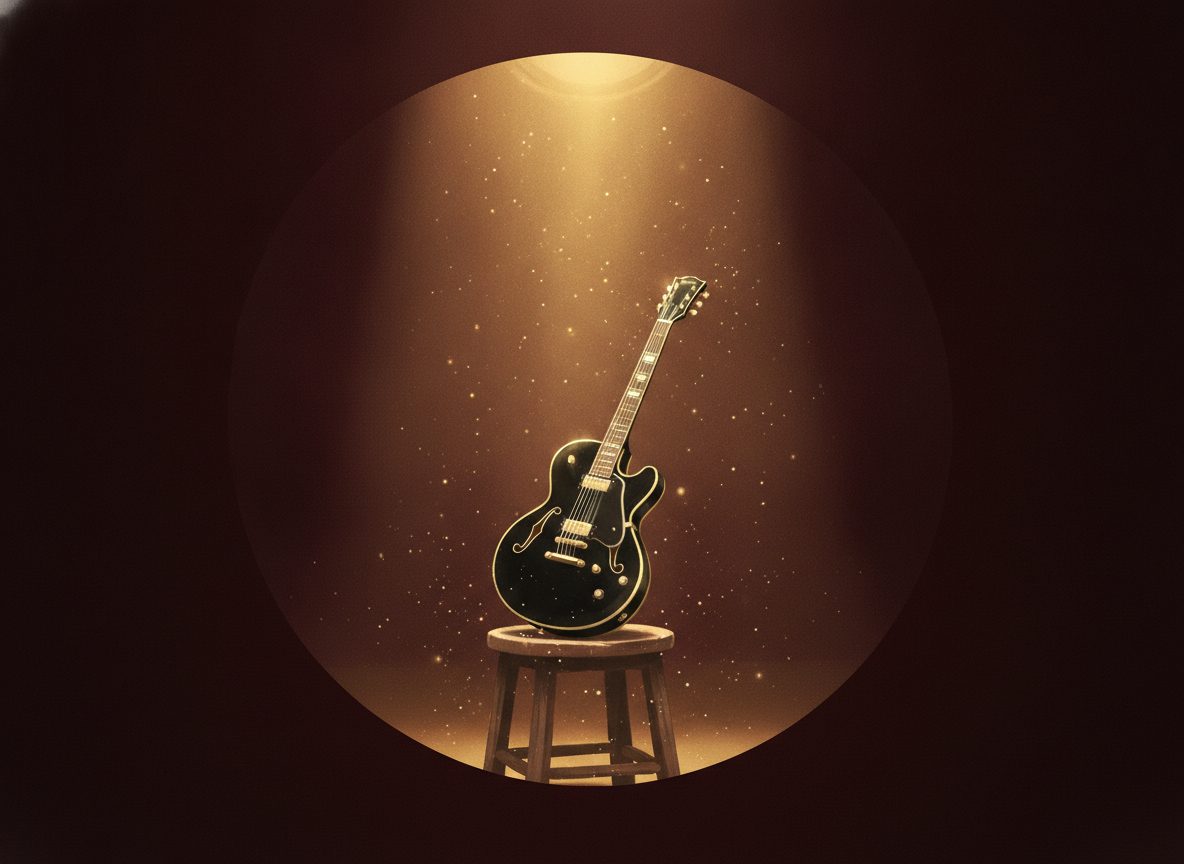
His guitar, a black Gibson he named Lucille, became as famous as he was. By the time he died in 2015, King had won fifteen Grammy Awards and shaped nearly every guitarist who followed him, from Eric Clapton to Jimi Hendrix to countless players who never knew where their favorite licks began.
One guitar, one spotlight, one voice answering itself.From a Delta Cotton Field to the World Stage
The Story
The B.B. King story is the story of a poor Mississippi kid who turned a borrowed guitar and a radio job into a lifelong mission to carry the blues to everyone who would listen.
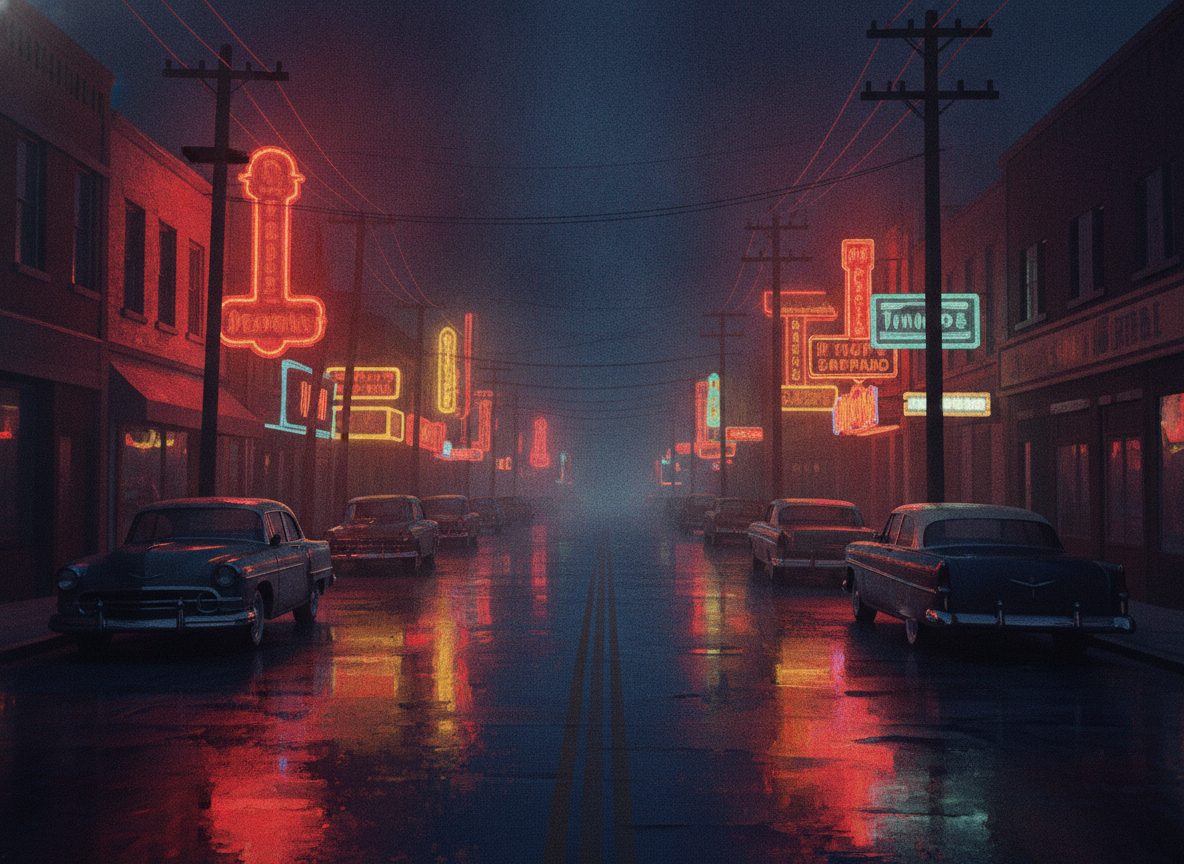
Beale Street, Memphis: where a young singer became a radio "Blues Boy."
1925
Born in the Mississippi Delta
Riley B. King was born near Indianola, Mississippi, and grew up working the cotton fields and singing in gospel church choirs. The music of the Delta, field hollers, spirituals, and country blues, was the soil everything else grew from.
1947–1949
Memphis and Beale Street
King left the plantation for Memphis, the great hub of Black music. Working as a singer and disc jockey on the radio station WDIA, he earned the nickname "Beale Street Blues Boy," soon shortened to Blues Boy, then simply B.B.
1951
His first number one
"3 O'Clock Blues" topped the R&B charts and launched him as a recording star. He began the punishing touring schedule, hundreds of one-nighters a year on the so-called chitlin' circuit, that would define his life.
1965
Live at the Regal
Recorded before a roaring Chicago crowd, this concert album captured King at the height of his powers and is still regarded as one of the greatest live blues records ever made. It is the perfect place to begin.
1969–1970
The crossover
"The Thrill Is Gone," a brooding minor-key blues with sweeping strings, became a Top 20 pop hit and won a Grammy. Suddenly King was playing to young rock audiences, festivals, and television, no longer confined to the blues circuit.
1980s–1990s
An American institution
King toured the globe, opened his own clubs, recorded with everyone from U2 to Eric Clapton, and became a warm, tuxedoed ambassador for the blues, collecting Grammys and honors along the way.
2015
The King of the Blues
King died in 2015 at age 89, having played an estimated fifteen thousand shows. He left the blues bigger, brighter, and more widely loved than he found it, and left his fingerprints on nearly every guitarist alive.
Four Videos, One Education
Start Here
B.B. King rewards deep listening to his great live albums, but these four performances are the fastest way to understand the voice, the tone, and the showmanship. Watch in order.
01 · The One You Know
"The Thrill Is Gone" (1969)
His signature song and biggest hit: a slow, aching minor-key blues wrapped in strings, with Lucille answering every line. The gateway for most new listeners and a master class in saying more with fewer notes.
02 · The Showman
"Every Day I Have the Blues" (Live at the Regal, 1964)
The swinging opener from his landmark live album, driven by a punchy big band. This is King the entertainer, feeding off a roaring crowd and trading phrases with his horn section.
03 · The Voice
"Sweet Little Angel" (Live at the Regal, 1964)
A slow blues that shows the call-and-response at the heart of his art: he sings a line, then lets Lucille cry the answer. The clearest window into why one bent note from him could stop a room.
04 · The Elder Statesman
"The Thrill Is Gone" (Live at Montreux, 1993)
The same song a quarter century on, seasoned and unhurried. Proof that his gift was never speed but feel, and that he only deepened with age as the reigning ambassador of the blues.
The Essential Catalog
The Albums 6 to start with
King's discography is vast, and much of his genius lives on stage, so his live albums are the heart of it. These four are the essential entry points. The gold-topped card is the best place to begin.
1965
Live at the Regal
Widely called the greatest live blues album ever recorded. Captured before a electric Chicago crowd in 1964, it is King, his big band, and Lucille at their peak. "Every Day I Have the Blues," "Sweet Little Angel," "How Blue Can You Get."
The studio album that changed everything, home to "The Thrill Is Gone." Producer Bill Szymczyk added strings and a moodier sheen, and King crossed over to the pop charts and a whole new audience.
An ambitious studio record named for his birthplace, blending blues with rock and soul players. King later called it one of his personal favorites. "Chains and Things," "Ask Me No Questions," "Nobody Loves Me But My Mother."
A second landmark concert record, taped before the inmates of a Chicago jail. Raw, urgent, and full of feeling, it topped the R&B album chart and stands beside Regal as essential live King.
Two YouTube Music playlists: a First Listen of the signature songs to bring you in, and a Deep Cuts set of the slower, headphone-reward blues for when you want to sink in. (Ideally, though, hear the live albums whole.) Hit the button on either card to play it.
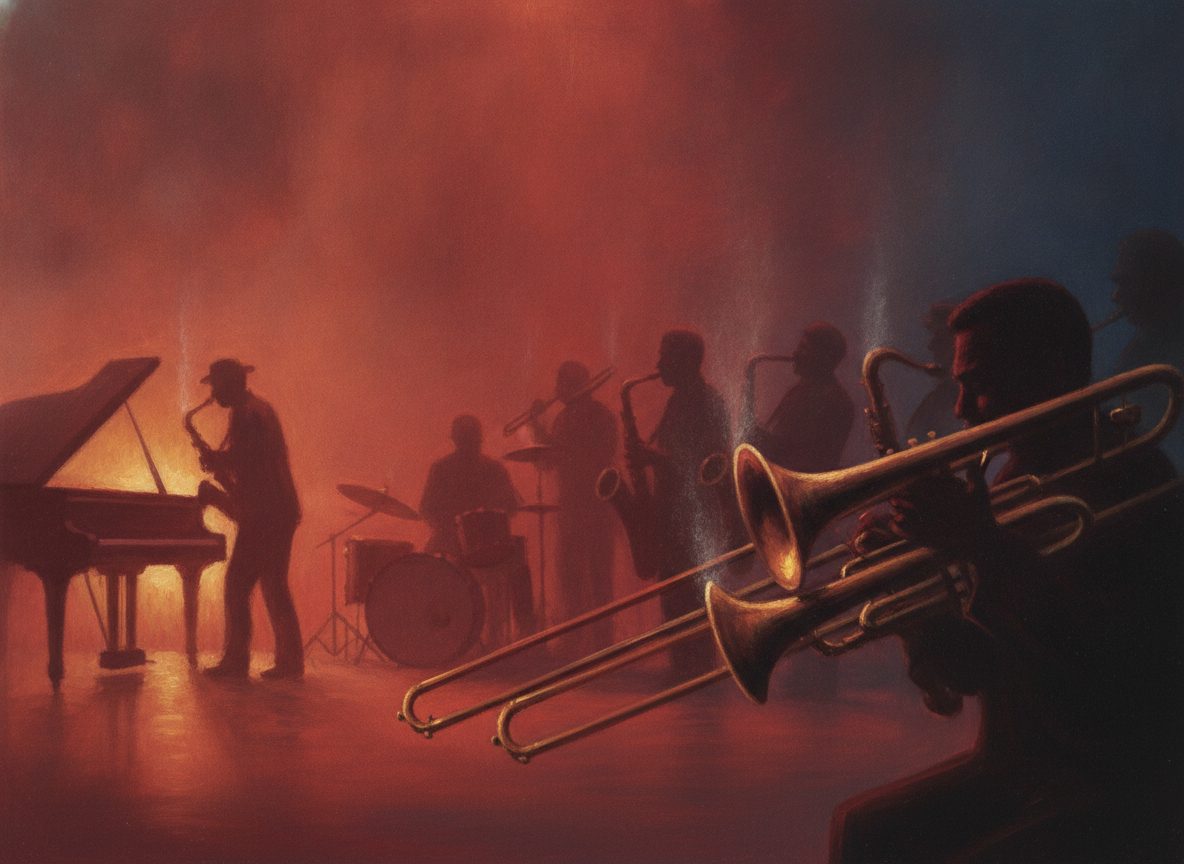
King fronted a tight, hard-working big band for most of his career, and it was central to his sound. He rarely stood alone: a horn section, an organ, and a rhythm section framed every crying phrase from Lucille.
A swinging horn-driven band framing every note.
B.B. KingVocals & guitarSang and played "Lucille," his beloved Gibson, answering his own voice with short, crying, richly vibratoed phrases
LucilleThe guitarHis famous black Gibson, named after a woman two men fought over in a burning dance hall he once fled and ran back into to save the instrument
Sonny FreemanDrumsLongtime drummer who anchored the band through the 1960s and the Live at the Regal era
Duke JethroPiano / organKeyboardist in the touring band whose organ filled out the harmony King left open on guitar
Calvin OwensTrumpet / bandleaderTrumpeter and arranger who led and shaped King's horn section across decades of touring
The Roots of the Sound
Influences
King built his style by absorbing the guitarists he loved on record and radio, blending Delta blues, smooth single-string jazz phrasing, and swinging electric blues into something entirely his own. Here is where it started.
Electric Blues Guitar
T-Bone Walker
The single biggest influence on King's playing. Walker's smooth, jazzy single-note electric lead lines showed King a whole new way to make the guitar sing.
King openly adored the great gypsy-jazz guitarist and studied his dazzling, melodic solos, folding that fluid European swing into his own blues vocabulary.
One of the earliest recorded blues stars, whose raw country-blues singing and guitar were part of the Mississippi sound King grew up hearing and carried forward.
King was as warm and generous in conversation as he was on stage. Two interviews that get at the man behind the music and the story of the blues he carried.
Interview · Reelin' In The Years
B.B. King on His Life and the Blues
A candid 1990 archive conversation in which King reflects on his career, his roots in Mississippi, and what the blues has meant to him across a lifetime on the road.
Once the essential live albums have you, there is a lifetime of recordings, collaborations, and history to explore.
The collaborations. later in life King recorded with a who's who of admirers, including Riding with the King with Eric Clapton, a warm, Grammy-winning duet album that is an easy and rewarding next stop.
The other live albums. beyond Regal and Cook County Jail, records like Live & Well and Blues Is King capture the band in full flight across the years.
The early singles. the 1950s sides for RPM and Kent, including "3 O'Clock Blues," "You Upset Me Baby," and "Sweet Sixteen," show the young star before the crossover fame.
The lineage. trace King's influence forward through Eric Clapton, Jimi Hendrix, Buddy Guy, and countless rock and blues guitarists, then backward to T-Bone Walker and the Delta players who shaped him.
The Way to Listen
Do yourself one favor: put on Live at the Regal from start to finish, loud, and imagine you are in that 1964 Chicago crowd. It is short, joyous, and perfectly paced, and it explains in forty minutes why the whole world called him the King. Then go straight to Completely Well for "The Thrill Is Gone."