How a Belgian-Romani guitarist with two crippled fingers invented a whole language for the instrument, gave Europe its first original jazz voice, and swung harder than almost anyone before or since.
The Short Version
Who Was He?
Django Reinhardt (born Jean Reinhardt in Liberchies, Belgium, in 1910) is the founding genius of gypsy jazz, the style the French call jazz manouche. Raised in Romani encampments around Paris, he came up playing banjo and guitar for dances, then fell hard for the American jazz of Louis Armstrong and Duke Ellington and set out to play it his own way.
Two things make him singular. First, the hands: a caravan fire when he was eighteen left the third and fourth fingers of his fretting hand fused and largely useless, so he rebuilt his entire technique around two fingers, and somehow played faster and more fluidly than anyone thought possible. Second, the sound: with violinist Stephane Grappelli he led the Quintette du Hot Club de France, an all-string band with no drums and no horns that made swing feel light, quick, and utterly European.
He died young, in 1953, but his influence never faded. Every player who has ever chased that fast, singing, acoustic tone is walking a road Django built. To understand the jazz guitar, you start here.
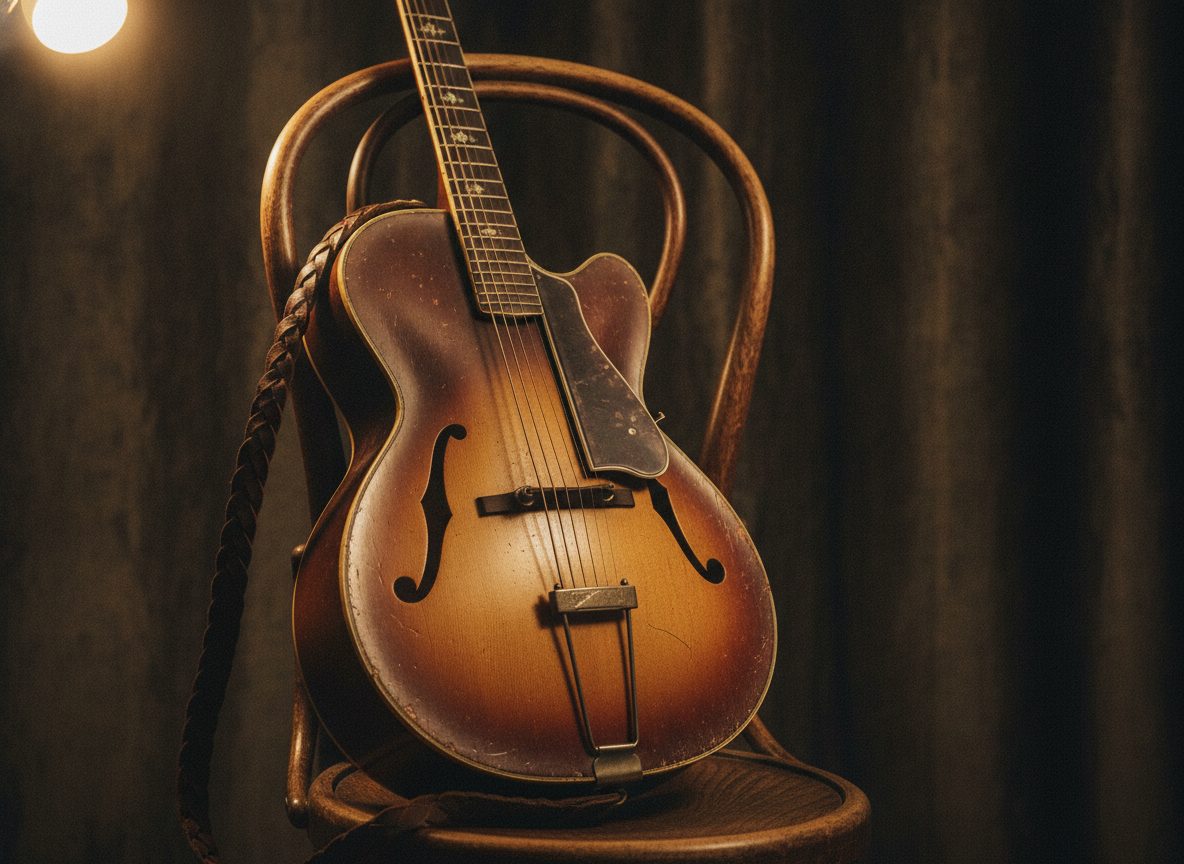
The acoustic archtop and a fast, singing line, the ground all gypsy jazz grows from.From a Romani Caravan to the Hot Clubs of Paris
The Story
Django's life reads like a legend, and much of it is true: the caravan childhood, the fire that should have ended his career, the band that conquered Europe, and the restless post-war years chasing a new electric sound.
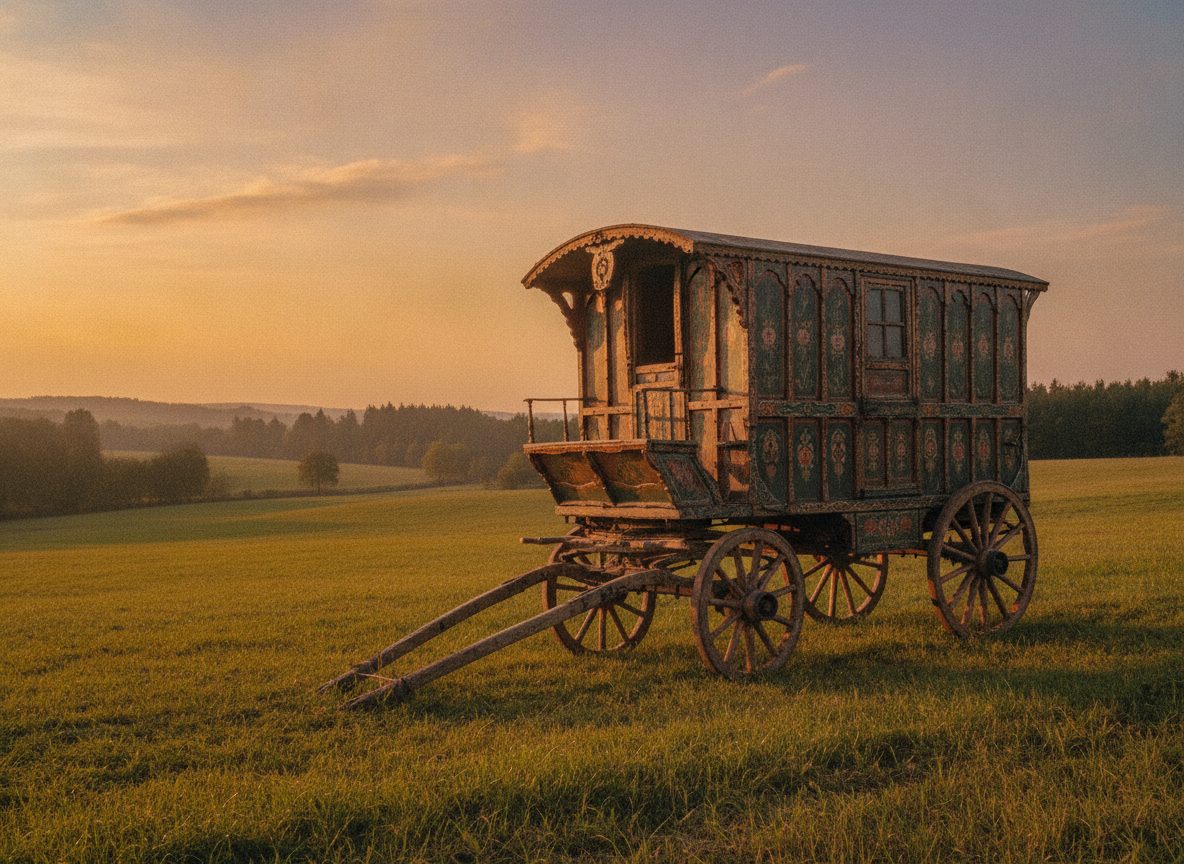
The Romani encampments outside Paris, where a boy learned banjo and guitar by ear.
1910–1928
The caravan years
Born into a traveling Romani family, Django grew up in encampments on the edge of Paris. He never learned to read music, but by his teens he was a dazzling banjo and guitar player, working the bal-musette dance halls of the city.
1928
The fire
A candle set his caravan's celluloid flowers ablaze. Django escaped with severe burns, and the third and fourth fingers of his left hand were left fused and stiff. Doctors said he would never play again.
1929–1933
A new technique
During a long recovery he rebuilt his playing from scratch, fretting melodies with two good fingers and using the damaged ones only for chords. The limitation forced a wholly original style, all speed, drama, and unmistakable phrasing.
1934
The Quintette
With violinist Stephane Grappelli he formed the Quintette du Hot Club de France, an all-string band with rhythm guitars and bass. It was one of the first European groups to play jazz as equals to the Americans, and a sensation.
1940–1945
Wartime Paris
Stranded in occupied France while Grappelli sat out the war in London, Django kept working under enormous danger as a Romani man under Nazi rule. He wrote his tender masterpiece "Nuages," which became an anthem of the era.
1946–1951
America and the electric turn
He toured the United States with Duke Ellington and grew fascinated with the amplified guitar and the new bebop. His late recordings trade some of the old lightness for a bolder, modern, electric attack.
1953
The last recordings
Settled in the village of Samois-sur-Seine, Django cut a final run of superb sessions that show him absorbing bebop on his own terms. He died of a stroke that May, at just forty-three.
Four Tunes, One Education
Start Here
Django's catalog runs to hundreds of sides recorded across two decades. These four are the fastest way to grasp the range, from the joyful swing of the Quintette to the aching ballad and the burning up-tempo showcase. Listen in order.
01 · The Anthem
"Minor Swing" (1937)
The signature Quintette tune and the unofficial anthem of gypsy jazz. A simple minor riff opens into Django and Grappelli trading fast, singing lines over a driving rhythm. The essential starting point.
02 · The Ballad
"Nuages" (1940)
Written in occupied Paris, this soft, floating melody became Django's most beloved piece and a symbol of quiet resistance. Proof that gypsy jazz could break your heart as easily as it could lift your feet.
03 · The Showcase
"Djangology" (1935)
A bright, springing original that shows off the interplay at the heart of the Quintette. The rhythm guitars pump, Grappelli soars, and Django's lines dart between them with impossible ease.
04 · The Barnburner
"Sweet Georgia Brown" (1938)
An American standard taken at a breathless clip. This is Django as virtuoso, tearing through the changes with a speed and swing that made American players sit up and take notice.
The Landmark Collections
The Albums 6 to start with
Django worked in the era of the 78 rpm single, so his legacy lives in compilations and reissues rather than studio albums. These six collections are the best gateways to the recordings. The wine-topped card is the place to begin.
1989 · 1930s recordings
Quintette du Hot Club de France
The classic sides with Stephane Grappelli, gathered in one place. "Minor Swing," "Djangology," and the swinging standards that made the band famous. The definitive first stop.
A tight, well-chosen single-disc survey of the signature tunes. If you want the highlights in one sitting, from the Quintette hits to "Nuages," this is a clean and reliable overview.
A generous two-disc gathering that stretches from the early Quintette sides through the wartime and post-war years. A deeper survey for when the highlights have you hungry for more.
The 1949 Rome reunion with Grappelli, cut with an Italian rhythm section. Warm, relaxed, and full of feeling, it captures the two old partners late in the day, still finishing each other's phrases.
The Blue Star sessions of 1947 and 1953, where Django plugs in an electric guitar and leans into bebop. Bolder and more modern than the Quintette sides, it shows an artist still reinventing himself.
Drawn from his final sessions, released just after his death. Django absorbing modern jazz on his own terms, his tone bigger and his lines longer, a fitting close to an extraordinary career.
Two YouTube Music playlists: a First Listen of the signature tunes to bring you in, and a Deep Cuts set of ballads and late-period sides for when you want to sink in. (Ideally, though, hear these sessions in full.) Hit the button on either card to search them out.
Django was the star, but the magic of the classic recordings came from a tight circle of players, above all his partnership with a violinist who was his perfect musical opposite.
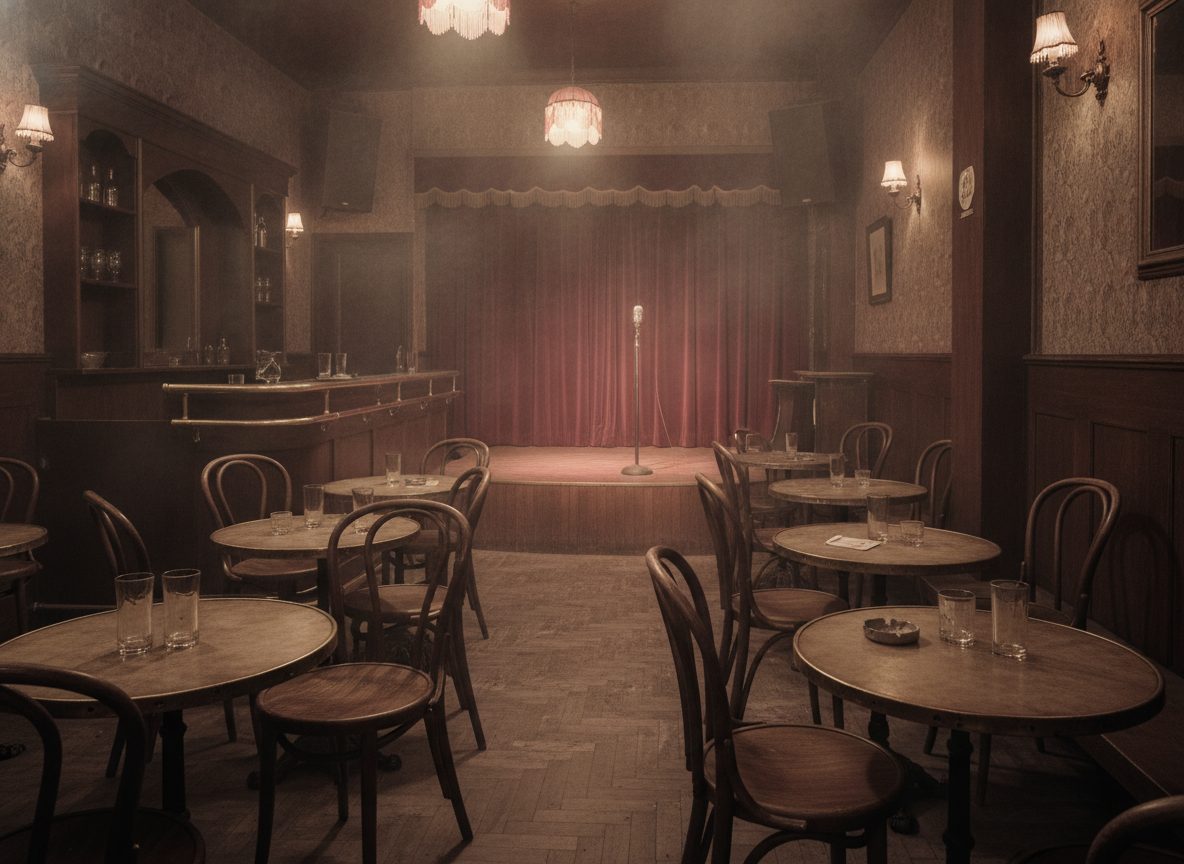
The hot clubs of 1930s Paris, where an all-string band redefined swing.
Stephane GrappelliViolinDjango's great foil and co-leader of the Quintette. His light, lyrical violin was the perfect counterweight to the guitar, and their interplay defined the group's sound
Joseph ReinhardtRhythm guitarDjango's younger brother, a steady presence in the Quintette whose driving rhythm guitar helped power the band's pulse in place of a drummer
Roger ChaputRhythm guitarOne of the original Quintette rhythm guitarists, part of the two-guitar engine that gave the band its unmistakable chugging swing
Louis VolaDouble bassThe Quintette's founding bassist, anchoring the all-string lineup and helping assemble the group in its earliest days
Hubert RostaingClarinetDuring the war years, with Grappelli in London, Rostaing's clarinet replaced the violin, reshaping the Quintette's sound for tunes like "Nuages"
The Roots of the Sound
Influences
Django fused two worlds: the Romani and musette music of his upbringing and the American jazz he heard on record as a young man. These are the players who set him on his path.
Jazz
Louis Armstrong
The revelation. Hearing Armstrong's records turned Django from a musette guitarist into a jazz musician, teaching him that a solo could sing like a human voice.
A lifelong idol whose rich harmony and orchestral color shaped Django's writing. The two finally met and toured America together in 1946, a dream realized.
The pioneering American jazz guitarist who proved the instrument could carry a jazz solo. His clean, single-string lines were a model for what Django would take much further.
The hot violin-and-guitar duo of the 1920s that prefigured the Quintette's very format. Their swinging string interplay pointed straight toward what Django and Grappelli would build.
Django died in 1953, before television made the recorded interview common, and he left almost no filmed conversations behind. What survives are rare performance clips and the recollections of those who knew him.
Archive · Performance
Django on Film
A handful of precious film fragments capture Django with the guitar, the two damaged fingers plainly visible as they fly across the neck. These rare clips are the closest thing we have to seeing him speak. Search YouTube for the archival footage.
Documentaries and interviews with Stephane Grappelli and the players who followed fill in the man behind the legend, from the caravan years to his final days at Samois-sur-Seine. Search YouTube for the portraits and conversations.
Once the classic sides have you, Django's world opens into decades of recordings, a living tradition, and a family of players who carry the flame.
The complete Djangologie. an exhaustive chronological series that walks through nearly every surviving recording, session by session, for those who want the whole story in order.
The living tradition. gypsy jazz never died. Players like Bireli Lagrene, Stochelo Rosenberg, and the annual Festival Django Reinhardt at Samois-sur-Seine keep the style vital and evolving.
The heirs of the guitar. American acoustic masters from Doc Watson to Tony Rice absorbed Django's speed and phrasing, and today artists like Sierra Ferrell fold that swing back into roots music.
The wartime story. Django's survival as a Romani man in occupied France, and the anthem "Nuages" that came out of it, is one of the most remarkable chapters in jazz history.
The Way to Listen
Do yourself one favor: put on the Quintette du Hot Club de France collection and just let it swing, then turn to Nuages and hear the other side of him. Django never read a note of music. He played entirely by ear and feel, and the recordings still sound alive because of it.