How a blind guitarist from the Blue Ridge mountains of North Carolina turned the fiddle tunes of his childhood into a new language for the flat-top guitar, and became the quiet giant that a whole tradition of pickers still measures itself against.
The Short Version
Who Is He?
Doc Watson (born Arthel Lane Watson in Deep Gap, North Carolina, in 1923) is the musician who made the flat-top guitar a lead instrument in old-time and bluegrass music. Blind from infancy, he learned to play by ear from records, radio, and the singing of his Blue Ridge family, and grew into one of the most admired acoustic guitarists America has produced.
Two things make him singular. First, the flatpicking: he took fiddle tunes that had always belonged to the bow and played them note for note on the guitar, clean and fast and swinging, and in doing so more or less invented a whole style. Second, the warmth: a rich baritone voice and an unhurried, generous way with a song that made even his most dazzling playing feel like something shared on a front porch.
Discovered during the folk revival of the early 1960s, he recorded for half a century, won seven Grammy Awards, received the National Medal of Arts, and played right up to the end of his life in 2012. To understand American acoustic guitar, you start here.
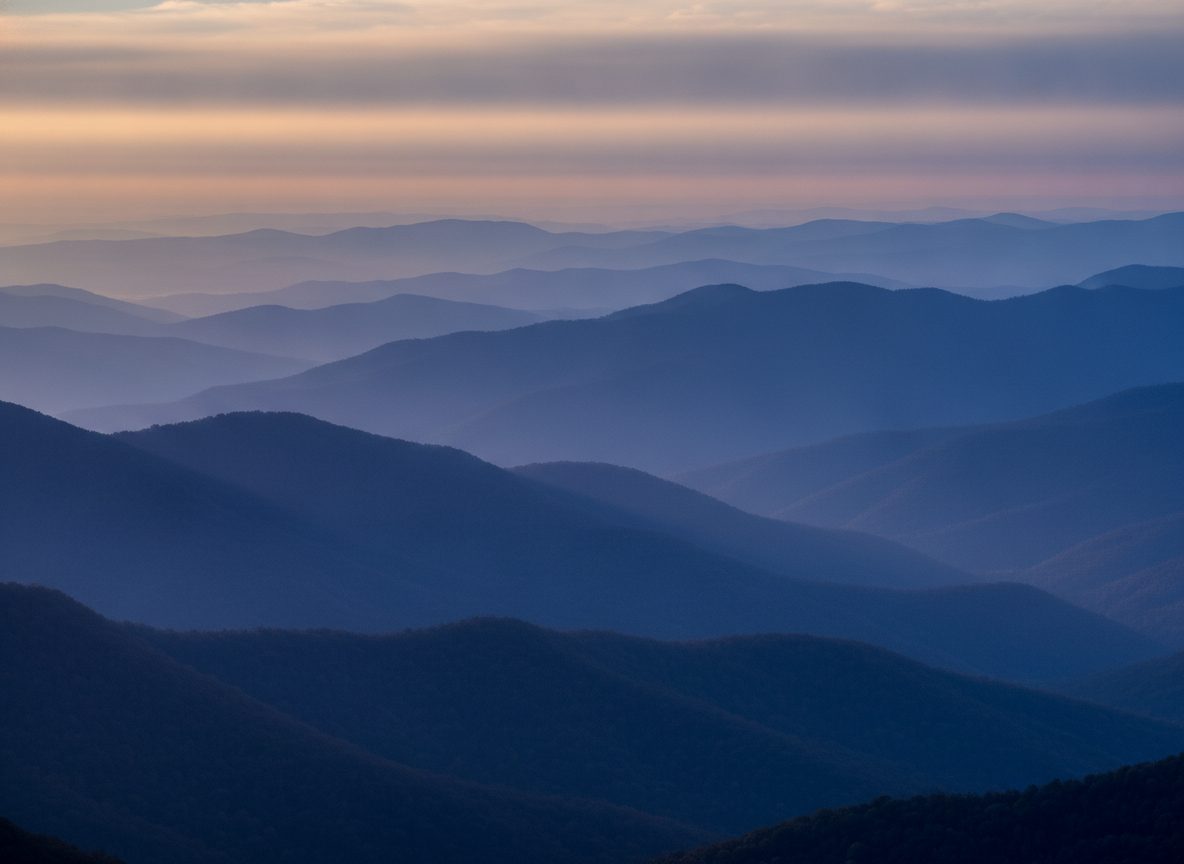
The Blue Ridge of North Carolina, the ground Doc Watson's music grows from.From a Deep Gap Porch to the National Medal of Arts
The Story
Doc Watson's story is one of patience and quiet mastery: a blind man from a remote mountain community who spent decades playing for tips and dances before the wider world discovered what his neighbors already knew.
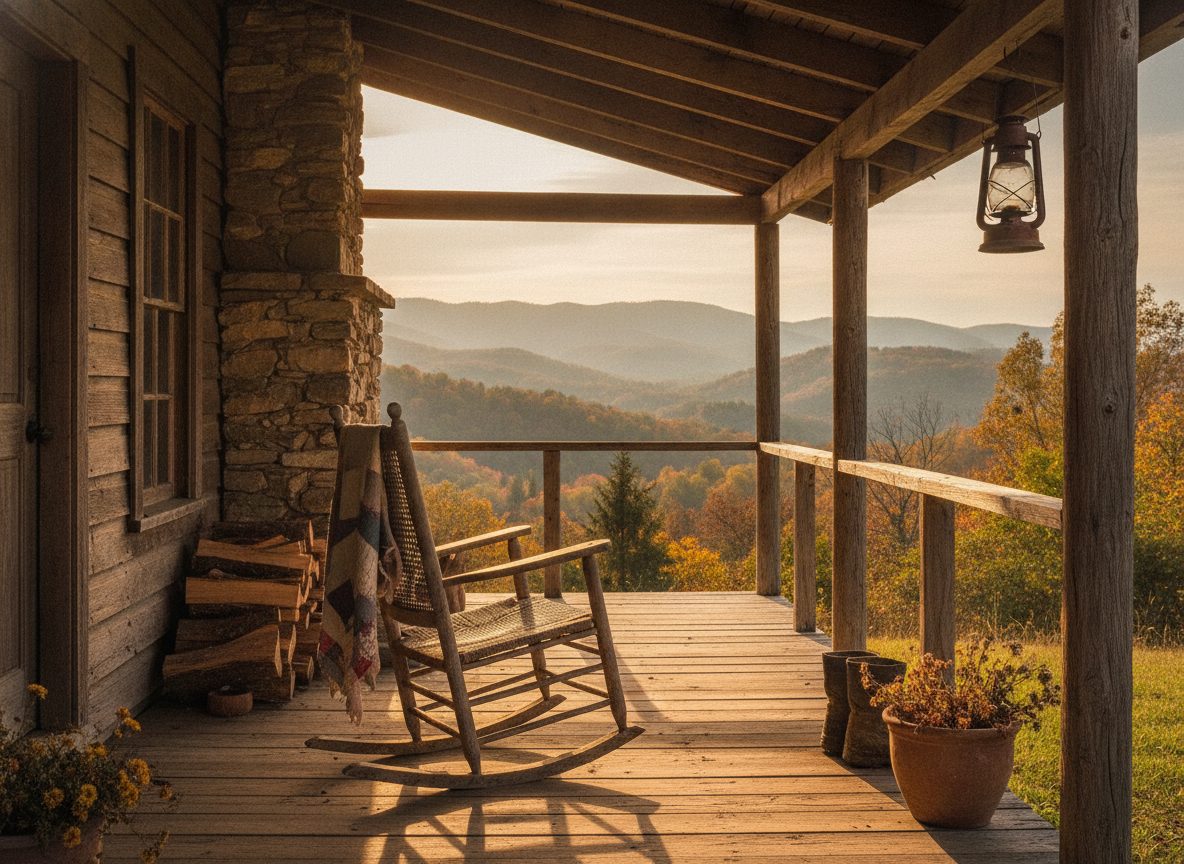
Deep Gap, the family, and a boy learning every tune by ear.
1923
Deep Gap, North Carolina
Arthel Watson was born into a large, musical Blue Ridge family and lost his sight before his first birthday. Raised on hymns, ballads, and his father's banjo, he soaked up the old mountain repertoire by ear.
1930s–1940s
Learning the guitar
Starting on a homemade fretless banjo and then a borrowed guitar, he taught himself from records by the Carter Family, Jimmie Rodgers, and Mississippi John Hurt, and from the radio pickers who filled the mountain airwaves.
1953–1960
The dance-band years
To feed his family he played electric guitar in a local country-and-western dance band. With no fiddler on hand, he began working out fiddle tunes note for note on the guitar, the seed of his flatpicking style.
1960–1961
Discovered by the folk revival
Folklorist Ralph Rinzler, recording old-time banjo player Clarence Ashley, found Watson in the same mountain circle. The recordings and a move to acoustic guitar opened the door to the northern folk revival.
1963–1964
Newport and a solo career
A show-stopping appearance at the Newport Folk Festival made his name, and his self-titled 1964 Vanguard debut launched a solo career that carried mountain music to concert halls and college campuses.
1964–1985
The partnership with Merle
His son Merle Watson joined him on guitar as a teenager and became his musical partner for more than twenty years, a deep, intuitive duo cut short by Merle's death in a farm accident in 1985.
1986–2012
Elder statesman
He founded MerleFest in his son's memory, kept touring with younger partners, and gathered honors including the National Medal of Arts. He played until shortly before his death in 2012, a revered father of the acoustic tradition.
Four Songs, One Education
Start Here
Doc Watson's catalog runs deep across fiddle tunes, ballads, blues, and gospel. These four performances are the fastest way to grasp the range, from a flatpicking showpiece to a tender old ballad. Watch in order.
01 · The Showpiece
"Black Mountain Rag"
The flatpicking calling card: an old fiddle breakdown played clean and lightning-fast on the flat-top guitar. This is the sound that made a generation of pickers pick up a pick.
02 · The Ballad
"Deep River Blues"
His warm baritone and a gently rolling fingerstyle blues learned from the Delmore Brothers. Proof that Doc was as much a singer and a bluesman as a flatpicker.
03 · The Standard
"Tennessee Stud"
A storytelling favorite that became a signature, cut most famously on the landmark Will the Circle Be Unbroken sessions. Doc the mountain storyteller at his most winning. Search for the recording.
04 · The Instrumental
"Doc's Guitar"
A bright original instrumental that shows off his fluid right hand and his own voice on the guitar, beyond the traditional repertoire. A window into Doc the composer. Search for the live version.
The Landmark Records
The Albums 6 to start with
Doc Watson recorded prolifically for half a century. These six are the pillars of the early Vanguard years plus the compilations that gather the essentials. The amber-topped card is the best place to begin.
1964
Doc Watson
The Vanguard solo debut that introduced him to the wider world. Fiddle tunes, ballads, and blues delivered with astonishing clarity, the record where flatpicking arrives as a fully formed style.
The first record with son Merle at his side, capturing the beginning of one of the great father-and-son partnerships in American music. Warm, intimate, and full of family repertoire.
A looser, more contemporary set that broadens the palette with originals and modern material while keeping the flatpicking front and center. One of the strongest of the Vanguard years.
Another Vanguard high point with Merle, rich in ballads and mountain gospel alongside the instrumental fireworks. A gentle, deeply rooted record that rewards close listening.
The perfect single-disc gateway, gathering the signature Vanguard performances in one place. If you want the flatpicking landmarks without hunting record by record, begin right here.
The deep dive: a career-spanning box that collects the foundational 1960s recordings, live sets, and rarities. The place to go once the essentials have you hooked.
Two YouTube Music playlists: a First Listen of the signature tunes to bring you in, and a Deep Cuts set of the ballads and instrumentals for when you want to sink in. (Ideally, though, hear these records whole.) Hit the button on either card to play it.
Doc Watson mostly performed as a duo or in small acoustic settings, but the players around him, above all his own son, shaped the sound and carried it forward.
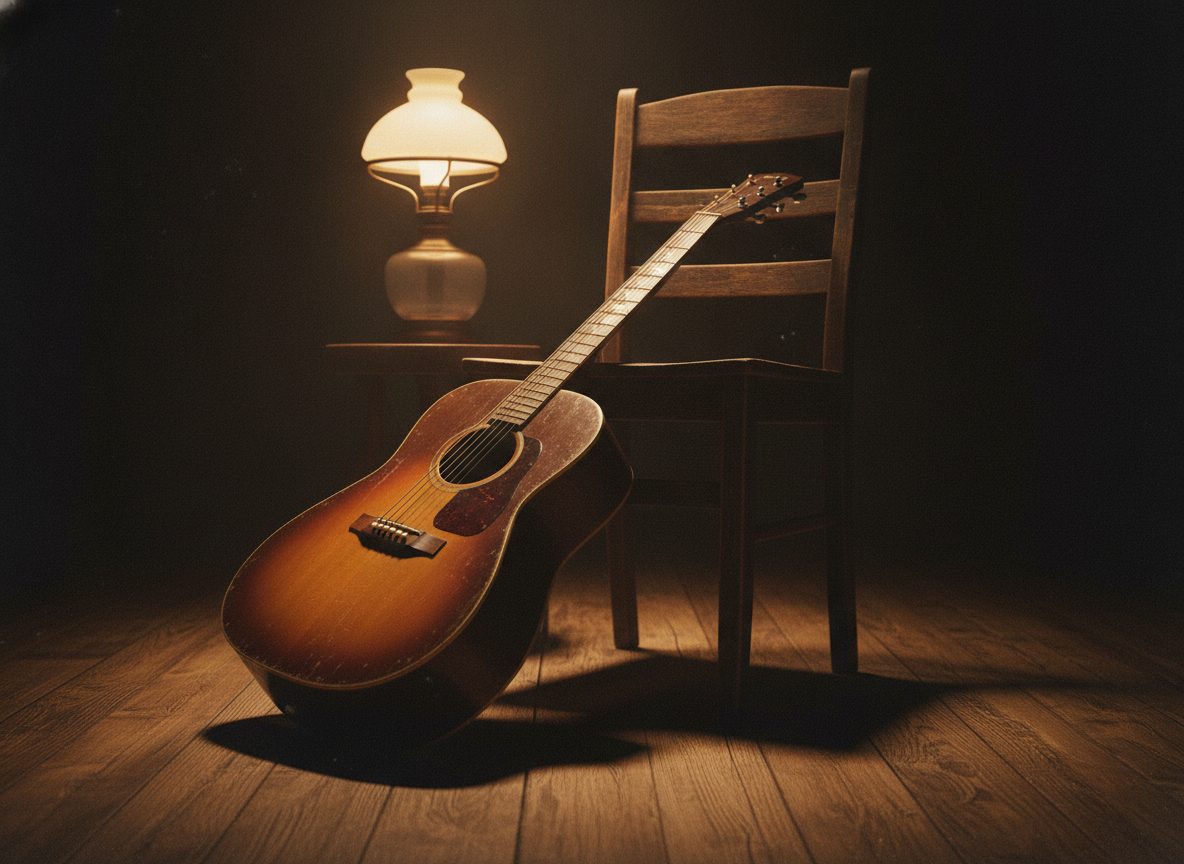
The flat-top guitar, played as a lead instrument, and the people who shared the stage.
Merle WatsonGuitar / son and partnerDoc's son joined him as a teenager and became his musical partner for more than two decades, backing him on guitar and banjo until his death in 1985; MerleFest was founded in his memory
Jack LawrenceGuitar / duo partnerA longtime touring and recording partner in Doc's later years, trading lead and rhythm with him on the road across the 1980s, 1990s, and 2000s
T. Michael ColemanBassPlayed bass with the Watsons for years, anchoring the trio through much of the 1970s and 1980s touring and recordings
David HoltBanjo / multi-instrumentalistOld-time musician and storyteller who toured and recorded with Doc in his later years and won Grammy Awards alongside him
Ralph RinzlerFolkloristThe folklorist who documented and helped introduce Doc to the folk revival, opening the door to Newport and a national audience
The Roots of the Sound
Influences
Doc Watson built his art from the records and radio of his youth: the mountain gospel of the Carter Family, the blue yodels of Jimmie Rodgers, country blues, jazz guitar, and the pioneering pickers of country music. Here is where it started.
Old-Time
The Carter Family
The bedrock of the mountain repertoire. Their songs and Maybelle Carter's guitar style ran through the music Doc grew up on and returned to all his life.
The Kentucky guitar innovator whose thumb-and-finger picking was so admired that Doc named his son after him. A direct root of the Watson guitar sound.
Doc Watson was a natural storyteller, generous and funny in conversation, and his filmed talks are as warm as his music. His recorded conversations are well worth seeking out.
Interview · Archive
Doc, In Conversation
Across decades of interviews Doc spoke plainly and warmly about growing up blind in the mountains, learning by ear, and the tunes that shaped him.
Interview · David Holt
The Filmed Conversations
Doc's longtime musical partner David Holt filmed a series of relaxed conversations and porch sessions with him, blending storytelling and playing. Search YouTube for the Doc Watson and David Holt talks.
Once the landmark records have you, Doc Watson's world opens into decades of collaborations, live sets, and the tradition he helped launch.
Will the Circle Be Unbroken. the Nitty Gritty Dirt Band's 1972 summit meeting of old-time and country legends, where Doc's "Tennessee Stud" introduced him to a rock-era audience.
The Merle years. the many Doc and Merle records of the late 1960s and 1970s, the heart of his catalog and the deepest expression of the father-and-son partnership.
MerleFest. the festival Doc founded in Merle's memory in Wilkesboro, North Carolina, now one of the great gatherings of American roots music.
The living tradition. hear how the flatpicking he pioneered runs straight through Tony Rice, Bryan Sutton, Molly Tuttle, and Billy Strings, the pickers who carry his sound forward.
The Way to Listen
Do yourself one favor: put on The Essential Doc Watson from start to finish, then the 1964 Doc Watson debut. Listen for the right hand, the way a fiddle tune becomes a guitar tune, and the warmth in the voice between the fireworks.