How three people from a corner of the Virginia mountains gathered up the old ballads and hymns of Appalachia, carried them into a recording studio, and became the first family of country music.
The Short Version
Who Were They?
The Carter Family were three musicians from Maces Spring, Virginia: A.P. Carter, his wife Sara Carter, and his sister-in-law Maybelle Carter. Beginning with a legendary 1927 recording session in Bristol, Tennessee, they cut hundreds of sides that turned the ballads, gospel songs, and parlor tunes of the southern mountains into the bedrock of American country music.
Two things make them foundational. First, the songs: A.P. roamed the hills collecting and reshaping old material, building a catalog ("Wildwood Flower," "Keep on the Sunny Side," "Can the Circle Be Unbroken") that every country and folk artist since has drawn from. Second, the sound: Maybelle's thumb-and-fingers guitar style, later called the "Carter scratch," let one guitar carry both melody and rhythm and reshaped how the instrument is played.
They recorded from 1927 to 1941, and their influence flows straight through Woody Guthrie, Johnny Cash, and Bob Dylan. To understand where country and folk music come from, you start here.
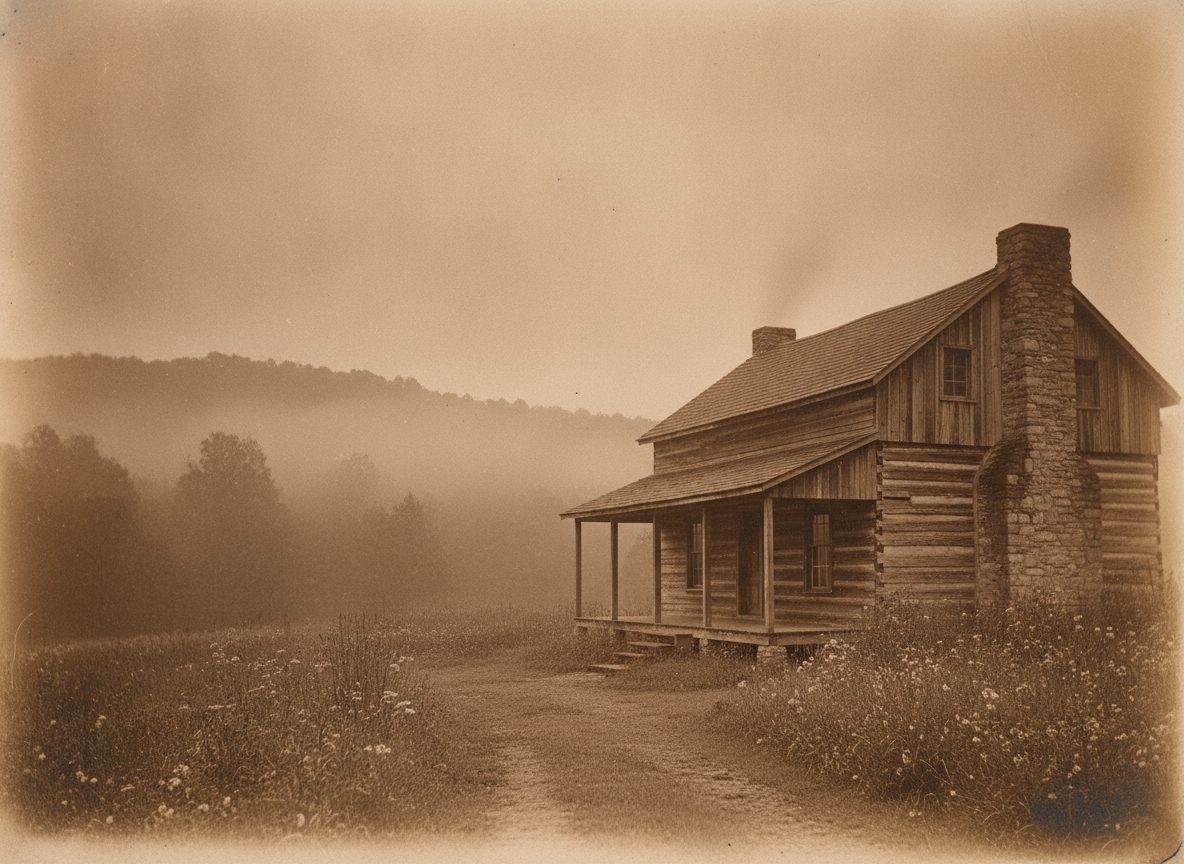
The Virginia mountain country the Carter Family's music grew from.From a Virginia Holler to the Birth of Country Music
The Story
The Carter Family's story is the story of how mountain music became a national industry, gathered up by a song-hunting husband, sung by two remarkable women, and pressed onto records that never went out of print.
Records and border radio carried these mountain songs into homes across the country.
1915–1926
Maces Spring, Virginia
A.P. Carter married Sara Dougherty in the Clinch Mountain community of Maces Spring. They sang together at home and at gatherings, and when A.P.'s brother married Sara's cousin Maybelle Addington, the trio's blend of voices and guitar took shape.
1927
The Bristol Sessions
Producer Ralph Peer set up a temporary studio in Bristol, Tennessee, to record local talent. The Carters drove down from Virginia and cut their first sides. Those sessions, which also discovered Jimmie Rodgers, are often called the "big bang" of country music.
1928–1934
Building the songbook
A.P. traveled the mountains collecting old ballads and hymns, reworking them into recordable songs. The trio pressed dozens of records a year, and Maybelle's "Carter scratch" guitar, melody on the bass strings, rhythm above, became a template for players everywhere.
1938–1941
Border radio
The group broadcast over powerful Mexican "border blaster" stations that reached deep into the United States, bringing their songs to an enormous audience and pulling a young generation, including A.P. and Sara's daughters, into the music.
1943
The original trio ends
With Sara and A.P. long estranged and Sara remarried, the original Carter Family stopped performing together. Their recorded legacy, though, was already permanent, a catalog that country and folk artists would mine for the rest of the century.
1943–1960s
Mother Maybelle and the Carter Sisters
Maybelle carried the name forward with her daughters Helen, Anita, and June as Mother Maybelle and the Carter Sisters, becoming a fixture at the Grand Ole Opry and a living bridge from the old-time era to the folk revival and the Nashville of Johnny Cash.
1970
The Hall of Fame
The Carter Family was inducted into the Country Music Hall of Fame, the first group so honored, cementing their place as the founding family of the genre and a permanent influence on everything that followed.
Four Songs, One Education
Start Here
The Carter catalog runs to hundreds of sides, but these four songs are the fastest way to grasp the whole tradition, from the guitar style to the family harmony to the gospel heart of it. Watch in order.
01 · The Signature
"Wildwood Flower"
The most famous Carter recording and the definitive showcase for Maybelle's guitar. That rolling, melody-on-the-bass-strings figure is the "Carter scratch," the lick that taught a century of players how the guitar could lead a song.
02 · The Hymn
"Can the Circle Be Unbroken"
A reworking of an old gospel song into the Carters' greatest anthem, a meditation on death and family that has been sung at gatherings and funerals ever since. The emotional center of the whole catalog.
03 · The Theme Song
"Keep on the Sunny Side"
The song so identified with the family that it became their motto and radio theme. Bright, plainspoken, and durable, it is the Carter sound at its most welcoming and its most enduring.
04 · The Standard
"Wabash Cannonball"
A rambling railroad ballad the Carters helped turn into an American standard. It shows how their records took loose folk material and fixed it into the versions everyone would come to know.
The Landmark Collections
The Albums 4 to start with
The Carters recorded between 1927 and 1941, so their catalog reaches us as reissues and anthologies rather than original LPs. These four collections are the best doorways in. The blue-topped card is the place to begin.
Compilation
The Essential Carter Family
The single best starting point: a well-chosen overview that gathers the signature recordings, from "Wildwood Flower" to "Keep on the Sunny Side," in one place. If you own one Carter Family collection, make it this one.
Drawn from the acclaimed American Epic restoration project, this set presents the early recordings, including Bristol-era material, in beautifully cleaned-up sound. The closest thing to hearing these sides the way 1927 audiences did.
For deeper listening, this chronological anthology follows the trio through their prime recording years in order, showing how the songbook and the sound were built session by session.
A generous career-spanning collection named for their greatest song. A rich, immersive set for when the essentials have pulled you in and you want to live inside the whole tradition.
Two YouTube Music setlists: a First Listen of the signature songs to bring you in, and a Deep Cuts set of the ballads and gospel numbers for when you want to sink further in. Hit the button on either card to search them out.
The original Carter Family was three people, but the name became a lineage, carried forward by Maybelle and her daughters until it ran straight into the heart of Nashville.
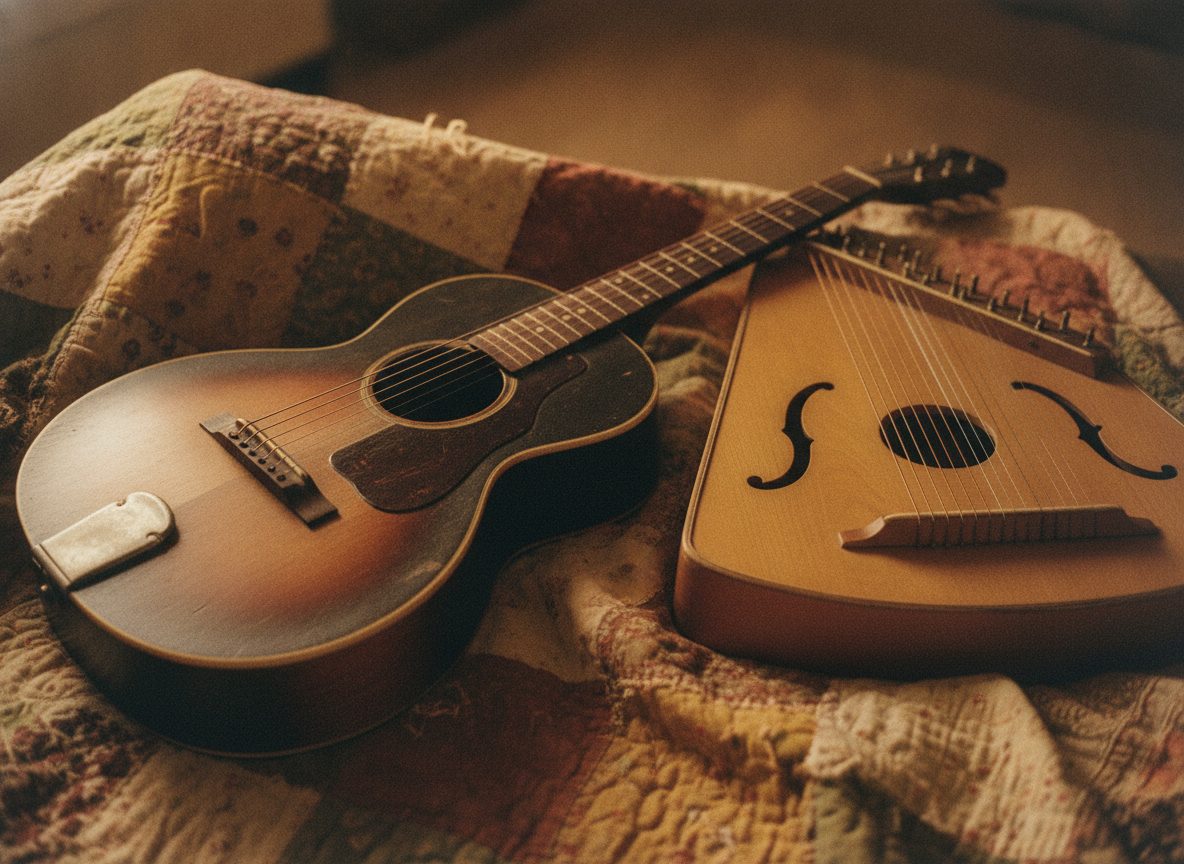
Guitar and autoharp, the two instruments at the center of the Carter sound.
A.P. CarterVocals / song collectorThe founder and driving force, who roamed the mountains gathering old ballads and hymns and reshaping them into the recorded Carter songbook, singing bass and baritone harmony
Sara CarterLead vocals / autoharpA.P.'s wife and the group's powerful, plainspoken lead singer, whose steady autoharp and unadorned voice defined the emotional weight of the records
Maybelle CarterGuitar / harmonySara's cousin and the instrumental genius of the group, whose "Carter scratch" guitar style, melody and rhythm at once, reshaped how the instrument is played
The Carter SistersSecond generationMaybelle's daughters Helen, Anita, and June performed with her as Mother Maybelle and the Carter Sisters, carrying the name from the old-time era into the Grand Ole Opry
June CarterSinger / performerMaybelle's daughter, a beloved performer in her own right who married Johnny Cash, linking the founding family directly to one of country's biggest stars
The Roots and the Legacy
Influences
The Carter Family drew from the deep well of Appalachian ballad and gospel tradition, then passed it on. Here is the world they came from and the artists they made possible.
Peer & Contemporary
Jimmie Rodgers
Discovered at the same 1927 Bristol sessions, Rodgers was the other founding pillar of country music. Where the Carters brought the family and the hymn, Rodgers brought the blue yodel and the rambler, the two streams the genre still runs on.
The high, lonesome mountain harmony and gospel repertoire the Stanleys carried into bluegrass grew from the same Appalachian ballad and hymn tradition the Carters helped preserve, a sound rooted in the churches and hollers of the southern mountains.
Guthrie borrowed Carter Family melodies outright, setting his own words to their tunes. The plainspoken American folk song that ran through Guthrie and on to Bob Dylan owes its shape in large part to these recordings.
Cash married June Carter and absorbed the family's music directly, recording Carter songs throughout his career and keeping the tradition alive on the biggest stages in the world. The clearest line from the founding family to modern country.
The original trio predates the age of the filmed interview, but archival footage, documentaries, and later conversations with Maybelle and June open a window onto the family and the world their music came from.
Interview · Archival (1975)
Maybelle Carter, In Her Own Words
A 1975 filmed interview with Maybelle Carter, the guitarist and matriarch whose playing shaped the group's sound, looking back on the family's early recordings.
Once the signature songs have you, the Carter world opens into decades of recordings, a second generation, and the whole history of American roots music.
The Bristol Sessions. seek out the 1927 recordings that started it all, gathered on the American Epic and Bear Family reissues, and hear country music at the moment of its birth.
Mother Maybelle and the Carter Sisters. the second-generation recordings and Grand Ole Opry years, where the old-time sound meets the modern country era.
The Johnny Cash connection. Cash's recordings of Carter songs, and the family's appearances on his television show, are the clearest bridge from 1927 to the present.
The films. American Epic and The Winding Stream are the best filmed windows into the Bristol sessions and the Carter dynasty.
The Way to Listen
Do yourself one favor: put on The Essential Carter Family from start to finish, and listen for Maybelle's guitar carrying the melody underneath the singing. Once you hear the "Carter scratch," you will hear it everywhere in country and folk music that came after.