How a sharecropper's son from the Arkansas cotton fields built one of the most recognizable voices in American music, sang for the men behind bars, and turned a lifetime of scars into the starkest, most honest records of his career.
The Short Version
Who Is He?
Johnny Cash (born J. R. Cash in Kingsland, Arkansas, in 1932) is one of the defining figures of American music, a country giant whose reach spread into folk, rockabilly, gospel, and rock. He came up chopping cotton, learned to sing from the radio and the hymnbook, and walked into Sam Phillips's Sun Records studio in Memphis in 1955 with a voice like a freight train and a rhythm section that clattered like a boxcar.
Two things make him singular. First, that voice: a deep, plainspoken baritone that could carry a murder ballad, a love song, and a gospel hymn with equal weight. Second, the empathy: dressed all in black, he sang for prisoners, working people, and the forgotten, and he meant every word of it.
His career spanned five decades and nearly collapsed more than once, but it ended in a remarkable late renaissance that introduced him to a whole new generation. To understand American roots music, you start here.
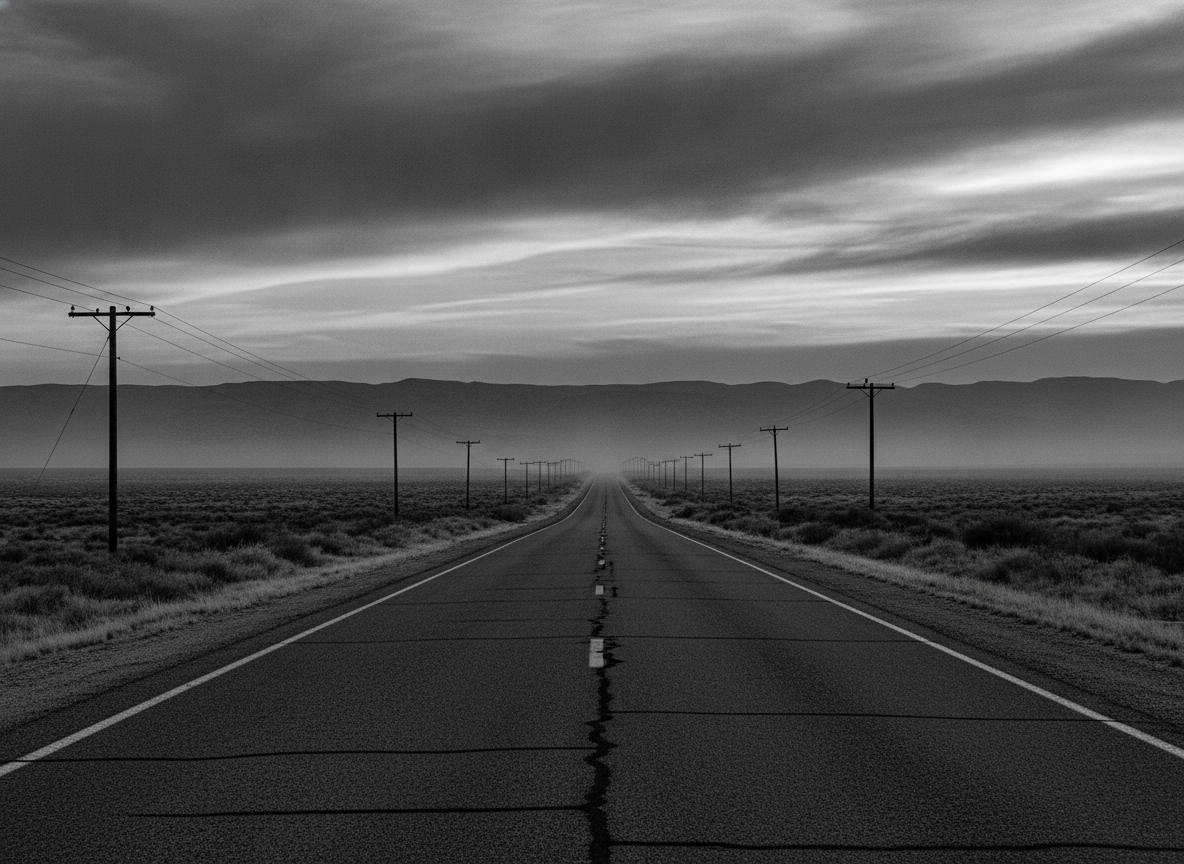
The open road, the railroad line, and the working South, the ground Cash's music grows from.From the Cotton Fields to the American Recordings
The Story
Cash's life reads like one of his own ballads: hard work, hard living, redemption, and a long, weathered final act that sealed his legend.
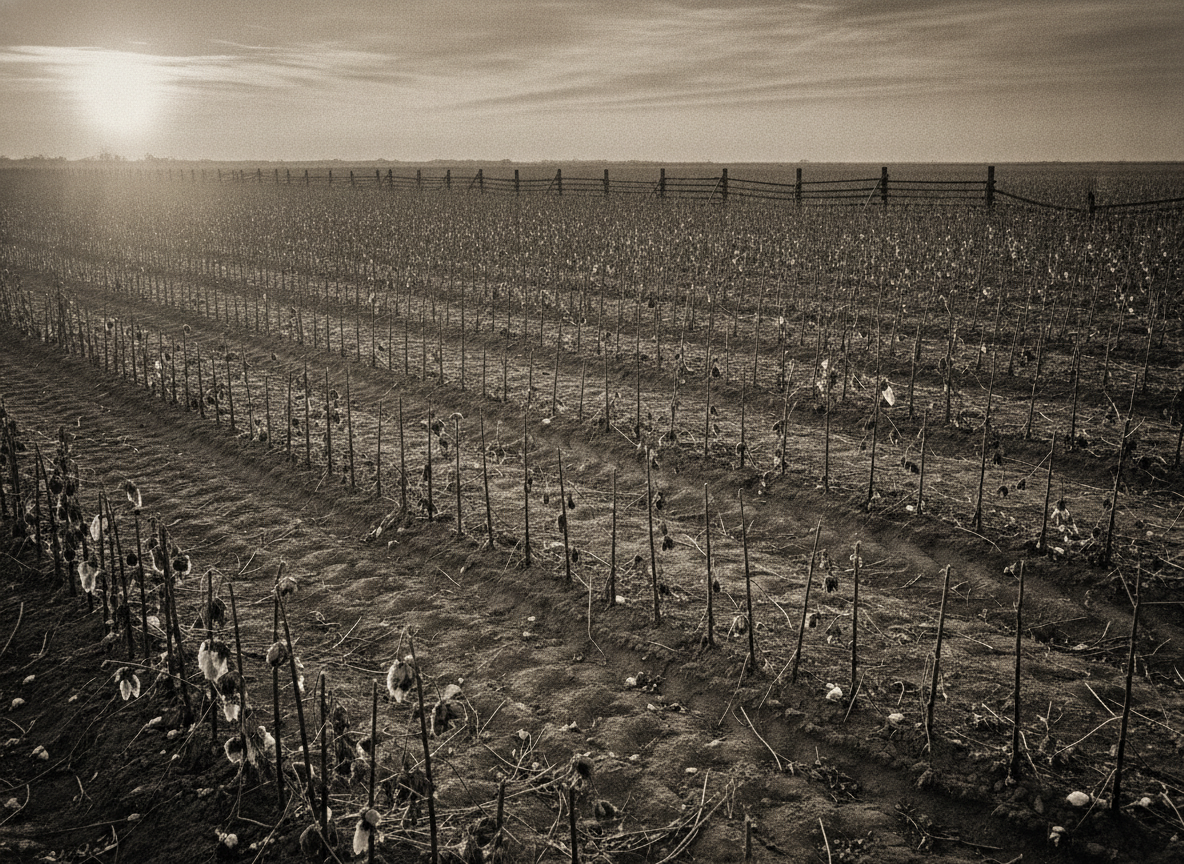
Kingsland and Dyess, Arkansas, the Depression-era farm country that shaped him.
1955
Sun Records
Cash auditioned for Sam Phillips in Memphis and cut his first sides with the Tennessee Two. "Cry! Cry! Cry!" and then "Folsom Prison Blues" and "I Walk the Line" announced a stark new sound built on a chugging, boom-chicka rhythm.
1958–1963
Columbia and stardom
Moving to Columbia Records, Cash widened his ambition with concept records and folk material. "Ring of Fire," co-written with June Carter, became a signature hit and cemented him as a national star.
Mid-1960s
The outlaw persona
Fame came with a punishing amphetamine habit that nearly destroyed him. The Man in Black image took hold, a figure who stood with the poor and the imprisoned, even as his own life spun toward the edge.
1968–1969
The prison concerts
Newly sober and newly married to June Carter, Cash recorded two blazing live albums inside Folsom and San Quentin prisons. Raw, funny, and electric, they became the biggest triumphs of his career.
1969–1971
Network television
The Johnny Cash Show brought him into living rooms across America and onto the same stage as Bob Dylan, showcasing his range and his generosity toward younger songwriters.
1980s
The wilderness years
Tastes shifted and the hits dried up. Cash kept working, joined the country supergroup the Highwaymen, but was eventually dropped by his label, seemingly a legend in decline.
1994–2003
The American renaissance
Producer Rick Rubin stripped him down to voice and guitar for the American Recordings series. Spare, haunted, and utterly honest, these late albums, capped by "Hurt," made him vital again right up to his death in 2003.
Four Songs, One Education
Start Here
Cash's catalog is long and deep. These four songs are the fastest way to grasp the whole man, from the young Sun rockabilly to the shattered late-career confession. Watch in order.
01 · The Signature
"Folsom Prison Blues" (1955)
The boom-chicka train rhythm, the flat menace in his voice, and a narrator hard-worn and full of regret. The song that made him, and the reason the prison concerts felt like coming home.
02 · The Vow
"I Walk the Line" (1956)
A love song built as a promise, its key changing with every verse. Plainspoken and unshakable, it is the sound of a young man determined to hold himself together.
03 · The Hit
"Ring of Fire" (1963)
The mariachi horns, the surging melody, and a lyric about falling helplessly in love, co-written by June Carter. His biggest crossover and one of the most recognizable songs in American music.
04 · The Farewell
"Hurt" (2002)
An old man in a wrecked body, reckoning with a whole life in four minutes. His cover of the Nine Inch Nails song became a devastating late masterpiece and one of the great final statements in music.
The Landmark Records
The Albums 5 to start with
Cash released dozens of studio and live albums across five decades. These five are the pillars, spanning the young Sun rockabilly, the epochal prison concerts, and the stark late renaissance. The blue-topped card is the best place to begin.
1957
With His Hot and Blue Guitar
His debut LP for Sun Records, and the birth of the sound. "Folsom Prison Blues" and "I Walk the Line" sit alongside early gospel and rockabilly, all riding the chugging boom-chicka rhythm of the Tennessee Two.
The comeback triumph and a perfect place to start. Recorded live for the inmates of Folsom, it is loose, defiant, and electric, the sound of an artist and an audience meeting each other exactly where they are.
The even bigger follow-up, capturing another prison crowd at fever pitch. It gave him the unlikely hit "A Boy Named Sue" and confirmed the live-behind-bars records as the peak of his popular success.
Just a man and a guitar in a living room. Rick Rubin stripped everything away, and the resulting record, all gravity and confession, launched the most improbable late-career revival in popular music.
The final album released in his lifetime, and its emotional summit. Home to "Hurt" and the title-track reckoning, it is the sound of a man staring down mortality with total, unflinching honesty.
Two YouTube Music setlists: a First Listen of the signature songs to bring you in, and a Deep Cuts set of the roots, rambles, and late-career confessions for when you want to sink in. (Ideally, though, hear the prison albums whole.) Hit the button on either card to play it.
Cash was a solo star, but his sound was made by a tight circle: the clattering rhythm section that became his signature, the producers who bookended his career, and the woman who steadied his life.
The prison stage and the boom-chicka rhythm, the machinery behind the myth.
The Tennessee Two / ThreeBacking bandLuther Perkins on the muted lead guitar, Marshall Grant on upright bass, and later W.S. Holland on drums, the trio whose chugging boom-chicka rhythm defined the Cash sound
Sam PhillipsProducer, Sun RecordsThe Memphis visionary who discovered him, recorded the early hits, and captured that spare, rocking rockabilly template
Rick RubinProducer, American RecordingsStripped Cash back to voice and guitar in the 1990s and produced the stark late-career series that made him vital again
June Carter CashSinger, songwriter, wifeOf the Carter Family, she co-wrote "Ring of Fire," sang and toured with him for decades, and is widely credited with helping him get sober
Bob JohnstonProducerProduced the era-defining live records At Folsom Prison and At San Quentin, capturing the raw energy of the prison crowds
The Roots of the Sound
Influences
Cash grew up on the radio and the hymnal, absorbing the singing brakeman's blue yodels, the plainspoken heartbreak of honky-tonk, and the mountain harmonies of country's first family. Here is where it started.
Country
Jimmie Rodgers
The Singing Brakeman and the founding father of country music. His railroad songs and blue yodels ran straight into Cash's love of trains, ramblers, and the working man.
Country music's first family, whose mountain hymns and ballads Cash absorbed young. He would later marry into the family through June Carter and record with them for years.
The plainspoken heartbreak and economy of Williams's writing was a lifelong model. Cash covered him and chased that same directness of feeling in his own songs.
A peer as much as an influence. Cash championed Dylan early, traded songs and admiration with him, and duetted on Nashville Skyline, deepening his own turn toward folk material.
Cash was a natural storyteller and a candid, self-aware subject, as comfortable talking about his faith and his failings as about his music. His filmed conversations are worth seeking out.
Interview · Archive
Cash, In Conversation
Raw archival footage of Cash speaking plainly about his life, his work, and his beliefs. Behind the Man in Black image was a thoughtful, disarmingly honest man who never dressed up his own story.
Interview · Documentary
The Filmed Portraits
From the 1969 network television show to later documentary profiles and the biopic Walk the Line, Cash's life has been captured on film again and again, with extended interview footage throughout. Search YouTube for clips and conversations.
Once the prison albums and the American Recordings have you, Cash's world opens into decades of concept records, gospel, and collaboration.
The American Recordings series. six stark, Rubin-produced albums (some released after his death) that stand among the finest work of his life, full of unexpected covers and hymns.
The concept records. ambitious song cycles like Bitter Tears, about the plight of Native Americans, and Ride This Train, showing a socially conscious artist willing to take real risks.
The Highwaymen. his outlaw-country supergroup with Waylon Jennings, Willie Nelson, and Kris Kristofferson, a loose, warm meeting of four legends.
The films. the biopic Walk the Line and various documentaries are the best filmed windows into the man, the marriage, and the myth.
The Way to Listen
Do yourself one favor: put on At Folsom Prison from start to finish, then American IV: The Man Comes Around. Hear the young man and the old man back to back. Same voice, same honesty, a whole life stretched between them.