How two brothers from the Clinch Mountains of Virginia turned mournful Baptist harmony and clawhammer banjo into one of the founding sounds of bluegrass, a music as old as the hills and as sharp as a winter wind.
The Short Version
Who Were They?
The Stanley Brothers were Carter Stanley (1925 to 1966) and Ralph Stanley (1927 to 2016), a singing and picking duo from Dickenson County in far southwestern Virginia. Backed by their band the Clinch Mountain Boys, they were among the first and most important acts to shape bluegrass in the years just after Bill Monroe invented it, and their sound carried the raw, unvarnished feeling of the mountains they came from.
Two things make them singular. First, the harmony: Carter's warm lead and Ralph's keening tenor built a close, sorrowful blend that became a template for brother-duet bluegrass. Second, the roots: rather than smoothing their music toward the mainstream, the Stanleys leaned into old Primitive Baptist hymns, ancient ballads, and Ralph's stark clawhammer banjo, keeping bluegrass tied to its oldest sources.
Carter died young, in 1966, but Ralph carried the name forward for another fifty years and found a whole new audience late in life through the film O Brother, Where Art Thou?. To understand where bluegrass comes from, you start here.
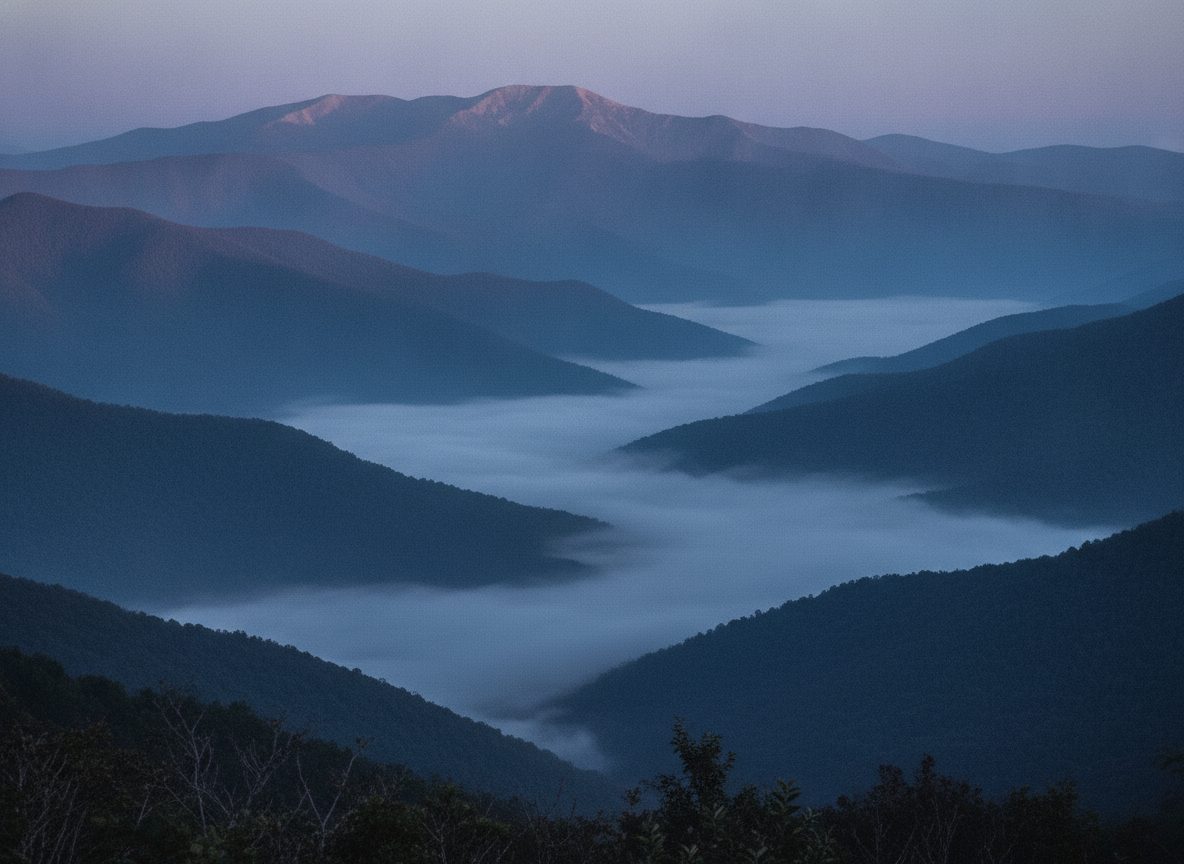
The Clinch Mountains of southwestern Virginia, the ground the Stanley Brothers' music grows from.From a Virginia Farm to the Founders of Bluegrass
The Story
The Stanley Brothers grew up on a farm in the Clinch Mountains, singing the shape-note hymns of the Primitive Baptist church and the old ballads their mother played on the banjo. When they turned that upbringing into a professional act, they helped define what bluegrass would sound like at its most traditional.
Live radio and schoolhouse shows across the mountain South, where the Stanleys built their following.
1946
The Clinch Mountain Boys
Home from World War II, Carter and Ralph formed the Clinch Mountain Boys and landed a spot on radio station WCYB in Bristol, whose Farm and Fun Time program carried their music across the Appalachian coalfields.
1947–1948
The first records
The band cut its earliest sides for the small Rich-R-Tone label, including the original "Molly and Tenbrooks," a sign of how closely they were listening to Bill Monroe even as they forged their own darker sound.
1949–1952
The Columbia years
Signed to Columbia Records, the Stanleys recorded some of their most enduring music, from "The White Dove" to "The Lonesome River," establishing the aching harmony and gospel feeling that would define them.
1953–1958
The Mercury sessions
A move to Mercury brought a run of classics, including "Angel Band" and "Rank Stranger," widely held to be the artistic peak of the duo and a high-water mark for traditional bluegrass.
1958–1965
The Starday and King era
Recording prolifically for Starday and King, the brothers reached back toward old-time sound, featuring Ralph's clawhammer banjo and a deep well of mountain gospel as the folk revival brought them new listeners.
1966
Carter's death
Carter Stanley died in December 1966 at only forty-one. The partnership that had defined the group for two decades was over, and Ralph faced the question of whether to carry on alone.
1967 onward
Ralph carries the name
Ralph kept the Clinch Mountain Boys going for another half century, mentoring young singers, deepening the old-time repertoire, and reaching a vast new audience in 2000 through O Brother, Where Art Thou?.
Four Songs, One Education
Start Here
The Stanley catalog is deep and scattered across labels and decades. These four performances are the fastest way to grasp the range, from close harmony to solo mountain banjo to unaccompanied gospel. Watch in order.
01 · The Harmony
"The Lonesome River"
The purest example of the brother blend: Carter's steady lead and Ralph's high tenor winding together over a mournful melody. The template for everything that came after.
02 · The Hymn
"Angel Band"
A gospel standard the Stanleys made their own, later carried to millions by the O Brother soundtrack. Warm, consoling, and rooted in the Primitive Baptist tradition they grew up singing.
03 · The Banjo
"Clinch Mountain Backstep"
An instrumental that shows Ralph's old-time banjo at its sharpest, driving and modal, a direct line back to the mountain music that predates bluegrass itself.
04 · The Ballad
"Rank Stranger"
A haunted meditation on returning home to find everyone gone, sung with a chilling loneliness that captures the deepest feeling in the Stanley sound.
The Landmark Collections
The Albums 5 to start with
The Stanley Brothers recorded in the era of singles, before the album was king, so their catalog lives on today mostly through label collections and anthologies. These five gather the essential recordings. The blue-topped card is the best place to begin.
1949–1952
The Complete Columbia Stanley Brothers
The Columbia sides that first made their name, including "The White Dove," "The Lonesome River," and "The Fields Have Turned Brown." Early, raw, and full of the harmony that defined them.
The artistic summit, and a perfect place to start. The Mercury era brought "Angel Band," "Rank Stranger," and some of the finest close-harmony singing in all of bluegrass.
The full Mercury run with the Clinch Mountain Boys, deeper than the highlights set. For anyone who falls for the Mercury sound, this is the whole story in one place.
The instrumental heart of the later years, where Ralph's old-time banjo shines. "Clinch Mountain Backstep" and the picking tunes that show the band's mountain roots most plainly.
The single-disc overview: a compact, well-chosen survey that runs across the labels and the years. If you want one collection that covers the essentials, begin with this.
Two YouTube Music setlists: a First Listen of the signature songs to bring you in, and a Deep Cuts set of the gospel numbers and instrumentals for when you want to sink in. (Ideally, though, hear these collections whole.) Hit the button on either card to play it.
At the center were two brothers, but the Stanley sound was carried by the Clinch Mountain Boys, a rotating band of gifted mountain musicians, and Ralph's long solo career kept the tradition alive for decades after Carter was gone.
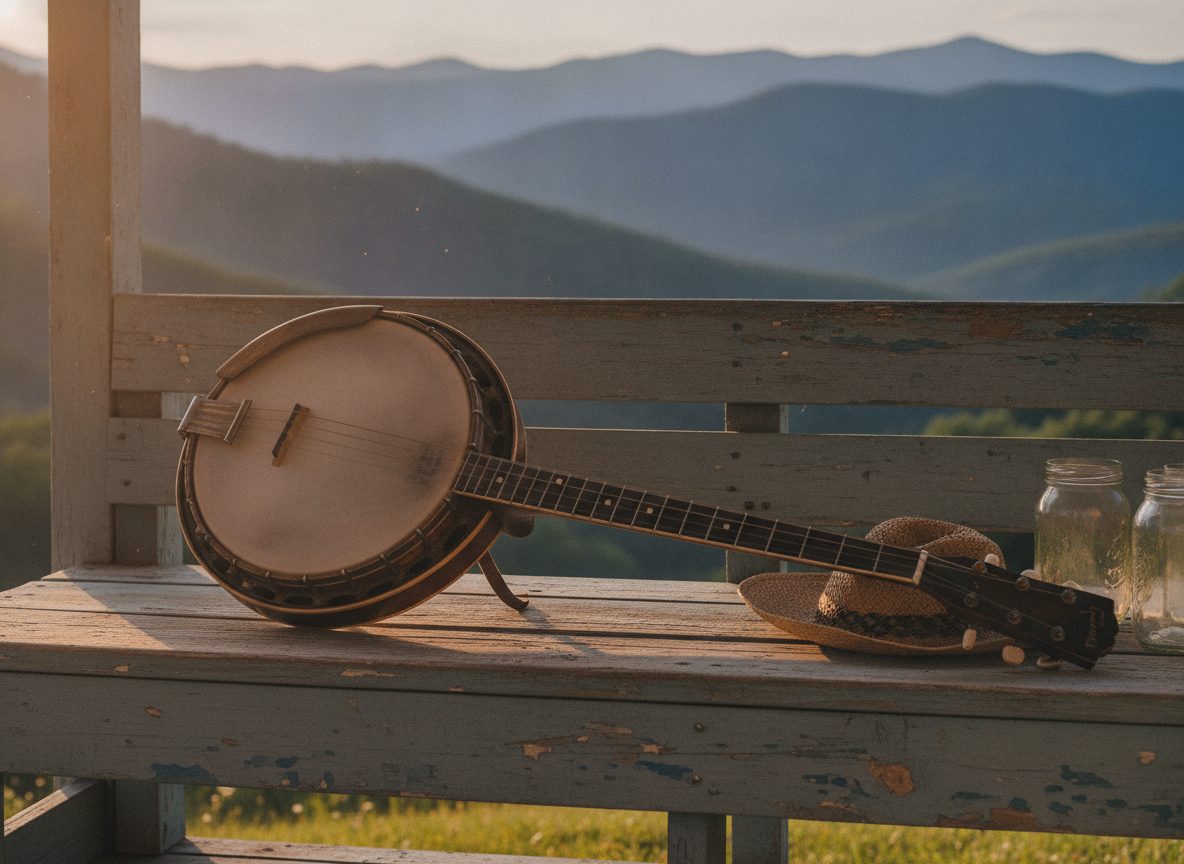
Ralph's old-time banjo tied the music to the oldest mountain sources.
Carter StanleyGuitar / lead vocalThe elder brother and chief songwriter, whose warm lead voice and steady rhythm guitar anchored the duo until his death in 1966
Ralph StanleyBanjo / tenor vocalThe younger brother, whose keening tenor and old-time clawhammer and three-finger banjo defined the sound; he later won solo fame and a Grammy through O Brother, Where Art Thou?
The Clinch Mountain BoysBacking bandThe ever-evolving group behind the brothers, a proving ground for mandolin, fiddle, and bass players across the decades of the band's life
Pee Wee LambertMandolin / tenorAn early Clinch Mountain Boy whose Monroe-styled mandolin and high harmony shaped the classic Columbia-era sound
George ShufflerGuitar / bassA longtime sideman known for the crosspicking guitar style he pioneered on the later Starday and King records
The Roots of the Sound
Influences
The Stanley Brothers built their art from the deepest sources of mountain music: the brand-new bluegrass of Bill Monroe, the old family harmony of the Carter Family, the close gospel of the brother duets, and the ancient ballad tradition of Appalachia itself. Here is where it started.
Bluegrass
Bill Monroe
The father of bluegrass and the direct model for the young Stanleys, who studied his sound so closely they were among the first to cover his songs.
Country music's first family, whose plain harmony singing and vast store of mountain songs ran straight into the Stanley Brothers' repertoire and blend.
The Kentucky ballad singer who carried the ancient Appalachian song tradition, the same deep well of mountain music the Stanleys drew their oldest material from.
Carter and Ralph were plainspoken mountain men, and the filmed and recorded record of their music is rich, from vintage television spots to Ralph's long later career of interviews and festival performances.
Interview · Archival
Ralph Stanley, In His Own Words
Ralph Stanley, half of the Stanley Brothers, reflects on the duo and the Appalachian tradition they helped define.
Once the landmark collections have you, the Stanley world opens into decades of recordings, Ralph's long solo career, and the whole family tree of traditional bluegrass.
The King gospel sides. deep collections of the sacred material, where the Primitive Baptist roots of the brothers' singing come through most powerfully.
Ralph Stanley solo. a half century of recordings after Carter, including the a cappella "O Death" that won him a Grammy and introduced him to millions.
O Brother, Where Art Thou?. the 2000 soundtrack that carried "Angel Band" and "O Death" to a huge new audience and sparked a traditional-music revival.
The Clinch Mountain Boys tree. the many singers and pickers who passed through the band, a living lineage that connects the Stanleys to modern bluegrass.
The Way to Listen
Do yourself one favor: put on the Mercury recordings and sit with "Angel Band" and "Rank Stranger" back to back. Then hear Ralph's later "O Death." Let the harmony and the loneliness do their slow work; this is music that rewards a quiet room.