How a dancing showman from Texas picked up one of the first electric guitars, invented the language of modern blues lead playing, and quietly taught B.B. King, Chuck Berry, and everyone who followed how the instrument could sing.
The Short Version
Who Is He?
T-Bone Walker (born Aaron Thibeaux Walker in Linden, Texas, in 1910) was the first great electric blues guitarist, the man who turned a new and unfamiliar instrument into the voice of an entire genre. Raised in the thriving Black music scene of Dallas, he was playing professionally as a teenager, and by the early 1940s he had become one of the first musicians anywhere to make the amplified guitar a lead instrument.
Two things make him singular. First, the sound: his warm, stinging single-note lines and jazzy chord voicings became the blueprint that nearly every blues and rock guitarist has drawn from since. Second, the show: a natural entertainer, he played the guitar behind his head, did the splits, and set the standard for what a blues bandleader could be on stage.
His signature song, "Call It Stormy Monday," is one of the most covered pieces in all of blues. To understand the electric guitar in popular music, you start here.
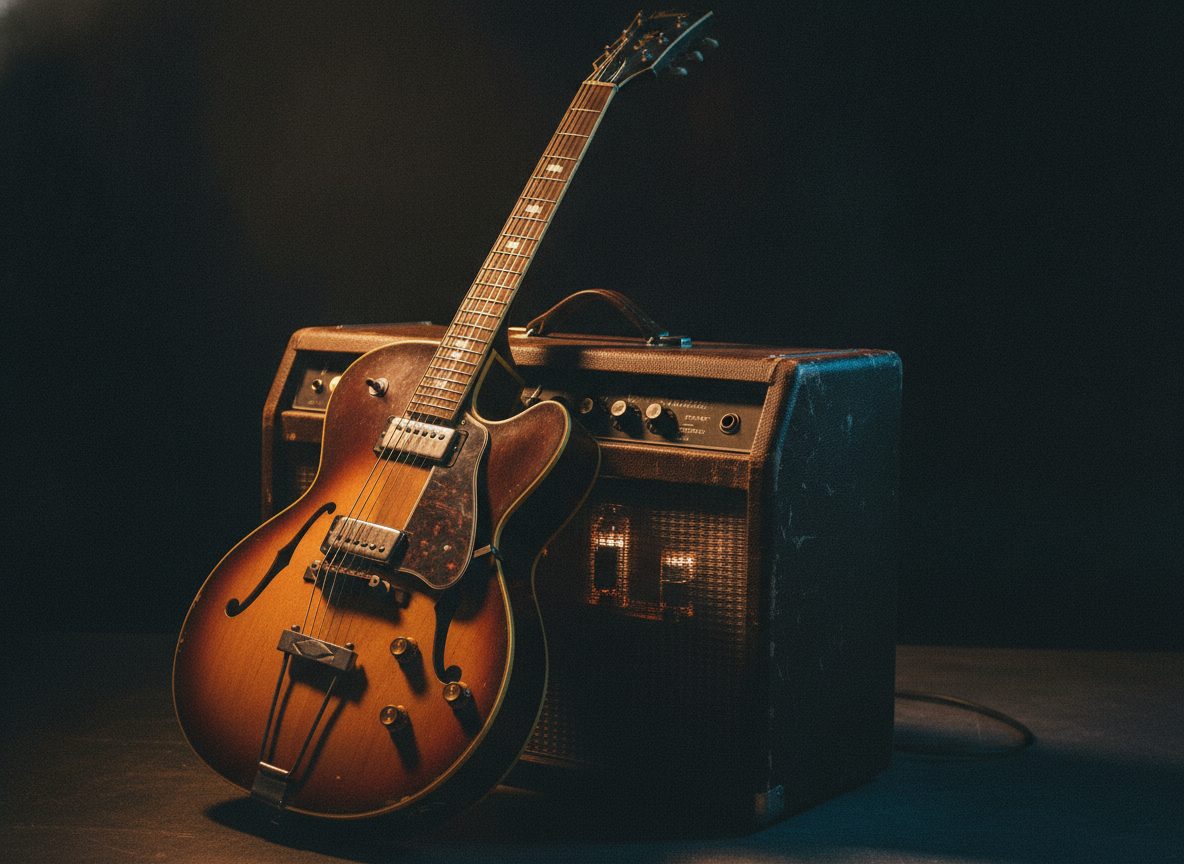
The hollow-body electric and a small amp, the tools T-Bone Walker used to invent a new kind of blues.From the Streets of Dallas to the Clubs of Los Angeles
The Story
Walker's career runs straight through the birth of modern blues, from acoustic Texas street music to the amplified, horn-driven sound that would define the postwar era.
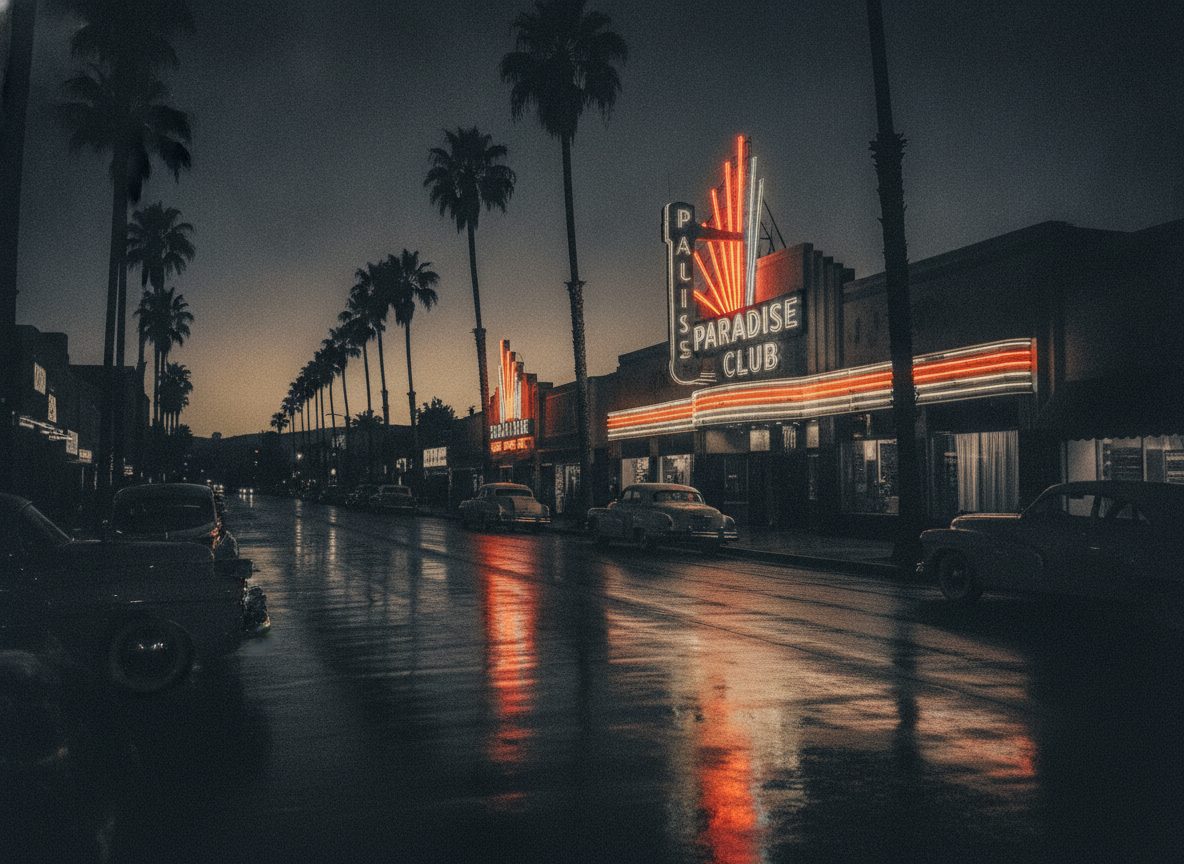
Postwar Los Angeles, where T-Bone Walker's jump blues filled the clubs night after night.
1910s–1920s
A Texas musical childhood
Growing up in Dallas, Walker was steeped in blues from the start. His family knew the great songster Blind Lemon Jefferson, and as a boy Walker led him around town by the arm, absorbing the music firsthand.
1929–1934
First recordings and the road
He cut his first record as "Oak Cliff T-Bone" in 1929, then worked the circuit as a dancer, singer, and guitarist, sharpening the showmanship that would make him famous.
1940–1942
Plugging in
Settling in Los Angeles, Walker became one of the very first bluesmen to feature the electric guitar as a lead voice. His 1942 sides, including "Mean Old World," announced a sound no one had heard before.
1947
"Call It Stormy Monday"
Recorded for the Black & White label, "Call It Stormy Monday (But Tuesday Is Just as Bad)" became his defining song and one of the most influential recordings in blues history.
1950–1954
The Imperial years
A rich run of singles for Imperial Records refined his jazzy, jump-blues style and produced classics like "T-Bone Shuffle" and "Cold, Cold Feeling," spreading his influence coast to coast.
1959
T-Bone Blues
Atlantic Records gathered his best late-fifties sessions into T-Bone Blues, the album that stands as the finest single-disc introduction to his art.
1960s–1975
Elder statesman
As a new generation of rock guitarists cited him as a hero, Walker toured Europe and the festival circuit, won a Grammy in 1971, and was honored as a founding father of the electric blues until his death in 1975.
Four Songs, One Education
Start Here
Walker's catalog is a sea of singles. These four recordings are the fastest way to hear what he invented, from the amplified breakthrough to the slow blues that changed everything. Watch in order.
01 · The Landmark
"Call It Stormy Monday" (1947)
The song that defined the slow blues. Its jazzy chord changes and aching guitar have been covered by nearly everyone in the genre, and it remains the essential T-Bone Walker starting point.
02 · The Breakthrough
"Mean Old World" (1942)
One of the earliest recordings to feature the electric guitar as a lead voice. Here, at the very beginning, is the warm, singing tone that every blues guitarist would chase.
03 · The Groove
"T-Bone Shuffle" (1947)
The swinging, uptempo side of Walker: a horn-driven jump-blues romp that shows why he was as much a dance-floor bandleader as a guitar innovator.
04 · The Master at Work
"Stormy Monday" (Live)
A later performance of his signature blues, showing the phrasing, timing, and effortless authority of the man who wrote the book on electric blues guitar.
The Landmark Records
The Albums 3 to start with
Walker was a singles artist, and his legacy lives in collections that gather those scattered classics. These three are the pillars, and the blue-topped card is the best place to begin.
1959
T-Bone Blues
The essential single-disc introduction. Atlantic assembled Walker's finest late-fifties sessions, with elegant, jazzy playing and a warm band sound, into the album most fans reach for first.
The heart of the catalog. This collection gathers the Imperial-era singles where Walker perfected his sound, including "T-Bone Shuffle" and "Cold, Cold Feeling," the deepest single source of his art.
Where it all began. These are the pioneering early sides, including the original "Call It Stormy Monday" and "Mean Old World," that first put the electric guitar at the front of the blues.
Two YouTube Music setlists: a First Listen of the signature sides to bring you in, and a Deep Cuts set of the swinging and slow-burning tracks for when you want to sink in. Hit the button on either card to search them out.
Walker was a bandleader as much as a guitar hero, and his best records were built on tight horn sections, swinging rhythm players, and the independent labels that captured him at his peak.
The jump-blues bandstand, horns and rhythm behind the guitar, where Walker made his name.
The Horn SectionsJump-blues brassWalker's records rode on swinging saxophone and trumpet arrangements, the big-band and jump-blues foundation that framed his guitar and drove the dance floor
Marl YoungPianist / arrangerAmong the West Coast bandleaders and arrangers who shaped the polished, jazz-inflected sound of Walker's postwar sessions
Imperial RecordsLabel, 1950–1954The Los Angeles independent, home to a wide roster of rhythm-and-blues talent, that released the deep run of singles at the center of his catalog
Black & White RecordsLabel, 1946–1947The independent label that issued "Call It Stormy Monday" and the pioneering early electric sides
Atlantic RecordsLabel, late 1950sThe New York powerhouse that recorded and compiled the sessions gathered on T-Bone Blues
The Roots of the Sound
Influences
Walker's style grew from the acoustic blues of his Texas boyhood and the sophisticated jazz guitar he heard coming up. He fused those worlds into something new. Here is where it started.
Texas Blues
Blind Lemon Jefferson
A family friend and towering early influence. As a boy in Dallas, Walker led the blind songster around town, absorbing the deep well of Texas blues at its source.
The pioneering guitarist and singer whose fluid, single-string soloing on both blues and jazz records showed Walker how expressive the guitar could be as a lead voice.
A Texas and Oklahoma contemporary and fellow electric pioneer. Christian's amplified, horn-like phrasing in the Benny Goodman groups ran parallel to Walker's own leap onto the electric guitar.
The small-group swing that put Charlie Christian's electric guitar in the spotlight, part of the jazz world whose sophistication Walker carried straight into the blues.
Filmed footage of Walker is precious and scarce, but the surviving television and festival clips capture both his easy charm and the showmanship that made him a legend on stage.
Archive · Performance
T-Bone Walker on Film
The best windows into Walker are his filmed performances, from television appearances to European festival dates, where the behind-the-head guitar tricks and effortless timing come alive. Search YouTube for the archival footage.
Blues documentaries and retrospectives regularly return to Walker as the founding father of the electric guitar in the blues, with interview clips and the testimony of the players he shaped. Search YouTube for the profiles.
Once the landmark sides have you, Walker's world opens into decades of singles, live sets, and the vast lineage of players he inspired.
The complete boxed sets. deep anthologies like The Complete Imperial Recordings and the Capitol and Black & White collections gather the scattered singles into one place, the truest way to hear the full sweep of his art.
The line of descent. once you know Walker, listen for him in B.B. King, whose whole approach he shaped, and onward through Chuck Berry, Muddy Waters, and Eric Clapton, who all built on what he started.
The Very Rare sessions. his 1973 collaboration with jazz players shows an elder statesman still stretching, a reminder that Walker never stopped being a musician's musician.
The Stormy Monday lineage. trace his signature song through the countless versions that followed, from the Allman Brothers to Bobby Bland, to hear how far one recording can travel.
The Way to Listen
Do yourself one favor: put on T-Bone Blues from start to finish, then dig into The Complete Imperial Recordings. Listen for the space between the notes. Walker phrased like a horn player, and the silence is half the song.