How a blind street preacher from South Carolina became one of the most dazzling guitarists America ever produced, and how, near the end of his life, a generation of young folk musicians found their way to his door.
The Short Version
Who Is He?
Reverend Gary Davis (born in the South Carolina Piedmont in 1896, died in 1972) was a blind singer, ordained Baptist minister, and one of the towering fingerpicking guitarists of the twentieth century. Blind from infancy, he taught himself a guitar style of astonishing complexity, weaving bass, melody, and ragtime syncopation into music that sounds like two players at once.
Two things make him singular. First, the hands: his ragtime-rooted Piedmont fingerpicking is still studied note for note by guitarists the world over. Second, the calling: after his ordination in the 1930s he mostly refused to record secular blues, pouring his virtuosity into gospel, and spent years preaching and playing on the sidewalks of Harlem.
Rediscovered during the folk revival of the late 1950s and 1960s, he became a revered teacher whose students carried his repertoire into rock, folk, and beyond. To understand American acoustic guitar, you start here.
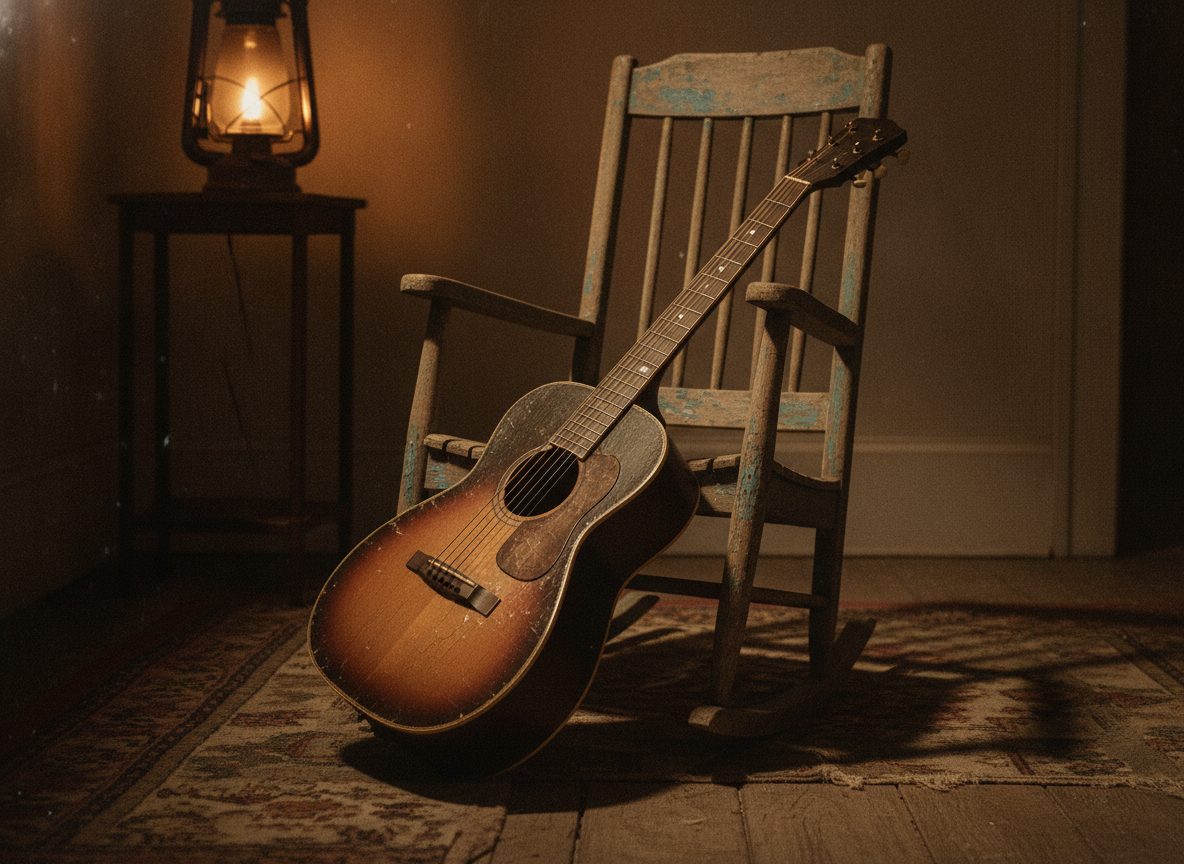
The parlor guitar and the front-porch tradition, the ground Davis's music grows from.From a Carolina Sidewalk to a Harlem Pulpit
The Story
Davis's life runs from rural poverty and the streets to a late, hard-won recognition as a master, carried aloft by the young musicians who sought him out as a teacher.
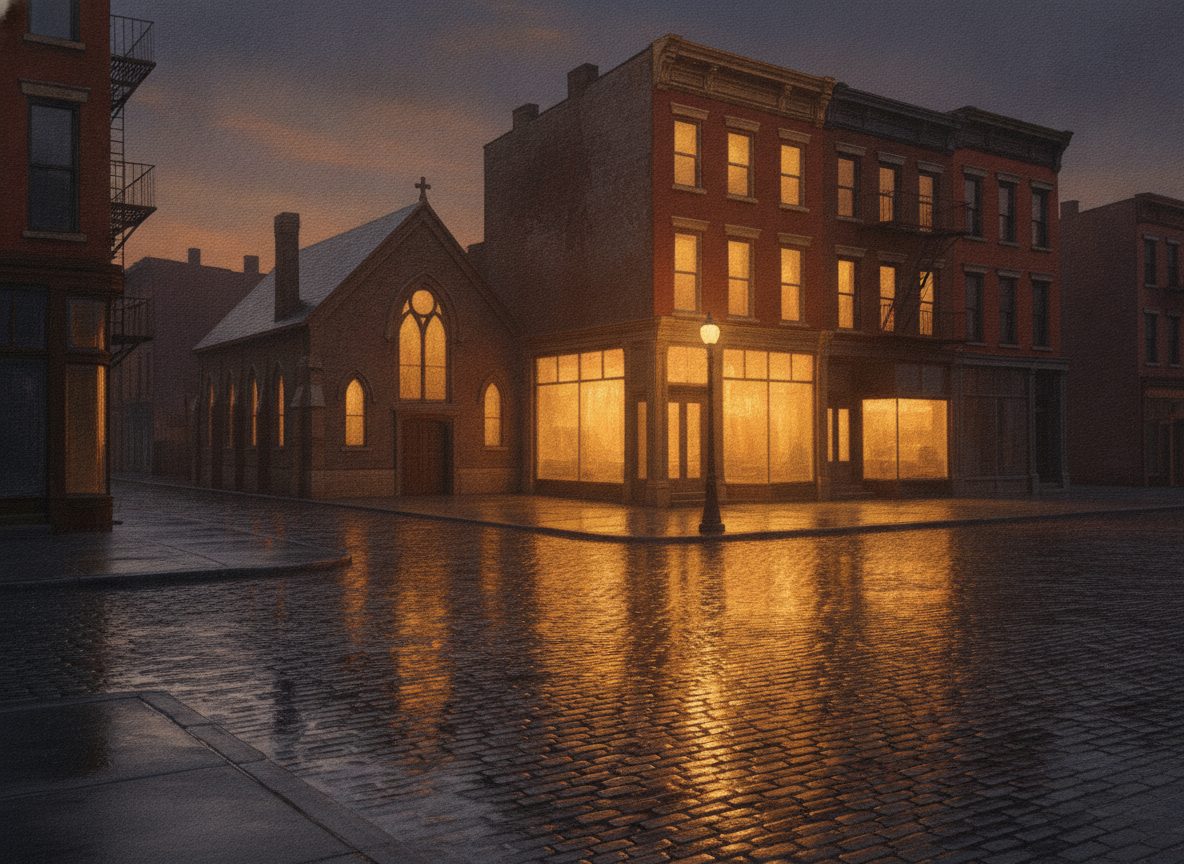
Harlem street corners and storefront churches, where Davis preached and played for years.
1896
Born in the Piedmont
Born in Laurens County, South Carolina, and blind from an early age, Davis grew up inside the Carolina string-band and ragtime tradition, absorbing a regional fingerpicking style that would become known as Piedmont blues.
1920s
The Durham years
He settled around Durham, North Carolina, a hub of the East Coast blues scene, playing on the streets and mentoring younger guitarists in the tight, ragged-time Piedmont style.
1935
First recordings
Davis made his earliest sides in New York in 1935. Already an ordained minister, he leaned toward gospel material, a choice that would shape the rest of his recorded life.
1940s
To Harlem
He moved to New York and became a familiar figure preaching and playing on Harlem sidewalks, earning the name by which he is still known: the Harlem Street Singer.
1960
Harlem Street Singer
His landmark solo album for Prestige's Bluesville label captured his gospel repertoire and blazing technique in full, and became the record that introduced him to the folk-revival audience.
1960s
The teacher
Young players made pilgrimages to his home for lessons. Stefan Grossman, Jorma Kaukonen, David Bromberg, and many others learned directly from him, spreading his style far beyond the church.
1965
Newport and the festival circuit
He appeared at the Newport Folk Festival and toured widely, at last a celebrated master, decades after he first picked up a guitar. He kept teaching and performing until his death in 1972.
Four Recordings, One Education
Start Here
Davis's genius lives in the sound of the guitar itself. These four recordings are the fastest way to hear the range, from gospel thunder to sly, syncopated ragtime. Listen in order.
01 · The Sermon
"Death Don't Have No Mercy"
His most haunting piece, a slow, unflinching meditation on mortality carried by a grave voice and a guitar that answers every line. The essential Davis starting point.
02 · The Anthem
"Samson and Delilah (If I Had My Way)"
The rolling gospel showpiece later carried into rock by the Grateful Dead and others. Proof of how a single Davis arrangement could ripple across generations.
03 · The Showpiece
"I Am the Light of This World"
A dazzling display of ragtime-gospel fingerpicking from Harlem Street Singer, the guitar dancing under the melody. Listen to how many voices seem to come from one instrument.
04 · The Rag
"Candy Man"
The playful, winking ragtime number that became a folk-revival standard and a rite of passage for fingerpickers. Davis's warmth and humor in a single tune.
The Landmark Records
The Albums 5 to start with
Davis's catalogue is a thicket of reissues and archival collections. These five verified records are the pillars, the ones that best capture his voice and his hands. The gold-topped card is the best place to begin.
1935–1949
The Complete Early Recordings
His first sessions, from the raw 1935 New York sides onward. The younger Davis, closer to his street-corner and ragtime roots, before the folk revival found him.
A vivid mid-career set that balances his gospel calling with flashes of secular fire, including the ragtime and blues pieces he usually kept close to the vest.
The masterpiece, and the perfect place to start. A solo gospel album of overwhelming force and grace, capturing his voice and guitar at their peak in a single unbroken session.
A rare instrumental showcase. With the sermons set aside, this record is pure technique, an intimate tour of the ragtime, blues, and marches locked inside his hands.
Davis on the festival stage at the height of the revival, playing to the young audience that had rediscovered him. The energy of the live performance and the roar of the crowd.
Two listening sets: a First Listen of the signature gospel and ragtime pieces to bring you in, and a Deep Cuts set for when you want to sink into the corners of his repertoire. (Ideally, though, hear Harlem Street Singer whole.) Hit the button on either card to open his music on YouTube Music.
Davis mostly recorded alone, one man and one guitar. His deepest mark on music came through teaching: the young folk-revival musicians who sat at his feet and carried his style into the wider world.
The ordained minister taught by hand, passing his repertoire to a generation of students.
Stefan GrossmanStudentHis most devoted pupil, who studied Davis's technique intensively and later documented and taught the repertoire to guitarists worldwide
Jorma KaukonenStudentThe Jefferson Airplane and Hot Tuna guitarist, whose acoustic fingerstyle is steeped in what he learned from Davis's playing
David BrombergStudent & helperThe multi-instrumentalist who studied with Davis and helped look after him, later a celebrated performer in his own right
Ry CooderStudentThe roots-music guitarist and film composer who absorbed Davis's fingerpicking as a young player and championed his music
Peter, Paul and MaryInterpretersTheir recording of Davis's "If I Had My Way (Samson and Delilah)" brought him songwriting royalties that reportedly helped him buy a house
The Roots of the Sound
Influences
Davis grew out of the deep tradition of East Coast fingerpicking, ragtime guitar, and sanctified gospel song. These are the sounds and players that shaped the world he came from.
Ragtime
Blind Blake
The dazzling ragtime guitarist whose rolling, syncopated fingerpicking set the standard for the East Coast style that Davis pushed to new heights.
The wildly popular Texas songster of the 1920s, whose recordings spread widely and helped define the sound and reach of the country blues that Davis knew.
Davis loved to talk, teach, and testify, and much of what survives on film comes from the home lessons and festival sets of his final decade. His archival footage is worth seeking out.
Archive · Performance
The Filmed Lessons and Sets
Surviving footage catches Davis at home and on festival stages in the 1960s, narrating his technique between songs and showing exactly how his two-handed style worked.
Archive · Documentary
Harlem Street Singer, on Film
The documentary Harlem Street Singer and other portraits gather the memories of his students and the story of his rediscovery, with performance and interview footage throughout. Search YouTube for clips and conversations.
Once the landmark records have you, Davis's world opens into decades of archival tapes, home lessons, and the many artists who carried his songs onward.
The home and church tapes. collections like At Home and Church, 1962-1967 and If I Had My Way: Early Home Recordings catch him relaxed, teaching, and testifying between numbers.
The instrumentals. The Guitar and Banjo of Reverend Gary Davis strips away the sermons and lets you study the pure mechanics of his playing.
The heirs. hear his songs travel: the Grateful Dead and Jerry Garcia carried "Samson and Delilah" and "Death Don't Have No Mercy" into rock, while Bob Dylan and Doc Watson drew on the same fingerpicking wellspring.
The instruction. Stefan Grossman's transcriptions and lesson materials remain the deepest map anyone has made of how Davis actually played.
The Way to Listen
Do yourself one favor: put on Harlem Street Singer from start to finish, in one sitting, on headphones. Then follow it with the instrumentals. Listen to the guitar as a second voice, and you will hear why players still study every note.