A foundational American folk and blues songster and a powerful twelve-string guitarist, recorded by the folklorists John and Alan Lomax, whose vast repertoire of songs entered the standard American canon and shaped generations of folk and rock musicians who followed.
The Short Version
Who Was He?
Lead Belly (born Huddie Ledbetter near Mooringsport, Louisiana, around 1888) was a songster and guitarist who carried an enormous repertoire of American folk song and played it on a booming twelve-string guitar. He worked as a traveling musician across Louisiana and Texas in the early twentieth century, absorbing field hollers, ballads, dance tunes, reels, and blues, and he became one of the most important sources of American vernacular song ever recorded.
Two things make him central. First, the repertoire: songs he performed and recorded, including "Goodnight Irene," "Midnight Special," "Cotton Fields," and "The Rock Island Line," became folk standards recorded by countless later artists. Second, the instrument: his twelve-string guitar, tuned low and played with a driving, rhythmic bass, gave his recordings a full, orchestral sound that few solo players matched.
Beginning in the 1930s he was recorded extensively by John and Alan Lomax for the Library of Congress, and later for commercial labels and Moses Asch's Folkways. He remains a bridge between the deep roots of Southern folk music and the urban folk revival that followed his death in 1949.
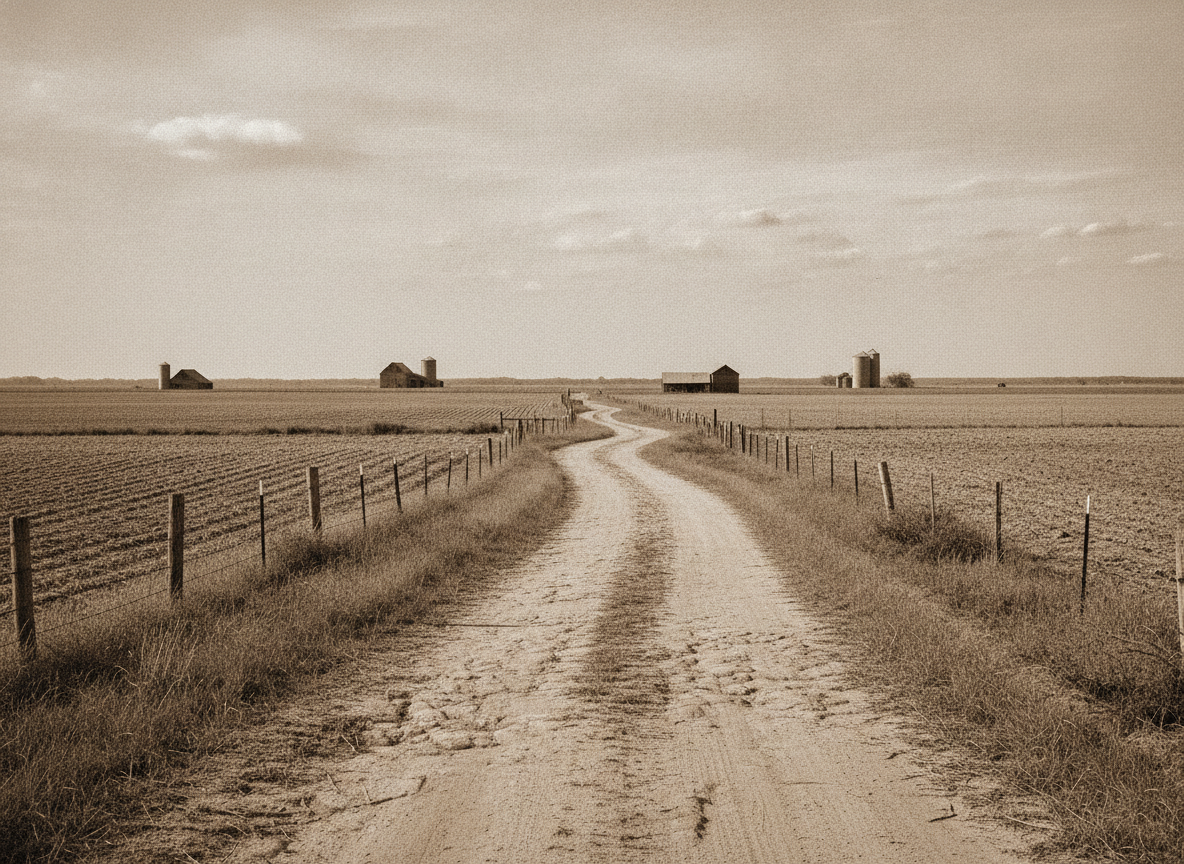
The Louisiana and Texas country roads where a young songster gathered his repertoire.From The Louisiana Bottoms to the Library of Congress
The Story
Lead Belly's life ran from the rural South of the late nineteenth century to the folk clubs and radio studios of mid-century New York, and his music carried that whole span with it.
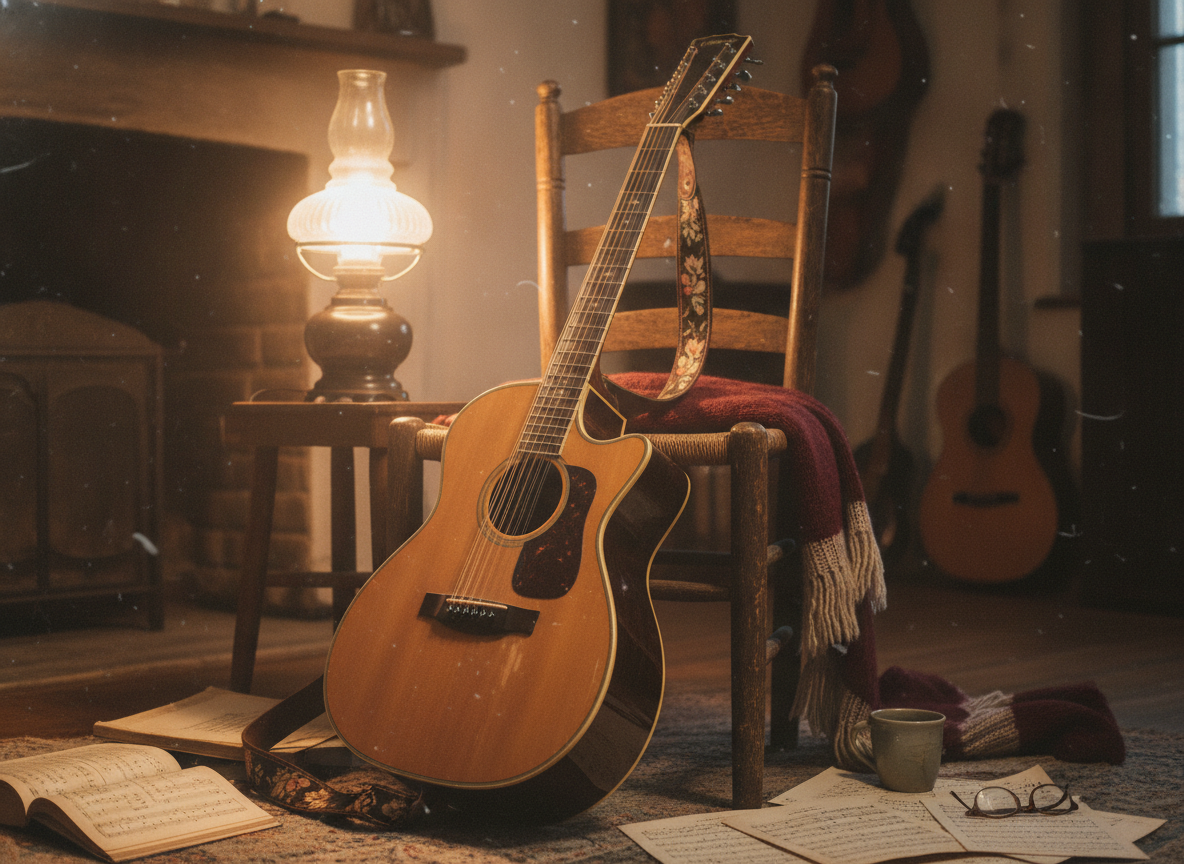
The twelve-string guitar, tuned low and played hard, was the heart of his sound.
c. 1888–1910s
Louisiana and Texas roots
Growing up in the Caddo Lake country on the Louisiana–Texas line, Ledbetter learned accordion, mandolin, and guitar as a boy. As a young man he worked and played across East Texas, absorbing a huge body of folk material and settling on the twelve-string guitar as his signature instrument.
1910s
The Dallas years
Around Dallas he crossed paths with the blues singer and guitarist Blind Lemon Jefferson, and the two reportedly performed together in the city's streets and districts. The encounter deepened his blues vocabulary and his command of the twelve-string.
1933–1935
The Lomax recordings
The folklorists John and Alan Lomax first recorded him in the field for the Library of Congress, capturing his repertoire on portable equipment. They later brought him north, and the recordings introduced his songs to a wide audience for the first time.
1935–1940s
The New York folk scene
Settling in New York, he became a fixture of the emerging urban folk world, performing at concerts, on radio, and alongside younger musicians such as Woody Guthrie and Pete Seeger. He recorded for the American Record Corporation, RCA Victor, and other labels during these years.
1941–1948
The Folkways sessions
He recorded extensively for Moses Asch, whose catalog later became Folkways Records. These sessions preserved a broad cross-section of his repertoire, from children's songs and dance tunes to ballads and blues, and remain a core part of his legacy.
1949
Last sessions and legacy
He died in New York in 1949. Months later, The Weavers took "Goodnight Irene" to the top of the charts, and over the following decades his songs became foundational to the folk revival and to rock, blues, and skiffle musicians on both sides of the Atlantic.
Four Songs, One Education
Start Here
His recorded catalog is deep and spread across many labels. These four songs are the fastest way to hear the range, from the driving twelve-string dance tunes to the tender ballads. Each link opens the song on YouTube.
01 · The Standard
"Goodnight Irene"
His best-known song, a gentle waltz-time ballad that became a number-one hit for The Weavers in 1950 and a permanent fixture of the American songbook. The clearest single introduction to his warm, unhurried side.
A rolling, insistent number built on his rhythmic twelve-string bass runs. It has been recorded by dozens of later artists and shows how much drive a single guitar could carry.
A train song he arranged and popularized that later sparked the British skiffle craze of the 1950s. The accelerating rhythm is a perfect demonstration of his percussive guitar attack.
A haunting traditional ballad he shaped into one of his signature performances, later carried to new audiences by folk and rock artists across the following decades. A showcase for his phrasing and low twelve-string tuning.
Lead Belly recorded before the album era, so his catalog survives as compilations drawn from the Library of Congress, Folkways, and commercial sessions. These five collections are the best doorways in. The highlighted card is where to begin.
Compilation
Lead Belly: The Smithsonian Folkways Collection
The definitive modern anthology, drawing together the breadth of his Folkways recordings across five discs. The most complete single introduction to his repertoire and his twelve-string playing.
Where Did You Sleep Last Night: Lead Belly Legacy, Vol. 1
A well-chosen single-disc Folkways collection gathering many of his signature performances, including the title ballad. A manageable entry point before the larger boxes.
Midnight Special: The Library of Congress Recordings, Vol. 1
Early field recordings made by Alan Lomax, capturing his repertoire in its rawest documented form. Essential listening for the historical roots of the songs.
A focused collection built around his commercial-era sides, foregrounding the instrument that defined his sound. A good way to hear the full-bodied twelve-string in clear fidelity.
A carefully restored single-disc overview tied to the American Epic documentary project, with cleaned-up transfers of key recordings. A polished, approachable survey of the highlights.
Two YouTube Music setlists: a First Listen of the signature songs to bring you in, and a Deep Cuts set of the ballads and dance tunes for when you want to sink in. Hit the button on either card to search and play.
Lead Belly performed largely as a solo artist, accompanying himself on twelve-string guitar. The people who mattered most to his legacy were the folklorists who documented him and the labels that preserved and reissued the recordings.
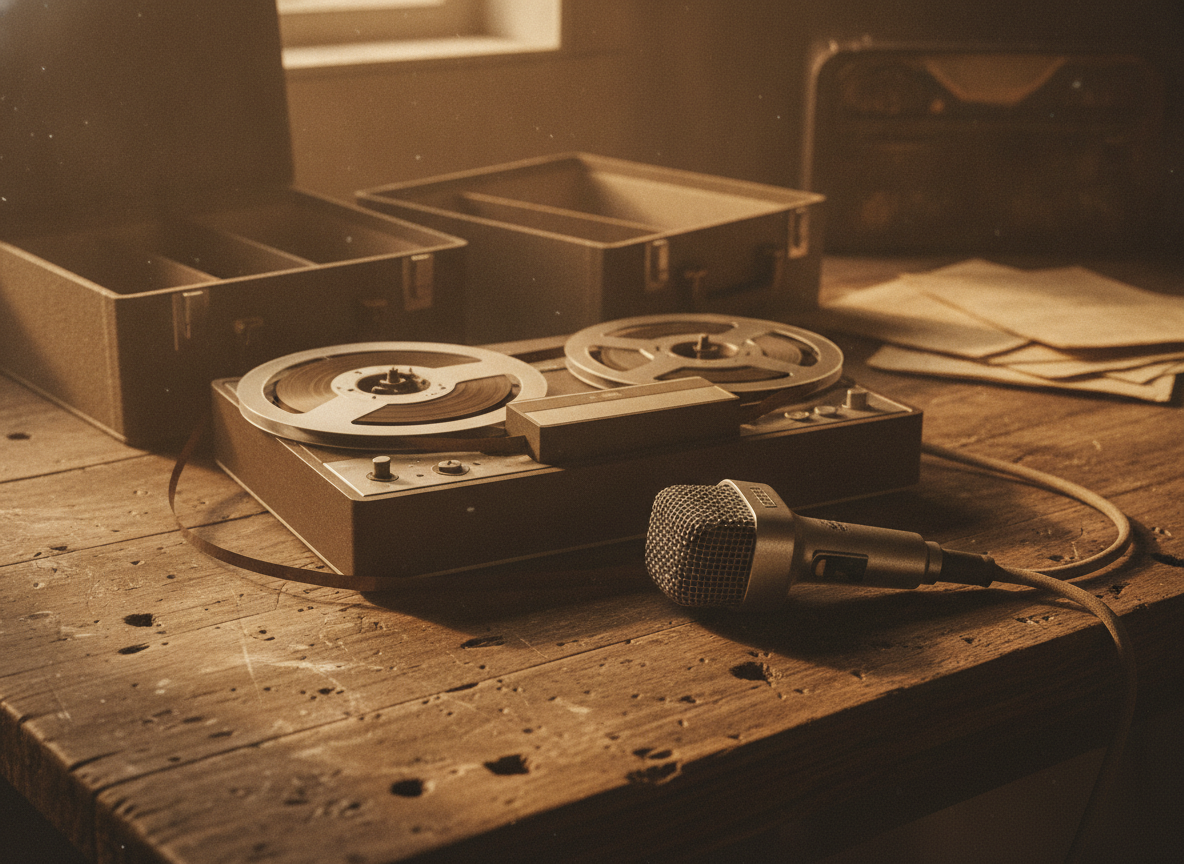
The field and studio recordings that carried his repertoire into the archive.
John LomaxFolkloristMade the first field recordings of Lead Belly for the Library of Congress in the early 1930s and helped bring his music to a national audience
Alan LomaxFolklorist / archivistContinued documenting Lead Belly's repertoire across many sessions, producing recordings that remain foundational to American folk scholarship
Moses AschProducer / label founderRecorded him extensively in the 1940s for the catalog that became Folkways Records, preserving a broad cross-section of his songs
Smithsonian FolkwaysArchive labelMaintains and reissues the Folkways recordings today, including the definitive multi-disc Smithsonian Folkways Collection
The Library of CongressRecording archiveHolds the earliest documented Lead Belly recordings, the source of the Library of Congress Recordings series
The Roots of the Sound
Influences
Lead Belly drew on the deep well of Southern vernacular music and the blues players he encountered on his travels, and he in turn shaped the folk musicians who carried his songs forward. Here is where the music connects.
Blues
Blind Lemon Jefferson
The Texas blues singer and guitarist with whom Lead Belly reportedly performed around Dallas in the 1910s. His intricate playing and blues phrasing left a clear mark on Lead Belly's own style.
A Georgia bluesman and, like Lead Belly, a master of the twelve-string guitar. His fluid, ringing playing represents the same tradition of full-bodied solo twelve-string blues.
A contemporary songster from the same era of Southern folk and blues, whose gentle fingerpicked repertoire runs parallel to Lead Belly's own blend of ballad, blues, and dance tune.
The Dust Bowl balladeer who became a friend and fellow traveler in the New York folk world of the 1940s. The two shared stages and repertoire, and together they helped seed the American folk revival.
Because Lead Belly recorded before the television age, the surviving footage is scarce, but archival film clips, spoken introductions on his recordings, and later documentaries preserve his voice and playing.
Interview · Archival (1939)
Lead Belly on the Blues
Rare 1939 footage of Lead Belly talking about the blues, one of the few surviving recordings of him speaking about his music.
Once the signature songs have you, Lead Belly's world opens into decades of archival recordings and the long trail of artists who carried his repertoire forward.
The Library of Congress Recordings. the multi-volume series of early field recordings made by John and Alan Lomax, the deepest documented source of his repertoire.
Lead Belly's Last Sessions. the extensive 1948 Folkways recordings, an intimate late-career survey of songs, tunings, and spoken introductions in his own voice.
The songs' second lives. "Goodnight Irene," "The Midnight Special," "Cotton Fields," and "The Rock Island Line" became standards recorded by The Weavers, Creedence Clearwater Revival, Lonnie Donegan, and many others.
The Smithsonian Folkways Collection. the definitive modern box set, with restored audio and detailed notes placing each recording in context.
The Way to Listen
Do yourself one favor: put on the Smithsonian Folkways Collection and let it run. Hearing the range of ballads, dance tunes, and blues in sequence is the fastest way to grasp how much of the American songbook passed through one man and one twelve-string guitar.