How a singer from working-class Belfast fused American rhythm and blues with Irish folk and jazz, cut two of the most revered albums of the era, and built one of the longest and most prolific careers in popular music.
The Short Version
Who Is He?
Van Morrison (born George Ivan Morrison in Belfast, Northern Ireland, in 1945) is a singer, songwriter, and multi-instrumentalist whose music draws American R&B, blues, gospel, jazz, and Irish folk into a style often called Celtic soul. He first reached a wide audience as the frontman of the 1960s band Them, then launched a solo career that has run for more than five decades.
Two things make him distinctive. First, the voice: a raw, elastic instrument capable of moving from a whisper to a roar, prone to improvised repetition and wordless vocal phrasing that borrows from jazz and gospel. Second, the range: across dozens of albums he has moved between tight R&B, sprawling acoustic song-suites, big-band swing, and spiritual meditation, rarely settling in one place for long.
He remains a working, recording, and touring musician, and his early albums Astral Weeks and Moondance are regularly cited among the most important records in popular music. To understand the meeting point of soul, folk, and jazz in the rock era, you start here.
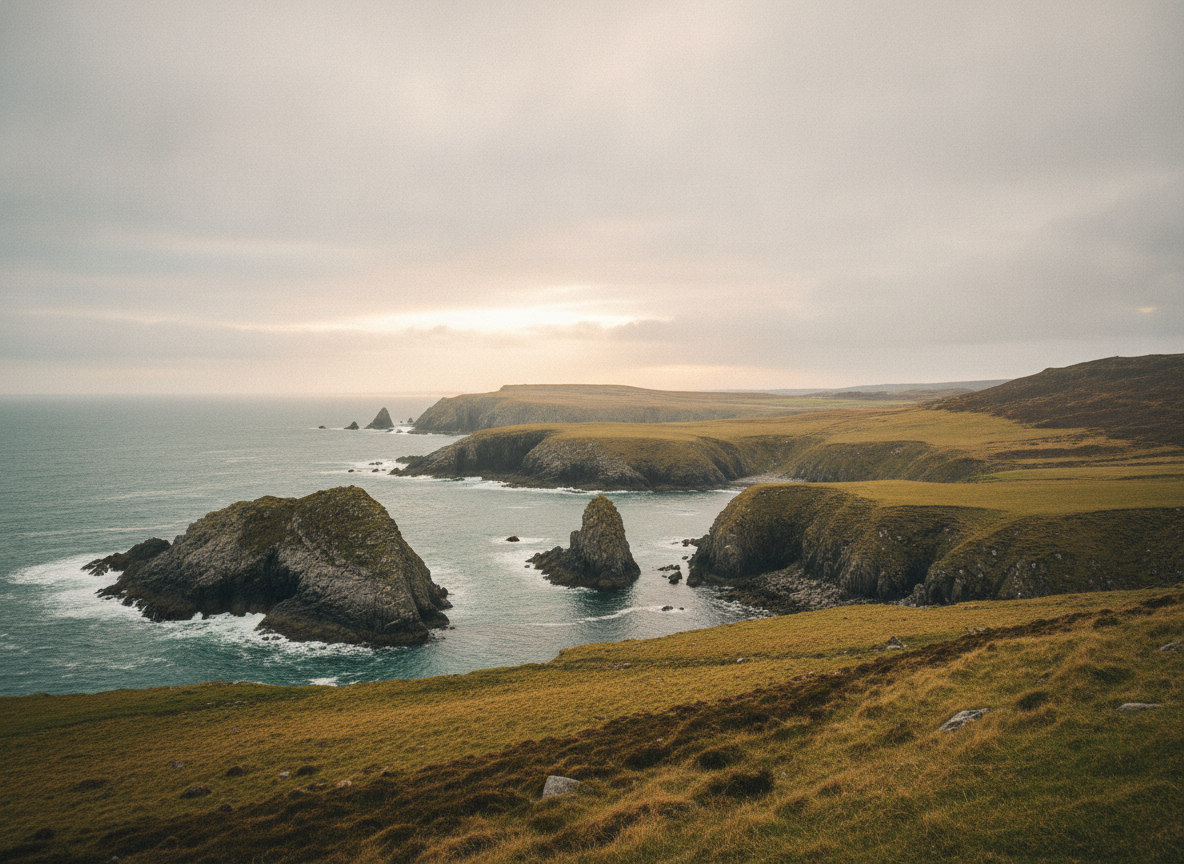
Belfast, the Irish coast, and the American R&B records that shaped a young singer.From a Belfast Showband to a Solo Landmark
The Story
Morrison's career runs from the R&B clubs of 1960s Belfast through a restless solo catalog that has never stopped growing.
The R&B and soul clubs where Them cut their teeth before the solo years began.
1945–1963
Belfast beginnings
Growing up in east Belfast, Morrison absorbed his father's collection of American blues, jazz, and gospel records. He learned guitar, saxophone, and harmonica as a teenager and played in local showbands before forming his own group.
1964–1966
The band Them
As frontman of the R&B group Them, Morrison scored hits with "Baby, Please Don't Go" and "Here Comes the Night," and wrote the garage-rock staple "Gloria." The band was short-lived, but it established him as a commanding vocalist.
1967
Going solo
After Them dissolved, Morrison signed with Bang Records and recorded the hit single "Brown Eyed Girl." Contractual disputes soon followed, but he had arrived as a solo artist.
1968
Astral Weeks
Recorded quickly with a group of jazz session players, Astral Weeks was a radical departure: long, free-flowing acoustic songs with upright bass, strings, and flute. It sold modestly at first but grew into one of the most acclaimed albums ever made.
1970–1974
The classic run
The tighter, soul-driven Moondance brought commercial success, followed by a remarkable streak: His Band and the Street Choir, Tupelo Honey, Saint Dominic's Preview, and the mystical Veedon Fleece. This period defined the mature Van Morrison sound.
1979–1997
The spiritual years
From Into the Music onward, Morrison turned toward more overtly spiritual and jazz-inflected records, exploring Celtic themes, standards, and long instrumental passages while continuing to tour and record steadily.
Ongoing
The prolific career
Across more than forty studio albums, Morrison has kept working at a pace few of his peers match, drawing on skiffle, blues, jazz, and soul. He was inducted into the Rock and Roll Hall of Fame in 1993 and remains active.
Four Songs, One Education
Start Here
Morrison's catalog is deep and varied. These four recordings are the fastest way to grasp the range, from radio-ready pop to the free-flowing Celtic soul that made his name. Watch in order.
01 · The Hit
"Brown Eyed Girl" (1967)
The bright, chiming single that became his signature radio song and one of the most-played tracks in pop history. A perfect three-minute introduction before the deeper waters.
02 · The Standard
"Moondance" (1970)
A swinging, jazz-tinged title track built on an upright-bass walk and a swaying horn arrangement. It shows the soul-and-swing side of Morrison at its most polished.
03 · The Celtic Soul
"Into the Mystic" (1970)
A slow, tidal ballad from Moondance that captures the yearning, folk-and-soul blend at the heart of his best work. Many listeners call it the quintessential Van Morrison song.
04 · The Later Grace
"Have I Told You Lately" (1989)
A warm, gospel-touched ballad from his later catalog that became a standard in its own right, widely covered and a fixture of his live sets.
The Landmark Records
The Albums 6 to start with
Morrison has released more than forty studio albums. These six, drawn from his celebrated early run, are the pillars of the catalog and the best place to begin. The blue-topped cards are where a newcomer should start.
1968
Astral Weeks
Recorded with jazz players in a handful of sessions, this suite of long, acoustic, stream-of-consciousness songs stands apart from everything around it and is routinely ranked among the greatest albums ever made.
The commercial breakthrough and the other essential starting point. Tighter and more soul-driven than its predecessor, it holds "Into the Mystic," "Caravan," and the swinging title track.
An ambitious, varied record that ranges from the buoyant "Jackie Wilson Said" to long, exploratory pieces, showing Morrison stretching his songwriting toward extended form.
A hushed, mystical album inspired by a trip to Ireland, full of pastoral imagery and gentle, jazz-folk arrangements. Long overlooked, it is now regarded as a hidden peak of the catalog.
Two YouTube Music sets: a First Listen of the signature songs to bring you in, and a Deep Cuts set of the longer, immersive pieces for when you want to sink in. (Ideally, though, hear these albums whole.) Hit the button on either card to open a search and play them.
Morrison is a solo artist, but his landmark records were shaped by remarkable players and producers, from the jazz session musicians on Astral Weeks to the touring band that framed his soul years.
The jazz and soul players who gave the records their supple, breathing feel.
Lewis MerensteinProducerProduced Astral Weeks, assembling the jazz session players whose loose, improvisational feel defined the album
Richard DavisUpright bassThe acclaimed jazz bassist whose fluid, melodic playing anchors Astral Weeks and shapes its distinctive sound
Connie KayDrumsDrummer of the Modern Jazz Quartet, he brought a light, swinging touch to the Astral Weeks sessions
Jeff LabesKeyboards / arrangementsArranged and played keys across Moondance, Saint Dominic's Preview, and other early-seventies records
John PlataniaGuitarA key guitarist of the classic run, featured on Moondance, His Band and the Street Choir, and beyond
The Caledonia Soul OrchestraTouring bandMorrison's celebrated mid-seventies live ensemble, captured on the acclaimed concert album It's Too Late to Stop Now
The Roots of the Sound
Influences
Morrison built his art from his father's record collection: American rhythm and blues, gospel, jazz, country, and the folk-blues songsters. Here is where it started.
R&B / Soul
Ray Charles
The blend of gospel fervor, blues, and jazz phrasing that Charles pioneered was a foundational model for Morrison's own vocal approach and his idea of Celtic soul.
The plainspoken heartbreak and economy of Williams's songwriting was among the country and folk sounds in the Morrison household, feeding his sense of song.
The folk-blues songster whose deep well of ballads and work songs, heard on his father's records, shaped Morrison's early love of the American vernacular tradition.
Morrison is famously private and rarely expansive with the press, which makes his longer, reflective conversations worth seeking out.
Interview · In Conversation
Van Morrison, In Conversation
A rare extended talk in which Morrison discusses his craft, his roots in American music, and his long recording career, offering a glimpse of the artist behind a guarded public reputation.
Interview · Archive
The Filmed Portraits
Decades of broadcast interviews, documentary segments, and archival performances trace Morrison's evolution from the Them years to his later spiritual records. Search YouTube for clips and conversations.
Once the early landmarks have you, Morrison's world opens into decades of live recordings, spiritual explorations, and stylistic detours.
It's Too Late to Stop Now. the celebrated 1974 live album with the Caledonia Soul Orchestra, widely rated among the greatest concert recordings ever released.
The spiritual run. records like Common One, Beautiful Vision, and No Guru, No Method, No Teacher follow his turn toward Celtic mysticism and long, meditative arrangements.
The collaborations. albums with Irish traditional group The Chieftains, blues great John Lee Hooker, and organist Georgie Fame show his roots in folk, blues, and jazz.
The Them years. the mid-sixties singles "Gloria," "Here Comes the Night," and "Baby, Please Don't Go" capture Morrison as a young R&B firebrand.
The Way to Listen
Do yourself one favor: put on Astral Weeks from start to finish in a quiet room, then Moondance. The first is a single unbroken mood, the second a set of tight, glowing songs. Together they are the fastest route into Celtic soul.