How an English folk singer who sold almost nothing in his lifetime made three quietly perfect albums, then died at twenty-six, and how those hushed songs slowly grew into some of the most beloved music of the last half century.
The Short Version
Who Was He?
Nick Drake (born in Burma in 1948, raised in the English countryside) was a folk singer-songwriter whose three albums, released between 1969 and 1972, barely registered while he was alive. He played delicately fingerpicked guitar in unusual tunings, sang in a soft, close voice, and wrote songs of aching stillness and beauty that almost no one heard at the time.
Two things make him singular. First, the guitar: intricate, self-invented open tunings that give his music its shimmering, unmistakable feel. Second, the intimacy: a hushed, unhurried voice that seems to be sung to one listener alone, close enough to touch.
He struggled with depression and withdrew from performing, and he died in 1974. In the decades since, admiration for his work has grown steadily until he became a quiet giant, an artist whose songs turn up everywhere and whose influence runs through generations of folk and indie music. To understand English folk of the modern era, you start here.
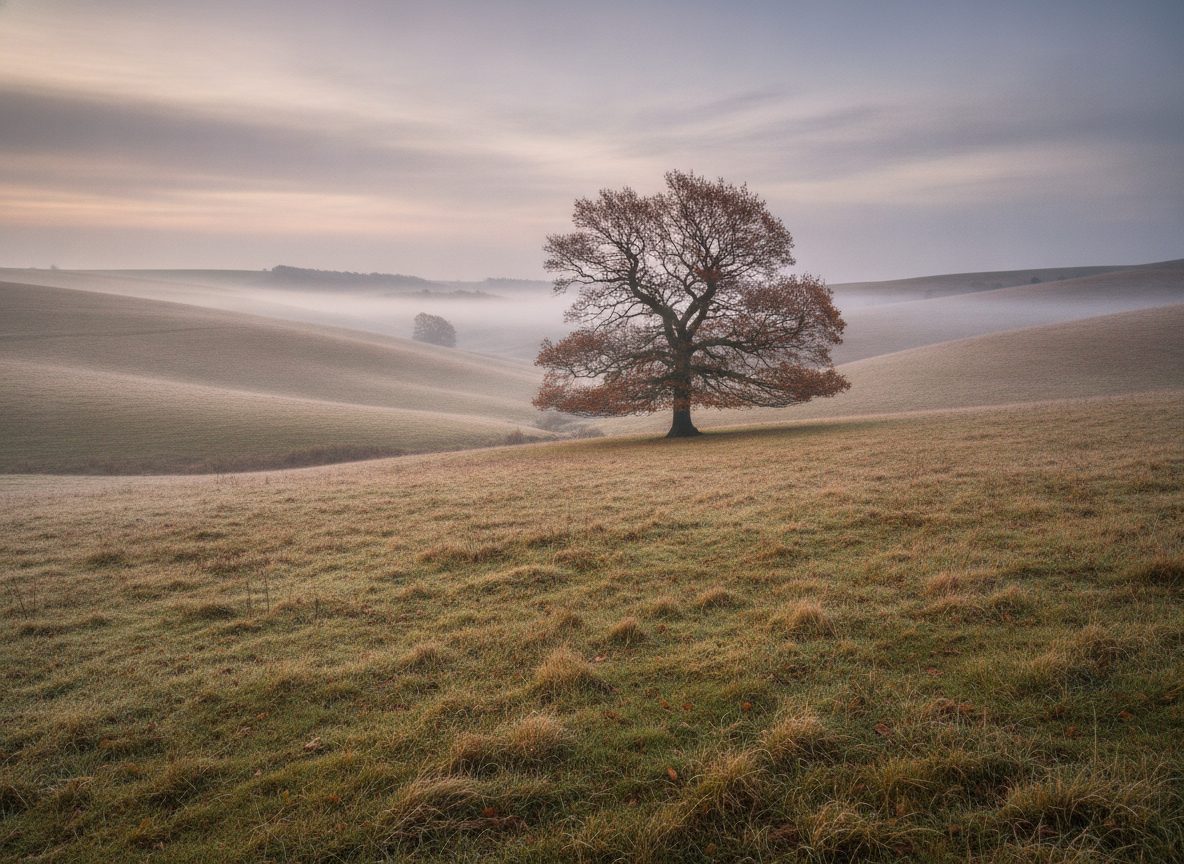
The quiet English landscape that runs all the way through his music.From a Cambridge Room to Quiet Immortality
The Story
Drake's career is short and almost silent, three albums and a handful of years, followed by a long, slow rise into reverence he never lived to see.
Cambridge, then long walks and long silences, and songs written in the quiet.
1948–1967
Childhood and Cambridge
Raised in Warwickshire in a musical family, Drake went up to Cambridge to study English. There he immersed himself in folk and jazz, developed his singular open tunings, and began writing and performing his own songs.
1968
Discovered by Joe Boyd
Producer Joe Boyd heard a demo and signed Drake to his Witchseason production company, pairing him with the players and arrangers of the British folk scene and setting him toward his first record.
1969
Five Leaves Left
His debut arrived, wrapped in Robert Kirby's tender string arrangements. It was met with quiet respect and almost no sales, a pattern that would hold for every record he made.
1970
Bryter Layter
A warmer, jazz-tinged second album with a fuller band, meant as his most accessible work. It, too, sold poorly, and the disappointment deepened his growing withdrawal.
1972
Pink Moon
Stripped to just voice and guitar, recorded in a couple of late-night sessions, his third album is stark and haunting. He delivered the finished tapes to Island almost without a word.
1972–1974
Retreat
Increasingly depressed and reclusive, Drake stopped performing and largely stopped recording, returning to his parents' home in the countryside and struggling with his health.
1974
An early death
Drake died in November 1974 at twenty-six. In the years that followed, reissues, tributes, and word of mouth carried his music to the wide audience it never found in his lifetime.
Four Songs, One Education
Start Here
Drake's catalog is small and gentle, and it rewards close, quiet listening. These four songs, one from each corner of his three albums, are the fastest way to hear what makes him singular. Best on headphones, late.
01 · The Masterpiece
"River Man" (1969)
The centerpiece of Five Leaves Left, in a rolling, unusual time signature draped with a string arrangement that seems to breathe. The single best introduction to his world.
02 · The Warm One
"Northern Sky" (1970)
From Bryter Layter, often called his most beautiful love song, lifted by John Cale's keyboards. Proof that Drake could be tender and radiant, not only shadowed.
03 · The Stark One
"Pink Moon" (1972)
The title track of his final album, just voice, guitar, and a single overdubbed piano figure. Two minutes of pure, unadorned Drake, and the song that later carried his name to millions.
04 · The Opener
"Time Has Told Me" (1969)
The song that opens his debut, gentle and country-tinged with Richard Thompson's guitar. A welcoming first step into the catalog and a fine place to linger.
The Complete Records
The Albums 3 to start with
Drake made only three studio albums, and all three are essential. Together they run barely two hours, a small and perfect body of work. The two rose-topped cards are the ones to reach for first.
1969
Five Leaves Left
The debut, and a perfect place to begin. Robert Kirby's string arrangements frame Drake's fingerpicking on "River Man," "Time Has Told Me," and "Way to Blue," a warm, autumnal introduction to everything he did.
The fuller, jazz-inflected second album, with a band and horns and his most upbeat playing. From "Hazey Jane II" to "Northern Sky," it is his warmest and most inviting record.
The stark, breathtaking finale, just voice and guitar recorded in two late-night sessions. Eleven short songs, spare and haunted, widely held to be his masterpiece.
Two YouTube Music playlists: a First Listen of the signature songs to bring you in, and a Deep Cuts set of the quieter, headphone-reward pieces for when you want to sink in. (Ideally, though, hear these three short albums whole.) Hit the button on either card to open it.
Drake worked alone at the microphone, but his records were shaped by a small circle of gifted collaborators from the British folk world, the people who framed his songs and, on the final album, deliberately stayed out of the way.
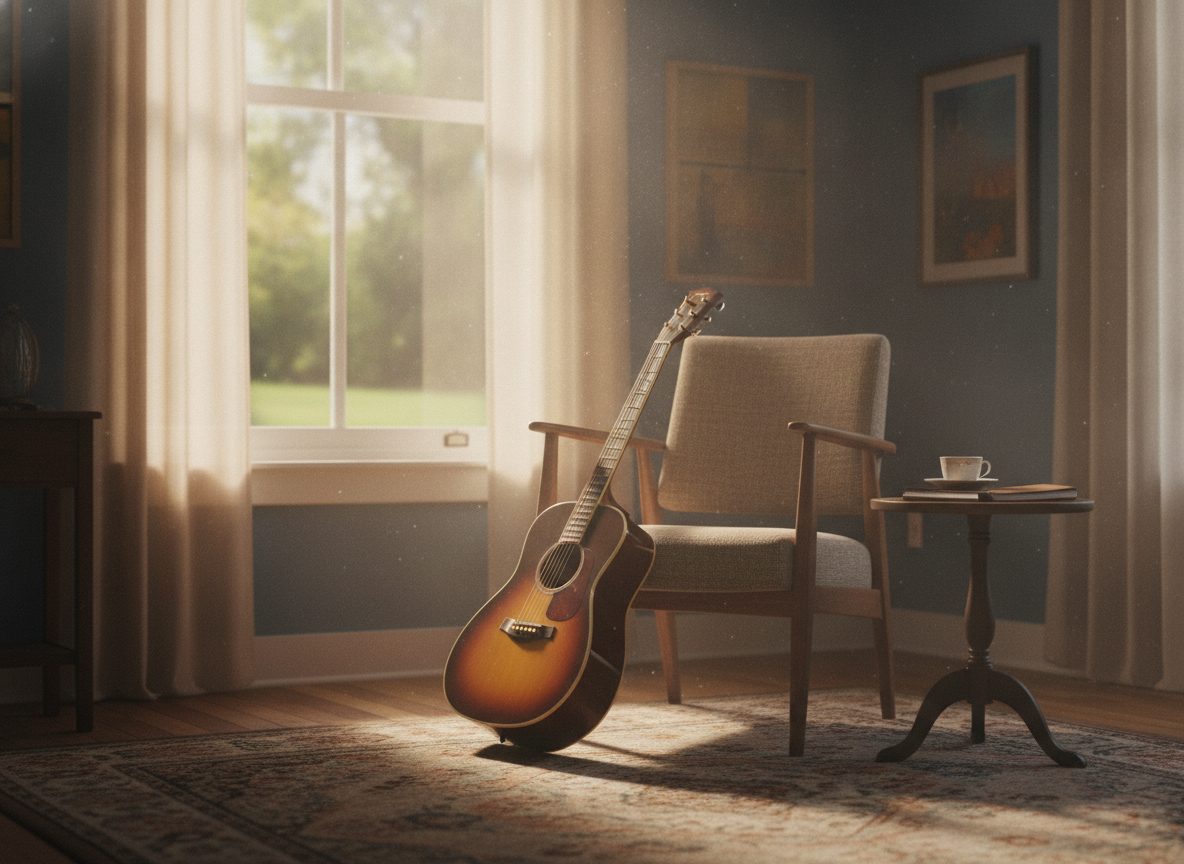
A guitar, a room, and a few trusted hands to frame the songs.
Joe BoydProducerDiscovered Drake and produced Five Leaves Left and Bryter Layter through his Witchseason company, championing the music long after Drake was gone
Robert KirbyString arrangementsA Cambridge friend whose tender orchestral arrangements gave Five Leaves Left and parts of Bryter Layter their unmistakable glow
John WoodEngineerRecorded all three albums at Sound Techniques, capturing the closeness of Drake's voice and guitar, and engineered the spare late-night Pink Moon sessions
Fairport Convention playersSession musiciansRichard Thompson, Dave Pegg, and Dave Mattacks of the British folk-rock group added guitar, bass, and drums across the first two records
Island RecordsLabelReleased all three albums and, through decades of reissues and the Fruit Tree box set, kept the catalog alive until the world caught up
The Roots of the Sound
Influences
Drake drew from the British folk revival, the American songbook, and the phrasing of modal jazz, folding them into something wholly his own. Here is some of where it started.
Folk
Bob Dylan
The towering songwriter of the era. Dylan's example, that a young man with a guitar could make serious, personal art, hovered over Drake's whole generation of English folk singers.
The Scottish guitarist whose intricate fingerstyle helped define British folk. His playing was a direct model for the open tunings and delicate technique at the heart of Drake's sound.
Drake was a devoted listener of modal jazz, and the unhurried, exploratory phrasing of Coltrane's playing shaped the way his melodies drift and hang in the air.
Released the year before Drake's debut, Morrison's Astral Weeks fused folk, jazz, and stream-of-consciousness lyric into a hushed, orchestral whole, a clear kindred spirit to what Drake would make.
Drake gave essentially no interviews and left behind almost no film or recorded speech, part of what makes him so mysterious. What survives is the memory of those who knew him, gathered in a pair of fine documentaries.
Interview · FaceCulture
Robert Kirby on Nick Drake
Drake gave almost no interviews and little footage of him survives. Here his string arranger Robert Kirby, who scored several of his songs, describes what he was like and how they worked together.
Once the three albums have you, Drake's small world opens into home recordings, unfinished songs, and the long afterlife of his influence.
The last sessions. the four final songs he recorded in 1974, including "Black Eyed Dog," are stark and unsettling, the sound of an artist at the edge, gathered on later compilations.
Made to Love Magic and Family Tree. collections of outtakes, alternate versions, and early home and family recordings that fill in the picture around the three albums.
The Fruit Tree box. the long-running box set that first gathered his complete work and helped build the reputation that eluded him in life.
The long shadow. hear his influence in later artists like Elliott Smith, Iron & Wine, and Big Thief, then trace it back to the source.
The Way to Listen
Do yourself one favor: put on Pink Moon from start to finish, late and alone, then go back to Five Leaves Left. It is quiet music that asks for quiet attention, and it gives back far more than you bring to it.