The most restless songwriter of his generation: a Canadian who can break your heart with three acoustic chords, then turn around and bury you in twenty minutes of ragged, distorted noise, and somehow means every note of both.
The Short Version
Who Is He?
Neil Young, born in Toronto in 1945, is a singer, guitarist, and songwriter whose career has run for six decades without ever settling down. He came up through Buffalo Springfield and Crosby, Stills, Nash & Young, then spent the rest of his life following his own instincts wherever they led, country, grunge, electronic, rockabilly, protest music, often against the wishes of his own record label.
Two things make him singular. First, the whiplash between tenderness and noise: the same man who wrote the gentle "Heart of Gold" also wrote "Cortez the Killer," a sprawling wall of distorted guitar. Second, the refusal to repeat himself: he has spent fifty years zig-zagging between his fragile solo-acoustic songs and the primal, unpolished electric music he makes with his longtime band, Crazy Horse.
He was inducted into the Rock and Roll Hall of Fame twice, once with Buffalo Springfield and once as a solo artist, and is often cited by the generation of grunge musicians who came after him, Kurt Cobain among them, as a direct ancestor of their sound.
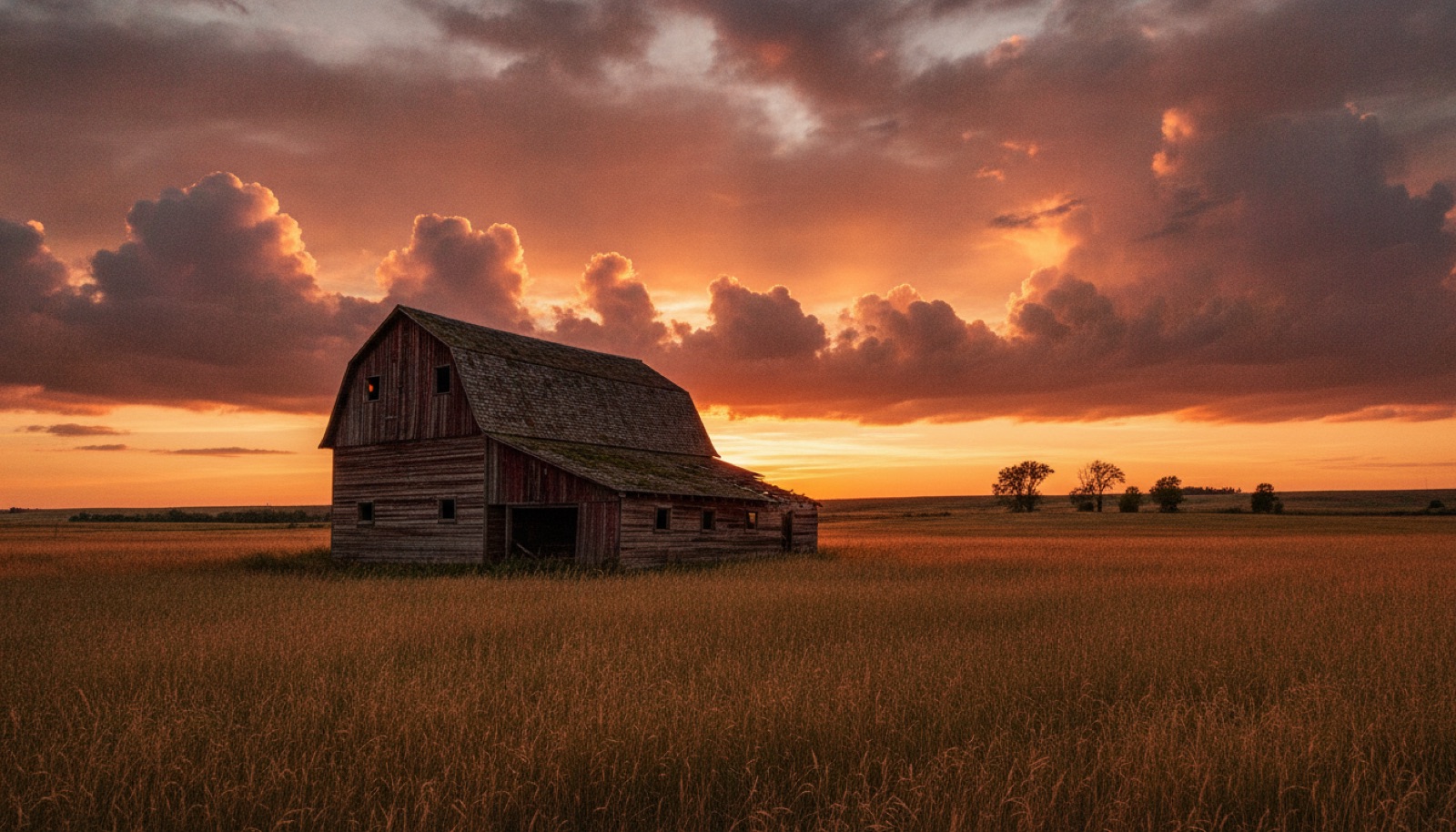
Harvest gold and long shadows, the emotional landscape of his quieter songs.From Winnipeg to Topanga Canyon and Back Again
The Story
His history is less a straight line than a series of hard turns, each one taken because the last one had stopped feeling honest.
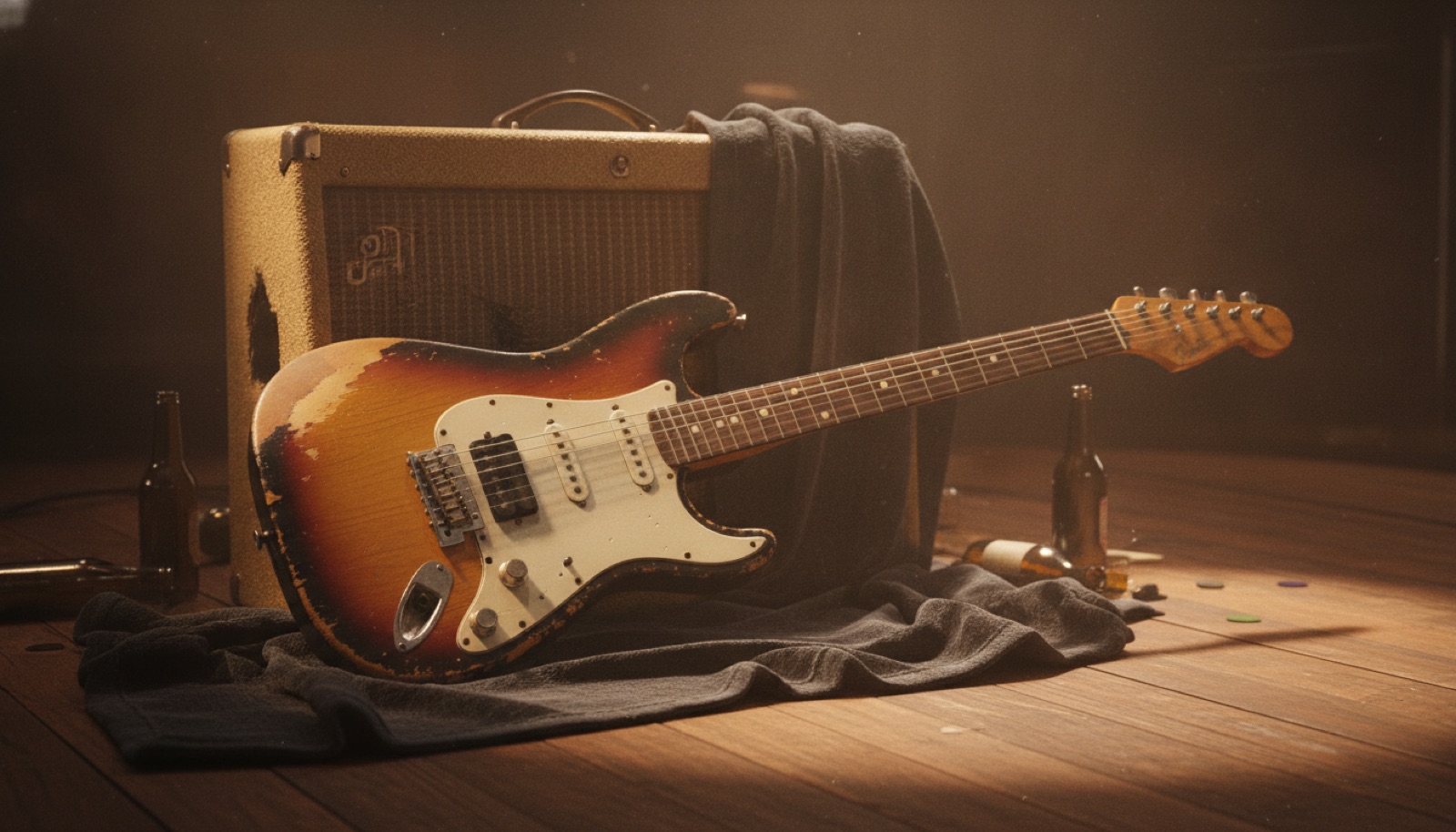
Old Black, the battered Les Paul at the center of the electric side.
1945–1966
Toronto, polio, and a hearse named Mort
Born in Toronto, Young survived childhood polio and epilepsy, then cut his teeth in Winnipeg's folk and garage-rock scene. In 1966 he drove an old hearse to Los Angeles, where a chance traffic-jam encounter with Stephen Stills led to Buffalo Springfield.
1968–1969
Solo debut, and Crazy Horse arrives
After Buffalo Springfield splintered, Young went solo and met the band that would define his loudest music: Danny Whitten, Billy Talbot, and Ralph Molina, soon christened Crazy Horse. Their first album together, Everybody Knows This Is Nowhere (1969), set the template.
1969–1970
Crosby, Stills, Nash & Young
He joined the folk-rock supergroup, adding grit and unpredictability to their close harmonies. Their live album 4 Way Street and Young's own After the Gold Rush (1970) both landed the same year, cementing him as a singular voice inside and outside the group.
1972
Harvest
His warmest, most accessible record, recorded partly in Nashville, went to number one and gave him his only U.S. chart-topping single, "Heart of Gold." He immediately worried it made him too comfortable, and spent the rest of the decade proving it wasn't a trap.
1972–1975
The Ditch Trilogy
Guitarist Danny Whitten died of a drug overdose in 1972, and roadie Bruce Berry died the same way in 1973. Devastated, Young made three raw, unpolished albums, Time Fades Away, On the Beach, and Tonight's the Night, that he later called the "Ditch Trilogy," deliberately turning away from Harvest's commercial warmth.
1979
Rust Never Sleeps
Recorded and toured with Crazy Horse, the album framed rock and roll itself as something that dies without renewal, "it's better to burn out than to fade away." Half acoustic, half a wall of amplified noise, it became a touchstone for the punk generation that followed.
1980s
The Geffen years
A restless decade of genre experiments, rockabilly, synth-pop, country, that famously led his label, Geffen Records, to sue him for making music "unrepresentative" of himself. He later called it one of his proudest fights.
1989–1990s
Godfather of Grunge
Freedom (1989) and Ragged Glory (1990) with Crazy Horse reasserted his electric side just as a new generation of loud, unpolished bands, Pearl Jam, Sonic Youth, Nirvana, cited him as an ancestor. He toured with Pearl Jam and later recorded Mirror Ball with them in 1995.
1992
Harvest Moon
A deliberate, twenty-years-later companion to Harvest, reuniting many of the same musicians for a gentler, reflective set that proved the acoustic side of his music had aged just as well as the electric.
2000s–2020s
Elder statesman, still restless
Decades of activism (Farm Aid, environmental causes), archival releases from his vast Neil Young Archives project, and continued albums with Crazy Horse and Promise of the Real followed. He remains, in his eighties, one of rock's most unpredictable working artists.
Three Videos, One Education
Start Here
Neil Young makes the most sense as a study in contrast. These three, one tender, one anthemic, one ragged, are the fastest way to hear both sides of him. Watch in order.
01 · The One You Know
"Heart of Gold" — 1972
His only U.S. number-one single, and still the gentlest entry point: harmonica, acoustic guitar, and a plainspoken lyric about searching for something you can't quite name. This is the sound he spent the rest of his career trying not to repeat.
02 · The Heart
"Old Man" — 1972
Written for the elderly caretaker of Young's California ranch, but really a young man's letter to every older generation. Simple, direct, and devastating, it's the clearest distillation of his tender, plainspoken side.
03 · The Noise
"Rockin' in the Free World" — 1989
A snarling, distorted anthem about American decay disguised as a singalong, this is the electric Neil Young, the one grunge bands worshipped. If one song turns you into a lifer, it's this.
The Studio Catalog
The Albums 6 to start with
Six landmark records spanning his two modes. The gold-topped cards are the essential entry points; the green marks the Crazy Horse electric era.
1969
Everybody Knows This Is Nowhere
The first record with Crazy Horse, and the birth of his ragged electric sound. "Cinnamon Girl," "Down by the River," and "Cowgirl in the Sand" all in one sitting.
A hushed, mostly acoustic record about a fading environment and a fading relationship. "Only Love Can Break Your Heart" and the title track are as good as songwriting gets.
The warmest, best-selling album of his career, recorded largely in Nashville with the Stray Gators. "Heart of Gold," "Old Man," "The Needle and the Damage Done."
A raw, drunken wake for two friends lost to overdoses, deliberately unpolished and recorded fast. Bleak, loose, and now considered one of his very best records.
Half acoustic, half a Crazy Horse wall of noise, framed by "My My, Hey Hey" and "Hey Hey, My My." A direct ancestor of grunge, and essential listening either way.
A twenty-years-later companion to Harvest, reuniting the same musicians for a gentler, more reflective set. Proof the tender side of his catalog only deepened with age.
One curated YouTube Music playlist, an Essentials set that moves back and forth between his tender and ragged sides the way his own career always has. Hit the button to play it.
Neil Young is largely a solo artist, but he has never really worked alone. His catalog splits cleanly into two modes, and understanding both is the key to understanding him.
The solo-acoustic side: hushed, direct, and unadorned.
The first mode is the tender side, the solo-acoustic Young of Harvest and Harvest Moon: harmonica, plainspoken lyrics, a voice that sounds like it might crack. It's the Young that country radio and casual fans love, and the one that made "Heart of Gold" a number-one single he never fully trusted.
The second mode is the ragged, electric side, played almost entirely with Crazy Horse, the loose, deliberately unpolished garage band built around bassist Billy Talbot and drummer Ralph Molina. Guitarist Danny Whitten was in the original lineup until his death from a drug overdose in 1972; guitarist Frank "Poncho" Sampedro joined in 1975 and became the band's other longtime foil. With Crazy Horse, songs stretch into ten- or twenty-minute jams built on a handful of chords and walls of distorted feedback, closer in spirit to a garage band than a virtuoso outfit, and that's exactly the point.
Young has moved between these two modes his entire life, sometimes within the same year, treating them less as a contradiction than as two instruments in the same toolbox.
The Roots of the Sound
Influences
Young grew up on the folk revival, early rock and roll, and the country and blues that ran through both. Here is where his songwriting and his voice started.
The Folk-Rock North Star
Bob Dylan
The songwriting ambition and the willingness to alienate an audience mid-career, a lesson Young absorbed early and never unlearned.
Young is famously guarded with the press, but two clips from his rare, wide-ranging sit-down with Howard Stern reveal both his bluntness and his conviction.
Interview · The Howard Stern Show
Neil Young Names His One Regret on "Woodstock"
A rare, candid moment from Young's sit-down with Howard Stern, in which he reflects on the song he wrote about the festival he never actually attended, and what he still wishes he'd done differently.
Young explains, in his own blunt terms, why he was willing to pull his entire catalog from the biggest streaming platform in the world over a matter of principle, a decision that says as much about him as any song.
Few artists have documented themselves as obsessively as Neil Young. Once the six landmark albums have you, the archive is enormous.
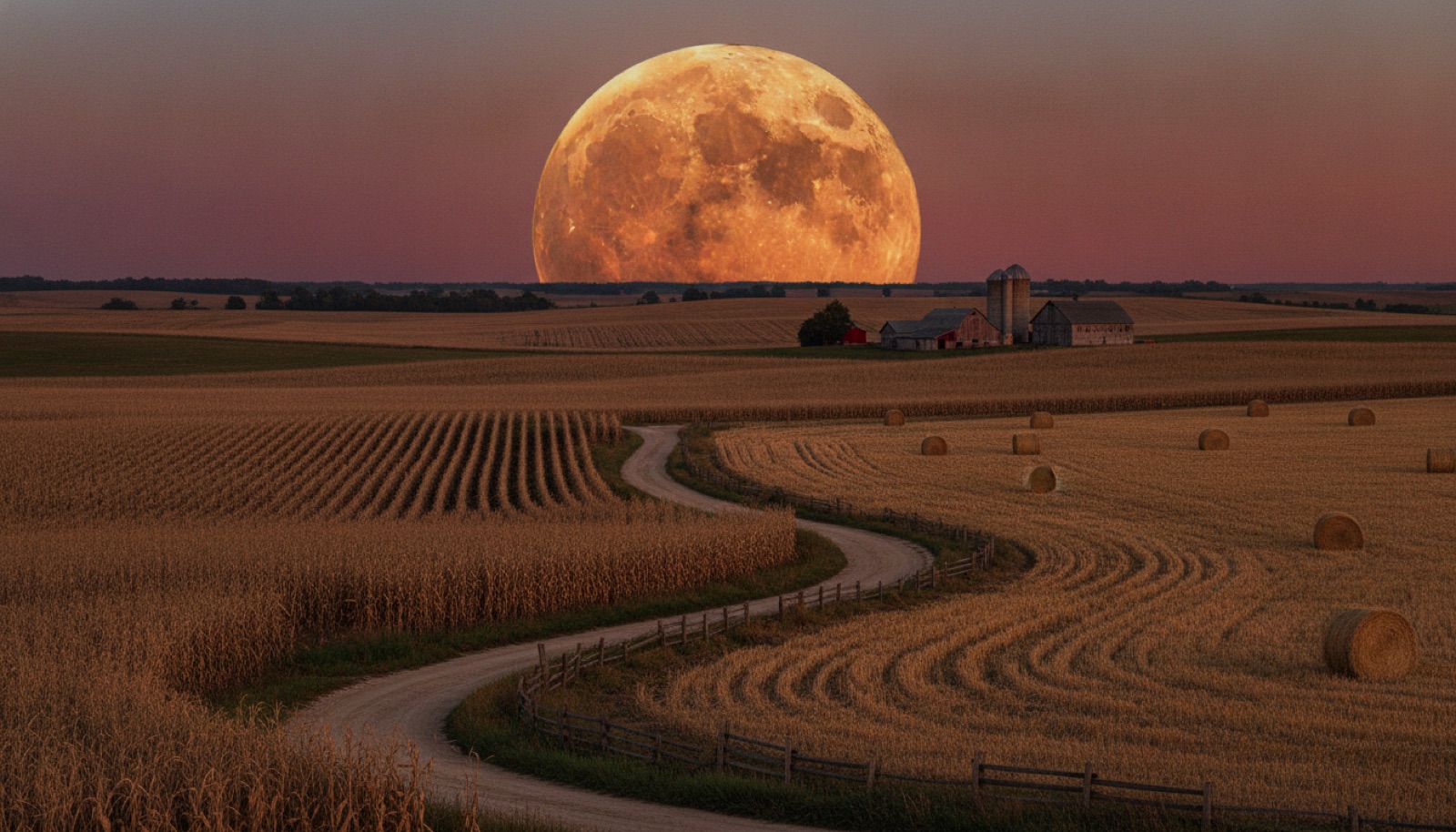
The rural imagery that gives the Harvest era its name.
Neil Young Archives — his own streaming service and archival project, cataloguing outtakes, live shows, and unreleased material going back to the 1960s.
Zuma and Rust Never Sleeps live — deeper cuts for anyone who fell for the electric side; "Cortez the Killer" and "Powderfinger" reward repeat listens.
The Ditch Trilogy — Time Fades Away, On the Beach, and Tonight's the Night, three raw, unpolished records made in the wake of losing two friends to overdoses.
Solo worlds nearby — his work with Crosby, Stills, Nash & Young, and his more recent recordings with Promise of the Real, both worth exploring once the core catalog clicks.
The Way to Listen
Do yourself one favour: put on After the Gold Rush from start to finish, then immediately follow it with Rust Never Sleeps. Hearing the hushed, acoustic Young next to the ragged, amplified Young, back to back, is the fastest way to understand why he's spent fifty years refusing to pick just one.