How a self-taught composer and guitarist from California fused rock, jazz, doo-wop, and modern classical music into one of the largest and most technically ambitious catalogs in American music.
The Short Version
Who Is He?
Frank Zappa (born in Baltimore, Maryland, in 1940 and raised in California) was a composer, guitarist, and bandleader who led the Mothers of Invention and recorded prolifically under his own name from the mid-1960s until his death in 1993. Largely self-taught, he wrote across an unusually wide range, from garage rock and rhythm and blues to jazz-fusion, chamber ensembles, and full orchestral works.
Two things make him singular. First, the scope: he released more than sixty albums in his lifetime, and his estate has issued dozens more since, spanning studio rock, live fusion, and notated concert music. Second, the craft: he was a demanding bandleader and a meticulous editor of tape and, later, of the Synclavier digital synthesizer, drilling his groups through intricate, rhythmically complex arrangements.
He was also an accomplished electric guitarist with a distinctive, exploratory soloing style. To understand the reach of American experimental music, from rock clubs to the concert hall, you start here.
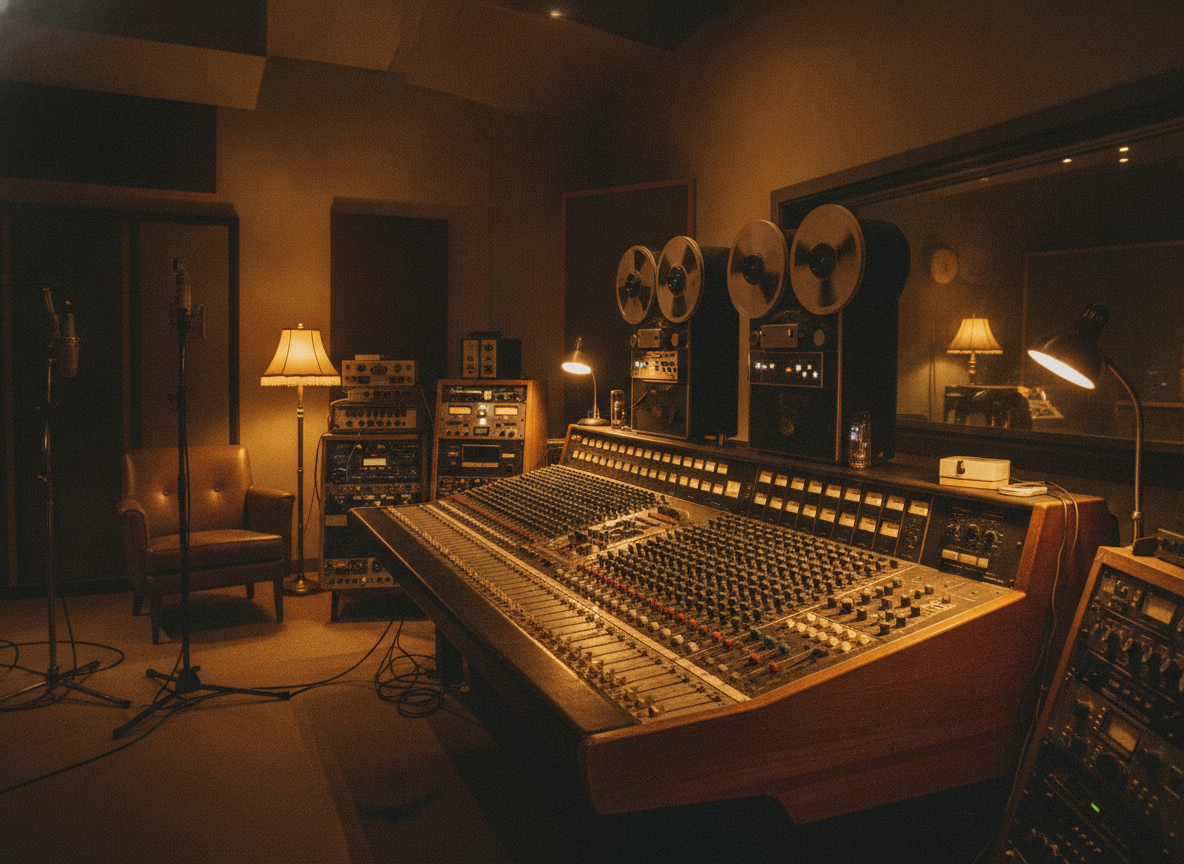
The studio as an instrument, the ground much of Zappa's music was built on.From Garage Bands to the Concert Hall
The Story
Zappa's career runs from mid-sixties rock experiments through a decade of large touring bands to a final turn toward orchestral and computer-composed music, all documented in an enormous recorded output.
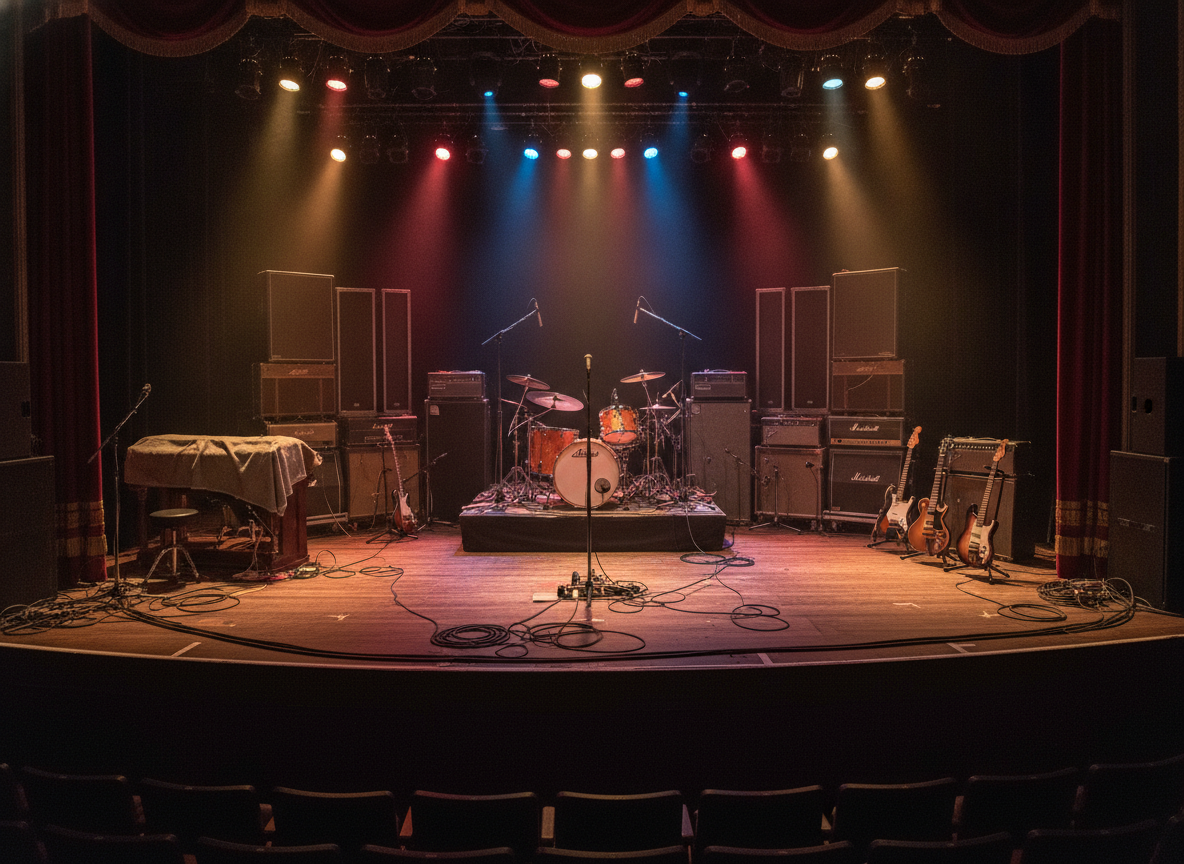
The large touring bands of the 1970s, drilled through some of the most intricate arrangements in rock.
1966
The Mothers of Invention
Zappa took over a Los Angeles bar band and reshaped it into the Mothers of Invention. Their 1966 debut Freak Out! was one of rock's first double albums, mixing rhythm and blues, studio collage, and orchestral experiments.
1969
The instrumental turn
Zappa disbanded the original Mothers and released Hot Rats, a mostly instrumental record built on overdubbed guitar, keyboards, and violin that became a cornerstone of early jazz-fusion.
1970–1976
The touring bands
Through the early and mid-seventies he led a rotating cast of virtuoso players, cutting studio albums such as Over-Nite Sensation, Apostrophe ('), and One Size Fits All while touring constantly and recording the shows.
1979
Independence and the guitar
He launched his own labels to control his catalog and issued sprawling projects that foregrounded his extended guitar improvising, releasing several albums drawn largely from live solos.
1984
The Synclavier and orchestral work
Zappa increasingly composed on the Synclavier, a digital synthesizer and sampler that let him realize dense scores without a band, alongside collaborations with classical ensembles performing his notated works.
1988–1993
Late tours and final projects
A large 1988 band produced several live albums before he retired from touring. His final years were devoted to orchestral recordings and Synclavier composition, work that continued to appear after his death in 1993.
Four Tracks, One Education
Start Here
Zappa's catalog is vast and daunting. These four tracks are the fastest way to grasp the range, from instrumental fusion to tightly arranged song to extended guitar feature. Watch in order.
01 · The Instrumental
"Peaches en Regalia" (1969)
The opening track of Hot Rats: a bright, tightly layered instrumental that shows Zappa the composer and arranger. The clearest single introduction to his melodic, fusion-leaning side.
02 · The Song
"Montana" (1973)
From Over-Nite Sensation: a tightly arranged band showcase built on interlocking rhythms and layered vocals, with intricate ensemble writing under a rock surface.
03 · The Groove
"Cosmik Debris" (1974)
From Apostrophe ('): a mid-tempo blues-rock groove that frames one of Zappa's fluid electric guitar solos, a good window into his playing.
04 · The Guitar
"Watermelon in Easter Hay" (1979)
A slow, sustained instrumental widely regarded as his finest recorded guitar performance. Patient, melodic, and unlike almost anything else in the catalog.
The Landmark Records
The Albums 6 to start with
Zappa released more than sixty albums in his lifetime. These six are among the most approachable entry points, spanning the Mothers of Invention and his own name. The gold-topped card is a good place to begin.
1966
Freak Out!
The Mothers of Invention debut and one of rock's earliest double albums, ranging from rhythm and blues songs to extended studio experiments and orchestral collage.
A mostly instrumental record built on multitracked guitar, keyboards, and violin. A cornerstone of early jazz-fusion and the best single starting point in the catalog.
A dense, heavily edited Mothers album that pushed studio collage and tape manipulation to a new level, moving between short songs and orchestral interludes.
A tightly produced band record with interlocking rhythms and layered vocals, one of his most accessible and widely heard albums, credited to Frank Zappa and the Mothers.
His best-selling studio album, pairing concise rock songs with instrumental jamming and one of his most-heard guitar features. An easy entry into the mid-seventies sound.
Often cited as the peak of his 1970s bands, balancing intricate ensemble writing with strong melodies and the interplay of a group of virtuoso players at their height.
Two YouTube Music playlists: a First Listen of signature tracks to bring you in, and a Deep Cuts set of the longer, headphone-reward pieces for when you want to sink in. (Ideally, though, hear these albums whole.) Hit the button on either card to play it.
Zappa led his own groups, but his records were shaped by a rotating cast of virtuoso players, many of whom went on to major careers of their own.
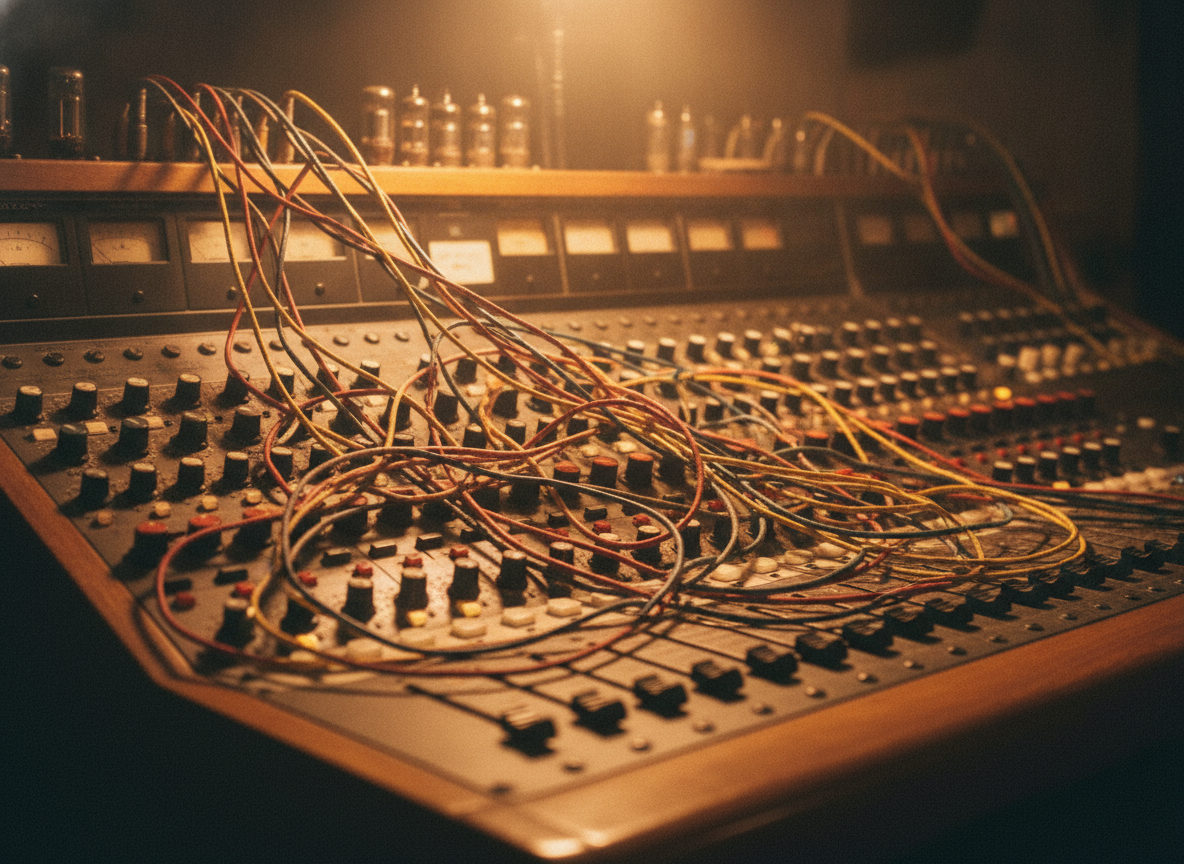
Precise arrangement and editing, the discipline behind the complexity.
The Mothers of InventionCore bandThe group Zappa led from 1966, in its various lineups the foundation of his rock and fusion recordings across the late sixties and seventies
George DukeKeyboardsA jazz keyboardist and vocalist central to the early-seventies bands, heard across Over-Nite Sensation, Apostrophe ('), and One Size Fits All
Ruth UnderwoodMarimba / percussionA mallet-percussion virtuoso whose intricate lines defined the sound of the mid-seventies bands
Jean-Luc PontyViolinThe jazz-fusion violinist who recorded with Zappa around the turn of the seventies, part of the instrumental, fusion-leaning material
Terry BozzioDrumsA technically demanding drummer with the mid-to-late-seventies bands, known for handling Zappa's most complex written parts
Steve VaiGuitar / transcriptionJoined in the early eighties as a guitarist and transcriber of Zappa's music, later a prominent solo instrumentalist
The Roots of the Sound
Influences
Zappa drew openly on two very different worlds: the modern classical composers he studied as a teenager, and the rhythm and blues and doo-wop records he grew up hearing. Here is where it started.
Modern Classical
Edgard Varèse
The composer Zappa cited as his single greatest influence, whose percussion-heavy, dissonant works he discovered as a teenager and championed throughout his life.
A lasting model for rhythmic complexity and orchestral color; Zappa often referenced and quoted Stravinsky's work in his own compositions and arrangements.
A bandleader and multi-instrumentalist central to the West Coast rhythm and blues Zappa absorbed early, feeding the R&B backbone of much of his songwriting.
Zappa was a sharp, articulate interview subject who spoke at length about composition, the music business, and his working methods. His filmed conversations are worth seeking out.
Interview · Archive
Zappa, In Conversation
An extended 1980s interview in which Zappa discusses his composing, his bands, and his relationship with the record industry, a clear window into how he thought about his work.
Interview · Archive
The Filmed Portraits
Decades of television appearances, press conferences, and documentary footage capture Zappa across every phase of his career. Search YouTube for clips and full conversations.
Once the landmark albums have you, Zappa's world opens into decades of live recordings, instrumental projects, and concert music.
The live catalog. Zappa recorded and released his concerts prolifically, and archival live sets such as the Roxy recordings capture the seventies bands at their most virtuosic.
The guitar albums. Projects assembled largely from his extended live solos, including Shut Up 'n Play Yer Guitar, are the deepest look at Zappa the improviser.
The orchestral and Synclavier work. Late records of notated concert music and computer-composed pieces show the composer working outside the rock band entirely.
The documentaries. The 2020 film Zappa, built from his own archive, is the best filmed overview of the man and the scope of his output.
The Way to Listen
Do yourself one favor: put on Hot Rats from start to finish, then One Size Fits All. Zappa's music rewards close attention to the arrangements. The more you listen, the more detail surfaces.