How a restless kid from South London built a career out of shedding his own skin, inventing personas, chasing sound across continents, and turning even his own death into a work of art.
The Short Version
Who Is He?
David Bowie (born David Robert Jones in Brixton, London, in 1947) is the most influential shape-shifter in popular music. Where other artists spend a lifetime perfecting one voice, Bowie built entire worlds and then walked away from them, treating each album as a chance to become someone new.
Two things make him singular. First, the personas: from the alien rock messiah Ziggy Stardust to the icy Thin White Duke, he made theatrical reinvention the center of the art, not a gimmick around it. Second, the restlessness of sound: he moved from glam to plastic soul to the stark electronic textures of his Berlin years to sleek eighties pop, always a step ahead of where rock thought it was going.
He kept reinventing to the very end, releasing the haunted, jazz-inflected Blackstar two days before his death in 2016 and turning his own goodbye into a final piece of work. To understand how strange and expansive rock could be, you start here.
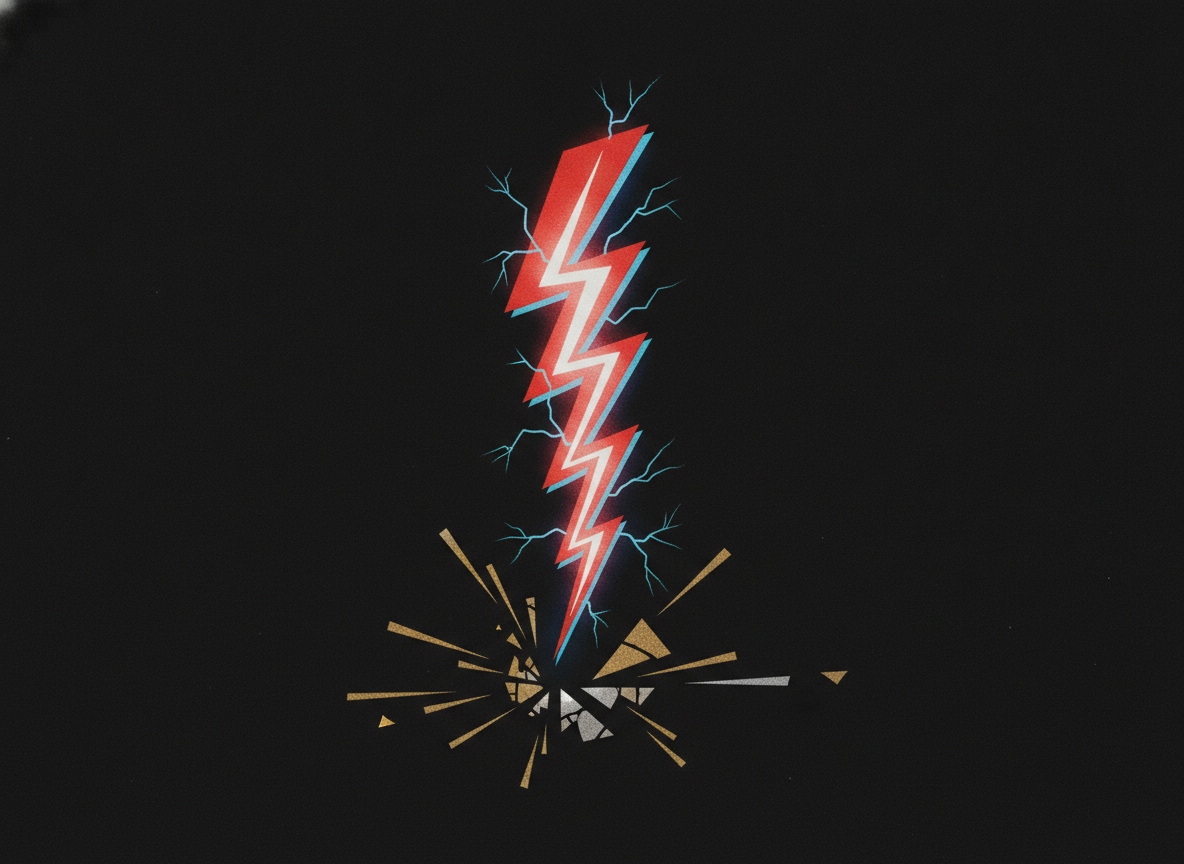
The lightning bolt: theater, color, and reinvention, the ground Bowie's music grows from.From a South London Bedroom to the Stars
The Story
Bowie's career is less a straight line than a series of costume changes, each persona a fully realized character, each one abandoned the moment it threatened to become a cage.
Rock as theater: Bowie treated the stage like a character to inhabit, not just a place to play.
1969
The first liftoff
After years of near-misses in mod bands and mime, Bowie broke through with "Space Oddity," a lonely tale of an astronaut adrift, released to coincide with the moon landing. It hinted at the theatrical outsider he was about to become.
1972
Ziggy Stardust
The masterstroke. Bowie invented an androgynous alien rock star, dressed the part, and let the character take over. The Rise and Fall of Ziggy Stardust made him a superstar and rewrote the rules of what a rock performer could be.
1975
Plastic soul and the Duke
He killed off Ziggy, chased American R&B on Young Americans, then took cocaine-fueled refuge in a new persona, the Thin White Duke of Station to Station, elegant, cold, and running on empty.
1977–1979
The Berlin trilogy
Fleeing addiction, Bowie moved to Berlin and, with Brian Eno and Tony Visconti, made Low, "Heroes", and Lodger. Half rock songs, half instrumental soundscapes, these records reinvented what a pop album could hold.
1983
The pop colossus
With Nile Rodgers producing, Let's Dance made Bowie a global stadium star. The commercial peak brought new fans, even as he later admitted he had lost the thread of his own restlessness.
1990s–2000s
The elder statesman experiments
He returned to risk, dabbling in industrial rock, drum and bass, and art rock, reminding the world that reinvention, not comfort, was always the point.
2016
The parting gift
After a decade of near-silence, Bowie released Blackstar on his birthday, a dark, searching jazz-rock record. Two days later he died of cancer, and the album revealed itself as a farewell composed in full knowledge of the end.
Four Songs, One Education
Start Here
Bowie's catalog spans five decades and a dozen styles. These four songs trace the whole arc, from the early outsider to the glam superstar to the Berlin artist to the final farewell. Watch in order.
01 · The Launch
"Space Oddity" (1969)
The song that introduced Major Tom and the lonely, drifting outsider who would haunt Bowie's whole career. A folk-rock ballad about floating away from everything, and the perfect place to begin.
02 · The Anthem
"Life on Mars?" (1971)
A soaring, surreal ballad from Hunky Dory, all sweeping piano and cryptic imagery. The clearest early proof that Bowie could write a pop song with the ambition of a short film.
03 · The Berlin Peak
"Heroes" (1977)
The towering centerpiece of the Berlin years: a wall of Robert Fripp's guitar, Eno's electronics, and a vocal that builds from a whisper to a roar. A love song set against a divided city.
04 · The Farewell
"Lazarus" (2016)
From Blackstar, released days before his death. A stark, jazz-shadowed meditation whose opening line, and whose video, read as an artist consciously composing his own goodbye.
The Landmark Records
The Albums 6 to start with
Bowie released more than two dozen studio albums across a career of constant reinvention. These six are the pillars, the run from 1971 to 1977 where he changed rock over and over. The blue-topped card is the best place to begin.
1971
Hunky Dory
The record where the songwriter arrives. "Changes," "Life on Mars?," "Oh! You Pretty Things," and "Quicksand" show a young artist bursting with melody, ambition, and ideas about who he might become.
The Rise and Fall of Ziggy Stardust and the Spiders from Mars
The album that made him a star and a template. A loose concept record about a doomed alien rock messiah, from "Starman" to "Ziggy Stardust" to "Rock 'n' Roll Suicide." Start here.
Ziggy goes to America. Wilder, edgier, and shot through with Mike Garson's avant-garde piano, it gave Bowie his most famous image, the red and blue lightning bolt, and songs like "The Jean Genie."
The pivot record. Born of the Thin White Duke persona, its long, hypnotic grooves bridge the plastic soul of Los Angeles and the electronic experiments about to come in Berlin. Cold, elegant, and mesmerizing.
The Berlin breakthrough. Fractured art-rock songs on side one, ambient instrumental soundscapes with Brian Eno on side two. A radical, influential reinvention that still sounds like the future.
The Berlin trilogy's emotional summit, recorded beside the Wall. Robert Fripp's searing guitar and Eno's textures frame the towering title track, one of the most beloved songs Bowie ever made.
Two YouTube Music setlists: a First Listen of the signature songs to bring you in, and a Deep Cuts set of the longer, headphone-reward pieces for when you want to sink in. (Ideally, though, hear these albums whole.) Hit the button on either card to play it.
Bowie was a solo artist and a great synthesizer of other people's talents. His reinventions were built with a rotating cast of virtuoso players and visionary producers who helped him chase each new sound.
From glam guitars to Berlin synthesizers, the right collaborators made every reinvention possible.
The Spiders from MarsGlam-era backing bandGuitarist Mick Ronson, bassist Trevor Bolder, and drummer Mick Woodmansey were the muscle behind Ziggy; Ronson's riffs and arrangements shaped the entire glam sound
Mick RonsonGuitar / arrangementsBowie's essential early foil, whose crunching guitar and string arrangements defined Ziggy Stardust, Hunky Dory, and Aladdin Sane
Tony ViscontiProducerBowie's longest-running producer, from the early records through the Berlin trilogy to the final Blackstar, a partnership that spanned nearly the whole career
Brian EnoProducer / synthesizersThe conceptual collaborator on Low, "Heroes", and Lodger, bringing ambient textures and studio experiment to the Berlin trilogy
Nile RodgersProducerThe Chic guitarist and producer who gave Let's Dance its sleek, funk-driven sheen and turned Bowie into an eighties global superstar
The Roots of the Sound
Influences
Bowie was a magpie of genius, pulling from rock and roll energy, avant-garde art song, downtown New York noise, and German electronics, then fusing it all into something entirely his own.
Art Rock
The Velvet Underground
Bowie was an early evangelist for Lou Reed's band, absorbing their deadpan cool, urban decadence, and art-school daring into his own theatrical vision of rock.
The brooding orchestral pop and later avant-garde daring of Scott Walker was a lifelong touchstone; Bowie called him a hero and drew on his ambition and drama.
The German pioneers of electronic music directly inspired Bowie's Berlin turn, their clean machine rhythms and futurism echoing through Low and "Heroes".
Bowie was a rare rock star who was also a brilliant, funny, and generous interviewee, thoughtful about art, prescient about culture, and always a step ahead. His conversations are worth seeking out.
Interview · MTV News (1995)
The Full 1995 Interview
A long-form MTV News conversation from 1995, with Bowie discussing his career and the work of that era at length.
Once the landmark records have you, Bowie's world opens into decades of characters, side quests, and reinventions.
Blackstar. the 2016 farewell, a dark, jazz-inflected art-rock record released two days before his death, and one of the most extraordinary final statements in music.
The rest of the Berlin trilogy. Lodger completes the run begun by Low and "Heroes", restless and often underrated.
Scary Monsters (And Super Creeps). the 1980 record that closes his classic period, home to "Ashes to Ashes" and its revival of the Major Tom story.
The films. The Man Who Fell to Earth, the concert film Ziggy Stardust and the Spiders from Mars, and the 2022 documentary Moonage Daydream are the best filmed windows into the myth.
The Way to Listen
Do yourself one favor: put on The Rise and Fall of Ziggy Stardust from start to finish, then Low. Hearing the glam superstar and the Berlin experimenter back to back is the fastest way to feel what made Bowie unlike anyone else.