How four art-school outsiders turned nervous energy and a love of funk into some of the strangest, smartest, most danceable rock ever made, and rewrote what a band could be.
The Short Version
Who Are They?
Talking Heads were an American band formed in New York City in 1975, one of the defining groups to come out of the CBGB scene that also produced the Ramones and Blondie. Where their peers played fast and loud, Talking Heads were jittery, cerebral, and rhythmic, led by the twitchy, wide-eyed presence of singer and songwriter David Byrne.
Two things make the band singular. First, the groove: with producer Brian Eno they pushed steadily deeper into funk, African polyrhythm, and dance music, building songs out of interlocking loops long before that was common in rock. Second, the art: Byrne's lyrics about anxiety, buildings, and everyday dread, delivered like a man reading someone else's mail, gave the music a wit and unease nothing else on the radio had.
Remain in Light (1980) is their masterpiece, and the concert film Stop Making Sense (1984), with Byrne in his oversized "big suit," is widely called the greatest concert film ever made. Their reach runs through post-punk, indie, and pop for decades after.
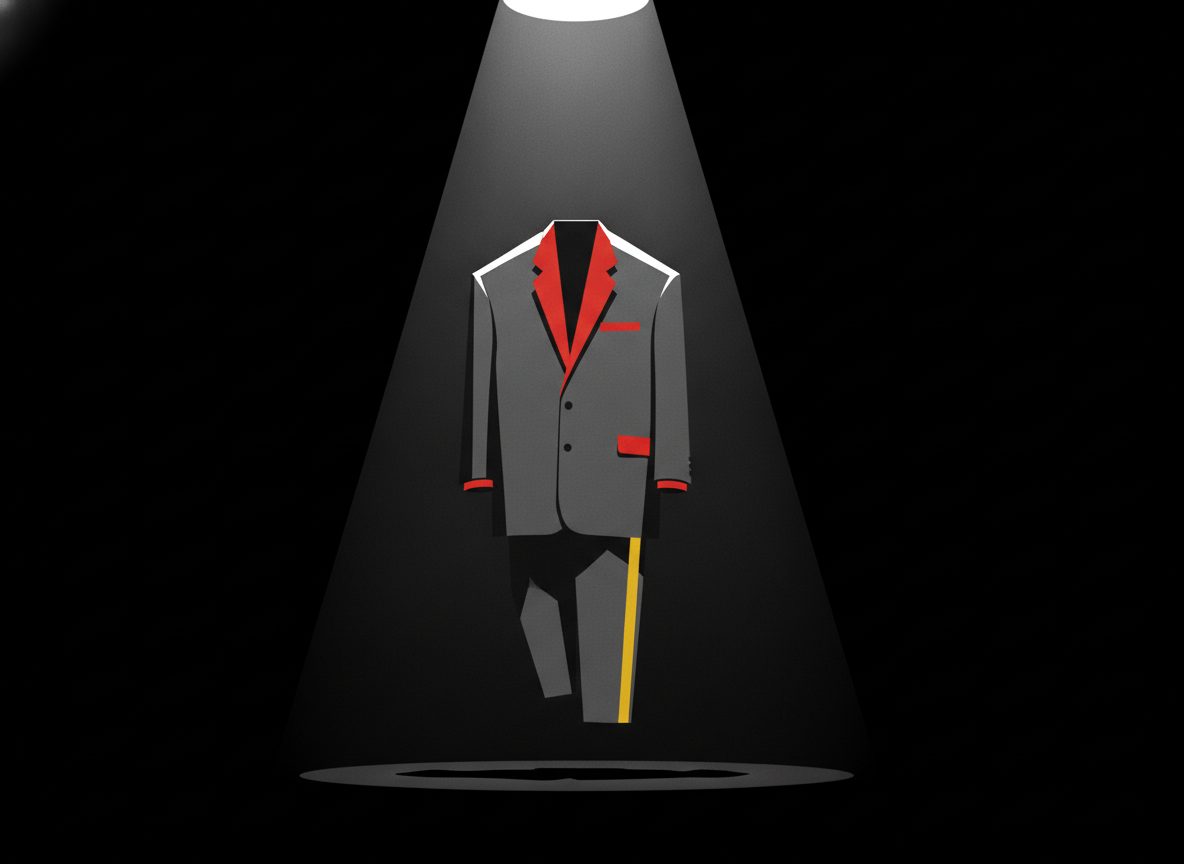
The big suit: nervy, absurd, iconic, the emotional weather of the band.From CBGB to the Big Suit
The Story
The Talking Heads story is the story of a band that kept teaching itself new music, moving from spiky art punk to deep polyrhythmic funk without ever losing its restless intelligence.
Downtown New York, mid-seventies: where the band was forged.
1975
Formed in New York
David Byrne, drummer Chris Frantz, and bassist Tina Weymouth, art-school friends from the Rhode Island School of Design, moved to New York and began playing the downtown club CBGB as a spare, wiry trio.
1977
Talking Heads: 77
Jerry Harrison joined on keyboards and guitar, filling out the sound. The debut album arrived with the jittery, unforgettable "Psycho Killer" and a new kind of tense, brainy rock.
1978
Enter Brian Eno
More Songs About Buildings and Food began the band's partnership with producer Brian Eno. Their cover of Al Green's "Take Me to the River" became a hit and pointed the way toward funk and groove.
1979
Fear of Music
Darker and more experimental, with Eno again at the desk. "Life During Wartime" and "I Zimbra" hinted at the African rhythms and studio adventurousness about to take over completely.
1980
Remain in Light
The peak. Built from dense, looping Afrobeat-inspired grooves and expanded with extra musicians, it produced "Once in a Lifetime" and reinvented what a rock album could be. The Eno trilogy complete.
1983–1984
Speaking in Tongues and Stop Making Sense
Producing themselves, the band scored its biggest hit with "Burning Down the House." The supporting tour became Stop Making Sense, Jonathan Demme's landmark concert film and the birthplace of the big suit.
1985–1988
Little Creatures to Naked
The band turned warmer and more song-based with Little Creatures ("Road to Nowhere") and True Stories, then closed the catalog with the lush, worldbeat-flavored Naked.
1991–2002
The end, and the legend
The band quietly dissolved in 1991 as Byrne pursued solo work. They reunited only once, to be inducted into the Rock and Roll Hall of Fame in 2002, their influence still spreading.
Four Videos, One Education
Start Here
Talking Heads reward deep album listening, but these four songs are the fastest way to understand the appeal and the range, from art-punk anthem to widescreen funk. Watch in order.
01 · The One You Know
"Once in a Lifetime" (1980)
The definitive Talking Heads song: a hypnotic funk groove, Byrne's preacher-in-a-panic vocal, and the immortal question, "Well, how did I get here?" The gateway for most new fans.
02 · The Hit
"Burning Down the House" (1983)
Their biggest single: a tight, punchy funk-rock anthem that took the band's studio experiments and made them irresistible on the radio. Pure kinetic joy.
03 · The Origin
"Psycho Killer" (1977)
The song that announced the band: a taut, stalking bassline and Byrne's unnerving switch into French. The tense, wiry art-punk roots the later grooves grew out of.
04 · The Singalong
"Road to Nowhere" (1985)
A marching, gospel-tinged anthem with an inventive stop-motion video. Proof the band could be warm and communal as easily as it could be nervous and strange.
The Studio Catalog
The Albums 6 to start with
Eight studio albums trace a continuous arc from spiky art punk to deep polyrhythmic funk and back toward song. The blue-topped cards are the early foundation; the red-topped ones are the essential peak.
1977
Talking Heads: 77
The wiry, nervous debut. Spare art punk built on Weymouth's bass and Byrne's yelp, home to "Psycho Killer" and a whole new brand of brainy rock. "Don't Worry About the Government," "Uh-Oh, Love Comes to Town."
The first album with Brian Eno producing. Funkier and fuller, it turned Al Green's "Take Me to the River" into a hit and set the band on its groove-driven path. "Thank You for Sending Me an Angel," "The Big Country."
Darker, denser, and more experimental. Paranoia and polyrhythm collide on "Life During Wartime" and the African-inspired "I Zimbra," a direct preview of what came next. "Cities," "Heaven."
The masterpiece, and the place to start. Layered Afrobeat loops, extra musicians, and "Once in a Lifetime" made it one of the most influential albums of its era. "Crosseyed and Painless," "Houses in Motion."
The band producing itself, and its commercial peak. Looser and more joyful, built around the huge hit "Burning Down the House" and the gorgeous "This Must Be the Place (Naive Melody)." "Slippery People," "Girlfriend Is Better."
The soundtrack to Jonathan Demme's landmark concert film, and one of the great live albums. The definitive versions of the songs, ecstatic and precise, birthplace of the big suit. "Slippery People (Live)," "Girlfriend Is Better (Live)."
Two YouTube Music playlists: a First Listen of the signature songs to bring you in, and a Deep Cuts set of the stranger, groove-heavy pieces for when you want to sink in. (Ideally, though, hear these albums whole.) Hit the button on either card to play it.
Talking Heads were a true four-piece, a tight unit whose interplay was the whole point, with producer Brian Eno acting as a decisive fifth voice across their most adventurous run.
A band built on interlocking parts, ecstatic and precise.
David ByrneVocals / guitarThe frontman and chief songwriter; his twitchy delivery and off-kilter lyrics defined the band's whole sensibility
Tina WeymouthBass / vocalsThe melodic, funk-rooted bassist whose lines anchor nearly every signature groove; also led Tom Tom Club
Chris FrantzDrums / vocalsThe steady, pocket-deep drummer and Weymouth's husband and rhythm-section partner from the start
Jerry HarrisonKeyboards / guitarJoined in 1977 to fill out the sound; the versatile multi-instrumentalist who broadened the arrangements
Brian EnoProducerThe fifth voice on the 1978–1980 trilogy; pushed the band toward loops, texture, and Afrobeat rhythm
The Roots of the Sound
Influences
Talking Heads grew out of a hungry, omnivorous listening habit, soul and funk, Afrobeat and art rock, all filtered through a downtown art-school sensibility. Here is where it started.
Memphis Soul
Al Green
Their breakout cover of "Take Me to the River" came straight from Green; his warm, sensual soul taught the band how to sit in a groove.
Reunited in 2023 for the restoration of Stop Making Sense, all four members looked back on the band with wit and candor. Two conversations that get at the chemistry behind the sound.
Interview · CBS Sunday Morning
All Four, On the Return of Stop Making Sense
Byrne, Weymouth, Frantz, and Harrison sit down together to reflect on the film, the band's rise, and why the music still connects four decades on.
Once the core albums have you, there is a wide world of side projects, live reinventions, and solo work to explore.
Stop Making Sense, the film. do not just hear it, see it. Jonathan Demme's concert film, restored in 4K by A24, is the essential Talking Heads experience and one of the greatest music films ever made.
Tom Tom Club. Tina Weymouth and Chris Frantz's playful, funky side project, home to the classic "Genius of Love," a hugely sampled cornerstone of hip-hop.
David Byrne solo. from the Eno collaboration My Life in the Bush of Ghosts to the Grammy-winning Broadway show American Utopia, Byrne kept pushing the ideas forward.
The later albums. True Stories (with Byrne's own film) and the worldbeat-flavored Naked round out the catalog for the committed.
The Way to Listen
Do yourself one favor: put on Remain in Light from start to finish, loud, no shuffle. It is built as one rising wave of interlocking rhythm, and it only fully lands that way. Then watch Stop Making Sense and hear those same songs catch fire on stage.