How a small, un-commercial New York band, championed by Andy Warhol and largely ignored in their own time, quietly rewired the DNA of rock and roll and inspired generations of artists to pick up instruments.
The Short Version
Who Are They?
The Velvet Underground were a New York band formed in the mid-1960s around songwriter Lou Reed and Welsh multi-instrumentalist John Cale. Over four studio albums released between 1967 and 1970, they made music that almost nobody bought at the time and almost everybody borrowed from afterward.
Two things make them singular. First, the range: in the same catalog you get squalling feedback and droning noise alongside some of the most tender, plainspoken pop ballads ever written. Second, the subject matter: Reed wrote about drugs, desire, and city life with a novelist's frankness at a time when pop songs did not go there.
They were commercially overlooked and internally combustible, breaking up within a few years. But their shadow is enormous. As the saying goes, hardly anyone bought the first album, but everyone who did started a band. To understand modern alternative music, you start here.
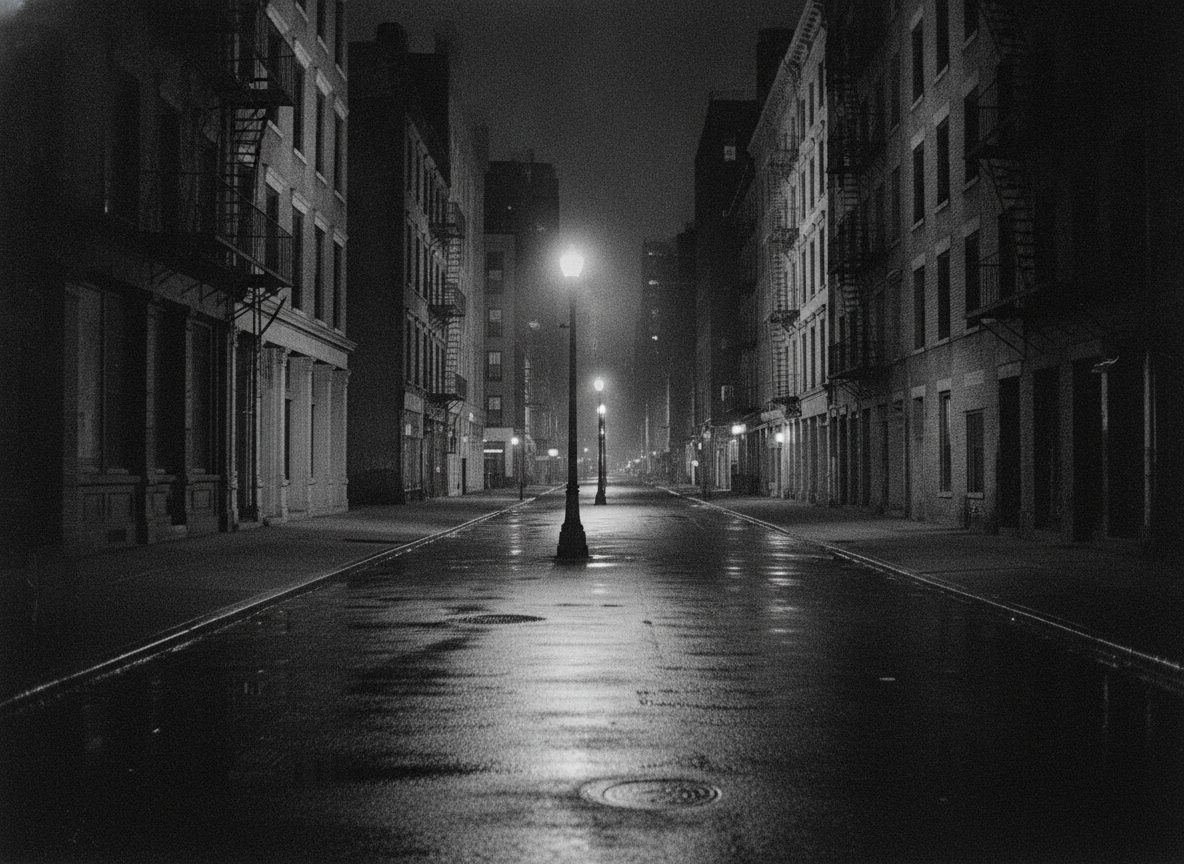
Mid-sixties downtown New York, the cold electric city this music grows from.From the Factory to Four Perfect Albums
The Story
The Velvet Underground's story is short and dense: four albums in four years, a famous collision with the pop-art world, and a slow-burning influence that outlasted almost every band that outsold them.
The art-world loft world of the Exploding Plastic Inevitable, where noise met pop.
1964–1965
Reed meets Cale
Lou Reed, a young staff songwriter with a literary streak, met John Cale, a classically trained violist steeped in avant-garde drone. With guitarist Sterling Morrison and drummer Maureen Tucker, they fused pop songcraft with noise and repetition into something entirely new.
1966
Andy Warhol and the EPI
Pop artist Andy Warhol took them on as manager, paired them with the German model and singer Nico, and folded them into his Exploding Plastic Inevitable, a multimedia show of film, light, and volume. Warhol designed the famous banana cover.
1967
The banana album
The Velvet Underground & Nico arrived to poor sales and hostile reviews, its songs about drugs and desire far ahead of their moment. It is now routinely ranked among the most influential rock albums ever made.
1968
White Light/White Heat
Cale pushed the band to its harshest extreme on a record of feedback, distortion, and the seventeen-minute "Sister Ray." Tensions between Reed and Cale peaked, and Cale left soon after.
1969
The quiet turn
With Doug Yule replacing Cale, the self-titled third album pulled back to hushed, gentle songs like "Pale Blue Eyes." The same band that made "Sister Ray" now sounded almost fragile.
1970
Loaded and the split
Loaded, packed with would-be hits like "Sweet Jane" and "Rock & Roll," was their most accessible record. Reed quit the band before it was even released.
After
The long afterlife
Reed and Cale went on to major solo careers, and the band's reputation only grew. Punk, post-punk, indie, and art rock all trace roots directly back to these four records.
Four Songs, One Education
Start Here
The Velvet Underground's range is the whole point. These four songs move from gentle pop to street-level rock to hushed ballad, all from the same band. Watch in order.
01 · The Opener
"Sunday Morning" (1967)
The first song on the first album: a soft, chiming lullaby laced with quiet paranoia. Proof from the outset that this "noise band" could write pop of real tenderness. The gentlest possible way in.
02 · The City
"I'm Waiting for the Man" (1967)
A hammering, two-chord ride through a Harlem drug run. Blunt, propulsive, and utterly unsentimental, it is the sound of rock discovering it could talk about anything at all.
03 · The Ballad
"Pale Blue Eyes" (1969)
From the hushed third album: an aching, softly strummed love song of quiet heartbreak. The other side of the band entirely, and one of the most beautiful things Lou Reed ever wrote.
04 · The Anthem
"Sweet Jane" (1970)
The immortal riff from Loaded, one of the most covered and quoted songs in rock. Warm, wry, and instantly hummable, it is the band at its most welcoming.
The Landmark Records
The Albums 4 to start with
The Velvet Underground made just four studio albums, and every one is essential. Together they map the full range from noise to pop. The silver-topped cards are the best places to begin.
1967
The Velvet Underground & Nico
The banana album. Warhol-produced and Nico-graced, it moves from the gentle "Sunday Morning" to the harrowing "Heroin," a record so far ahead of its time it took a decade to catch up. Start here.
The loudest, harshest record they made, all feedback, distortion, and abandon, culminating in the seventeen-minute freakout "Sister Ray." The wellspring of noise rock and no-wave.
The quiet turn. With Cale gone, the band pulled inward to hushed, intimate songs like "Pale Blue Eyes" and "Candy Says." Warm, gentle, and deeply human, it is the perfect counterweight to the noise.
The most accessible record, "loaded with hits" that never charted. Home to "Sweet Jane" and "Rock & Roll," it is the band reaching for the radio just as Reed walked out the door.
Two YouTube Music playlists: a First Listen of the signature songs to bring you in, and a Deep Cuts set of the longer, stranger, headphone-reward pieces for when you want to sink in. (Ideally, though, hear these four albums whole.) Hit the button on either card to play it.
The Velvet Underground were a true band of distinct personalities, orbited by two figures from the art world who shaped their sound and image. Here is who made the noise.
Guitar and electric viola, the drone-and-pop collision at the heart of the sound.
Lou ReedGuitar / vocals / songsThe band's chief songwriter and voice, who brought a novelist's eye for the city, its outsiders, and its appetites into the vocabulary of rock
John CaleViola / bass / keysThe classically trained avant-gardist whose droning electric viola and love of noise gave the early records their radical edge
Sterling MorrisonGuitarThe steady, versatile guitarist who anchored the interplay between Reed's songs and Cale's experiments
Maureen "Moe" TuckerDrumsA wholly original drummer who played standing up on a minimal kit, her hypnotic, tom-heavy pulse central to the band's sound
NicoVocals (first album)The German singer and model added by Warhol, whose cool, deep voice fronts three songs on the debut before she went solo
Andy WarholProducer / managerThe pop artist who managed the band, produced the first album, designed its banana cover, and staged them inside his Exploding Plastic Inevitable
The Roots of the Sound
Influences
The Velvet Underground pulled from an unusually wide net: the poetry of folk-rock, the sweetness of old pop and R&B, and the radical experiments of the New York avant-garde. Here is where it came from.
Folk Rock
Bob Dylan
Dylan's proof that a rock lyric could carry literary weight opened the door for Lou Reed's frank, novelistic storytelling and the band's plainspoken realism.
The classic doo-wop and R&B that Reed grew up on gave the band its tender side, the sweet melodies and street-corner harmony underneath even their harshest songs.
John Cale played in Young's Theatre of Eternal Music, where sustained drones and pure repetition became the raw material he carried straight into the band's electric viola.
The band members were sharp, funny, and often prickly interviewees, and the archival footage is a window into a scene that no longer exists. These conversations are worth seeking out.
Interview · Archive
Lou Reed and John Cale, In Conversation
From combative early press to the reflective interviews of their solo years, Reed and Cale each spent decades talking about the band they built and broke.
Interview · Documentary
The Filmed Portrait
Todd Haynes's 2021 documentary The Velvet Underground gathers rare footage and extended interviews with the surviving members and their circle, the best filmed account of the band and the scene. Search YouTube for clips and conversations.
Once the four albums have you, the band's world opens into lost tapes, solo careers, and a whole lineage of the artists they set in motion.
VU and Other People's Songs. the shelved 1969 recordings finally released in 1985 as VU, full of songs as strong as anything on the official albums, including "I Can't Stand It" and "Foggy Notion."
The live recordings. 1969: Velvet Underground Live and Live at Max's Kansas City capture the band loose and warm on stage, a different animal from the studio records.
The solo careers. Lou Reed's Transformer and Berlin and John Cale's Paris 1919 extend the story into the seventies and are essential in their own right.
The descendants. hear the influence run forward through David Bowie, Talking Heads, Big Thief, Built to Spill, and countless others who took these four records as a starting point.
The Way to Listen
Do yourself one favor: play The Velvet Underground & Nico from start to finish, then the self-titled third album. One is the noise and the danger, the other is the tenderness, and together they are the whole band in an hour and a half.