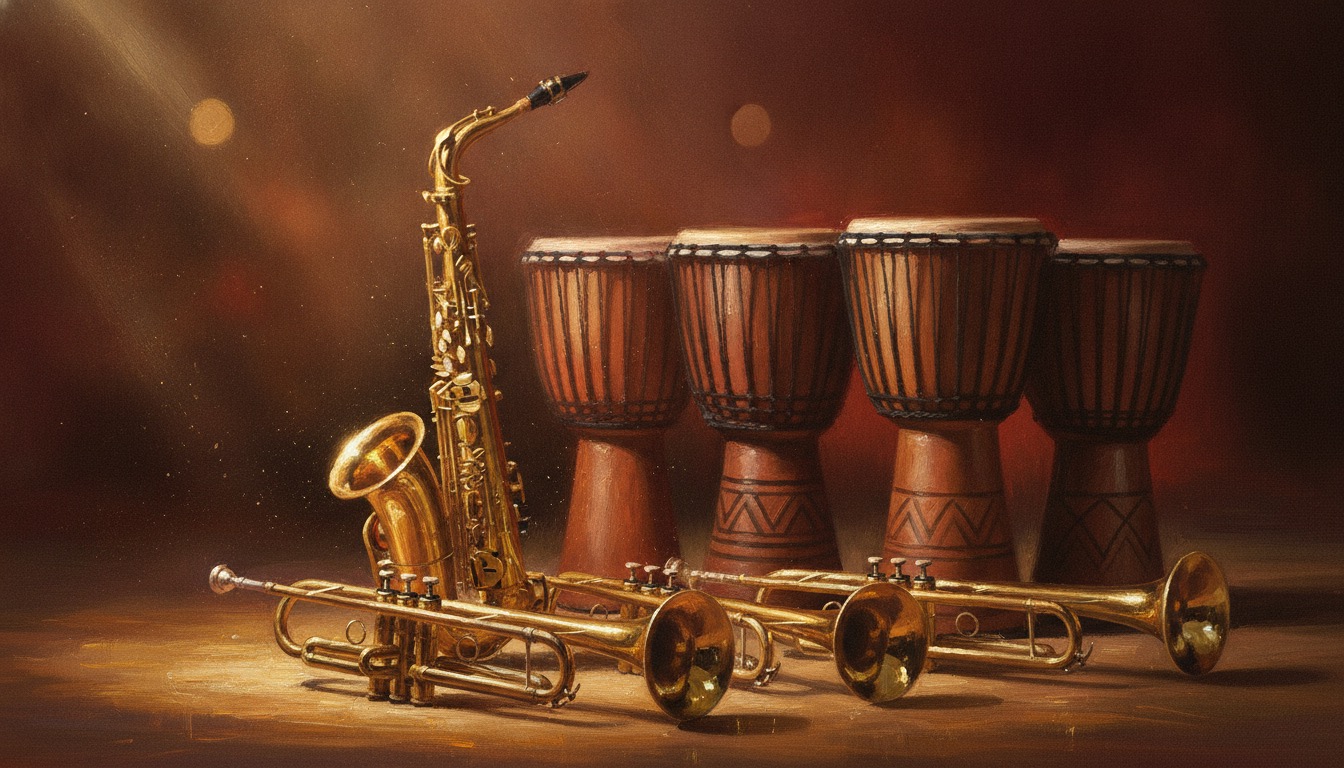
How a Nigerian bandleader invented an entire genre, turned it into a weapon against corruption and dictatorship, and paid for it with his freedom and his blood.
The Short Version
Who Is This?
Fela Kuti was a Nigerian bandleader, saxophonist, keyboardist, and activist who created Afrobeat, one of the most infectious and influential styles of music in the world. Fusing Yoruba rhythms, highlife, American funk, and jazz into long, hypnotic, horn-driven grooves, he built a sound that was as danceable as it was defiant.
Two things make him singular. First, the groove: his songs stretch to ten, twenty, even thirty minutes, built on interlocking rhythms, call-and-response vocals, and blazing horns that pull you into a trance. Second, the courage: he used that music as a weapon against corruption and military dictatorship in Nigeria, and paid a terrible price for it.
His records are long, political, and utterly hypnotic, unlike almost anything else in popular music. If you want music that makes you move and makes you think in equal measure, start here.
The Lagos world his music came from and spoke to.The Birth of Afrobeat, and the Cost of It
The Story
Fela's story is inseparable from Nigeria's: a musician who turned his band into a movement and his songs into acts of resistance.
1938
Abeokuta, Nigeria
Born into a prominent activist family, Fela studied music in London, absorbing jazz and classical training before returning home to forge something entirely new.
1969
America and awakening
A trip to the United States exposed him to the Black Power movement and deepened his politics. He returned radicalized, renamed his band Africa 70, and sharpened Afrobeat into a tool.
1970-1975
The sound takes shape
With drummer Tony Allen as his rhythmic engine, Fela built the classic Afrobeat template across a torrent of albums, singing in pidgin English so all of Africa could understand.
1976
Zombie
His most famous album mocked the Nigerian military as mindless "zombies." It was a massive hit and an act of open defiance that the regime would not forgive.
1977
The raid on Kalakuta
Soldiers attacked his commune, the Kalakuta Republic, beating him and throwing his elderly mother from a window, injuries from which she later died. He responded with more music, not less.
1980s
Prison and persistence
Renaming his band Egypt 80, Fela kept recording fierce protest albums, ran for president, and was repeatedly jailed on trumped-up charges. He never stopped.
1997
A nation mourns
Fela died in 1997, and an estimated million people filled the streets of Lagos for his funeral. His sons Femi and Seun carry Afrobeat forward today.
Horns and drums: the engine of Afrobeat.Three Songs, One Education
Start Here
Three tracks that show the range: the cultural satire, the philosophical groove, and the defiant anthem. Give each the time it needs. Listen in order.
01 · The Satire
"Gentleman" — 1973
A swaggering, saxophone-led groove that mocks Africans who ape European manners. A perfect first taste of how Fela wrapped sharp ideas in irresistible rhythm.
02 · The Groove
"Water No Get Enemy" — 1975
A warm, philosophical classic and one of his most beloved songs, its horn refrain gliding over a deep, patient groove. Afrobeat at its most hypnotic and humane.
03 · The Defiance
"Zombie" — 1977
His most famous and most dangerous song, mocking the mindless obedience of the military. The groove is joyful; the message got his commune burned to the ground.
The Studio Catalog
The Albums 6 to start with
Fela recorded dozens of albums, most built from one or two long tracks. These six are the best way in. The gold-topped cards mark the essentials; the moss-green marks the early classics.
1972
Roforofo Fight
An early Africa 70 landmark that shows the classic Afrobeat template snapping into focus: long, driving grooves with Tony Allen's drums at the center.
His most famous and consequential album, mocking the military over one of his most irresistible grooves. Essential, and the record that made him a target.
One curated YouTube Music playlist gathering the essentials, though remember these are long, patient tracks meant to unfold. (Ideally, spend time with these albums whole.) Hit the button below to play it.
Fela was a total bandleader in the tradition of Duke Ellington or James Brown: composer, arranger, frontman, and disciplinarian of a large, tight ensemble. He played saxophone and keyboards, sang, and directed everything, and his bands, first Africa 70, then Egypt 80, could hold a single groove locked in place for half an hour without ever losing tension.
The secret weapon for years was drummer Tony Allen, whose intricate, funk-derived rhythms are the beating heart of Afrobeat. Fela famously said that without Tony Allen there would be no Afrobeat, and the interplay between Allen's drums and the horns and guitars is the foundation everything else is built on.
The music is inseparable from the message. Fela sang in pidgin English so listeners across Africa could understand, and his subjects were corruption, colonialism, police brutality, and the failures of Nigeria's rulers. He turned the dance floor into a place of political education, and the regime feared him for it.
He lived his politics to a dangerous extreme, founding an independent commune, defying the government again and again, and enduring beatings, arrests, and worse. That fusion of irresistible joy and fearless resistance is exactly what makes his music matter so much, and why it still sounds so alive.
Joy and defiance, locked into the same groove.The Roots of the Sound
Influences
Fela fused West African traditions with American funk and jazz. Here are four of the touchstones behind Afrobeat.
The Funk
James Brown
James Brown's hard, rhythmic funk was the crucial American ingredient in Afrobeat; the two bands even influenced each other across the Atlantic.
Fela was a spellbinding, provocative talker, as fearless in conversation as in song. Two archival interviews from the heart of his career.
Interview · 1981
On Music and Politics
An archival 1981 interview in which Fela lays out his fusion of music and activism, and the beliefs that put him in constant conflict with Nigeria's rulers.
A 1988 archival interview from the Reelin' in the Years collection, with Fela reflecting on Afrobeat, colonialism, and his role as a musician and an agitator.
Fela's catalog is vast, and his world extends well beyond the records.
The later masterworks — Coffin for Head of State and Beasts of No Nation are among his most powerful political albums.
Tony Allen — the drummer's own records, before and after Fela, are essential listening for anyone who falls for the Afrobeat groove.
FELA! the musical — the acclaimed Broadway show introduced his life and music to a whole new audience, and is a great entry point.
The next generation — his sons Femi and Seun Kuti carry Afrobeat forward with their own bands, keeping the tradition alive and political.
The Way to Listen
Start with Zombie or Expensive Shit, and do not fight the length. Let one long track carry you for its full run; that slow, hypnotic build is the whole point, and the clearest case for why Fela changed music forever.