The relentless bandleader who drove soul toward funk, building songs around rhythm, the one, and a drilled, virtuosic band, and earned the title Godfather of Soul.
The Short Version
Who Is He?
James Brown (born in Barnwell, South Carolina, in 1933, and raised in Augusta, Georgia) was a singer, bandleader, and one of the principal architects of funk. He began in the 1950s as a gospel-steeped rhythm and blues shouter fronting the Famous Flames, and over the following decade he rebuilt popular music around rhythm, stripping songs down until the groove itself became the subject.
Two things make him singular. First, the rhythm: Brown pushed the accent onto the first beat, the downbeat his band called "the one," turning every instrument, including the voice, into a piece of percussion. Second, the discipline: he ran his band like a bandleader and a drill sergeant at once, fining players for missed notes and demanding a precision that made the music snap.
He recorded and toured almost without pause for half a century, earning nicknames that doubled as job descriptions: the Godfather of Soul, Soul Brother Number One, the Hardest Working Man in Show Business. To understand funk, hip hop, and modern dance music, you start here.
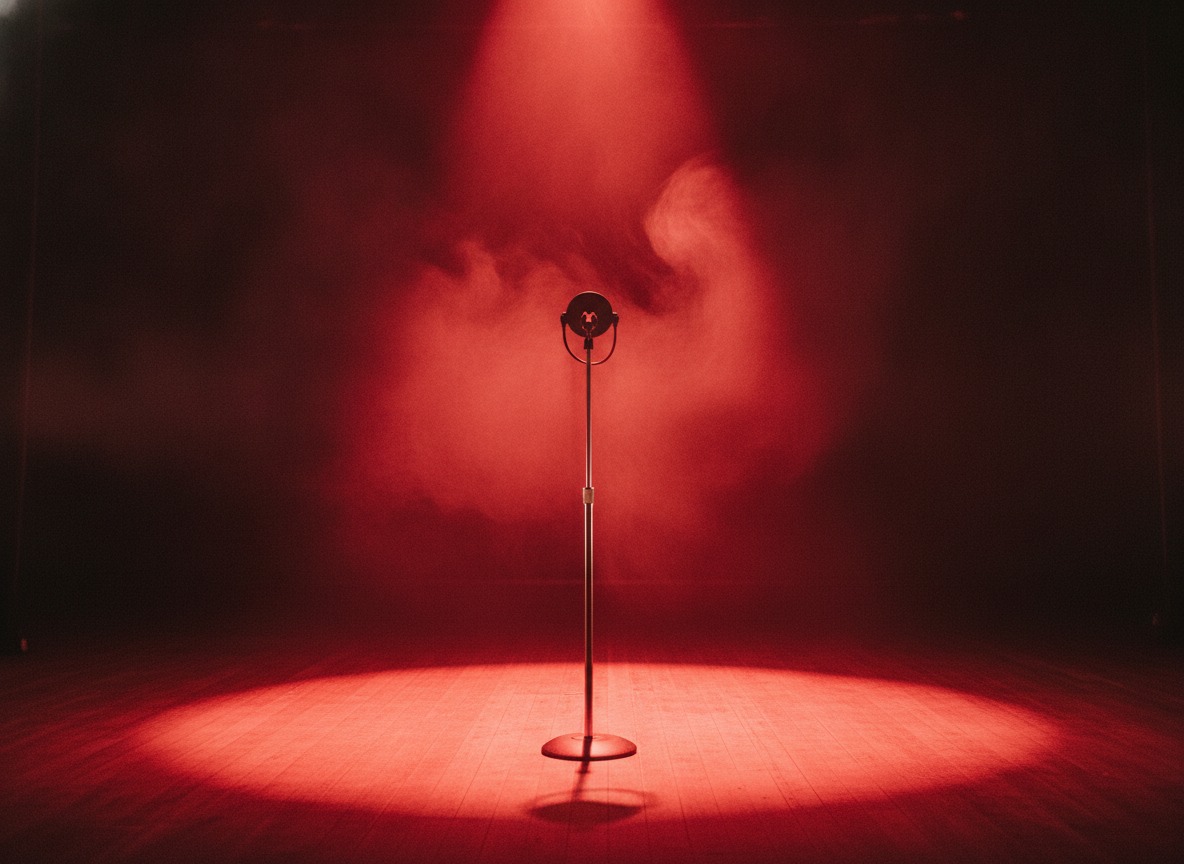
The stage, the spotlight, and a band drilled to turn on a dime.From Augusta Gospel to the Godfather of Soul
The Story
Brown's career is a long march of relentless work and steady reinvention, each phase tightening the music until rhythm stood at the center of everything.
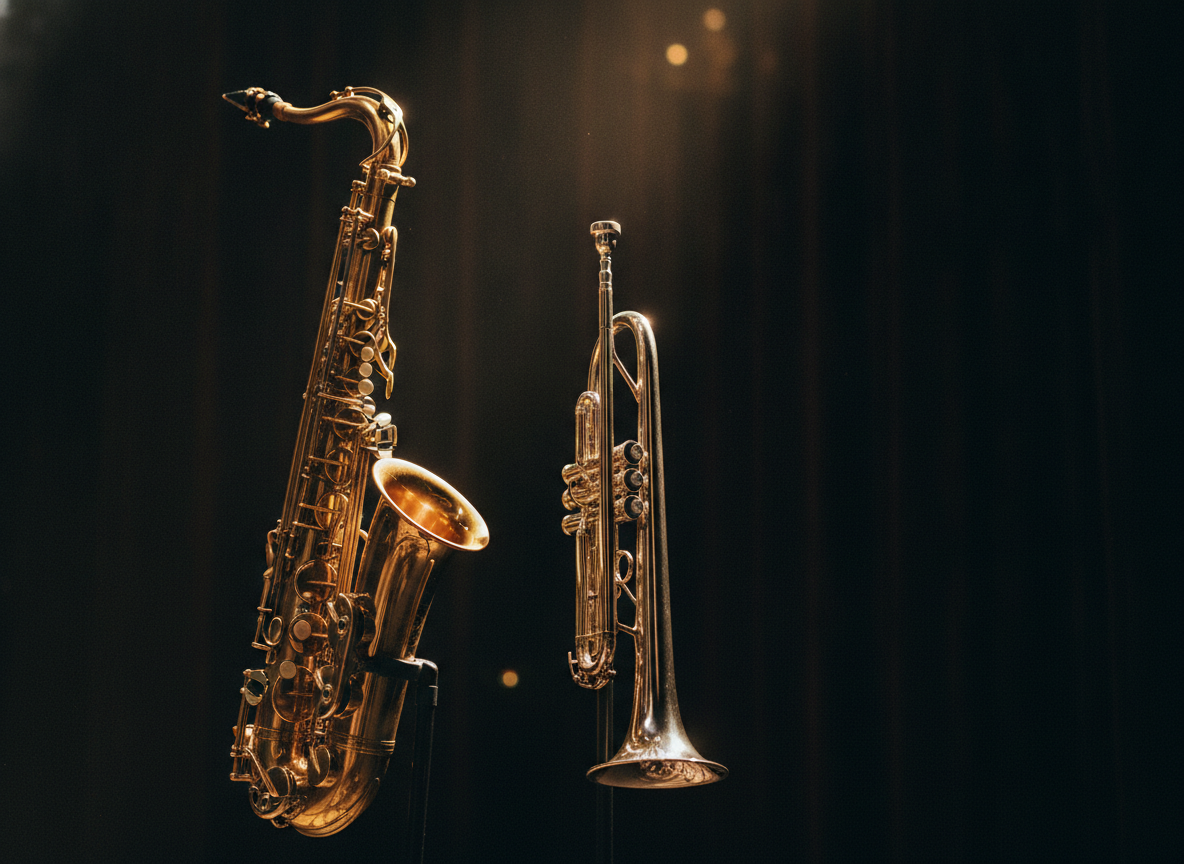
A horn section built to punch on the beat, the engine of the funk sound.
1956
Please, Please, Please
Brown broke through fronting the Famous Flames, whose pleading debut single became an R&B hit and established his raw, gospel-charged vocal style and his galvanic live presence.
1963
Live at the Apollo
Financing the recording himself against his label's wishes, Brown captured a full show at Harlem's Apollo Theater. The album crossed over to a wide audience and became a landmark of live recording.
1965–1967
Inventing the funk
With "Papa's Got a Brand New Bag" and "Cold Sweat," Brown pared his sound down to interlocking rhythm, horn stabs, and the downbeat. The songs pointed the way from soul into funk.
1968–1971
Say it loud
Brown became a social force, recording "Say It Loud - I'm Black and I'm Proud" and calming a grieving city with a televised Boston concert the night after Martin Luther King Jr. was killed.
1970
The J.B.'s and "the one"
A walkout led Brown to assemble a young new band, the J.B.'s, with teenage bassist Bootsy Collins. "Get Up (I Feel Like Being a) Sex Machine" and "Super Bad" pushed the groove to its leanest, hardest form.
1973–1974
The Payback
Working with arranger Fred Wesley and the horn team of Maceo Parker and company, Brown cut deep, slow-burning funk like "The Payback," music later mined for countless samples.
1986
Living in America
A late comeback hit returned Brown to the charts, and he was inducted into the Rock and Roll Hall of Fame in its first class, his influence by then woven into the foundation of hip hop.
Four Songs, One Education
Start Here
Brown's catalog is enormous. These four tracks are the fastest way to hear the arc, from soul hit to the birth of funk to the deep groove that hip hop would build on. Watch in order.
01 · The Hit
"I Got You (I Feel Good)" (1965)
The joyous, horn-driven single that became his signature crossover hit. A perfect two minutes of soul energy, and the easiest possible way into James Brown.
02 · The Turn
"Papa's Got a Brand New Bag" (1965)
The hinge point. Brown shifts the accent onto the downbeat and lets the rhythm carry the song, a record widely cited as one of the first true funk sides.
03 · The Groove
"Get Up (I Feel Like Being a) Sex Machine" (1970)
The J.B.'s at full stride, built on Bootsy Collins's bass and a call-and-response with the band. The groove is the whole song, and it never lets up.
04 · The Deep Cut
"The Payback" (1973)
A slow, simmering seven-minute groove with Fred Wesley's arrangement and Maceo Parker on saxophone. One of the most sampled recordings in music history.
The Landmark Records
The Albums 6 to start with
Brown released dozens of albums across five decades, plus a mountain of singles and live sets. These six are the pillars, the records and collections that define the catalog. The gold-topped card is the best place to begin.
1963
Live at the Apollo
The self-financed live album that made his name. A sweat-drenched Harlem set that captures the ferocity of his show better than any studio record, and a benchmark of the live format.
The album around his defining anthem, where hard funk and social message meet. The title track became a rallying cry and one of the most important records of its moment.
Part live, part studio, this is the arrival of the J.B.'s and the leanest era of the groove. Bootsy Collins on bass, endless vamps, and the title track as its centerpiece.
The deepest studio funk in the catalog, arranged with Fred Wesley and built for the long groove. Dark, patient, and endlessly sampled, it is a cornerstone of 1970s funk.
A compilation of extended early-1970s funk, including "Funky Drummer," whose Clyde Stubblefield break became one of the most sampled beats in the history of recorded music.
Two setlists: a First Listen of the signature sides to bring you in, and a Deep Cuts set of the longer grooves and breaks for when you want to sink in. Hit the button on either card to search it out on YouTube Music.
Brown was the frontman and the boss, but the sound belonged to the band as much as the man. A rotating cast of drilled, virtuosic players turned his ideas into the tightest funk ever recorded.
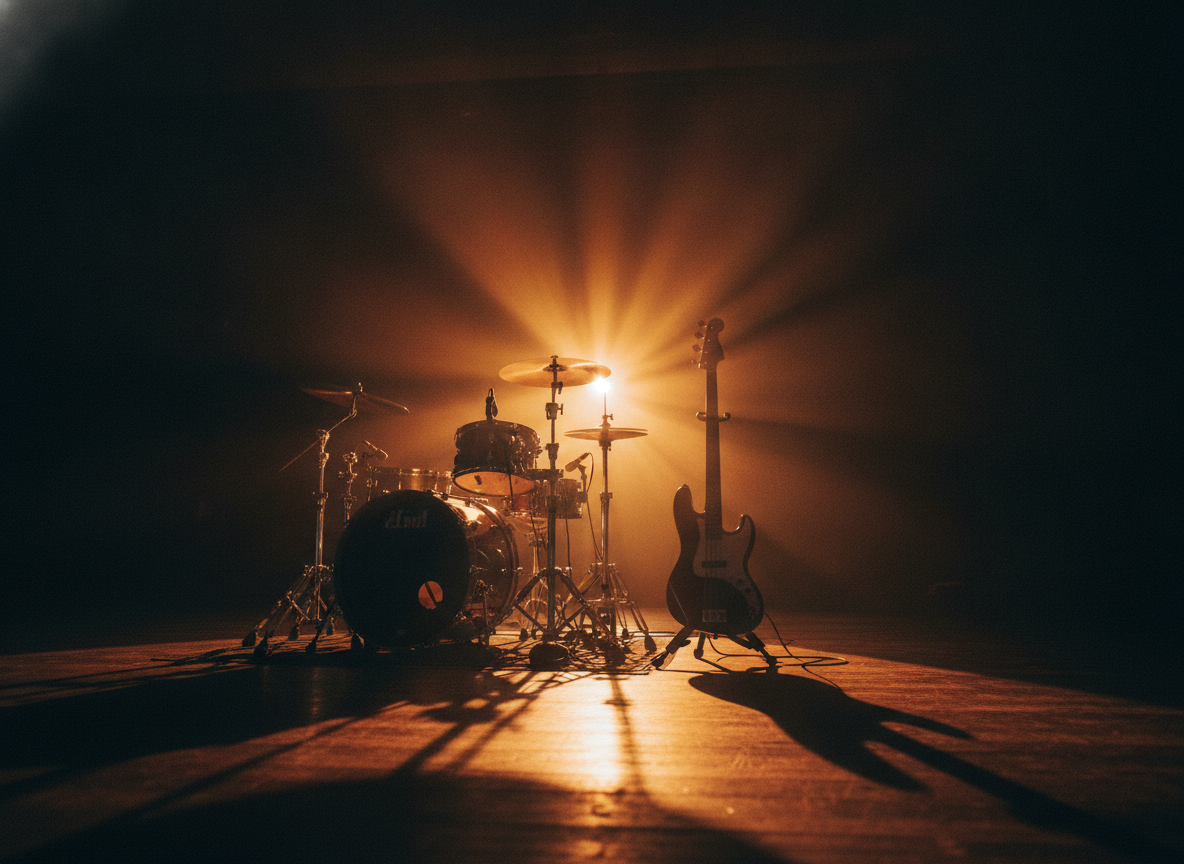
The rhythm section was the whole point, and these players locked it down.
James BrownVocals, bandleaderThe Godfather of Soul, who fronted the group, directed the arrangements by hand and voice on stage, and ran the band with legendary discipline
Maceo ParkerSaxophoneThe signature horn voice of the funk years, whose alto and tenor solos, cued by Brown's shout of "Maceo," defined the sound of the J.B.'s
Bootsy CollinsBassJoined as a teenager in 1970 and anchored "Sex Machine" and "Super Bad" before going on to Parliament-Funkadelic and his own career
Fred WesleyTrombone, arrangerMusical director of the J.B.'s who shaped the horn charts and arrangements behind "The Payback" and the deep early-1970s funk
Bobby ByrdVocals, organA Famous Flame and lifelong collaborator whose call-and-response vocals answered Brown across decades of records
Clyde StubblefieldDrumsCut the "Funky Drummer" break, one of the most sampled drum patterns ever recorded and a foundation of hip hop
The Roots of the Sound
Influences
Brown built his art from the Black American music he grew up inside: the fervor of the gospel church, the shout of jump blues, and the first jolt of rock and roll. Here is where it started.
Rock and Roll
Little Richard
A fellow Georgia performer whose explosive energy and gospel-charged shout were an early model. Brown briefly filled in fronting Richard's band, the Upsetters, in the 1950s.
The jukebox king of the 1940s, whose tight bands, riffing horns, and rhythm-forward jump blues laid down a template that Brown's funk would take to its logical extreme.
The pioneer who fused gospel phrasing with rhythm and blues, opening the door to soul. His example showed how the sound of the church could power secular music.
The guitar-slinging gospel star whose rhythmic drive and showmanship prefigured rock and soul. The Pentecostal fervor she embodied runs straight through Brown's vocals.
Brown was as vivid off stage as on it, holding forth on the band, the business, and "the one." His filmed conversations are worth seeking out.
Interview · Archive
Brown, In Conversation
A 1988 television interview from the CNN archive, one of many candid conversations in which Brown talked through his music, his method, and his career in his own unmistakable voice.
Interview · Documentary
The Filmed Portraits
Concert films and documentaries, including Alex Gibney's Mr. Dynamite and archival footage of the 1968 Boston Garden concert, capture Brown at the height of his powers. Search YouTube for clips and conversations.
Once the landmark records have you, Brown's world opens into decades of singles, live sets, and the vast web of music built on his grooves.
The singles. Brown's genius lived on 45s as much as albums; sets like 20 All-Time Greatest Hits! gather the run of chart singles that album listening can miss.
The J.B.'s records. His band cut their own instrumental funk, from "Doing It to Death" to "Pass the Peas," a parallel catalog of pure groove.
The samples. From "Funky Drummer" to "Funky President," Brown's breaks became the raw material of hip hop; tracing the samples is its own education.
The live films. The T.A.M.I. Show performance and the 1968 Boston Garden concert are among the most electric filmed documents in popular music.
The Way to Listen
Do yourself one favor: put on Live at the Apollo from start to finish, then In the Jungle Groove. Listen for "the one," the hard accent on the downbeat, and hear how every instrument turns into a drum.