The racially integrated house band at Stax Records who cut classic instrumentals of their own and backed the label's greatest soul sides, defining the lean, deep-pocket sound of Memphis soul.
The Short Version
Who Are They?
Booker T. & the M.G.'s were the house band at Stax Records in Memphis, and one of the most influential instrumental groups in American music. Formed in 1962, the classic lineup paired organist Booker T. Jones and drummer Al Jackson Jr. with guitarist Steve Cropper and bassist Donald "Duck" Dunn, a group that was racially integrated at a time when the segregated South made that itself a statement.
Two roles made them singular. As a band in their own right, they scored instrumental hits built on Jones's Hammond organ and Cropper's clipped, economical guitar, starting with the 1962 smash "Green Onions." As the Stax rhythm section, they played on a huge share of the label's catalog, backing Otis Redding, Sam & Dave, Wilson Pickett, Eddie Floyd, Carla Thomas, and many more.
Their style prized restraint: space, groove, and taste over flash. That approach shaped the entire Memphis soul sound and echoed through decades of R&B, rock, and funk. The band was inducted into the Rock and Roll Hall of Fame in 1992.
Studio A at Stax, the converted movie theater on McLemore Avenue where the sound was built.From a Memphis Session to the Hall of Fame
The Story
The band came together almost by accident and grew into the engine room of a legendary label, then a celebrated act of its own.
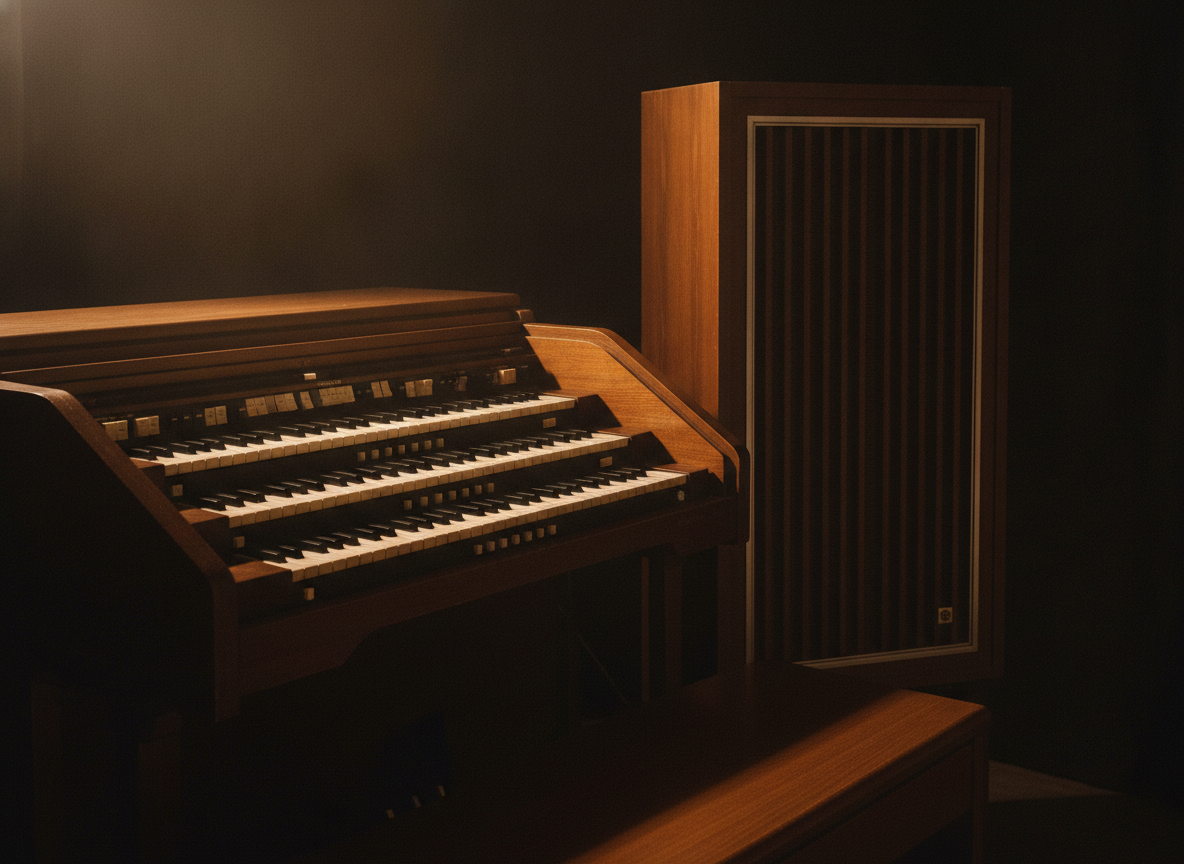
The Hammond organ and Leslie speaker, the voice at the center of the band's sound.
1962
Green Onions
During a leftover studio session, the young players cut an organ-driven instrumental called "Green Onions." Released as a single, it became a national hit and gave the band its name and its debut album. Booker T. Jones was still a teenager.
1962–1964
The house band forms
With Jones on organ, Steve Cropper on guitar, Lewie Steinberg on bass, and Al Jackson Jr. on drums, the group became the core Stax rhythm section, playing on record after record for the label's roster of soul singers.
1965
Duck Dunn steps in
Donald "Duck" Dunn took over on bass, completing the classic and most celebrated lineup. Jones and Jackson were Black, Cropper and Dunn were white, and the integrated band became a quiet emblem of what Stax stood for.
1965–1968
Backing the golden age
The M.G.'s anchored the peak Stax years, backing Otis Redding, Sam & Dave, Wilson Pickett, Eddie Floyd, and others, while landing their own hits like "Hip Hug-Her" and "Soul Limbo."
1969
Time Is Tight
Drawn from the film Uptight, "Time Is Tight" became one of the band's biggest singles and remains a signature of the group's tight, melodic instrumental style.
1970–1971
McLemore Avenue and Melting Pot
The band stretched out, reimagining the Beatles' Abbey Road as the instrumental McLemore Avenue, then cutting the long-form, groove-heavy Melting Pot. Soon after, members drifted away and the classic run ended.
1975
The loss of Al Jackson Jr.
Drummer Al Jackson Jr., one of the most admired timekeepers in soul, was killed in Memphis in 1975. The band would regroup in later years with other drummers, but the original engine was gone.
1992
The Hall of Fame
Booker T. & the M.G.'s were inducted into the Rock and Roll Hall of Fame. Members stayed active for decades, with Cropper and Dunn in the Blues Brothers band and Jones a touring and recording artist to this day.
Four Tracks, One Education
Start Here
The M.G.'s made their case without a single word. These four instrumentals are the fastest way to hear the groove, the organ, and the famous economy of the band. Play them in order.
01 · The Landmark
"Green Onions" (1962)
The song that started it all: a simple, menacing organ riff over a walking bass and Cropper's stinging guitar. A million-selling instrumental and the blueprint for the whole Memphis sound.
02 · The Signature
"Time Is Tight" (1969)
A melodic, mid-tempo groove that builds patiently to a joyful release. Among the band's biggest hits and a perfect demonstration of how much they could say with so few notes.
03 · The Groove
"Hip Hug-Her" (1967)
A funky, wah-tinged strut that shows the band moving with the times. The interplay of organ and guitar over Dunn and Jackson's pocket is the sound of a rhythm section in total command.
04 · The Sunshine
"Soul Limbo" (1968)
A bright, Caribbean-flavored instrumental built on marimba and a lilting beat, later famous as a broadcast theme. Proof the band's palette reached far beyond straight soul.
The Landmark Records
The Albums 6 to start with
The M.G.'s cut a run of tight, groove-driven albums across the sixties and early seventies. These six are the pillars of the catalog. The green-topped card is the best place to begin.
1962
Green Onions
The debut, built around the title-track smash. A lean set of organ-led instrumentals that established the band and helped set the template for Memphis soul.
The band at its funky peak, led by the title-track hit. Wah-inflected guitar and a harder groove show the M.G.'s absorbing the new sounds of the late sixties.
The final album by the classic lineup, and a stretch into longer, deeper grooves. Its extended title track became a favorite source for later samplers and DJs.
Two YouTube Music playlists: a First Listen of the signature instrumentals to bring you in, and a Deep Cuts set of the longer, headphone-reward grooves for when you want to sink in. (Ideally, though, hear these albums whole.) Hit the button on either card to play it.
The M.G.'s were a true band, four distinct voices locked into one of the deepest grooves in American music. These are the players who defined the classic sound.
Behind the glass on McLemore Avenue, where the Stax sound was cut to tape.
Booker T. JonesOrgan / keysThe bandleader and namesake, whose Hammond organ is the melodic center of the sound; a teenage prodigy who became one of soul's great instrumentalists and arrangers
Steve CropperGuitarA master of economy whose clipped, precise lines shaped the Stax sound; also a key songwriter and producer for the label
Donald "Duck" DunnBassJoined in the mid-sixties and anchored the classic lineup with a warm, melodic, deeply in-the-pocket bass; later a member of the Blues Brothers band
Al Jackson Jr.DrumsOne of the most revered timekeepers in soul, nicknamed "The Human Timekeeper," whose feel drove the band and countless Stax hits until his death in 1975
Lewie SteinbergBass (early years)The band's original bassist, who played on "Green Onions" and the earliest recordings before Duck Dunn took over
The Roots of the Sound
Influences
The M.G.'s grew out of the deep well of Memphis and Southern music: gospel from the churches, rhythm and blues from the radio, and the jazz organ tradition that gave the Hammond its voice.
R&B
Ray Charles
The great architect of soul, who fused gospel fervor with rhythm and blues. His blend of the sacred and secular was foundational for everything Stax would build.
Booker T. Jones and Steve Cropper are living history, and both have spoken at length about how the Stax sound was made. Their reflections are the closest thing to a guided tour of the era.
Interview · Q with Tom Power
Booker T. Jones, In Conversation
A reflective, career-spanning conversation with the bandleader about growing up in Memphis, the birth of the Stax sound, and a life at the Hammond organ.
Interview · More Voices
Steve Cropper and the Stax Story
Guitarist Steve Cropper has given many detailed interviews about the band, the label, and the making of the Memphis sound, including sessions filmed at the Musicians Hall of Fame. Search YouTube for extended conversations and clips.
Once the instrumentals have you, the M.G.'s open a door onto the entire Stax catalog and the wider story of Memphis soul.
The Stax singles they backed. hear the band as a rhythm section behind Otis Redding, Sam & Dave, Wilson Pickett, Eddie Floyd, and Carla Thomas, and their playing comes fully into focus.
Otis Redding, live. the M.G.'s backed Redding at the Monterey Pop Festival in 1967, one of the great documents of the band as a live force.
Booker T. Jones solo. Jones has kept recording for decades, including Grammy-winning later albums that revisit and extend the classic sound.
The Stax story. books and documentaries on Stax Records place the band in the full history of the label, the city, and the era.
The Way to Listen
Do yourself one favor: put on Green Onions front to back, then jump to Melting Pot. Listen for the space between the notes. The M.G.'s prove that groove and restraint can say more than any solo.