A California quartet led by John Fogerty who, in a brief and astonishingly prolific run from 1968 to 1972, distilled American blues, rockabilly, and R&B into a lean, bayou-flavored sound and a string of hit singles that still define classic rock radio.
The Short Version
Who Were They?
Creedence Clearwater Revival were an American rock band from El Cerrito, California, active as CCR from 1967 to 1972. The group grew out of a teenage band formed by singer, guitarist, and songwriter John Fogerty with his older brother Tom Fogerty on rhythm guitar, Stu Cook on bass, and Doug Clifford on drums. After years of playing under earlier names, they settled on Creedence Clearwater Revival and signed to the Bay Area label Fantasy Records.
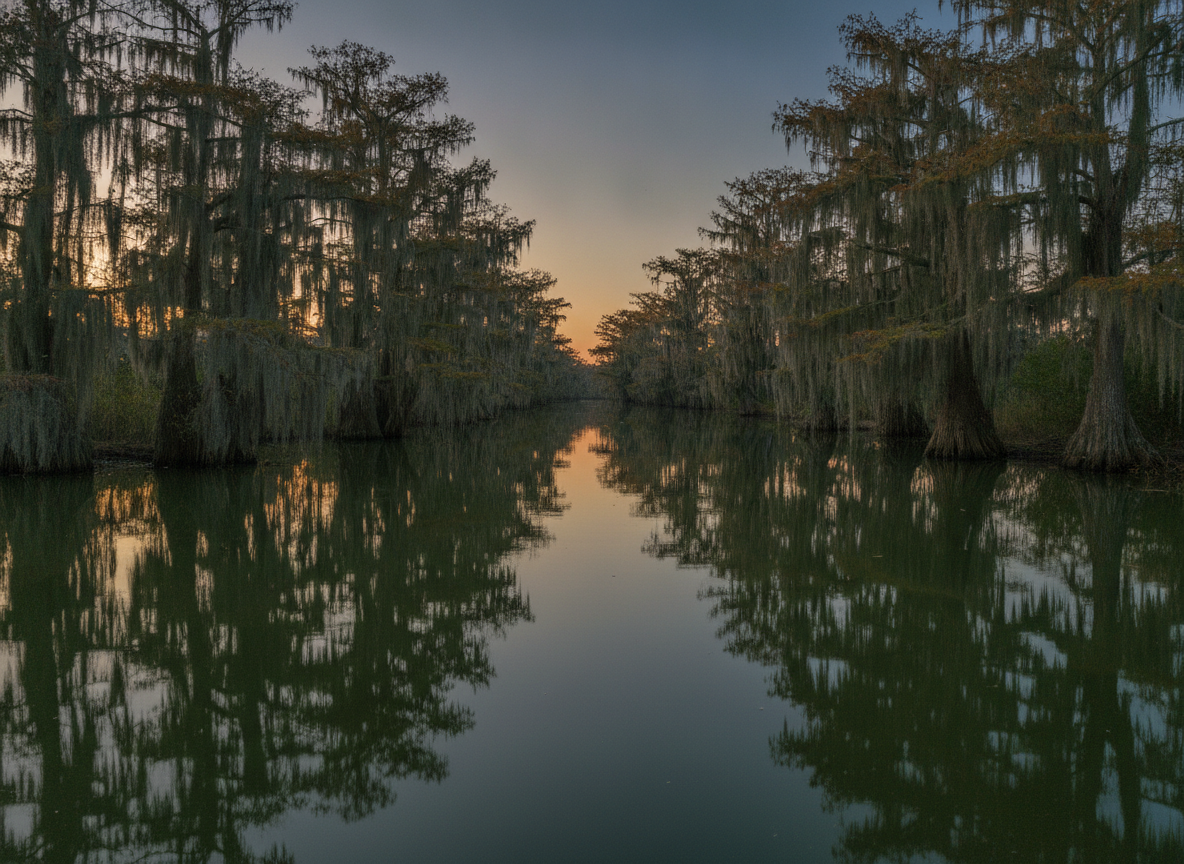
Two things make them singular. First, the sound: a compact, no-frills blend of blues, rockabilly, and Southern R&B that fans and critics dubbed "swamp rock," even though the band was rooted in Northern California rather than the Louisiana bayou it evoked. Second, the pace: between 1968 and 1970 CCR released a remarkable run of albums and singles, becoming one of the most successful American bands of their era in barely three years.
Their catalog is short and dense, which makes them an unusually easy band to explore. To understand the roots of American rock radio, you start here.
The swampy imagery the band evoked, though their home was the San Francisco Bay Area.From an El Cerrito Garage to the Top of the Charts
The Story
CCR's story is one of a long apprenticeship followed by a sudden, concentrated burst of success, and then an equally sudden unraveling.
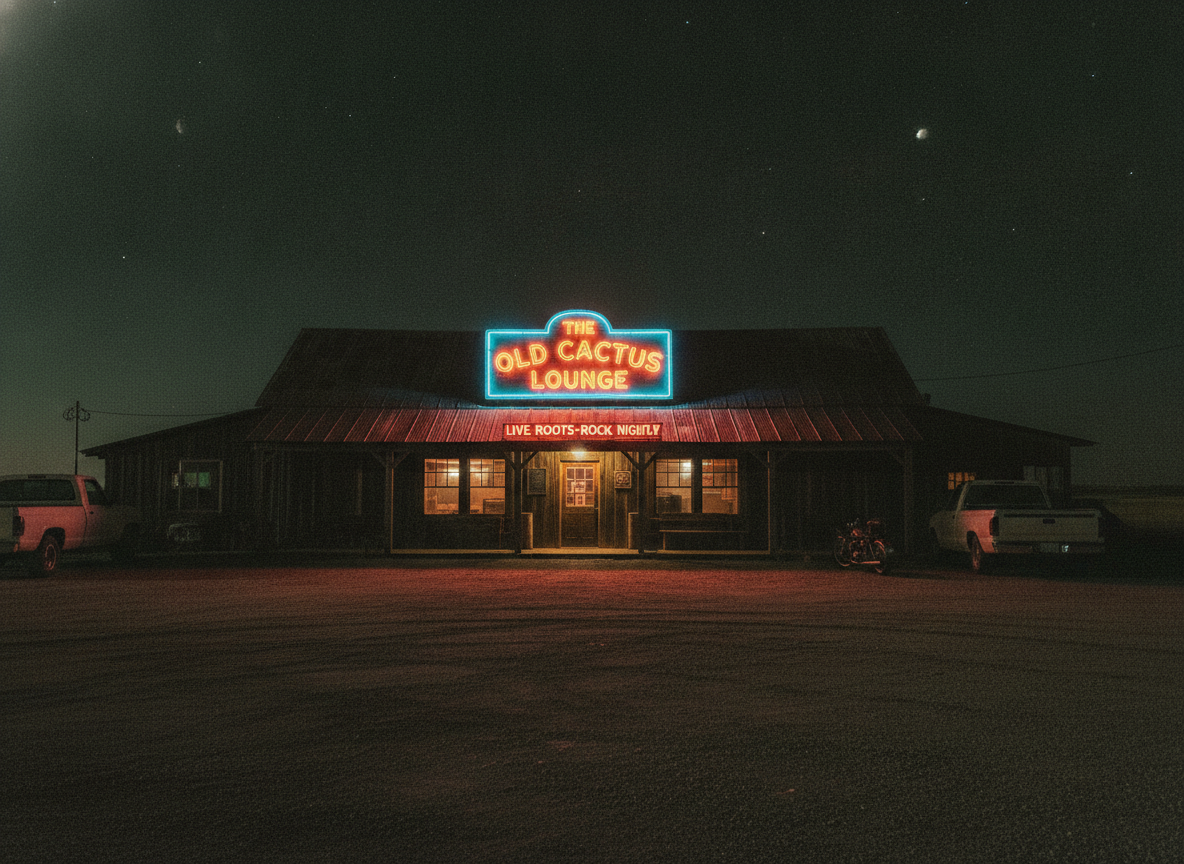
Years of bar and club work sharpened the tight, road-tested sound.
1959–1967
The long apprenticeship
The four members played together for years as the Blue Velvets and later as the Golliwogs, cutting singles for Fantasy Records and honing their craft in Bay Area clubs before adopting the name Creedence Clearwater Revival.
1968
The breakthrough
Their self-titled debut arrived, built around a driving cover of "Susie Q" that became their first hit single and established John Fogerty as the band's writer, singer, and creative leader.
1969
The prolific year
An extraordinary run of three albums in a single year, Bayou Country, Green River, and Willy and the Poor Boys, produced hit after hit and made CCR one of the most popular bands in America.
1970
The peak
Cosmo's Factory gathered a cluster of singles into their best-selling album, and Pendulum followed the same year, showing the band expanding its arrangements with keyboards and horns.
1971
Tensions and departure
Friction over creative control mounted, and Tom Fogerty left the group. CCR carried on as a trio, with Cook and Clifford taking on more writing and singing duties.
1972
The end
The trio released the divisive Mardi Gras and then disbanded, closing one of the most concentrated hit-making careers in rock after only a handful of years.
1993
The Hall of Fame
Creedence Clearwater Revival were inducted into the Rock and Roll Hall of Fame, cementing a legacy that has kept their singles in constant rotation for decades.
Four Songs, One Education
Start Here
CCR's catalog is compact and full of hits. These four singles are the fastest way to grasp the range, from swamp-rock groove to lean rockabilly to R&B-tinged pop. Watch in order.
01 · The Signature
"Proud Mary" (1969)
The rolling, riverboat groove that became the band's calling card and one of the most covered songs of its era. The essential CCR starting point.
02 · The Two-Minute Hit
"Bad Moon Rising" (1969)
A concise, upbeat rockabilly single built on a jangling rhythm guitar. Proof of the band's gift for packing a full hook into barely two minutes.
03 · The Rocker
"Fortunate Son" (1969)
A fast, hard-charging single from Willy and the Poor Boys, driven by a snapping backbeat and Fogerty's raw, cutting vocal. The band at its most propulsive.
04 · The Ballad
"Have You Ever Seen the Rain" (1970)
A warmer, mid-tempo single from Pendulum that shows the melodic, piano-touched side of the band. Direct, tuneful, and enduring.
The Landmark Records
The Albums 6 to start with
CCR released seven studio albums in barely four years. These six are the core of the catalog, the records that produced the hits and defined the swamp-rock sound. The blue-topped cards are the best places to begin.
1968
Creedence Clearwater Revival
The debut. Built around an extended cover of "Susie Q" and a reading of Screamin' Jay Hawkins's "I Put a Spell on You," it introduced the band's blues-rooted, jam-friendly early sound.
Leaner and tighter, with the title track, "Bad Moon Rising," and "Lodi." Many consider it the sharpest distillation of the band's classic single-driven style.
The commercial peak and best-selling album, gathering "Travelin' Band," "Up Around the Bend," "Who'll Stop the Rain," and a sprawling take on "I Heard It Through the Grapevine." The essential CCR album.
A more elaborate record that added keyboards and horns, yielding "Have You Ever Seen the Rain" and "Hey Tonight." The sound of the band stretching its arrangements.
Two YouTube Music sets: a First Listen of the signature singles to bring you in, and a Deep Cuts set of the longer and lesser-played tracks for when you want to sink in. (Ideally, though, hear these albums whole.) Hit the button on either card to play it.
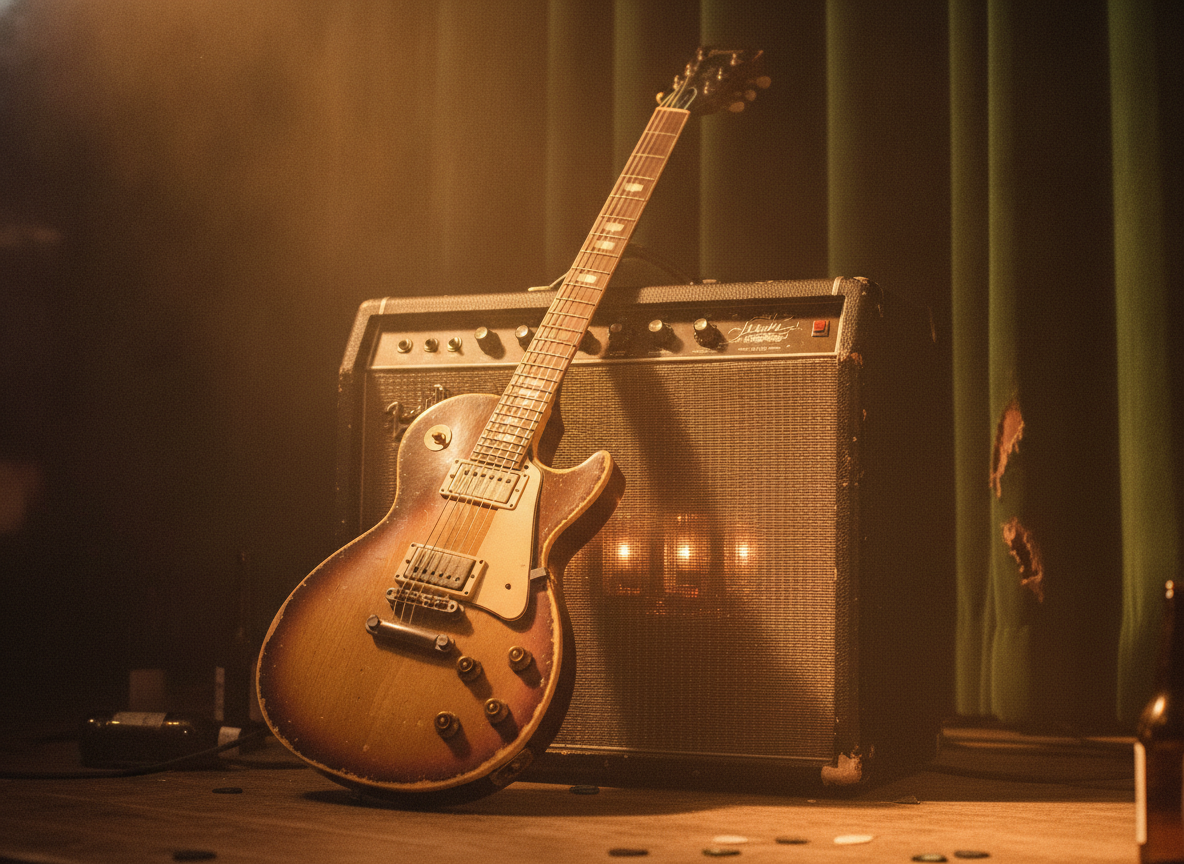
Creedence Clearwater Revival were a tight four-piece for their classic run, with John Fogerty writing, singing, and producing while the rhythm section provided the steady, unshowy drive that defined the sound.
A lean four-piece built for the groove, with no wasted motion.
John FogertyLead vocals / lead guitarThe band's frontman, principal songwriter, and producer, whose gravelly voice and guitar hooks defined nearly every hit
Tom FogertyRhythm guitarJohn's older brother, whose steady rhythm playing anchored the group until he left in 1971
Stu CookBassA founding member from the earliest teenage lineup, providing the melodic, rock-solid bottom end
Doug CliffordDrumsThe band's drummer throughout its career, delivering the tight, no-frills backbeat that drove the singles
The Roots of the Sound
Influences
CCR built their music from the foundations of American rock and roll, rhythm and blues, and Chicago blues. Here is where the sound came from.
Rock and Roll
Little Richard
A cornerstone of the raw, high-energy rock and roll that shaped John Fogerty's vocal attack and the band's up-tempo singles.
Archival footage captures the band at the height of their run, offering a window into the group behind the hits.
Interview · Archive
On American Bandstand, 1969
A period television appearance and interview from the band's breakthrough year, capturing CCR just as their singles were taking over the charts.
Interview · More
The Filmed Record
Decades of television appearances, documentary features, and later reflections from the members are scattered across the archives. Search YouTube for clips and conversations.
Once the hit singles have you, CCR's short catalog opens into deeper album tracks, live recordings, and the members' later work.
The full albums. because the catalog is so compact, hearing Green River and Cosmo's Factory end to end is an easy and rewarding way to move past the radio singles.
The long jams. tracks like "Susie Q," "Ramble Tamble," and the extended "I Heard It Through the Grapevine" show the band's improvisational, blues-jam side.
The live recordings. archival concert releases capture the tight, road-tested band on stage at its commercial peak.
The solo work. John Fogerty's later solo career, including the album Centerfield, carries the swamp-rock sound forward for listeners who want more.
The Way to Listen
Do yourself one favor: put on Cosmo's Factory from start to finish, then Green River. Hearing the hits in the context of the full albums shows just how much this band packed into a few short years.