How four young musicians from New Orleans turned the syncopated pulse of the second line into the tightest, most sampled funk ever recorded, and quietly became one of the most influential rhythm sections in American music.
The Short Version
Who Are They?
The Meters are the New Orleans funk band that defined the sound of the city in the late 1960s and early 1970s. Built around Art Neville on keyboards, Leo Nocentelli on guitar, George Porter Jr. on bass, and Joseph "Zigaboo" Modeliste on drums, they made instrumental funk of astonishing economy: every note in its place, nothing wasted, all of it locked to a deep, rolling groove.
Two things make them essential. First, the feel: their music grows straight out of the second-line rhythms of New Orleans street parades, a loose, syncopated pulse that swings and struts at the same time. Second, the reach: as the house band for producer Allen Toussaint and as a group in their own right, they became one of the most sampled bands in the history of hip hop, their breaks turning up under countless records.
They rarely troubled the pop charts, yet their fingerprints are everywhere. To understand funk, and the sound of New Orleans, you start here.
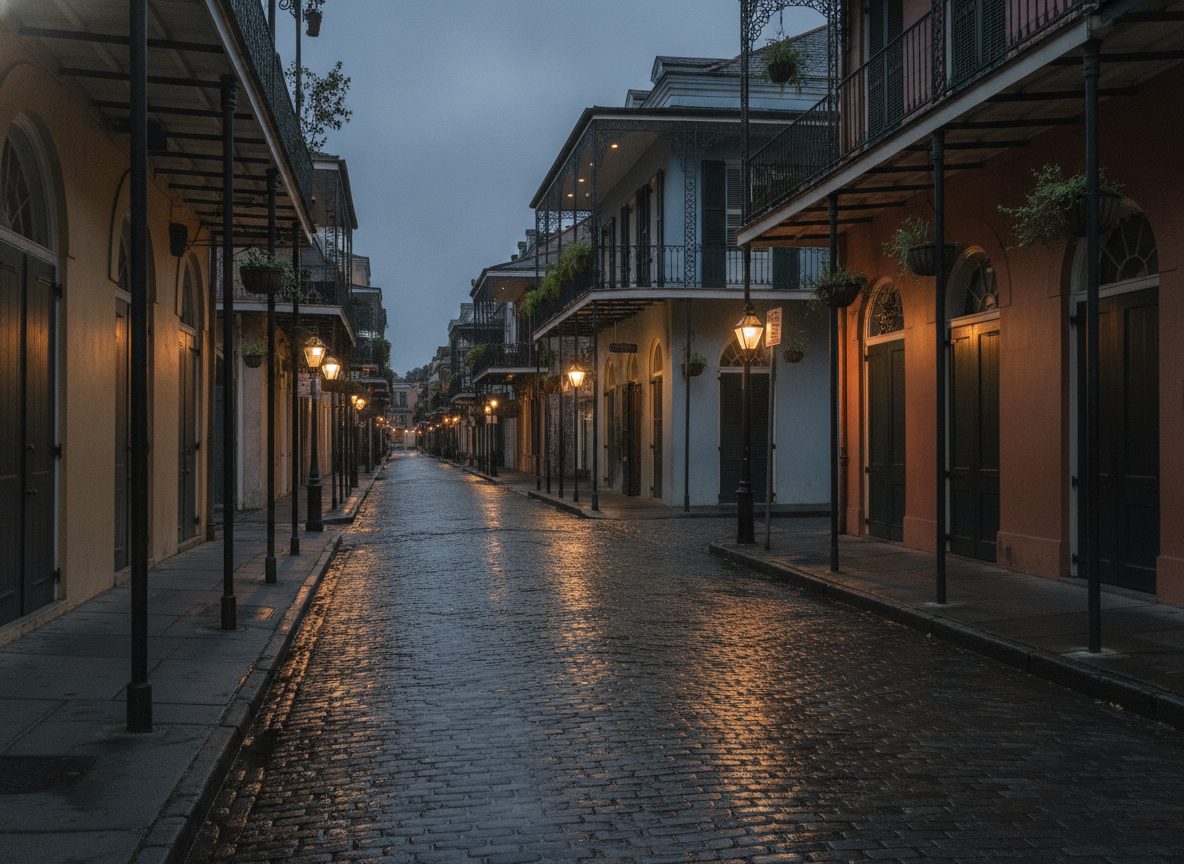
New Orleans, the city whose parades and back-street rhythms the Meters distilled into funk.From a Sansu Session to the Funk Canon
The Story
The Meters story runs on two tracks at once: the group's own run of instrumental funk records, and their day job backing nearly everyone who recorded in New Orleans during their peak years.
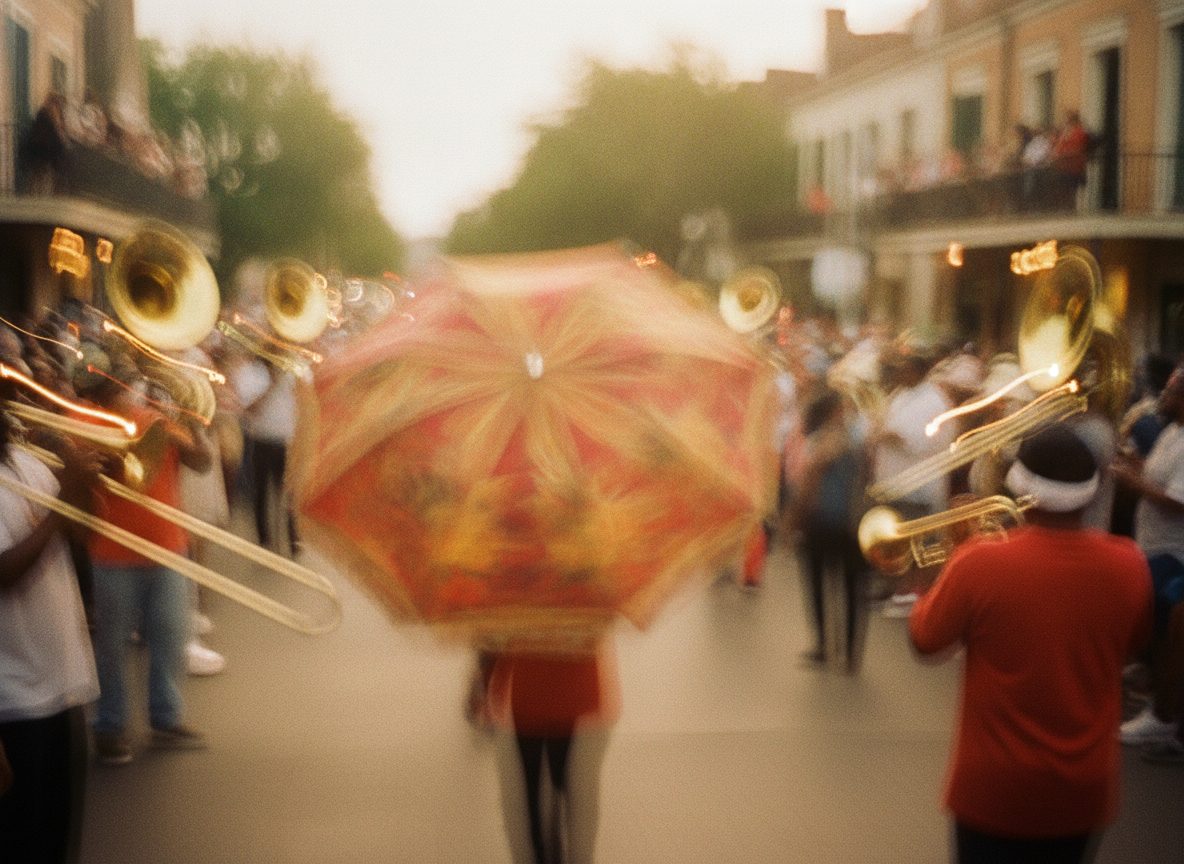
The second line, the loose syncopated pulse of the New Orleans street parade, the DNA of the Meters groove.
Mid 1960s
The house band takes shape
Art Neville pulled together a young rhythm section that became the go-to studio band for producer Allen Toussaint and his partner Marshall Sehorn at their Sansu operation, cutting the backing tracks behind a stream of New Orleans records.
1969
Cissy Strut and the debut
Recording under their own name for Josie Records, they scored instrumental hits with "Sophisticated Cissy" and "Cissy Strut." Their self-titled debut and Look-Ka Py Py, both released in 1969, laid down the blueprint for lean, deep-pocket funk.
1970–1972
Struttin' and Cabbage Alley
They kept refining the formula on Struttin', then signed to Reprise and broadened their palette on Cabbage Alley, adding vocals and a wider songwriting reach while keeping the groove airtight.
1974
Rejuvenation
Widely held to be their masterpiece. From the swampy "Hey Pocky A-Way" to the taut "People Say" and the sprawling "It Ain't No Use," it is the fullest statement of the New Orleans funk they invented.
1975–1977
Fire on the Bayou and the road
Fire on the Bayou deepened the Mardi Gras flavor, and the band toured widely, including a famous run opening for the Rolling Stones. Internal tensions, though, were beginning to pull the group apart.
Late 1970s onward
Breakup, rediscovery, and the sample era
The original lineup splintered by the end of the decade, with Art Neville going on to the Neville Brothers. Then hip hop producers discovered their catalog, and the Meters became one of the most sampled bands ever, their grooves reborn on a new generation of records.
Four Tracks, One Education
Start Here
The Meters catalog is deep, but the groove announces itself in seconds. These four tracks are the fastest way to feel what makes them essential, from the signature instrumental to the Mardi Gras funk of their peak. Play them in order.
01 · The Signature
"Cissy Strut" (1969)
The instrumental that says everything. A sly, stuttering guitar figure, a bass line you can walk to, and drums that leave all the space in the world. The essential Meters starting point.
02 · The Groove
"Look-Ka Py Py" (1969)
A hypnotic, chanting funk workout that shows how much the band could do with how little. The pocket is so deep it feels bottomless. Pure rhythmic hypnosis.
03 · The Anthem
"Hey Pocky A-Way" (1974)
From Rejuvenation, a loose, joyous chant rooted in the Mardi Gras Indian tradition. The sound of the band at its warmest and most soulful.
04 · The Party
"Fire on the Bayou" (1975)
Title track of their 1975 record and a fixture of their live set. Bright, insistent, and dripping with New Orleans flavor, it captures the band with vocals up front and the groove still in charge.
The Landmark Records
The Albums 6 to start with
The Meters made a run of records that map the whole arc of New Orleans funk, from lean instrumentals to fuller, vocal-driven grooves. These six are the pillars. The highlighted card is the best place to begin.
1969
The Meters
The instrumental debut that launched it all. "Cissy Strut" and "Sophisticated Cissy" defined a lean, syncopated funk that still sounds startlingly modern, every part locked into the pocket.
The second album from a remarkable year, doubling down on the groove. The title track and "Little Old Money Maker" show a band that could make hypnotic funk out of almost nothing.
The third instrumental set, tightening the formula further. "Chicken Strut" and a funked-up read of "Wichita Lineman" show the band's playful side alongside its unshakable rhythm.
The move to Reprise and a broader canvas. Vocals move to the front and the songwriting widens, but the groove stays airtight. The bridge between the instrumental years and their peak.
The masterpiece, and a perfect place to start. From "Hey Pocky A-Way" to "People Say" to the slow-burning "It Ain't No Use," it is the fullest, richest statement of everything the band could do.
A deep dive into Mardi Gras funk, with the whole New Orleans tradition bubbling up through the grooves. The title track and "They All Ask'd for You" are joyful, unmistakable Meters.
Two YouTube Music setlists: a First Listen of the signature grooves to bring you in, and a Deep Cuts set of the longer, headphone-reward pieces for when you want to sink into the pocket. (Ideally, though, hear these albums whole.) Hit the button on either card to play it.
The Meters were a true group, four players whose interlocking parts made the whole thing move, framed by the producer and business partner who put them in the studio.
Organ, guitar, bass, and drums, four instruments and no wasted motion.
Art NevilleKeyboards / organBandleader and founder, whose greasy organ and Hammond textures anchored the sound; later co-founded the Neville Brothers
Leo NocentelliGuitarThe rhythmic architect, whose clipped, syncopated guitar figures are the signature of the Meters groove and endlessly sampled
George Porter Jr.BassOne of funk's great bassists, his melodic, conversational lines locking with the drums into the deepest of pockets
Joseph "Zigaboo" ModelisteDrumsThe heartbeat, whose loose, second-line-inflected drumming redefined funk rhythm and became a foundational sampled break
Allen ToussaintProducer / songwriterThe New Orleans master who produced and guided the band, using them as his house rhythm section on countless sessions
Marshall SehornManager / business partnerToussaint's partner in the Sansu and Sea-Saint operations, the business half of the machine that put the Meters on record
The Roots and the Family Tree
Influences
The Meters grew from the rich soil of New Orleans rhythm and blues and the wider language of 1960s funk, and their sound in turn ran straight into the next generation of the city's music. Here is where it came from, and where it went.
New Orleans R&B
Professor Longhair
The rolling, rumba-tinged piano of Fess is a bedrock of New Orleans rhythm, the loping second-line feel that the Meters translated into funk.
Their producer and creative guide, and a giant of New Orleans music in his own right. His songwriting and arranging sensibility shaped the band from behind the glass.
The surviving members are generous, funny storytellers about the New Orleans they came up in and the grooves they built. Here is a window into the band from the people who made it.
Interview · Performance
The Meters, In Conversation
An interview and performance session with the band, talking through the New Orleans roots of their sound and playing the grooves that made their name.
George Porter Jr. and Zigaboo Modeliste have given rich, detailed interviews over the years about the making of these records and the New Orleans scene that produced them. Search YouTube for the archival conversations.
Once the landmark records have you, the Meters world opens into their session work, their samples, and the deep New Orleans tradition around them.
The Toussaint sessions. as the house band, the Meters played on a mountain of New Orleans records, most famously Dr. John's In the Right Place and Labelle's "Lady Marmalade." Chasing these down is its own education.
The samples. their breaks underpin countless hip hop records; tracing where "Cissy Strut" and Zigaboo's drums resurface is a tour through decades of sampling.
The later records. Trick Bag and New Directions close out the original run, uneven but full of rewarding moments for the committed listener.
The live tapes. sets like Uptown Rulers! Live on the Queen Mary catch the band stretching the grooves out on stage, where the pocket got even deeper.
The Way to Listen
Do yourself one favor: put on Rejuvenation from start to finish, then go back to the 1969 debut. Feel how much the band leaves out. The Meters teach you that the space between the notes is where the funk lives.