How one restless trumpeter kept tearing his own music down and building it back new, reinventing jazz itself four or five times across a single half-century career.
The Short Version
Who Was He?
Miles Davis was an American trumpeter, bandleader, and composer, and one of the most important figures in the history of jazz. Born in Illinois in 1926 and raised in East St. Louis, he arrived in New York as a teenager, apprenticed beside the founders of bebop, and never stopped moving forward from there.
What makes him singular is not a single sound but a refusal to sit still. Almost every decade he abandoned a style he had helped perfect and pushed into a new one. He shaped cool jazz, then modal jazz, then the orchestral collaborations with Gil Evans, then the electric jazz-fusion that scandalized purists and opened jazz to rock and funk.
His trumpet tone is instantly recognizable: spare, vocal, full of space, often muted and close to a whisper. He believed as much in the notes he left out as the ones he played. Kind of Blue (1959) remains the best-selling jazz album of all time, and his run of bands launched more major musicians than almost any leader in the music.
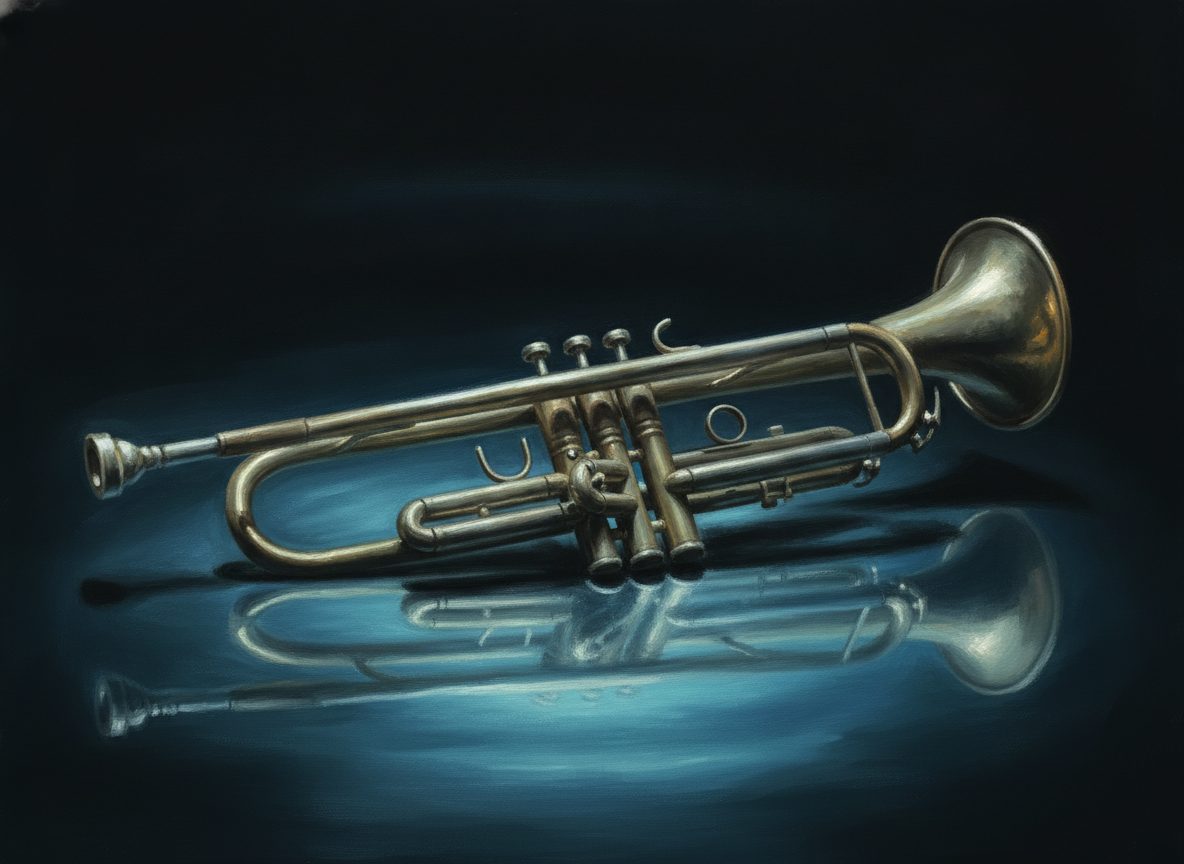
Spare, vocal, and full of space: the sound of the muted horn.Five Reinventions in One Lifetime
The Story
The Miles Davis story is a chain of departures. Each time the music around him settled into a formula, he walked away from it and pulled jazz somewhere new.
From the bebop clubs of 52nd Street to the electric stage.
1944–1948
Bebop apprenticeship
Davis left East St. Louis for New York, nominally to study at Juilliard, but really to find Charlie Parker. He soon joined Parker's quintet, learning the fast, harmonically dense language of bebop on the bandstands of 52nd Street.
1949–1950
Birth of the Cool
Leading a nine-piece band with arranger Gil Evans and others, Davis recorded a set of sessions that traded bebop's heat for a softer, more orchestral calm. Later gathered as Birth of the Cool, it helped launch cool jazz.
1955–1958
The First Great Quintet
Signed to Columbia, Davis assembled a band with a young John Coltrane on tenor saxophone. Their hard-swinging records, and a lush run of orchestral albums with Gil Evans, made him a star and a critical force.
1958–1959
The modal breakthrough
On Milestones and then Kind of Blue, Davis stripped away bebop's rushing chord changes in favor of scales, or modes, giving soloists wide open space. Kind of Blue became the most beloved jazz album ever made.
1964–1968
The Second Great Quintet
A new band of young virtuosos (Wayne Shorter, Herbie Hancock, Ron Carter, Tony Williams) pushed the music toward looser, more abstract territory on albums like E.S.P. and Nefertiti, blurring the line between composition and improvisation.
1969–1970
Electric turn
With In a Silent Way and the sprawling Bitches Brew, Davis plugged in, adding electric keyboards, rock rhythms, and studio editing. The music outraged traditionalists and effectively invented jazz-fusion.
1975–1980
Silence and retreat
Worn down by illness, injury, and years of hard living, Davis withdrew from music almost entirely for about five years, one of the longest silences of any major artist at his peak.
1981–1991
The comeback
Davis returned with a new electric band and an openness to pop and funk, engaging with the sounds of his day right up to Tutu. He kept performing and evolving until his death in 1991 at age 65.
Four Tracks, One Education
Start Here
Miles Davis made music across so many styles that no four songs can cover it, but these trace the two peaks most newcomers fall for first: the hushed modal masterpiece Kind of Blue, and the electric storm of Bitches Brew. Listen in order.
01 · The One You Know
"So What" (1959)
The opening track of Kind of Blue and the doorway to modal jazz: two chords, endless space, and a famous call-and-response between bass and horns. Calm, cool, and instantly recognizable.
02 · The Groove
"Freddie Freeloader" (1959)
A relaxed twelve-bar blues from the same album, built on an easy walking pulse. It shows how much feeling Davis and his sidemen could wring out of the simplest form, one unhurried solo at a time.
03 · The Ballad
"Blue in Green" (1959)
A short, aching mood piece written with pianist Bill Evans. This is Davis at his most tender and interior, the muted horn floating over hushed piano. Proof that restraint can be its own kind of intensity.
04 · The Leap
"Bitches Brew" (1970)
A twenty-minute electric maelstrom of layered keyboards, dense percussion, and studio editing. This is the other Miles: the one who plugged in, turned toward rock and funk, and invented fusion. A shock after Kind of Blue, and that is the point.
The Landmark Records
The Albums 6 to start with
Davis recorded dozens of albums across five decades. These five are the essential map, from the cool-jazz beginnings through the modal peak to the electric revolution. The blue-topped card is the place to begin.
1957
Birth of the Cool
The 1949–50 nonet sessions that helped invent cool jazz: soft, orchestral, and unhurried. A gentler answer to the fire of bebop, and the first sign of Davis as an architect of new sounds.
The bridge record. With Coltrane and Cannonball Adderley in the band, Davis begins loosening bebop's chords toward modal playing on the title track, pointing straight at what came next.
The masterpiece, and the best place to start. A hushed, spacious modal session cut in near-first takes with a peerless band. The best-selling jazz album ever made, and still the genre's most beloved entry point. "So What," "Freddie Freeloader," "Blue in Green."
A lush orchestral collaboration with arranger Gil Evans, drawing on Spanish classical and flamenco music. Davis's muted horn floats over sweeping arrangements. Jazz reaching toward the concert hall.
The electric revolution. A double album of long, churning, studio-assembled grooves that fused jazz with rock and funk and split the jazz world in two. Difficult, thrilling, and enormously influential. "Bitches Brew," "Spanish Key," "Pharaoh's Dance."
Two YouTube Music playlists: a First Listen of the signature pieces to bring you in, and a Deep Cuts set of the longer, more adventurous performances for when you want to sink in. (Ideally, though, hear these albums whole.) Hit the button on either card to play it.
Miles Davis was a bandleader as much as a soloist, and his groups became finishing schools for the greatest musicians in jazz. These are the key players from his two most famous quintets and the landmark Kind of Blue sessions.
A bandstand that launched a generation of jazz greats.
John ColtraneTenor saxophoneThe towering saxophonist of the First Great Quintet and Kind of Blue, who went on to reshape jazz on his own
Cannonball AdderleyAlto saxophoneThe soulful, blues-drenched alto voice alongside Coltrane on the 1958–59 sextet recordings
Bill EvansPianoThe impressionistic pianist whose harmonies shaped the sound and mood of Kind of Blue
Red GarlandPianoThe elegant, blues-rooted pianist of the First Great Quintet's classic Prestige and Columbia sides
Paul ChambersBassThe anchor of the rhythm section across the late-fifties bands, on both quintet and Kind of Blue
Wayne ShorterTenor saxophoneThe saxophonist and composer whose writing steered the Second Great Quintet's abstraction
Herbie HancockPianoThe pianist of the Second Great Quintet, later a giant of jazz and funk in his own right
Ron CarterBassThe supple, endlessly inventive bassist at the heart of the 1960s quintet
Tony WilliamsDrumsThe teenage prodigy whose restless, elastic drumming transformed the band's rhythmic feel
The Roots of the Sound
Influences
Davis came up inside the bebop revolution, mentored and shaped by the giants who invented it. These are the players whose sound and example set him on his way.
Bebop
Charlie Parker
The alto-saxophone genius who hired the young Davis into his quintet and became his most direct mentor in the new language of bebop.
Davis was famously guarded and blunt, but on camera he could be sharp, funny, and revealing about the music and the life. Two conversations from his later years.
Interview · 1988
Miles Davis, A Rare Conversation
A candid late-career interview recorded around a European concert stop, with Davis reflecting on his music, his restlessness, and a lifetime spent moving on from his own successes.
The CBS News profile from near the end of his life, with Davis talking about his painting, his comeback, and his refusal to keep replaying the past for nostalgic audiences.
Once the landmark albums have you, Davis leaves behind one of the deepest catalogs in all of music, decade by decade and band by band.
The Gil Evans collaborations. beyond Sketches of Spain, the orchestral albums Miles Ahead and Porgy and Bess show Davis's muted horn set against gorgeous large-ensemble writing.
The Second Great Quintet. the 1960s studio run of E.S.P., Miles Smiles, Nefertiti, and more is where the music grows most adventurous and abstract.
The electric years. after Bitches Brew, records like A Tribute to Jack Johnson and the raw live Agharta push the fusion idea to its furthest, funkiest edges.
The autobiography. Miles: The Autobiography, written with Quincy Troupe, tells the whole story in his own unmistakable, unfiltered voice.
The Way to Listen
Do yourself one favor: put on Kind of Blue from start to finish, late at night, with headphones and no distractions. It was cut in near-first takes and it breathes as one continuous mood. Then, when you are ready for the shock, play Bitches Brew and hear the same man tear it all down.