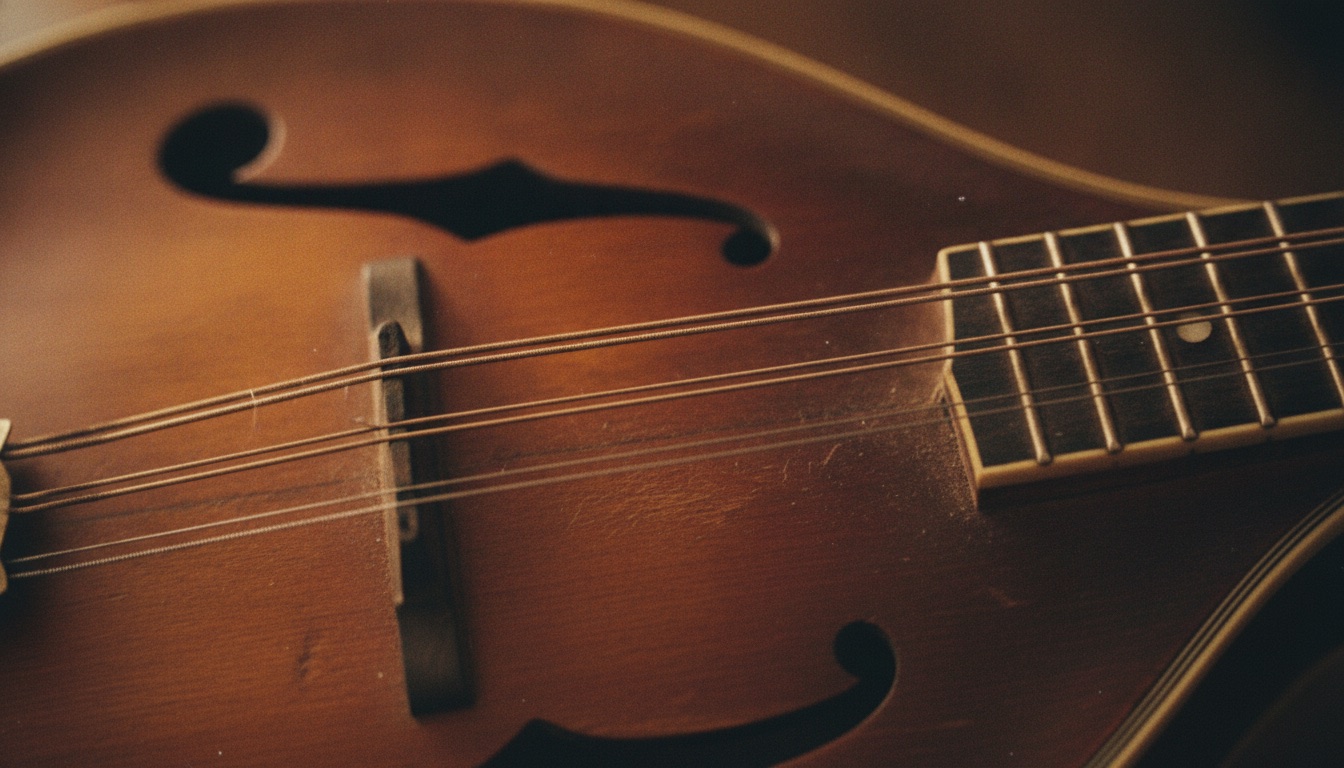
Newgrass • Mandolin • The Father of a Whole Subgenre
The mandolinist who blew the doors off bluegrass, fusing it with rock, reggae, and jazz to invent newgrass, and then spent fifty years as its restless, joyful bandleader.
The Short Version
Who Is He?
Sam Bush (born 1952) is an American mandolinist and fiddler who did something few musicians ever manage: he founded a subgenre. As the leader of New Grass Revival, formed in 1971, he took the instruments and repertoire of bluegrass and fused them with rock, reggae, funk, and jazz, creating the loose, virtuosic, groove-driven music that came to be called newgrass.
His rhythmic mandolin "chop" became one of the most influential techniques in modern acoustic music, and the players who grew up on it, from Nickel Creek to Billy Strings, built the entire progressive and jam-grass landscape on the ground he broke. He learned it inside the tradition of Bill Monroe and Flatt & Scruggs, then pushed straight past it.
The mandolin, played harder and looser than anyone had before.From Bowling Green to the King of Telluride
The Story
His career is the story of newgrass itself: a young fiddle champion who decided bluegrass could hold rock and reggae, built a band to prove it, and never stopped.
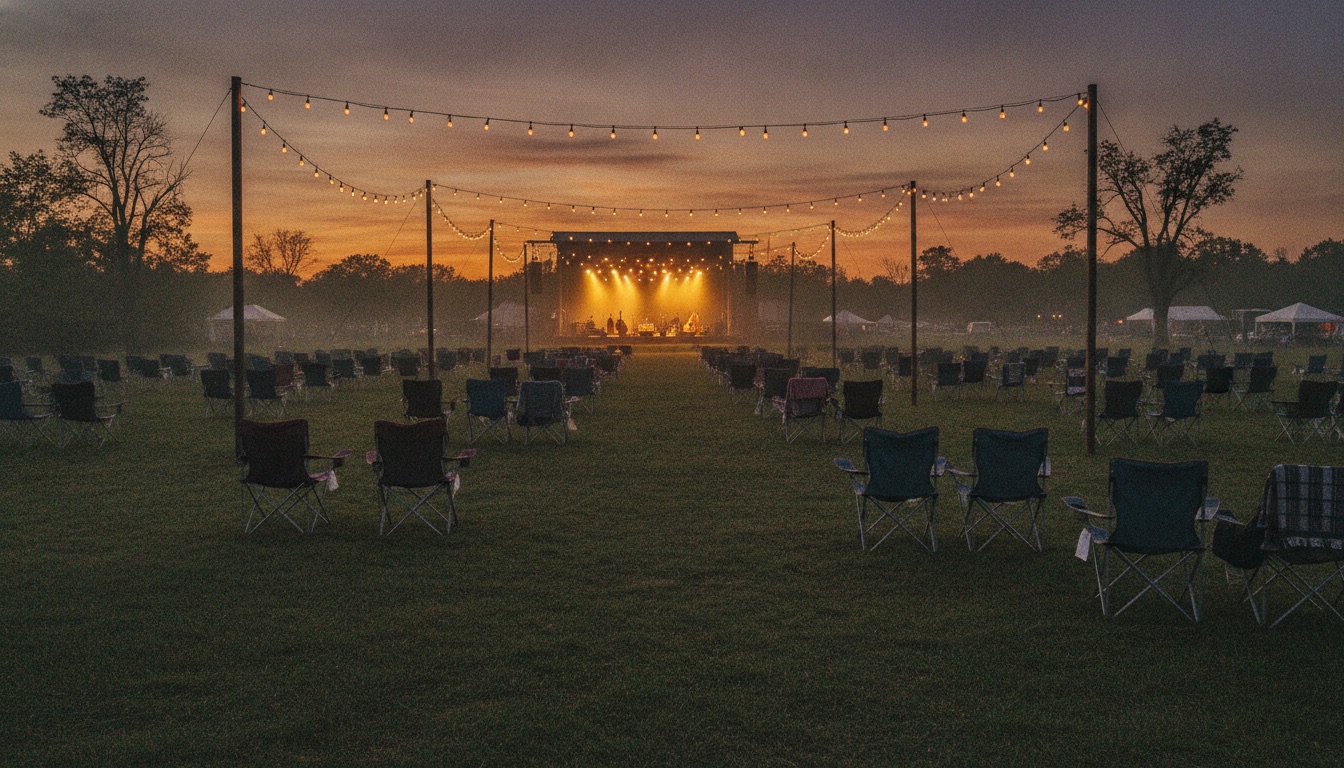
The festival field, the natural habitat of newgrass.
1952
Born in Bowling Green, Kentucky
Sam Bush grew up on a farm surrounded by his father's fiddle records, and won the national junior fiddle championship three times as a teenager.
1971
New Grass Revival
Out of the folk-revival band Bluegrass Alliance, Bush and bandmates formed New Grass Revival, giving the emerging style its name and its flagship band.
1970s
The first wave
With Curtis Burch, Courtney Johnson, and Ebo Walker, the band played pop, rock, and funk-tinged bluegrass, long jams and long hair, scandalizing purists and thrilling everyone else.
1980s
The second wave
A new lineup with John Cowan, a young Bela Fleck, and Pat Flynn leaned into odd meters, world music, and instrumental fireworks, and even charted on country radio before disbanding in 1989.
1990s
The Nash Ramblers and beyond
Bush spent years in Emmylou Harris's acclaimed acoustic band the Nash Ramblers before launching his own solo career in the mid-1990s.
Ongoing
The King of Telluride
A fixture and perennial headliner at the Telluride Bluegrass Festival, Bush became an elder statesman and constant collaborator, honored with a lifetime achievement Grammy-world of awards and the enduring title "father of newgrass."
Three Recordings, One Introduction
Start Here
These three are the fastest way to hear why Sam Bush changed the music: the newgrass anthem, the deep-cut groove Marcel points newcomers to, and the solo mandolin fire.
01 · The Newgrass Anthem
"Callin' Baton Rouge"
New Grass Revival's signature, all drive and harmony, later a huge hit for Garth Brooks. The clearest three minutes of what newgrass could do.
02 · The Deep Cut
"Do What You Gotta Do"
A second-wave gem, the song Marcel points newcomers straight to, showing the band's groove and vocal blend at their best.
03 · The Mandolin
"Eight More Miles to Louisville"
Bush tearing through a bluegrass standard, a showcase of the chop, the drive, and the joy that define his playing.
The Catalog
The Essential Records 5 to start with
Five records that trace the arc from New Grass Revival's two eras to Bush's long, adventurous solo career.
1994
Best of New Grass Revival
The single best entry point to the band that started it all.
One curated YouTube Music playlist of Sam Bush and New Grass Revival essentials, the way in for anyone new to newgrass. Hit the button on the card to play it.
The center of Sam Bush's influence is a right-hand technique called the chop: a hard, percussive, muted downstroke on the mandolin's offbeats that turns the instrument into a snare drum for a band with no drummer. Bluegrass mandolin had always had a chop, but Bush made it heavier, funkier, and more central, borrowing the backbeat of rock and reggae and driving a whole band from it. Listen to almost any modern acoustic group and you will hear his chop keeping time underneath.
What made newgrass more than a novelty was that Bush and his bandmates were serious virtuosos who genuinely loved the music they were folding in. They were not mocking tradition; they were expanding it. As New Grass Revival put it, the point was to show that you could take those same instruments and reach a whole new sound, and they did, with extended improvisation, odd time signatures, soul and reggae covers, and a looseness that had more in common with the Grateful Dead than the Grand Ole Opry.
That openness is the direct ancestor of everything jam-grass and progressive bluegrass became. The festival culture, the long solos, the willingness to put a bluegrass band on a rock stage, all of it traces back through Bush. Two bouts with cancer in his early thirties nearly ended it, and that he came through and kept playing with such evident joy is part of why the acoustic world reveres him as much for his spirit as for his chops.
Calling Baton Rouge: the road at the heart of newgrass.The Roots of the Sound
Influences
Newgrass was bluegrass plus everything else Sam Bush loved. These are the bedrock he came from and the outside sounds he pulled in.
Father of Bluegrass
Bill Monroe
The mandolin and the tradition Bush grew up inside and then expanded.
Once the chop has you, the tradition Bush came from and the players he set loose all reward the same attention.
Bill Monroe: the bluegrass mandolin bedrock Bush built on. See the guide.
Flatt & Scruggs: the high-drive bluegrass in his DNA. See the guide.
Nickel Creek: the progressive generation newgrass made possible. See the guide.
Billy Strings: the jam-grass fire that grows straight out of this soil. See the guide.
The Telluride Bluegrass Festival: Bush's spiritual home, where "the King of Telluride" earned the title.
The Way to Listen
Put on "Callin' Baton Rouge" and feel the backbeat. That drive with no drummer, the whole band riding the mandolin chop, is the sound that opened bluegrass up to everything that came after.