How four musicians from a college town in Georgia built one of the defining American alternative rock bands, moving from the independent circuit to global stages across a thirty-one year run.
The Short Version
Who Are They?
R.E.M. formed in Athens, Georgia, in 1980, built around singer Michael Stipe, guitarist Peter Buck, bassist Mike Mills, and drummer Bill Berry. Together they became one of the defining American alternative rock bands, pairing jangly, arpeggiated guitar with layered harmony vocals and a melodic, driving rhythm section.
Two things set them apart. First, the sound: Buck's ringing, chiming guitar and Mills's high harmonies gave the band a signature texture that shaped a generation of guitar rock. Second, the arc: they moved from a scrappy independent label to a major-label career that made them one of the biggest bands in the world without abandoning the approach that started it all.
The band recorded together for three decades, growing steadily in reach across the 1980s and reaching worldwide popularity in the early 1990s. They disbanded in 2011. To understand modern alternative rock, you start here.
Athens, Georgia, the college town whose music scene raised the band.From a College Town to the World
The Story
R.E.M.'s rise is a slow-build story: four friends who started on the independent circuit, honed a distinctive sound, and grew it album by album into a global career.
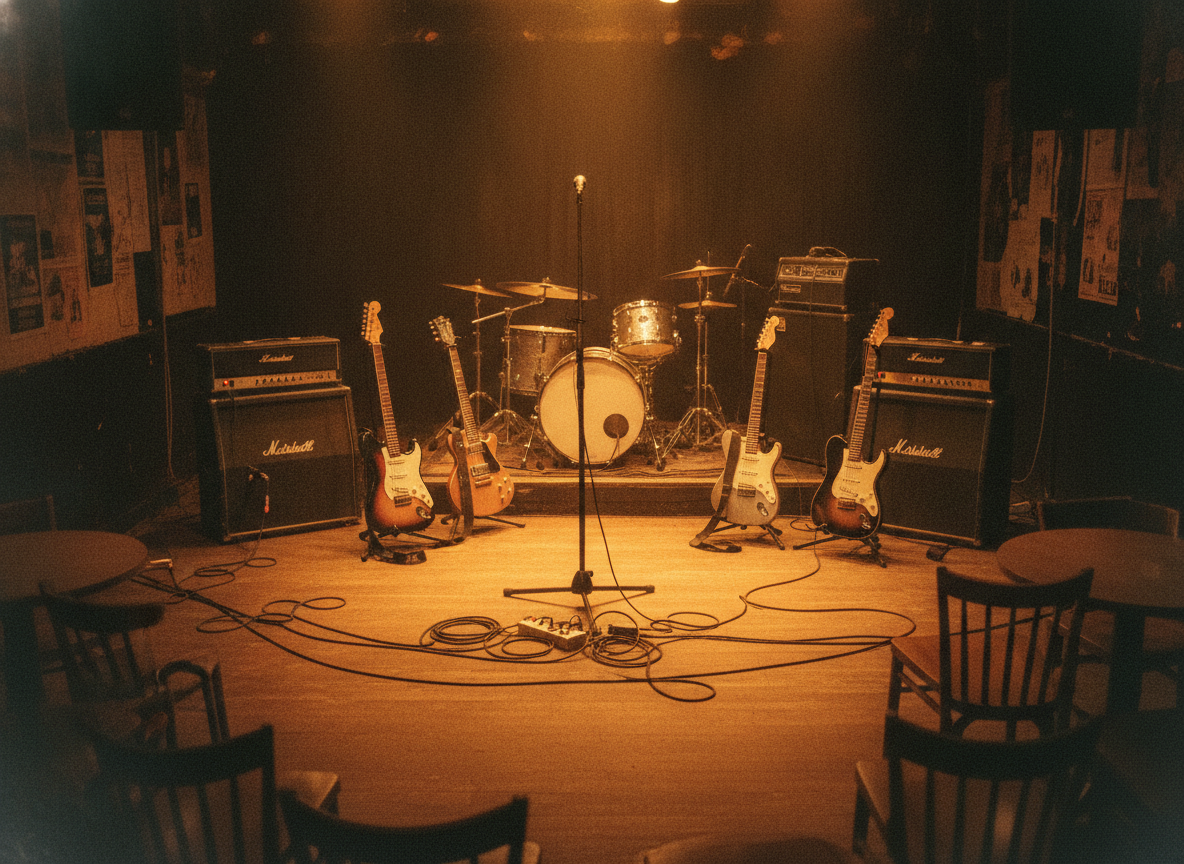
The small-club circuit, where the band's chiming, guitar-driven sound took shape.
1980
Formed in Athens
Michael Stipe, Peter Buck, Mike Mills, and Bill Berry came together in Athens, Georgia, and began playing local shows around the university town's active music scene.
1981
The first single
The band released its debut single on the independent Hib-Tone label, an early document of the jangly, propulsive sound that would define them.
1982
Chronic Town on I.R.S.
The Chronic Town EP arrived on I.R.S. Records, sharpening the group's guitar textures and harmony vocals into a tighter, fuller statement.
1983
Murmur
The debut full-length Murmur drew wide critical praise for its ringing guitars, melodic bass, and layered vocals, establishing the band's core approach.
Late 1980s
Growing success
A steady run of albums on I.R.S. built the band's audience through college radio and touring, expanding their reach across the decade.
1988
Signing to Warner Bros.
The band moved to Warner Bros. Records, a major label that gave the group a wider platform for the records that followed.
Early 1990s
Worldwide popularity
A pair of hugely successful albums pushed the band to global popularity, placing their singles on charts and radio around the world.
1997
Bill Berry departs
Drummer Bill Berry left the band, which continued as a three-piece, working with touring and session drummers on subsequent records.
2011
The band disbands
After thirty-one years and a long catalog of albums, R.E.M. announced that they were disbanding, closing the book on one of alternative rock's landmark careers.
Four Songs, One Introduction
Start Here
R.E.M.'s sound lives in chiming guitars, high harmonies, and strong melody. These four songs are the fastest way to hear the band at its peak. Watch in order.
01 · The Calling Card
"Losing My Religion" (1991)
Built around a mandolin figure and a driving rhythm, this is the band's biggest hit and the fastest way to hear the R.E.M. sound at full reach.
02 · The Breakthrough
"The One I Love" (1987)
A tighter, harder-hitting single from Document that became the band's first widely heard hit, all ringing guitar and momentum.
03 · The Sing-Along
"Man on the Moon" (1992)
A loping, melodic highlight from Automatic for the People that shows the band's gift for a big, warm chorus and a memorable guitar line.
04 · The Ballad
"Everybody Hurts" (1993)
A slow, spacious arrangement built on simple guitar arpeggios and swelling strings, one of the band's best-known and most widely played songs.
The Records So Far
The Albums 6 to start with
R.E.M.'s catalog is long and consistent. These six records trace the band from the early I.R.S. years through the peak of the Warner Bros. era. The gold-topped card is the place to begin.
1983
Murmur
The debut full-length, all ringing guitar, melodic bass, and layered vocals. It set the template for the band's sound and remains a landmark of early American alternative rock.
Two setlists: a First Listen of the signature songs to bring you in, and a Deep Cuts set of the corners worth exploring once you are in. (Ideally, though, hear the albums whole.) Hit the button on either card to play it.
R.E.M. was built on the partnership of four musicians who wrote together and shared credit across the catalog, a stable lineup for its first seventeen years.
The chiming guitars and warm stage glow at the center of the band's sound.
Michael StipeLead vocalsThe band's frontman and lyricist, whose distinctive voice and phrasing sit at the center of the R.E.M. sound
Peter BuckGuitarThe band's guitarist, whose ringing, arpeggiated jangle became one of the most recognizable textures in alternative rock
Mike MillsBass, keyboards, backing vocalsA melodic bassist and multi-instrumentalist whose high harmony vocals are a defining part of the band's sound
Bill BerryDrums (1980–1997)The founding drummer and a key songwriting contributor, anchoring the rhythm section until his departure in 1997
The Roots of the Sound
Influences
R.E.M.'s jangly, melodic guitar rock grows from a lineage of American bands that paired ringing guitars with strong songwriting. Here are the touchstones you can hear in the songs.
Proto-Punk
The Velvet Underground
The spare, guitar-driven songcraft of the Velvet Underground is a clear ancestor to R.E.M.'s early sound and the wider American underground it helped shape.
Across three decades the band gave many interviews and sessions about their songwriting, their catalog, and their long career. These conversations fill in the story behind the records.
Performance · Signature Song
Man on the Moon
One of the band's best-loved singles, a good companion to the many interviews and sessions available online. Search YouTube for more conversations and clips.
Do yourself one favor: put on Murmur and then Document back to back, start to finish. Hearing the early band grow across those two records is the fastest way to understand what made R.E.M. matter.