Texas Songwriter • Folk & Country • The Songwriter's Songwriter
How a hard-living Texas troubadour wrote some of the most beautiful and desolate songs in the American language, and became the writer that other great writers bow to.
The Short Version
Who Is This?
Townes Van Zandt was a Texas singer-songwriter, active from the late 1960s until his death in 1997, who wrote spare, poetic folk and country songs of extraordinary beauty and sadness. He never had a hit of his own, yet he is revered as one of the greatest songwriters America has produced.
Two things make him singular. First, the writing: his best songs are plainspoken and unbearably direct, built from simple guitar figures and lyrics that move between tenderness and pure desolation without a wasted word. Second, the myth: he lived hard, drank and gambled, roamed constantly, and turned his own restlessness into the subject of the songs.
He is folk and country at the root, closer to a lone voice and a guitar than to any band, and a clear ancestor of the whole americana tradition. If you love songwriting that tells the truth and does not flinch, start here.
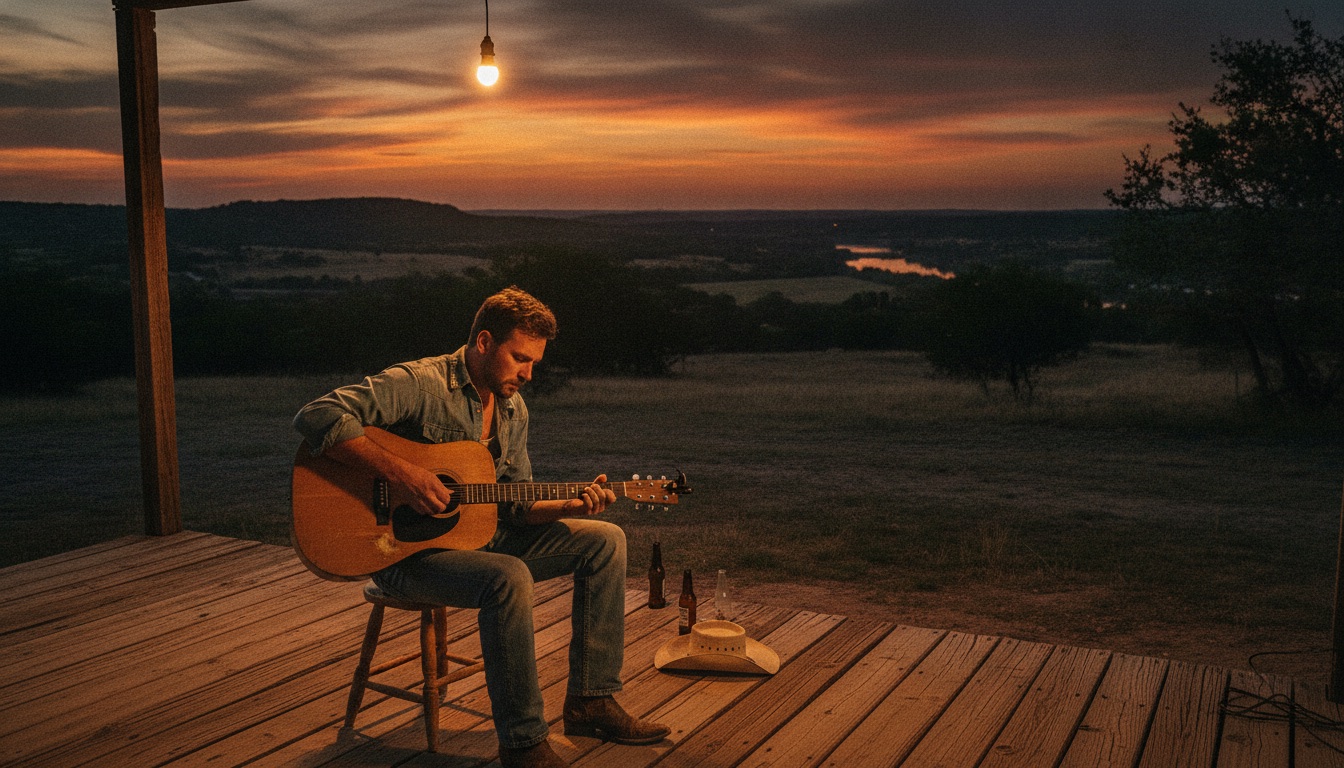
One voice, one guitar, and the whole of Texas behind it.From Fort Worth to a Traveling Life
The Story
Van Zandt was born into a well-off Texas family and walked away from all of it to chase songs. His life was itinerant and often self-destructive, but it produced a body of work that has only grown in stature since his death.
1944
Born in Fort Worth
Born into a prominent Texas family, he grew up bright and restless, and turned toward music and poetry rather than the settled life expected of him.
1968
For the Sake of the Song
His first album introduced the voice and the writing, though he would later feel its arrangements buried the songs. The material, though, was already remarkable.
1969
Our Mother the Mountain and Townes Van Zandt
Two records in quick succession, home to "Tecumseh Valley," "Waiting Around to Die," and "For the Sake of the Song," established him as a major writer among those paying attention.
1972
The Late Great Townes Van Zandt
Despite the ironic title, this album carried "Pancho and Lefty" and "If I Needed You," two songs that would later become country standards in other artists' hands.
1983
Pancho and Lefty goes to number one
Willie Nelson and Merle Haggard took "Pancho and Lefty" to the top of the country chart, bringing Van Zandt's writing to an audience his own records never reached.
1997
A hard life ends, a reputation grows
He died on New Year's Day at 52. In the decades since, his standing has only risen, and new listeners keep discovering the depth of the catalog.
A life spent moving, and songs made from the road.Three Songs, One Education
Start Here
Three songs that hold the whole of him: the masterpiece, the desolate early one, and the tender benediction. Listen in order.
01 · The One to Play First
"Pancho and Lefty" — 1972
His most famous song and one of the great American ballads: a tale of a bandit and the friend who may have betrayed him, told in images that never fully explain themselves. Later a number-one country hit for Willie Nelson and Merle Haggard.
02 · The Desolate One
"Waiting Around to Die" — 1969
One of the first songs he ever wrote, and one of the bleakest ever recorded. It is also the clearest statement of his gift for making despair sound plain, unforced, and strangely beautiful.
03 · The Tender One
"To Live Is to Fly" — 1971
The other side of him: warm, generous, and quietly wise. A traveling song and a blessing, and proof that the darkness in his work was only ever half the story.
The Studio Catalog
The Albums 5 to start with
A small, deep catalog where the songs matter more than the production. The gold-topped cards mark the best entry points; the moss-green marks the earliest era.
1969
Our Mother the Mountain
An early high point, more richly arranged than later records, home to the title song and "Tecumseh Valley." A haunting, beautiful place to begin the story.
The self-titled record where the sound settles into just his voice and guitar. It holds "Waiting Around to Die" and re-recorded early songs, and is the purest statement of who he was.
Despite the ironic title, this is essential: "Pancho and Lefty," "If I Needed You," and "To Live Is to Fly" all sit together here. Maybe the single best album to own.
Just him, a guitar, and a hot Houston room. Widely loved as the best single document of his art: the songs, the between-song jokes, the whole man in one recording.
One curated YouTube Music playlist gathering the essentials across the catalog. (Ideally, though, spend time with the Old Quarter live album whole.) Hit the button below to play it.
Townes Van Zandt was a solo artist in the truest sense: one voice, one guitar, and a body of songs that other people spent careers trying to match. His records vary in their production, and he often felt the arrangements got in the way, but the writing never wavered.
He was a fingerpicker of real skill, schooled in the blues of Lightnin' Hopkins as much as in folk and country, and that guitar style gave even his darkest songs a gentle, rolling momentum. His voice was plain and unadorned, which is exactly why the words land so hard.
The life was famously difficult. He struggled with addiction and mental illness, roamed from town to town, and could be his own worst enemy, but he was also, by every account, funny, generous, and magnetic. Both sides are audible in the work.
What makes him worth following is the standard he set. Steve Earle's much-quoted line, that Townes was the best songwriter in the world, captures the way other writers regard him. He is the songwriter's songwriter, the one the great ones point to.
The songs came first, whatever the life cost.The Roots of the Sound
Influences
Van Zandt came out of country, folk, and country blues, and turned them into something starker and more literary. Here are four touchstones.
The Foundation
Hank Williams
The template for the plainspoken country song of heartbreak. Hank's economy and directness are the deepest root of Van Zandt's writing.
Dylan's expansion of what a song could carry, in image and ambition, opened the door for a generation of literary songwriters, Van Zandt among the finest.
Van Zandt was a sharp, funny, evasive talker who deflected as often as he revealed. A short clip on his most famous song, and a longer conversation with fellow writer Guy Clark.
Interview · Archival
On "Pancho and Lefty"
A brief, revealing clip in which Van Zandt talks about where the song came from, and admits how much of it he does not claim to understand himself.
A 1993 conversation between Van Zandt and his lifelong friend and fellow Texas songwriter Guy Clark, two masters trading stories and needling each other.
Once the songs have you, there is a whole world around them to explore.
Be Here to Love Me — the 2004 documentary is the best film portrait of his life and work, and a moving introduction to the man.
Heartworn Highways — the 1976 documentary captures him young and among peers like Guy Clark and Steve Earle, in the outlaw-Texas songwriting scene.
The cover versions — follow "Pancho and Lefty," "If I Needed You," and "Tecumseh Valley" through Willie Nelson, Emmylou Harris, and many others.
Live recordings — beyond the Old Quarter album, a wealth of live tapes shows how the songs breathed on stage, jokes and all.
The Way to Listen
Start with The Late Great Townes Van Zandt for the songs, then live inside Live at the Old Quarter to hear the whole man, alone with a guitar in a hot Houston room.