A Winston-Salem band that folds bluegrass instrumentation, Southern rock, and jam-band improvisation into a sound they call Appalachian rock, built for festival stages and long, open-ended live sets.
The Short Version
Who Are They?
Big Daddy Love is a band from Winston-Salem, North Carolina, formed in the late 2000s. They pair acoustic bluegrass instrumentation, banjo, mandolin, and upright bass, with electric guitars, a full drum kit, and the loose, improvisational structure of a jam band. The group has settled on a shorthand for the blend: Appalachian rock.
Two things define the sound. First, the instrumentation: string-band textures sit inside rock arrangements, so a song can move from a bluegrass breakdown into a heavy electric jam and back. Second, the live focus: like many bands in the jamgrass tradition, Big Daddy Love builds much of its identity on stage, stretching studio songs into extended improvisations at clubs and regional music festivals across the Southeast.
They have released a run of studio and live albums since 2008 and become a fixture of the North Carolina and Southeastern festival circuit. To hear where bluegrass, Southern rock, and the jam scene overlap, this is a useful place to start.
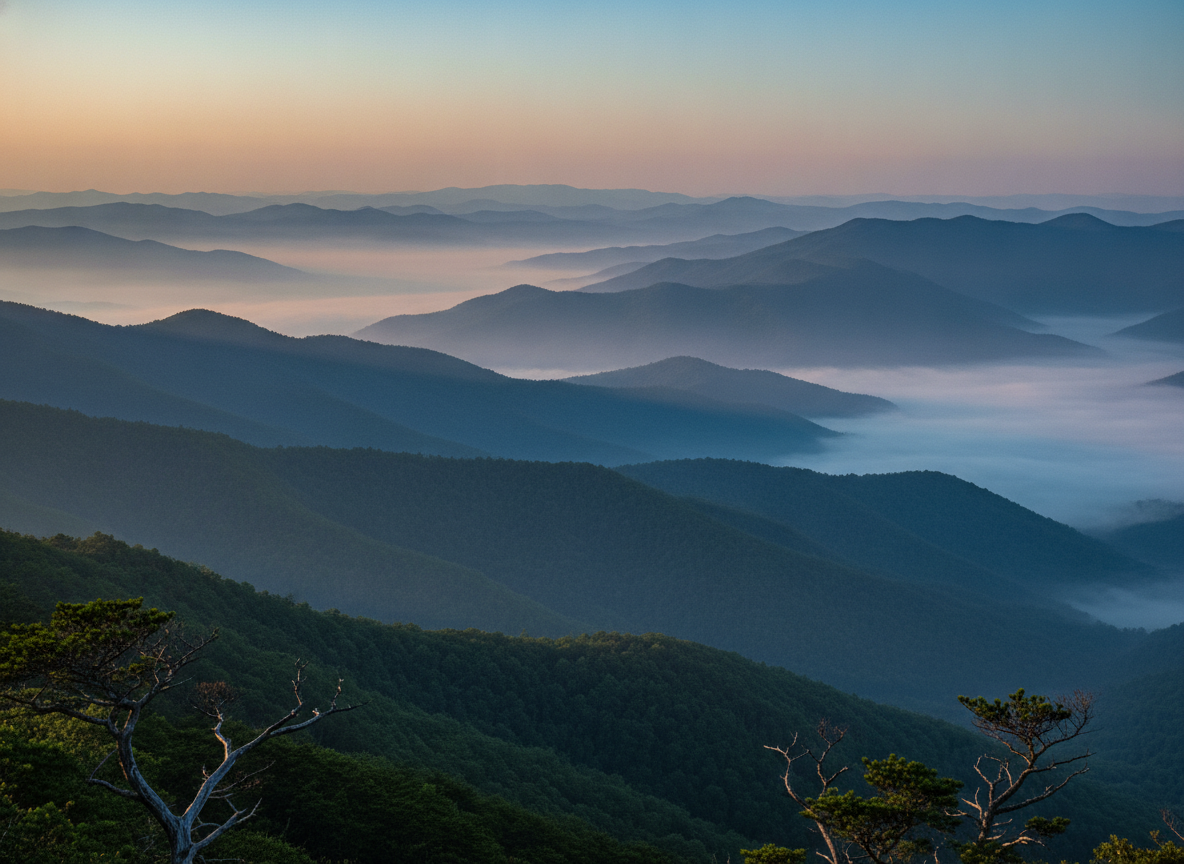
The southern Appalachians, the landscape the band takes its sound and its name from.From a Winston-Salem Scene to the Festival Circuit
The Story
Big Daddy Love's history follows the arc of a regional jam band: a local start, a steady stream of albums, and a reputation earned on stage rather than radio.
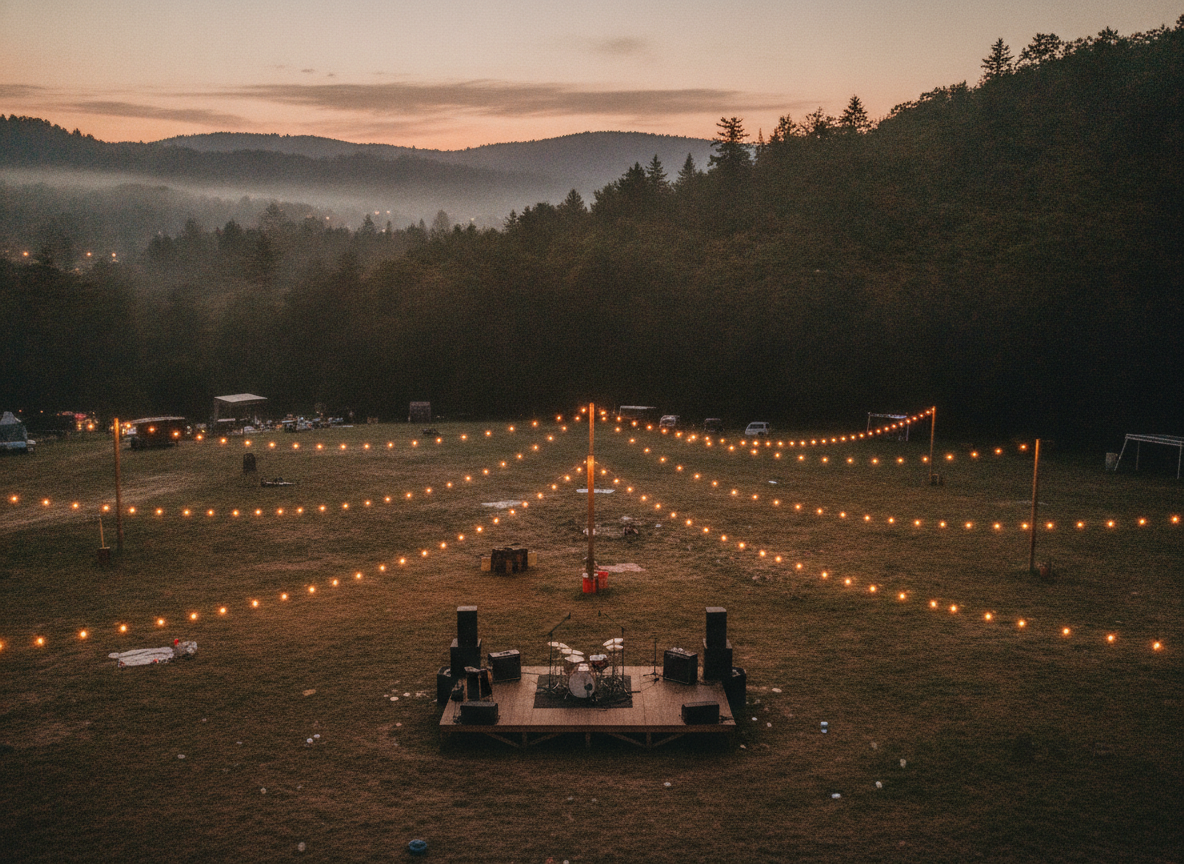
The regional festival stage, where a jamgrass band does most of its real work.
2008
Circle Around the Sun
The band's debut album arrived in 2008, laying out the template of bluegrass instrumentation wrapped in rock and roll energy and marking the start of a steady recording career.
2010
To the Mountain
A second studio record deepened the Appalachian-rock blend and widened the band's reach across the Southeastern club and festival scene.
2013
Live at Ziggy's
Recorded at the Winston-Salem venue Ziggy's, this concert album captured the group in its natural habitat, stretching songs into long improvisations for a hometown crowd.
2014
This Time Around
A studio album that tightened the songwriting while keeping the jam-band flexibility, with songs that became live staples for the band.
2017
Let It Grow
The band's most recent studio album leaned further into the full Appalachian-rock palette, balancing string-band roots with heavier, more expansive arrangements.
Ongoing
The touring band
Across these records, Big Daddy Love has remained first and foremost a live act, a regular presence at Southeastern festivals and a working example of the jamgrass tradition.
Four Songs, One Introduction
Start Here
Big Daddy Love is a live band above all, so these four performances are the fastest way in, from festival stages to a hometown studio session. Watch in order.
01 · The Opener
"Nashville Flood" (Live)
A driving, banjo-led song caught live at a large arena show, a good snapshot of how the band pushes string-band material into full rock arrangements.
02 · The Live Staple
"Kerosene" (Live)
One of the band's best-known songs from This Time Around, stretched out in concert with room for the jam-band interplay between the electric and acoustic instruments.
03 · The Title Track
"Let It Grow" (Music City Roots)
The title song from the 2017 album, performed on the Nashville roots-music showcase Music City Roots, a cleaner look at the group's songwriting and harmonies.
04 · The Studio Cut
"Heed the Call" (2010)
From To the Mountain, a studio track that shows the more melodic, mountain-music side of the band away from the extended live jams.
The Records
The Albums 5 to start with
Big Daddy Love's catalog runs from a 2008 debut to a 2017 studio album, with a hometown live record in the middle. These five are the core. The highlighted cards are the best places to begin.
2008
Circle Around the Sun
The debut. It sets out the band's core blend of bluegrass instrumentation and rock and roll drive, from the title track through songs like "Family Tree" and "It's Alright."
A stronger second record that widened the sound, home to "Heed the Call," "River Runs," and "Peace of Mind," and a good early snapshot of the Appalachian-rock idea.
The live album, recorded at the Winston-Salem club Ziggy's. Extended performances and a Grateful Dead "Shakedown Street" jam make this the clearest document of the band on stage.
The most recent studio album and the fullest realization of the Appalachian-rock blend, from the title track to "Down from the Mountain" and "Sweet Water."
Two sets drawn from the catalog: a First Listen of the songs that define the band, and a Deep Cuts set of album tracks for when you want to sink in. Hit the button on either card to search it on YouTube Music.
Big Daddy Love is a band rather than a solo project, and its sound comes from combining a full string-band front line with a rock rhythm section. The lineup has centered on a five-piece configuration built around these roles.
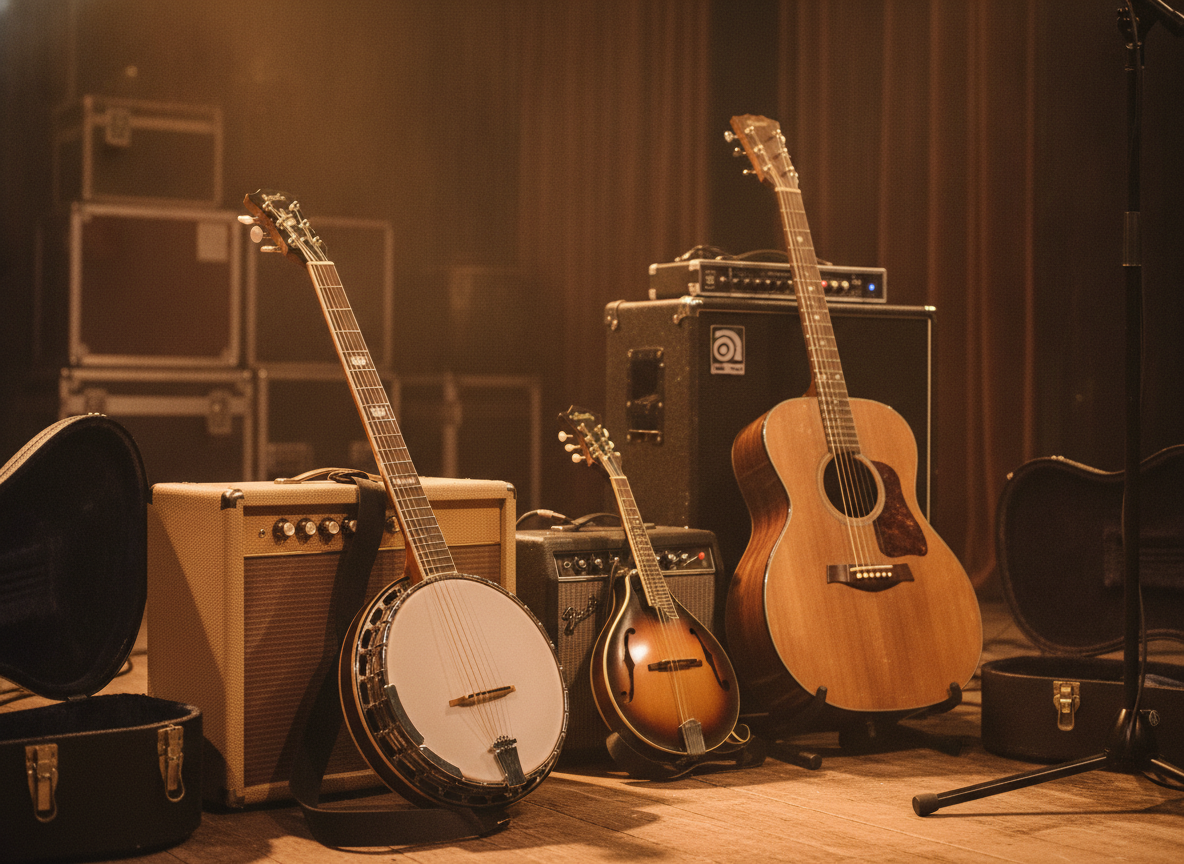
String-band instruments plugged into a rock rhythm section, the core of the Appalachian-rock sound.
Lead vocals & guitarFront lineThe band's songs are anchored by lead vocals and both acoustic and electric guitar, the bridge between the string-band and rock sides of the sound
BanjoString-band leadThe banjo drives much of the bluegrass texture, taking melodic leads and rolling accompaniment inside the rock arrangements
MandolinString-band leadMandolin adds the high, chopping rhythm and lead lines central to the Appalachian side of the group's music
BassRhythm sectionBass ties the acoustic and electric instruments together and gives the extended live jams their low-end foundation
DrumsRhythm sectionA full drum kit is what pushes the string-band material into rock and jam-band territory on stage and on record
The Roots of the Sound
Influences
The Appalachian-rock blend draws on a clear lineage: the Southern rock of the Allman Brothers, the improvisation of the Grateful Dead, the bluegrass of Bill Monroe, and the modern jamgrass and jam-band scenes. Here is where it comes from.
Southern Rock
The Allman Brothers Band
The founders of Southern rock and its extended live jam, a direct model for how Big Daddy Love stretches songs on stage and trades leads between instruments.
The template for the jam band: open-ended improvisation, a roots-music foundation, and a live-first identity. Big Daddy Love has even covered the Dead's "Shakedown Street" in concert.
Pioneers of the "jamgrass" fusion of bluegrass instrumentation and jam-band improvisation, a close relative of the Appalachian-rock sound Big Daddy Love works in.
The band is documented mostly through live sessions and regional features. These are a good window into the group away from the festival stage.
Session · Our State
Music in the Lobby
A stripped-back session and feature filmed by Our State Magazine, with the band performing "Star Spangled Blues" in an intimate setting that highlights the acoustic side of their sound.
Interview · Search
Features and Conversations
Regional outlets and festival channels have posted interviews and backstage clips over the years. Search YouTube for the latest conversations and profiles.
Once the albums have you, the rest of the band's world lives on stage and on the festival circuit.
Live at Ziggy's. the 2013 concert album is the essential live document, the best recorded example of how the songs open up in performance.
The festival sets. as a jamgrass band, Big Daddy Love is built for the Southeastern festival circuit; fan-recorded and official live videos capture the extended jams the studio albums only hint at.
The covers. their live sets have folded in songs from the jam and roots canon, including the Grateful Dead's "Shakedown Street," a clear signal of where the band's roots lie.
The full catalog. beyond the five core records, the band's studio and live releases reward a full front-to-back listen for how the Appalachian-rock blend developed.
The Way to Listen
Start with Live at Ziggy's to hear the band as it really works, then go back to Let It Grow and This Time Around for the studio versions of the songs. The live and studio sides together are the whole picture.