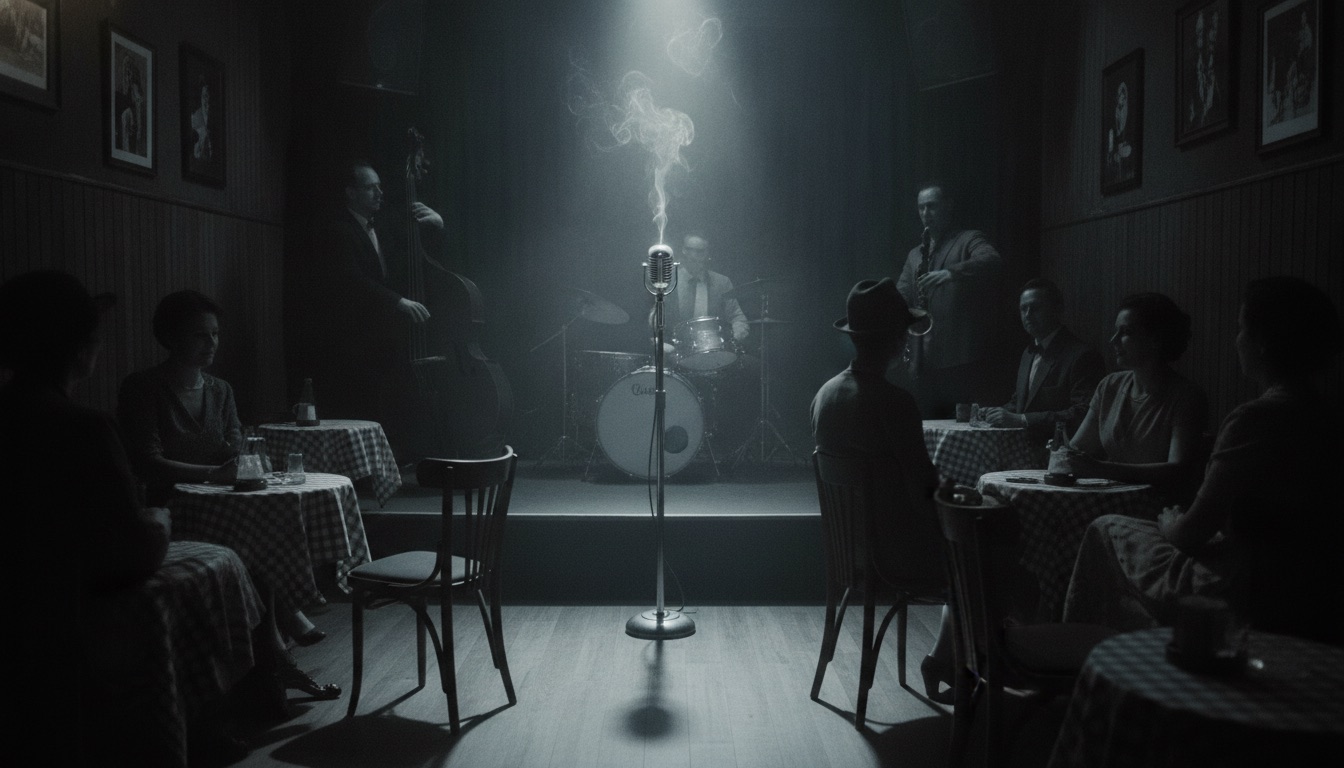
How a singer with a small, unschooled voice became the most influential jazz vocalist who ever lived, turning every song into a piece of her own life and changing forever what singing could mean.
The Short Version
Who Is This?
Billie Holiday, known as "Lady Day," was an American jazz singer, active from the 1930s until her death in 1959, and the most influential vocalist in the history of jazz and popular song. Nearly every singer who came after, from Frank Sinatra to Nina Simone, drew from her.
Two things make her singular. First, the phrasing: she had a small, unschooled voice, but she used it like a jazz horn, bending time and melody, singing behind the beat, turning a song's words into intimate, lived-in drama. Second, the truth: she sang with such raw emotional honesty that every performance sounds like a piece of her own hard life.
She is jazz singing at its deepest and most human, closer to confession than to entertainment. If you want to understand what a voice can do to a song, start here.
The gardenia she wore, and the fragile beauty behind it.A Hard Life, an Immortal Voice
The Story
Holiday rose from a brutal childhood to the top of American music, and turned even her deepest suffering into art of shattering beauty, all in a life cut tragically short.
1915
Born Eleanora Fagan
A hard, impoverished childhood in Baltimore and Philadelphia gave her little but music. She began singing in Harlem clubs as a teenager, and a new voice arrived.
1935 – 1938
The classic small-group sides
Recordings with pianist Teddy Wilson and saxophonist Lester Young, who nicknamed her "Lady Day," produced some of the most joyful and swinging vocal jazz ever made.
1939
"Strange Fruit"
At the Cafe Society club she introduced a searing anti-lynching song that broke every rule of popular music. It became her signature and one of the most important protest songs ever recorded.
1941
"God Bless the Child"
A song she co-wrote that became a standard, showing her gift for turning personal pain into universal, enduring music.
1947 – 1950s
Struggle and endurance
Addiction, abusive relationships, and a drug arrest that cost her the license to perform in New York clubs marked her later years, even as her artistry deepened.
1958 – 1959
Lady in Satin, and the end
Her voice frayed but heartbreakingly expressive, she made the haunting Lady in Satin with strings, then died in 1959 at just forty-four, an immortal legacy already secured.
A voice that turned a nightclub into a confessional.Three Songs, One Education
Start Here
Three songs that hold her whole world: the protest that changed music, the standard she co-wrote, and the swinging blues with her soulmate. Listen in order.
01 · The One to Play First
"Strange Fruit" — 1939
Her devastating anti-lynching song, sung with unbearable restraint. One of the bravest and most important recordings in American history, and the song she is most defined by.
02 · The Standard
"God Bless the Child" — 1941
A song she co-wrote out of a family argument about money, which became a timeless standard. The clearest example of her turning her own life directly into art.
03 · The Reunion
"Fine and Mellow" — 1957
A televised blues that reunited her with her old soulmate Lester Young. The wordless understanding between them, in a look and a saxophone solo, is one of the most moving moments in recorded jazz.
The Catalog
The Albums 5 to start with
Her greatest early work came as singles later gathered into collections; her later years produced landmark albums. These five are the essential doorways. The gold-topped cards mark the best entry points; the moss-green marks the earliest era.
1933–1944
Lady Day: The Complete Billie Holiday on Columbia
The essential early years: her joyful, swinging small-group sides with Teddy Wilson and Lester Young, including "Strange Fruit." The place to start.
Her haunting late masterpiece with a full string orchestra. The voice is worn and cracked, and almost unbearably moving. Not where beginners usually start, but essential.
One curated YouTube Music playlist gathering the essentials across her career. (Ideally, though, spend time with Lady in Satin whole.) Hit the button below to play it.
Billie Holiday's genius was never about vocal power. Her voice was small, limited in range, and untrained, and she made that the source of an art no one has matched. She sang like an instrumentalist, phrasing behind the beat, sliding around a melody, reshaping a song's rhythm and pitch until it became entirely hers.
Her deepest gift was for emotional truth. She could take an ordinary popular song and, through the smallest inflection, fill it with longing, irony, joy, or grief until it sounded autobiographical. Listeners feel that she is not performing a song so much as living it, right in front of them.
That instrumental sensibility came in part from the musicians she loved, above all the saxophonist Lester Young, whose relaxed, behind-the-beat phrasing was a mirror to her own. Their recordings together are a conversation between two of the most sensitive artists in jazz.
What makes her worth following is her influence and her honesty. She redefined what jazz and popular singing could be, and she did it by refusing to hide anything. To hear Billie Holiday is to understand that a voice can carry a whole life.
A small voice that carried an entire life.The Roots of the Sound
Influences
Holiday grew out of the great jazz horns and the blues and pop singers she heard as a girl. Here are four touchstones.
The Horn
Louis Armstrong
Armstrong taught her to sing like a horn player, phrasing a melody freely and swinging it. His warmth and rhythmic genius are the foundation of her whole approach.
The Empress of the Blues gave the young Holiday her sense of power, weight, and emotional directness, the deep blues feeling beneath even her lightest songs.
Her closest musical partner, "Prez," whose cool, floating, behind-the-beat saxophone was a mirror of her own phrasing. Their recordings are among the deepest in jazz.
The pioneering singer and actress who brought jazz phrasing to popular song was an early model for how Holiday could inhabit a lyric with drama and nuance.
Filmed conversations with Holiday are rare and precious. A 1956 television interview, and a reputable documentary that tells her whole story.
Interview · 1956
A Rare Television Interview
A 1956 television appearance in which Holiday talks and performs, one of the few filmed conversations with Lady Day, and a moving glimpse of the woman behind the legend.
A BBC documentary tracing Holiday's life, her genius, and her struggles, with archival footage and the testimony of those who knew and played with her.
Once her voice has you, there is a deep history to explore.
The Lester Young recordings — seek out the 1930s small-group sides where "Lady Day" and "Prez" made magic together.
Lady Sings the Blues (the memoir) — her ghostwritten, unreliable, unforgettable autobiography is a fascinating companion to the music.
The story of "Strange Fruit" — the song's origins and its impact are a whole chapter of American cultural history.
Her descendants — hear her influence in nearly every jazz and pop singer since, from Frank Sinatra to Nina Simone to Amy Winehouse.
The Way to Listen
Start with the early Columbia sides for the joy and the swing, then brace yourself and sit with Lady in Satin to hear the whole of her, worn and luminous, at the end.