How a self-described non-musician invented ambient music, reshaped the sound of rock as a producer, and became one of the most quietly influential figures in modern music.
The Short Version
Who Is This?
Brian Eno is an English musician, producer, and thinker who has shaped modern music in more ways than almost anyone, often without touching a conventional instrument. He made playful, arty rock records in the 1970s, then invented an entire genre, ambient music, and along the way produced some of the most important albums in rock history.
Two things make him singular. First, the ideas: he approaches music as a set of systems and processes, calling himself a "non-musician" and treating the studio, chance, and generative rules as his real instruments. Second, the reach: his influence runs through his own records, the artists he produced, and the whole way we now think about atmosphere and texture in music.
His catalog splits roughly into song-based art-rock and gorgeous, weightless ambient work, and both are essential. If you want to understand where a huge amount of modern music comes from, start here.
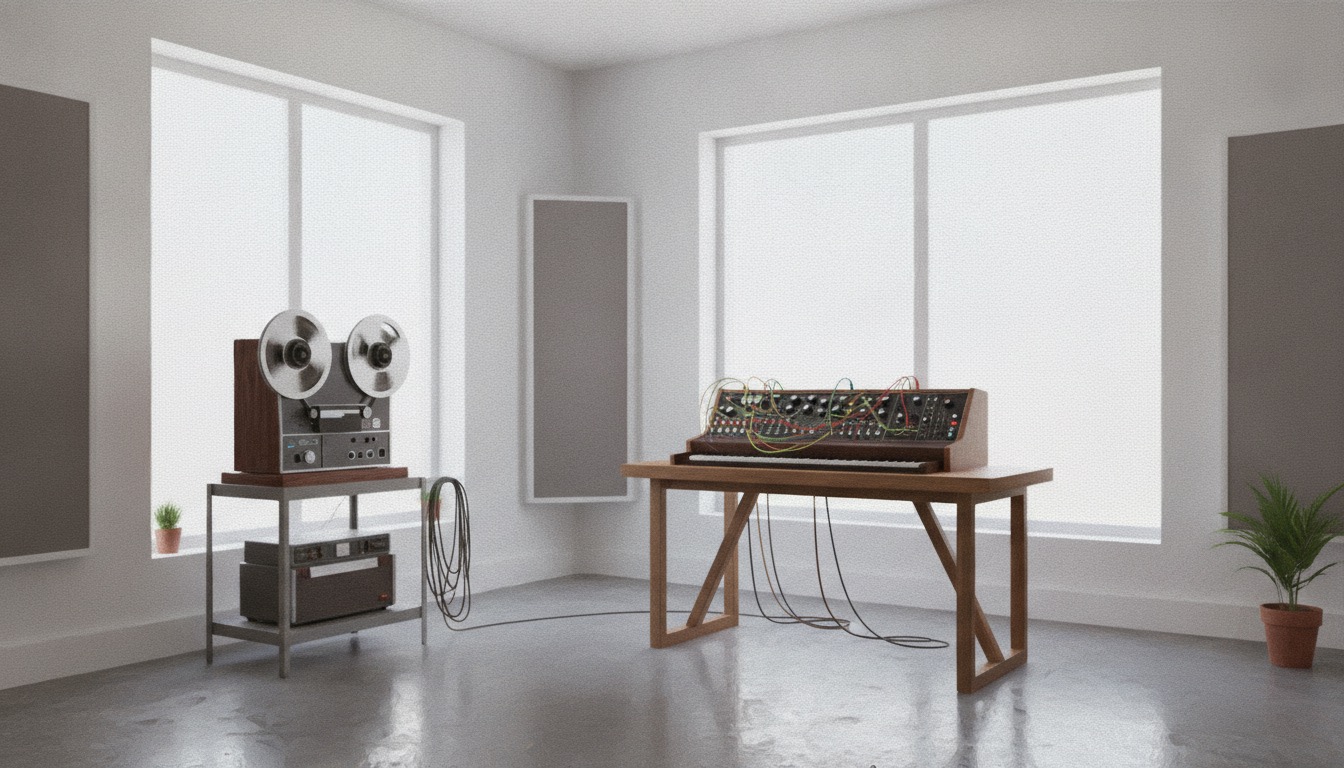
Ambient music: sound as atmosphere and light.From Glam Rock to a New Genre
The Story
Eno's story is a steady move away from the front of the stage and toward the deep structure of music itself.
1971
Roxy Music
Eno joined the glam art-rock band Roxy Music not as a traditional player but as a manipulator of synthesizers and tape, treating the other members' sounds in real time. It made him a star and a provocateur.
1974
Here Come the Warm Jets
His solo debut was a burst of witty, glammy, off-kilter art-rock, proving he could write strange, catchy songs as well as manipulate sound.
1975
Another Green World
The hinge of his career: half art-pop songs, half instrumental sketches, pointing toward the atmospheric music to come. Widely regarded as his masterpiece.
1978
Ambient 1: Music for Airports
He coined the term "ambient music" and made its founding statement: music designed to be as ignorable as it is interesting, a whole new way of thinking about sound.
1977-1980
The Berlin Trilogy and beyond
As a producer, Eno co-created David Bowie's landmark Berlin albums (Low, "Heroes") and produced Talking Heads, reshaping the sound of the era.
1980s-1990s
The super-producer
He produced U2's biggest and boldest albums (The Joshua Tree, Achtung Baby) and many more, becoming one of the most sought-after producers in the world.
2000s and beyond
Generative music and installations
He kept releasing ambient and generative work, built sound-and-light installations, and made apps that create endless, ever-changing music, extending his ideas into new forms.
The studio itself as his true instrument.Three Pieces, One Education
Start Here
Three pieces that map both sides of him: the art-rock provocateur, the ambient inventor, and the composer of pure atmosphere. Listen in order.
01 · The Art-Rock
"Baby's on Fire" — 1974
A sly, sneering glam-rock song from his solo debut, built around a scorching guitar solo. The playful, provocative Eno before he turned to atmosphere.
02 · The Invention
"1/1" — 1978
The opening piece of Music for Airports, where he defined ambient music: slow, spacious, and beautiful, designed to color a room rather than demand attention.
03 · The Beauty
"An Ending (Ascent)" — 1983
A weightless, glowing piece from his album Apollo, and perhaps his most beloved ambient work. Proof that music this calm can also be this moving.
The Studio Catalog
The Albums 6 to start with
His catalog splits between song-based art-rock and pioneering ambient work. The gold-topped cards mark the best entry points; the moss-green marks the glam-rock debut.
1974
Here Come the Warm Jets
The witty, glammy, off-kilter solo debut. Catchy and strange in equal measure, and a great way to meet the art-rock Eno.
One curated YouTube Music playlist gathering the essentials across both sides of him, the art-rock songs and the ambient pieces. (Ideally, though, spend time with these albums whole.) Hit the button below to play it.
Essentials
Across the Catalog · 12 tracks
Baby's on FireHere Come the Warm Jets
Needles in the Camel's EyeHere Come the Warm Jets
Burning Airlines Give You So Much MoreTaking Tiger Mountain
Eno famously calls himself a "non-musician," and he means it as a description of method rather than false modesty. He is not a virtuoso in the traditional sense; his genius is conceptual, in how he sets up systems, chooses constraints, and shapes sound after the fact. The studio and the process are his real instruments.
That approach produced two revolutions. As a solo artist he more or less invented ambient music, redefining what music could be for, atmosphere rather than attention, and opening a door that electronic and experimental musicians have been walking through ever since. His ambient records still sound fresh decades later.
As a producer, he reshaped rock. He co-created David Bowie's Berlin albums, produced Talking Heads and Devo, and made U2's most adventurous records, always pushing artists toward the strange, the textural, and the new. Much of what we think of as the modern rock studio bears his fingerprints.
Running through all of it is a restless theorist. His Oblique Strategies cards, his writing on generative music, and his sound installations all treat music as a field for experiment. Few artists have influenced so much music while remaining so hard to pin down.
Music for Airports: sound designed to color a space.The Roots of the Sound
Influences
Eno drew on the avant-garde, minimalism, and art-rock as much as on pop. Here are four touchstones.
The Avant-Rock
The Velvet Underground
The Velvets' drone and refusal of convention were foundational for Eno; he has said their music showed him rock could be a vehicle for the avant-garde.
His deep creative partnership with Bowie on the Berlin albums was a two-way exchange, and Bowie's fearless reinvention pushed Eno's own studio experiments.
Eno is one of the most articulate and quotable thinkers in music, as compelling on ideas as on sound. A studio conversation, and a reflection on ambient music.
Interview · Apple Music
Inside the Studio
A wide-ranging Apple Music conversation with Zane Lowe, with Eno walking through his methods, his history, and his ideas about how music actually gets made.
Eno explains the original idea behind ambient music, the accident and insight that led him to imagine sound designed to be as ignorable as it is interesting.
Eno's work extends far past his own albums, into the records he shaped and the ideas he spread.
The productions — Bowie's Low and "Heroes", Talking Heads' Remain in Light, and U2's Achtung Baby are all essential, and all bear his fingerprints.
The collaborations — his records with Robert Fripp, Harold Budd, David Byrne, and Cluster open whole other corners of his catalog.
The later ambient work — albums like The Ship and his generative apps continue the ambient project into the present.
The ideas — his Oblique Strategies and his talks and writing on creativity are worth exploring alongside the music.
The Way to Listen
Start with Another Green World to hear both sides of him at once, then put on Music for Airports while you work or rest. Between them you will understand why Eno quietly changed the sound of modern music.