How a kid from Compton turned the story of his own block into some of the most ambitious music of the century, winning a Pulitzer Prize for a rap album and reshaping what the genre could hold.
The Short Version
Who Is He?
Kendrick Lamar (born Kendrick Lamar Duckworth in Compton, California, in 1987) is the most acclaimed rapper of his generation and, by wide agreement, one of the defining artists of the modern era. He rose through the Los Angeles independent label Top Dawg Entertainment and broke through in 2012 with a debut album that played like a short film about his teenage years on the streets of Compton.
Two things make him singular. First, the writing: he builds albums as unified narratives, dense with characters, shifting voices, and moral weight, closer to novels than to song collections. Second, the range: he moves from hard West Coast rap to live jazz and funk to spare confession, and in 2018 he became the first musician outside jazz and classical to win the Pulitzer Prize for Music.
He remains at the peak of his powers, headlining stadiums and the Super Bowl halftime show. To understand where hip-hop has gone in the last fifteen years, you start here.
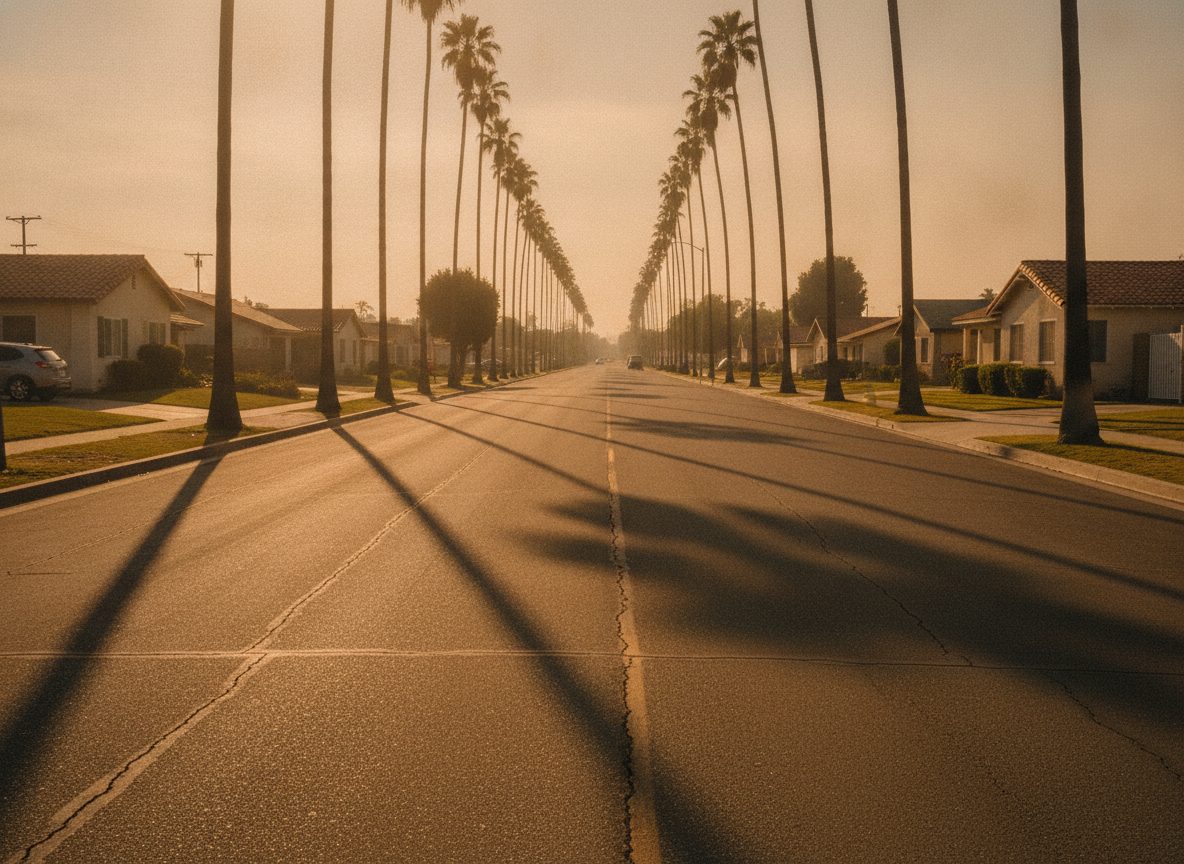
Compton, California, the place and the pressure that his music grows from.From a Compton Block to the Pulitzer Prize
The Story
Kendrick's career is a steady climb built on discipline and craft, each album more ambitious than the last, each one raising the bar for what a rap record could be.
Top Dawg Entertainment, the LA independent label where the craft was built.
2003–2010
K.Dot and Top Dawg
As a teenager rapping under the name K.Dot, Kendrick signed to the local independent label Top Dawg Entertainment and spent years releasing mixtapes, sharpening a reputation as the most gifted young writer in Los Angeles.
2011
Section.80
His first proper album arrived independently, a concept record about a generation raised in the crack era. It drew critical attention and set the template for the narrative ambition that would define him.
2012
good kid, m.A.A.d city
The major-label breakthrough, released through Dr. Dre's Aftermath and Interscope. Subtitled "a short film," it told the story of a single dangerous day in his Compton adolescence and made him a superstar.
2015
To Pimp a Butterfly
A sprawling, live-band fusion of jazz, funk, and spoken word that grappled with fame, race, and depression. "Alright" became an anthem of the Black Lives Matter movement, and the album reset expectations for the genre.
2017–2018
DAMN. and the Pulitzer
A tighter, harder record that topped the charts and, in 2018, won the Pulitzer Prize for Music, the first ever awarded to a work outside classical and jazz. He was suddenly the most decorated artist in rap.
2022
Mr. Morale & the Big Steppers
After a five-year silence, a raw double album about therapy, trauma, and fatherhood. Less an event than a reckoning, it traded anthems for confession and deepened his reputation as a serious writer.
2024–2025
GNX and the Super Bowl
After a headline-grabbing rivalry, he released the surprise album GNX, then headlined the 2025 Super Bowl halftime show, cementing his place at the center of American popular culture.
Four Songs, One Education
Start Here
Kendrick's catalog rewards deep listening, but these four songs are the fastest way to grasp the range, from live-band funk to hard-hitting single to street storytelling. Watch in order.
01 · The Anthem
"Alright" (2015)
The song that became a rallying cry for a movement. Built on a Pharrell hook and a bright, defiant chorus, it turned hardship into hope and is the clearest doorway into To Pimp a Butterfly.
02 · The Hit
"HUMBLE." (2017)
The number-one single from DAMN., a stark piano loop and a commanding hook. Immediate, physical, and endlessly quotable, it is the easiest first taste of his mainstream power.
03 · The Groove
"King Kunta" (2015)
A funk-drenched strut that shows the live, bass-heavy side of his music. Playful and fierce at once, it is the most joyful entry point into his most ambitious album.
04 · The Firestorm
"DNA." (2017)
A breathless, beat-switching showcase of pure technical force. Two beats, two moods, and some of the fastest, most kinetic rapping he has ever committed to tape.
The Landmark Records
The Albums 5 to start with
Kendrick has released a lean, deliberate run of albums, and nearly every one is essential. These five are the pillars. The blue-topped card is the best place to begin.
2012
good kid, m.A.A.d city
The breakthrough, and a perfect place to start. Subtitled "a short film," it walks through one dangerous day in Compton with cinematic detail, from "Bitch, Don't Kill My Vibe" to "Money Trees."
The masterpiece. A live fusion of jazz, funk, and spoken word wrestling with fame, race, and survival, from "King Kunta" to "Alright." Dense, demanding, and widely held to be his finest work.
The Pulitzer winner. Harder and more direct, built on stark hooks and a theme of fate versus free will, from "HUMBLE." to "DNA." to "LOVE." The album that made him the most decorated artist in rap.
A raw double album about therapy, generational trauma, and fatherhood. Less an event than a reckoning, it is his most personal and most challenging record, and it deepens with every listen.
A surprise release named for the Buick GNX, hard and West Coast to its core, arriving in the wake of a headline rivalry and just ahead of his Super Bowl halftime show. His most immediate record in years.
Two YouTube Music playlists: a First Listen of the signature songs to bring you in, and a Deep Cuts set of the longer, headphone-reward pieces for when you want to sink in. (Ideally, though, hear these albums whole.) Hit the button on either card to play it.
Kendrick is a solo artist, but his greatest records were shaped by a tight circle of collaborators, above all the Top Dawg Entertainment family and the West Coast producers and musicians who framed his songs.
The sound is built by a small, loyal circle of producers and players.
Top Dawg EntertainmentHome labelThe Los Angeles independent label that developed Kendrick from a teenage mixtape rapper into a superstar, and released nearly all of his major work
Anthony "Top Dawg" TiffithLabel founderFounded Top Dawg Entertainment and signed Kendrick early, guiding the label's roster and executive-producing its releases
SounwaveProducerThe in-house TDE producer and closest musical collaborator, a central architect of the sound across every album from the mixtapes onward
Dr. DreMentor / AftermathSigned Kendrick to Aftermath and Interscope for the major-label debut and served as a mentor and executive presence on the breakthrough records
Terrace MartinProducer / saxophoneA jazz-schooled multi-instrumentalist and producer whose saxophone and arrangements shaped the live sound of To Pimp a Butterfly
ThundercatBassThe virtuoso bassist and singer whose fluid, jazz-fusion playing defined the low end of To Pimp a Butterfly
DJ DahiProducerCrafted signature beats across the catalog, including "Money Trees," bringing a warm, sample-driven texture to key tracks
The Roots of the Sound
Influences
Kendrick built his art from the deep tradition of West Coast rap and Black American music: the storytelling of Tupac, the sound of Dr. Dre's G-funk, the technical fire of Eminem, and the P-Funk that underpins it all. Here is where it started.
Hip-Hop
Tupac
The single greatest influence. Kendrick has spoken of Tupac as a guiding spirit, from the Compton storytelling to the moral urgency, and even staged an imagined conversation with him to close To Pimp a Butterfly.
The producer who signed him, and the architect of the G-funk sound that runs through West Coast rap. Dre's sonic blueprint is in the DNA of Kendrick's Compton, from N.W.A onward.
A touchstone for pure technical skill. Eminem's dense internal rhyme and rapid-fire delivery set a standard for the kind of writing and breath control Kendrick pushes to its limits.
The P-Funk of George Clinton's Parliament is the bedrock of West Coast music, sampled and channeled across G-funk and directly into the live, funk-drenched grooves of To Pimp a Butterfly.
Kendrick is famously private and gives few interviews, which makes the ones he does give worth seeking out. His conversations reveal a careful, deeply intentional artist.
Interview · Archive
Kendrick, In Conversation
From early radio appearances to the rare, reflective sit-downs around his major albums, Kendrick's interviews reveal an artist who guards his mystery as carefully as he builds his records.
Interview · Performance
The Live Portraits
His NPR Tiny Desk set, his televised performances, and his 2025 Super Bowl halftime show capture the intensity of his artistry better than most interviews ever could. Search YouTube for the full performances and conversations.
Once the landmark albums have you, Kendrick's world opens into mixtapes, guest verses, and the wider Top Dawg universe.
Section.80 and the early mixtapes. his 2011 debut album and the Overly Dedicated era show the writer taking shape before the major-label spotlight found him.
The guest verses. his feature on Big Sean's "Control" and a long list of scene-stealing guest spots are legend, proof that he can dominate any track he steps onto.
The Black Panther soundtrack. the 2018 film album he curated and starred on is a showcase for his vision and for the wider TDE roster.
The full TPAB experience. read along with the lyrics, then seek out the live and televised performances, where the jazz-band arrangements come fully alive.
The Way to Listen
Do yourself one favor: put on good kid, m.A.A.d city from start to finish, then To Pimp a Butterfly. Follow the story the first time through. Kendrick builds albums as whole narratives, and the sequence repays the attention.