How a bookish theater kid raised on Black Panther politics became the most magnetic voice in rap, holding rage and tenderness in the same breath, and left a body of work that still sets the standard for how much a hip hop record can carry.
The Short Version
Who Is He?
Tupac Shakur (born Lesane Parish Crooks in New York City in 1971, later renamed Tupac Amaru Shakur) is one of the best selling and most influential recording artists in history. The son of a Black Panther activist, he moved from Baltimore to the Bay Area as a teenager, trained in acting and poetry, and broke into music as a roadie and dancer for the Oakland group Digital Underground before launching a solo career that made him a global icon.
Two things make him singular. First, the range: in a single catalog he wrote hard street reportage, tender tributes to single mothers, and searching meditations on his own mortality, often within the same song. Second, the presence: as a performer and on camera he had a charisma that jumped through the speakers and the screen, which is why he became a movie star as fast as he became a rapper.
He was killed in a Las Vegas shooting in 1996 at the age of twenty five, but he recorded so prolifically that music kept arriving for years. To understand what hip hop became in the nineties and after, you start here.
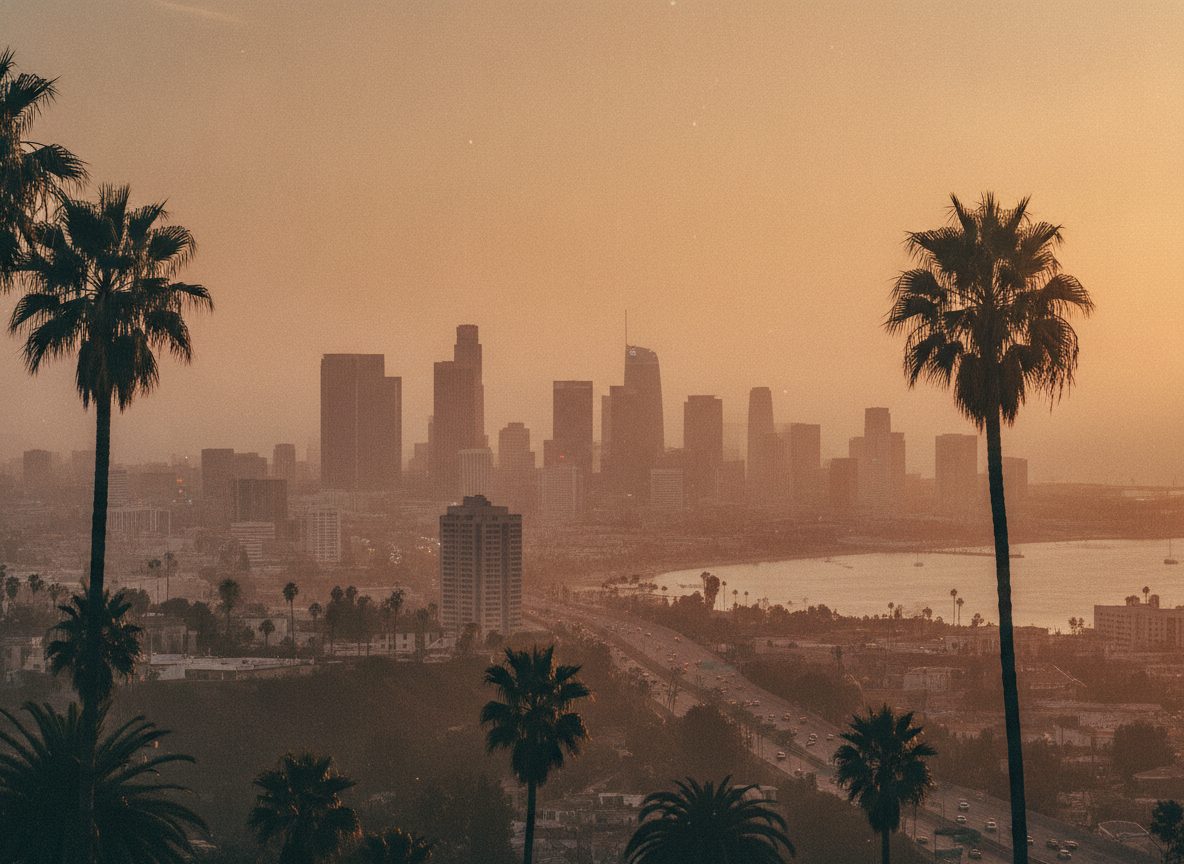
California light and the sprawl of the West Coast, the landscape Tupac's music grows from.From a Panther's Household to a Global Icon
The Story
Tupac's life moved fast and burned bright, a compressed arc that took him from a struggling teenager to one of the most famous artists on earth in only a handful of years.
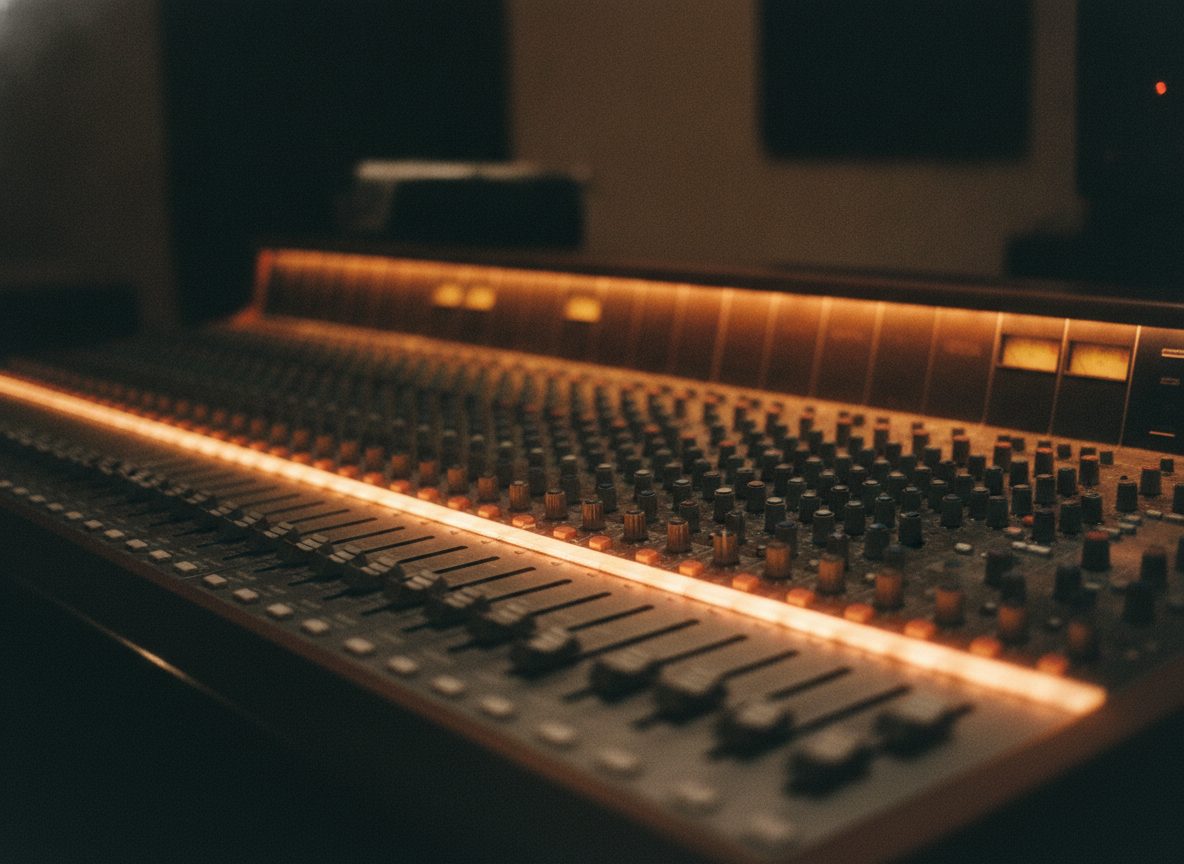
The booth and the spotlight, where a poet's notebook became a voice heard around the world.
1971–1988
A political childhood
Born to Black Panther member Afeni Shakur, Tupac grew up steeped in activism and poverty, moving between New York, Baltimore, and finally the Bay Area. He studied acting and poetry at the Baltimore School for the Arts, a foundation that shaped his gift for language.
1990–1991
Digital Underground
He got his start with the playful Oakland crew Digital Underground, first as a roadie and dancer, then rapping on their records. The connection gave him a stage, a scene, and the momentum to step out on his own.
1991–1993
Going solo
His debut 2Pacalypse Now announced a fierce political voice, and the follow up Strictly 4 My N.I.G.G.A.Z. widened his audience. At the same time his film role in Juice proved he was a natural screen actor.
1995
Me Against the World
Recorded under legal and personal pressure, this introspective album debuted at number one while he was incarcerated, a first for any artist. Its raw honesty, on songs like "Dear Mama," deepened his reputation as more than a street chronicler.
1996
Death Row and All Eyez on Me
Signing to Death Row Records, he released the sprawling double album All Eyez on Me, a commercial juggernaut powered by the Dr. Dre single "California Love." He was, briefly, the biggest star in music.
1996
The Makaveli record
Under the alias Makaveli he recorded The Don Killuminati: The 7 Day Theory, a dark, urgent album finished in a matter of days. It arrived after his death and reads now like a haunted farewell.
1996 and after
Death and legacy
Tupac was shot in Las Vegas in September 1996 and died days later at twenty five. A flood of posthumous releases followed, and his influence on rap, film, and culture only grew, culminating in a 2017 induction into the Rock and Roll Hall of Fame.
Three Songs, One Education
Start Here
Tupac's catalog holds both the party and the pain, and these three official videos cover that whole span, from a tender tribute to a West Coast anthem to a piercing state of the world. Watch in order.
01 · The Heart
"Dear Mama" (1995)
A tender, unflinching tribute to his mother that became one of the most beloved songs in rap. It shows the empathy and vulnerability that set Tupac apart, and it is the fastest way to understand why people loved him.
02 · The Anthem
"California Love" (1995)
The Dr. Dre produced juggernaut that turned Tupac's Death Row arrival into a coast wide celebration. Big, joyful, and instantly recognizable, it is West Coast hip hop at full volume.
03 · The Message
"Changes" (1998)
A posthumous single built on a Bruce Hornsby sample, it distills Tupac's social conscience into one aching, hopeful plea. The clearest window into the thinker behind the icon.
The Landmark Records
The Albums 5 to start with
Tupac released a remarkable amount of music in a short life, and even more arrived after his death. These five are the pillars of the catalog. The blue-topped cards are the best places to begin.
1991
2Pacalypse Now
The debut. A raw, politically charged record that laid out his themes of poverty, police violence, and survival, announcing an unusually literate new voice in West Coast rap.
The record that widened his reach, balancing hard street tracks with the uplift of "Keep Ya Head Up." It marked the moment Tupac became a genuine star.
The introspective peak, and a perfect place to start. Recorded in turmoil and released while he was incarcerated, it is intimate, searching, and home to "Dear Mama," widely held to be his finest album.
The blockbuster. A sprawling double album made after signing to Death Row, packed with hits like "California Love" and "2 of Amerikaz Most Wanted," it captures Tupac at the dizzying height of his fame.
Released under the Makaveli alias just after his death, this dark, urgent record was written and recorded at breathtaking speed. It plays like a defiant, haunted final statement.
Two YouTube Music playlists: a First Listen of the signature songs to bring you in, and a Deep Cuts set of the longer, more searching pieces for when you want to sink in. (Ideally, though, hear these albums whole.) Hit the button on either card to play it.
Tupac was a solo artist, but his records were built with a tight circle of producers, mentors, and crews, from the Oakland group that launched him to the Death Row team that made him a superstar.
Behind every icon is a room of collaborators shaping the sound.
Digital UndergroundGroup / launch padThe Oakland crew led by Shock G that gave Tupac his start as a roadie, dancer, and rapper, putting him on record and on tour for the first time
Shock GMentor / producerThe Digital Underground frontman who mentored Tupac early and produced key tracks, including the piano-driven "I Get Around"
Dr. DreProducerThe Death Row co-founder whose G-funk production powered "California Love," Tupac's biggest crossover hit
Johnny JProducerA close collaborator who produced a large share of All Eyez on Me and much of Tupac's most enduring solo work
Death Row RecordsLabel / crewSuge Knight's label, home to Dr. Dre and Snoop Dogg, that signed Tupac in 1995 and released his blockbuster Death Row era
OutlawzBacking rap groupThe young crew Tupac assembled and mentored, featured across the Death Row and Makaveli records, including "Hail Mary"
The Roots of the Sound
Influences
Tupac drew on the socially conscious soul of the seventies, the revolutionary fire of reggae, and the founding wave of West Coast rap, then fused it all with the politics he was raised on. Here is where it started.
Hip Hop
Digital Underground
Not just an influence but his launch pad. The Oakland group's playful, funk-drenched sound gave Tupac his first records and taught him how to command a track.
The Compton group whose unflinching street reportage rewrote what a rap record could say. Their blueprint of anger and detail runs straight through Tupac's West Coast work.
The socially conscious soul of What's Going On was a north star for Tupac's message songs. Its blend of tenderness and protest shaped how he wrote about the world.
Tupac admired Marley's fusion of revolutionary politics and universal feeling, a model of the militant artist who could still reach everyone. That balance is all over his best work.
Tupac was one of the most quotable interview subjects of his era, thoughtful, funny, and fearless in front of a camera. His conversations are as revealing as his music.
Interview · Archive
Tupac, In His Own Words
From prison interviews to television sit-downs, Tupac spoke about race, poverty, fame, and his own contradictions with startling candor.
Interview · Documentary
The Filmed Portraits
Documentaries like Tupac: Resurrection, narrated in his own words, and Dear Mama gather extended interviews and footage that trace his life and thinking. Search YouTube for clips and conversations.
Once the landmark albums have you, Tupac's world opens into a deep well of posthumous music, film, and writing.
The posthumous albums. R U Still Down?, Until the End of Time, and Better Dayz collect vaulted recordings, uneven but full of essential songs left behind.
The films. Juice, Poetic Justice, and Above the Rim show the screen presence that made Tupac a movie star alongside his music.
The poetry. The Rose That Grew from Concrete gathers verse he wrote as a young man, a window into the writer beneath the rapper.
The documentaries. Tupac: Resurrection and the series Dear Mama are the best filmed windows into his life, his mother, and the movement that shaped him.
The Way to Listen
Do yourself one favor: put on Me Against the World from start to finish, then All Eyez on Me. Listen for how quickly Tupac moves between hardness and tenderness. That range, more than any single song, is the whole point.