How a blind Motown child prodigy won total artistic control and then made one of the greatest runs of albums in the history of popular music.
The Short Version
Who Is This?
Stevie Wonder is an American singer, songwriter, and multi-instrumentalist, blind since infancy, and one of the most gifted musicians of the twentieth century. A Motown child prodigy who grew into a self-contained genius, he wrote, sang, produced, and played most of the instruments on a run of 1970s albums that stand among the greatest ever made.
Two things make him singular. First, the joy: even at his most serious, his music overflows with warmth, melody, and groove, an irrepressible love of sound. Second, the self-sufficiency: during his classic period he built his records almost single-handedly, pioneering the use of synthesizers to create whole ensembles by himself.
He is beloved for the hits, but the deeper you go, the more you find: social commentary, spiritual searching, and songwriting of astonishing range. If you want music that is both profound and pure pleasure, start here.
The warmth and optimism at the heart of the music.From Little Stevie to Total Control
The Story
Stevie Wonder's story turns on a single act of independence, and the astonishing decade of music it unleashed.
1950
Saginaw, Michigan
Born prematurely and blind, Stevland Morris was a musical prodigy who signed to Motown as a child and scored his first number one, "Fingertips," at just thirteen.
1971
Winning control
Turning twenty-one, he renegotiated his Motown contract to win near-total artistic control, a rare feat that freed him to make exactly the music he wanted.
1972
Talking Book
The classic period begins in earnest, with the funk landmark "Superstition" and the ballad "You Are the Sunshine of My Life." Synthesizers, Clavinet, and total creative freedom.
1973
Innervisions
A masterpiece of social vision and musical ambition, with "Living for the City" and "Higher Ground." It won the Grammy for Album of the Year, the first of three in four years.
1974
Fulfillingness' First Finale
Another Album of the Year winner, warmer and more inward, made as he recovered from a serious car accident. His dominance was total.
1976
Songs in the Key of Life
The sprawling double-album summit of his powers, with "Sir Duke," "I Wish," and "Isn't She Lovely." A third Album of the Year, and one of the greatest records ever made.
1980s and beyond
An icon and an activist
He kept scoring hits (Hotter Than July, "I Just Called to Say I Love You") and became a leading advocate, notably in the fight to make Martin Luther King Jr. Day a holiday.
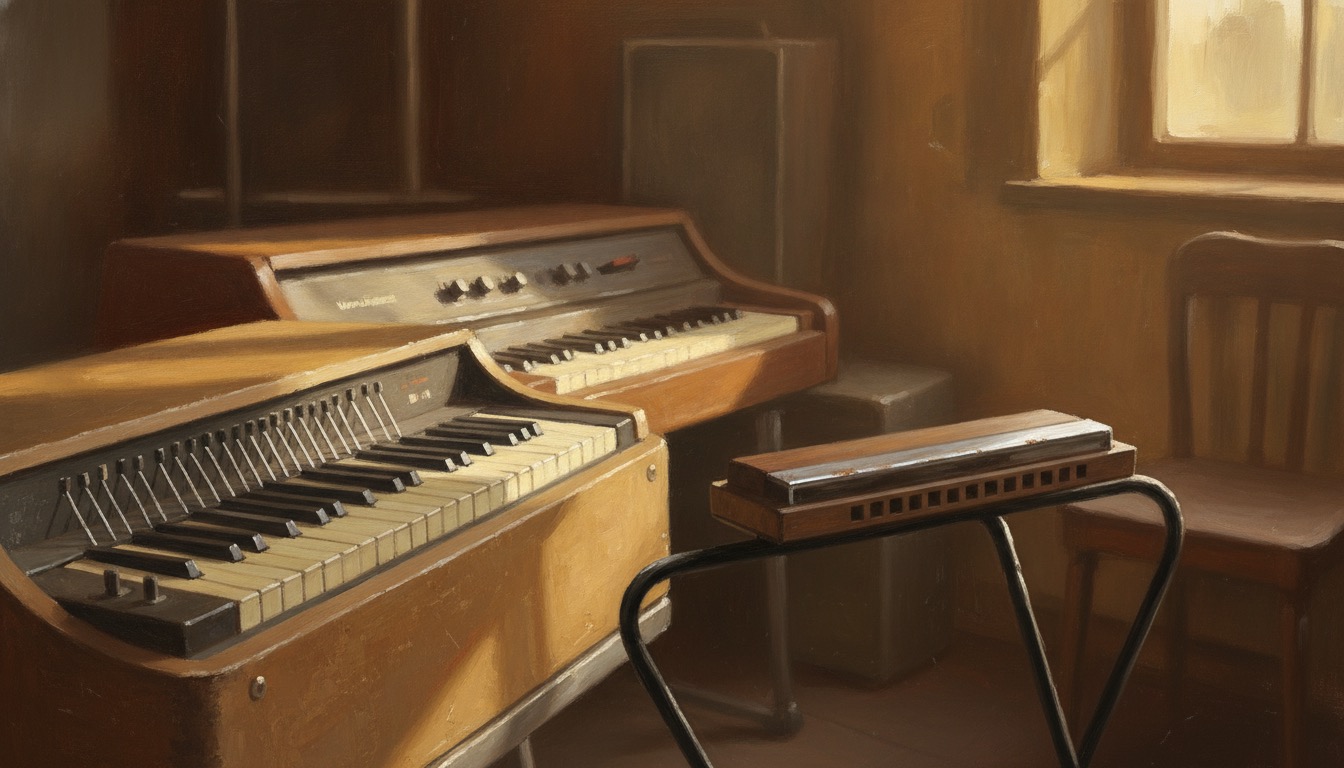
Keyboards, Clavinet, and harmonica: a one-man band.Three Songs, One Education
Start Here
Three songs from the classic period: the funk landmark, the spiritual anthem, and the joyful tribute. Listen in order.
01 · The Funk
"Superstition" — 1972
Built on one of the greatest Clavinet riffs ever recorded, with Stevie playing nearly every instrument. A perfect three-minute case for his genius, and pure joy.
02 · The Groove
"Higher Ground" — 1973
A churning, wah-drenched funk workout about reincarnation and second chances, written and recorded by Stevie alone in a matter of hours. Relentless and uplifting.
03 · The Joy
"Sir Duke" — 1976
A jubilant tribute to Duke Ellington and the giants of music, with an unforgettable horn line. The sound of a master celebrating the joy of music itself.
The Studio Catalog
The Albums 6 to start with
The heart of the story is a five-year run almost unmatched in popular music. The gold-topped cards mark the best entry points; the moss-green marks the start of the classic period.
1972
Music of My Mind
The first fully self-produced album, where he took control and began building whole records almost single-handedly with synthesizers. The template for everything after.
The breakthrough, with "Superstition" and "You Are the Sunshine of My Life." Funk, ballads, and synthesizer genius in perfect balance. A superb entry point.
Another Album of the Year winner, warmer and more inward, with "You Haven't Done Nothin'" and "Boogie On Reggae Woman." The quiet peak between two giants.
A vibrant, reggae- and pop-touched album from just after the classic period, with "Master Blaster (Jammin')" and "Happy Birthday." Warm and joyful throughout.
One curated YouTube Music playlist gathering the essentials from the classic period and just beyond. (Ideally, though, spend time with these albums whole.) Hit the button below to play it.
The astonishing fact about Stevie Wonder's classic period is how much of it he made himself. He sang, wrote, arranged, and produced, and he played keyboards, drums, bass, harmonica, and more, layering the parts into full, living arrangements. He was, in effect, a whole band and studio in one person.
Synthesizers were his liberation. Working with early synth pioneers, he used the technology not for cold, futuristic effects but to create warm, human ensembles, basslines, horn-like leads, and textures that no session could have given him. He is one of the most important figures in the history of the instrument.
His gifts as a melodist and singer are almost taken for granted because they are so abundant. He could write an unforgettable hook seemingly at will, and his voice, agile, joyful, and full of feeling, is one of the great instruments in popular music. Both serve the song rather than showing off.
And there is the vision. Beneath the joy, his best albums grapple seriously with poverty, injustice, faith, and love, holding profound subject matter and irresistible grooves in the same hand. That balance, of depth and delight, is what makes his classic period feel like a miracle.
Depth and delight, held in the same hand.The Roots of the Sound
Influences
Wonder grew out of the great soul, gospel, and R&B traditions, and out of Motown itself. Here are four touchstones.
The Genius
Ray Charles
The original genre-fusing genius of soul, and the model for a blind keyboard prodigy who could do everything. Charles's blend of gospel, blues, and pop is deep in Wonder's DNA.
His Motown labelmate's What's Going On proved a soul artist could make a serious, socially conscious album statement, a direct spur to Wonder's own classic period.
The Beatles' melodic ambition and studio experimentation expanded every songwriter's sense of the possible, Wonder included, as he built his own studio masterpieces.
Wonder is a warm, funny, and deeply thoughtful presence. Two archival windows into the classic-period artist at work.
Interview · 1973
The Innervisions Era
An archival 1973 television interview and performance from the height of his powers, capturing Wonder talking about his music just as the classic period was cresting.
Once the classic period has you, there is more to explore in both directions.
The early Motown hits — "Fingertips," "Uptight," "I Was Made to Love Her," and "Signed, Sealed, Delivered" show the prodigy before the classic period.
The full double album — Songs in the Key of Life rewards a complete, unhurried listen more than any single song can suggest.
Journey Through the Secret Life of Plants — his ambitious, divisive 1979 instrumental-leaning album is a fascinating deep cut.
The harmonica — his chromatic-harmonica playing, all over the catalog and beyond, is a signature worth chasing on its own.
The Way to Listen
Start with Innervisions front to back, then Songs in the Key of Life when you have the time to sit with a double album. Between them you will hear one of the greatest runs any artist has ever had.