The Jacksonville, Florida band that defined Southern rock, pairing a hard-driving rhythm section with a three-guitar attack and the plainspoken delivery of frontman Ronnie Van Zant.
The Short Version
Who Are They?
Lynyrd Skynyrd is an American rock band formed in Jacksonville, Florida, in 1964. Built around vocalist and chief lyricist Ronnie Van Zant, the group became the definitive Southern rock band of the 1970s, translating the blues, country, and hard rock of the American South into a muscular, guitar-forward sound.
Two things set them apart. First, the three-guitar attack: unusually for a rock band, Lynyrd Skynyrd built its sound around three electric guitars trading rhythm, lead, and harmony lines. Second, the craftsmanship: tight arrangements, a swinging rhythm section, and Billy Powell's honky-tonk piano gave the songs a polish that set the template for a whole regional genre.
From 1973 to 1977 the classic lineup released a run of studio albums that remain the cornerstone of Southern rock. The band regrouped in 1987 and has continued to tour and record into the present.
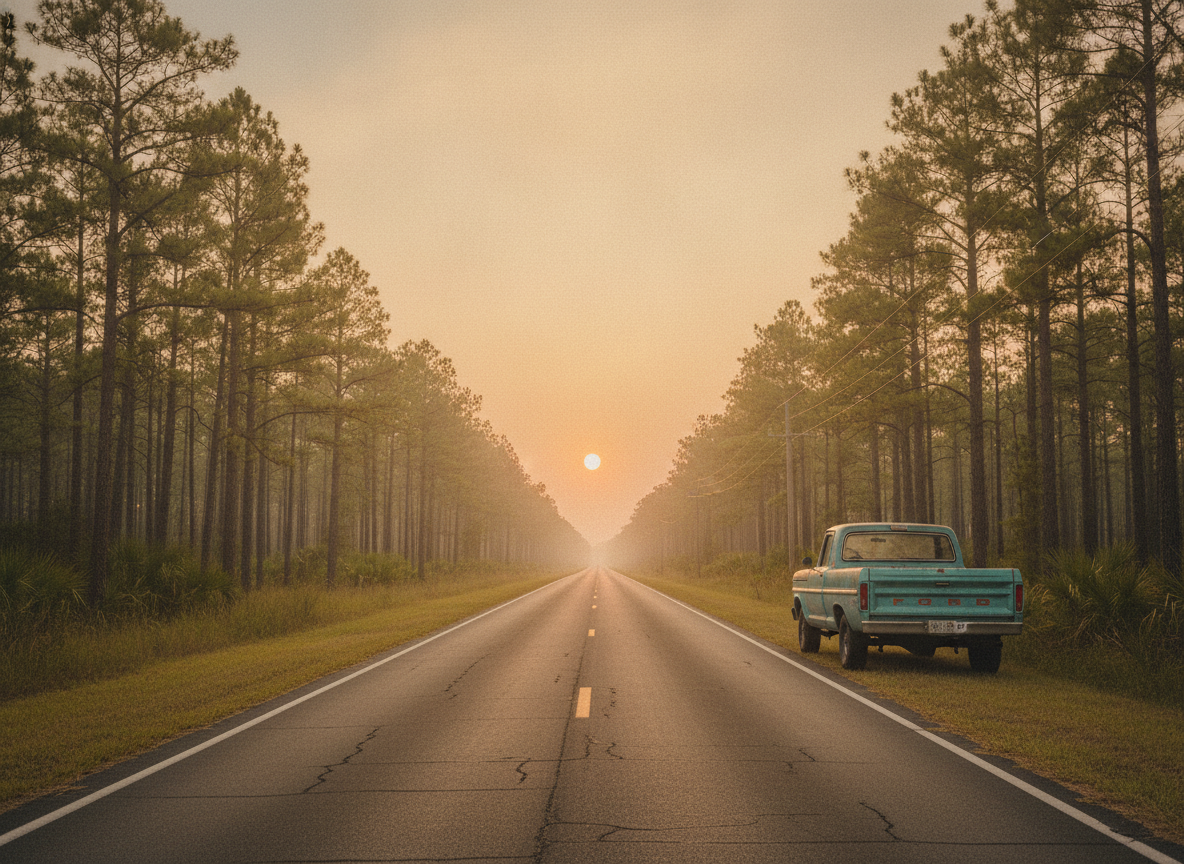
Jacksonville, Florida, and the backroads of the American South, the ground this music grows from.From a Jacksonville Garage to the Arena Stage
The Story
Lynyrd Skynyrd's rise is a story of relentless practice, regional bar circuits, and a sound refined over nearly a decade before the first album ever appeared.
The three-guitar front line that became the band's signature.
1964
Jacksonville beginnings
Schoolmates Ronnie Van Zant, Gary Rossington, and Allen Collins formed a band in Jacksonville that cycled through several names before settling on Lynyrd Skynyrd. They spent years honing their material on the Southern club circuit.
1973
The debut
Producer Al Kooper signed the band and produced (Pronounced 'Leh-'nerd 'Skin-'nerd), which introduced the three-guitar lineup and the extended closer that became their signature concert piece.
1974
Second Helping
The follow-up, Second Helping, brought the band its widest audience, led by a bright, radio-ready single that answered a Neil Young song and became a Southern anthem.
1975
Lineup and touring
Nuthin' Fancy arrived as the band toured heavily, with drummer Artimus Pyle joining and guitarist Ed King departing, reshaping the front line.
1976
Road-tested
Gimme Back My Bullets and the live album One More from the Road captured a band at the height of its powers as a touring act, with Steve Gaines soon added on guitar.
1977
Street Survivors
Street Survivors showcased a maturing band and the new writing partnership between Van Zant and Steve Gaines, and stands as the final studio album of the classic era.
1987
The reunion era
The band regrouped for a tribute tour with Johnny Van Zant on vocals and Gary Rossington anchoring the lineup, then continued as a recording and touring act for decades.
Four Songs, One Education
Start Here
The Lynyrd Skynyrd catalog is deep, but these four songs are the fastest way to grasp the range, from the anthem to the ballad to the epic closer. Watch in order.
01 · The Anthem
"Sweet Home Alabama" (1974)
The instantly recognizable riff and rolling groove that made the band a household name. The essential Lynyrd Skynyrd starting point and one of the defining songs of Southern rock.
02 · The Ballad
"Simple Man" (1973)
A slow-building, three-chord ballad from the debut that shows the band's quieter, gospel-tinged side and Rossington's melodic lead playing.
03 · The Slow Burn
"Tuesday's Gone" (1973)
A sweeping, mellotron-colored piece from the first album that stretches out and lets the three guitars build in layers. Proof the band was more than boogie.
04 · The Epic
"Free Bird" (1973)
The band's signature closer: a tender opening that gives way to one of the most famous extended guitar workouts in rock. The full three-guitar attack in a single song.
The Landmark Records
The Albums 5 to start with
The classic lineup released five studio albums between 1973 and 1977. These are the pillars of the catalog and the foundation of Southern rock. The blue-topped card is the best place to begin.
1973
(Pronounced 'Leh-'nerd 'Skin-'nerd)
The debut, produced by Al Kooper. It introduces the three-guitar lineup and gathers "Simple Man," "Tuesday's Gone," "Gimme Three Steps," and the epic "Free Bird," an astonishing first statement.
The commercial breakthrough. Home to "Sweet Home Alabama," "The Ballad of Curtis Loew," "Call Me the Breeze," and "Workin' for MCA," it is the band's most accessible and widely loved record.
Recorded quickly amid heavy touring, it is leaner and harder-edged, led by the driving single "Saturday Night Special" and marking a shift in the guitar lineup.
A stripped-down, blues-leaning record produced by Tom Dowd, temporarily paring the band back to two guitars before Steve Gaines rounded out the lineup for the road.
The final album of the classic era, and a high point, featuring the new Van Zant and Steve Gaines writing partnership on "That Smell," "What's Your Name," and "You Got That Right."
Two sets: a First Listen of the signature songs to bring you in, and a Deep Cuts gathering of the longer, headphone-reward pieces for when you want to sink in. (Ideally, though, hear these albums whole.) Hit the button on either card to play it.
The classic-era Lynyrd Skynyrd was built on a seven-piece lineup, with three guitars, piano, bass, and drums framing Ronnie Van Zant's vocals.
Three guitars, piano, and a swinging rhythm section, the classic-era engine.
Ronnie Van ZantLead vocalsFounder, frontman, and chief lyricist whose plainspoken delivery defined the band's identity
Gary RossingtonGuitarFounding guitarist and the band's long-running anchor, known for his melodic slide and lead playing
Allen CollinsGuitarFounding guitarist and a primary co-writer, whose fiery lead work drove the extended solos
Ed KingGuitarCompleted the original three-guitar front line and co-wrote several signature songs
Billy PowellKeyboardsThe honky-tonk and boogie piano that colored the arrangements from the debut onward
Leon WilkesonBassThe melodic, propulsive bass foundation of the classic-era rhythm section
Bob BurnsDrumsOriginal drummer whose swinging feel underpinned the first two albums
The Roots of the Sound
Influences
Lynyrd Skynyrd built its sound from British blues-rock, the twin-guitar approach of fellow Southern players, and the deep Mississippi blues that underpins it all. Here is where it started.
Rock
The Rolling Stones
A foundational model for a guitar band built on blues and swagger. The Stones' riff-driven approach shaped how Skynyrd built its own songs.
Archival interviews with the classic lineup offer a window into how the band saw its own music and its Southern roots.
Interview · Archive
The 1976 InnerView
Jim Ladd's radio conversation with Ronnie Van Zant and Gary Rossington, a rare extended talk from the classic era about the band's songs, sound, and Southern identity.
Interview · Archive
More Conversations
The band's members gave numerous radio and television interviews across the 1970s and the reunion decades. Search YouTube for archival clips and full conversations.
Once the five classic albums have you, the Lynyrd Skynyrd world opens into live records, reissues, and the wider Southern rock family.
One More from the Road. the celebrated 1976 live double album, widely regarded as one of the great live rock records and the best document of the classic-era band on stage.
The deluxe reissues. expanded editions of the studio albums add demos, alternate takes, and live tracks that show how the songs came together.
The reunion catalog. beginning with the 1987 tribute tour and continuing through later studio albums, the reformed band kept the songbook alive across the decades.
The Southern rock family. explore The Allman Brothers Band, the Marshall Tucker Band, and the Outlaws to hear the wider movement Skynyrd helped define.
The Way to Listen
Do yourself one favor: put on (Pronounced 'Leh-'nerd 'Skin-'nerd) from start to finish, then Second Helping. Let the three guitars and the piano fill the room. These records were built to be heard whole.