Delta Roots • Chicago Electric Blues • The Father of It All
How a Mississippi sharecropper carried the Delta blues north to Chicago, plugged it into an amplifier, and invented the loud, swaggering electric sound that rock and roll was built on.
The Short Version
Who Is He?
Muddy Waters (born McKinley Morganfield in 1913) is the man most people mean when they say "the father of modern Chicago blues." He grew up working the cotton fields of the Mississippi Delta, learned the raw, haunted country blues of Son House and Robert Johnson, and then moved to Chicago in 1943 and made it electric.
Two things make him singular. First, the sound: a stinging amplified slide guitar, a big commanding voice, and a full band of drums, piano, harmonica, and bass that turned front-porch blues into something loud enough for a crowded, noisy South Side club. Second, the influence: his records on Chess laid the groundwork for rock and roll, and a young English band even named itself after one of his songs, "Rollin' Stone."
Songs like "Hoochie Coochie Man," "Mannish Boy," and "I Just Want to Make Love to You" are foundational texts. Learn Muddy Waters and you understand where a huge share of modern popular music actually comes from.
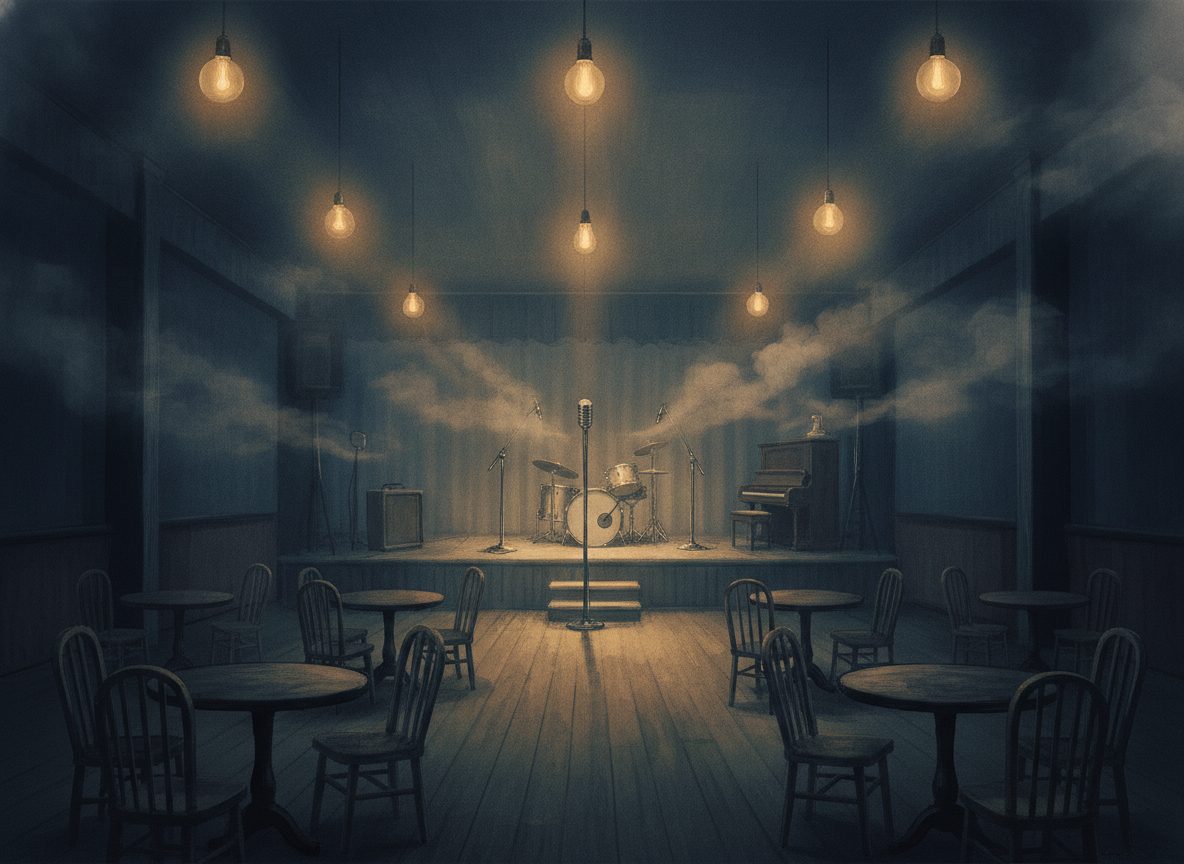
The smoky South Side club, the room this music was built to fill.From the Delta to the South Side
The Story
Muddy Waters' story is the story of the Great Migration set to music: a Southern country sound carried north, plugged in, and turned into the template for the modern band.
Cotton fields and a country guitar: where the sound was born.
1913
Born in the Mississippi Delta
McKinley Morganfield was born in Mississippi and raised largely on Stovall Plantation near Clarksdale by his grandmother, who nicknamed him "Muddy" for his love of playing in a nearby creek.
1941–1942
The Library of Congress recordings
Folklorist Alan Lomax recorded the young Muddy on the plantation for the Library of Congress. Hearing himself played back convinced him he had something worth pursuing.
1943
North to Chicago
Muddy joined the Great Migration and moved to Chicago, working day jobs and playing house parties at night. He soon traded his acoustic guitar for an electric one so he could be heard over the crowds.
1948
The first Chess hits
His singles for the Aristocrat and Chess labels, starting with "I Can't Be Satisfied" and "I Feel Like Going Home," were regional sensations and made him a star of the Chicago blues scene.
1954
The classic band and the anthems
With Willie Dixon writing and a killer band behind him, Muddy cut the songs that defined him: "Hoochie Coochie Man," "I Just Want to Make Love to You," and "I'm Ready."
1960
At Newport
His electrifying set at the Newport Jazz Festival, captured on a live album, introduced the raw power of Chicago blues to a huge new audience and helped spark the coming blues revival.
1970s
Elder statesman and Grammy years
A run of albums produced by Johnny Winter, starting with Hard Again, revived his career and won Grammys, cementing his status as a living founder of American music until his death in 1983.
Four Songs, One Education
Start Here
Muddy Waters rewards digging into the full Chess catalog, but these four songs are the fastest way to understand the swagger, the voice, and the sound that changed everything. Watch in order.
01 · The One You Know
"Mannish Boy" (1955)
The strutting, one-chord declaration of manhood that opens with the most famous stop-time riff in the blues. If you know one Muddy Waters song already, it is almost certainly this one.
02 · The Anthem
"Hoochie Coochie Man" (1954)
The Willie Dixon classic that became Muddy's signature: a swaggering boast built on a stop-time riff that thousands of blues and rock bands have played ever since. The blueprint for cool.
03 · The Groove
"I Just Want to Make Love to You" (1954)
A tight, prowling groove with Little Walter's harmonica weaving through it. Later covered by everyone from the Rolling Stones to Etta James, but Muddy's original is the coiled, definitive version.
04 · The Root
"Rollin' Stone" (1950)
A spare, hypnotic early single, just Muddy's voice and electric slide. It gave a name to a band, a magazine, and a Bob Dylan song, and it shows the Delta bones underneath the Chicago sound.
The Essential Records
The Albums 6 to start with
Muddy Waters was first and foremost a singles artist, so his story lives in Chess compilations as much as proper albums. These five releases trace the arc from raw Delta blues to the electric Chicago sound and the late-career revival. The blue-topped card is the best place to begin.
1957
The Best of Muddy Waters
The essential starting point: a collection of his foundational Chess singles from the late forties and early fifties. "I Can't Be Satisfied," "Rollin' Stone," "Louisiana Blues," and more, all in one place.
The landmark live album that took Chicago blues to a mainstream festival crowd. A blistering set including "Got My Mojo Working" that shows the band at its most electric and exciting.
A stripped-back acoustic detour made for the folk revival, and a stone classic. Intimate, warm, and beautifully recorded, with a young Buddy Guy on guitar. Muddy at his most understated.
The triumphant late-career comeback, produced by Johnny Winter with a fired-up band. It won a Grammy and features a definitive, roof-raising remake of "Mannish Boy." Proof the fire never went out.
For the committed: a career-spanning box set of the Chess years, gathering the singles, the classics, and the deep cuts in one definitive collection. The whole electric story, chronologically.
Two YouTube Music playlists: a First Listen of the signature songs to bring you in, and a Deep Cuts set of the slower, headphone-reward pieces for when you want to sink in. (Ideally, though, hear these records whole.) Hit the button on either card to play it.
Muddy's genius was partly as a bandleader. Across the classic Chess years his group was a rotating cast of the greatest Chicago blues musicians alive, many of whom went on to legendary careers of their own. These are the real players who defined the sound.
Guitar, harp, piano, and a rhythm section: the classic Chicago blues band.
Muddy WatersVocals / slide guitarThe bandleader, singer, and amplified slide guitarist at the center of every record
Little WalterHarmonicaRevolutionized blues harp by amplifying it; the sound of the early-fifties band before his own solo stardom
Jimmy RogersGuitarThe second guitarist whose interplay with Muddy defined the classic Chess band texture
Otis SpannPianoMuddy's longtime pianist and musical anchor, widely regarded as one of the greatest of all Chicago blues players
Willie DixonBass / songwriterThe Chess house bassist and writer of "Hoochie Coochie Man," "I'm Ready," and "I Just Want to Make Love to You"
James CottonHarmonicaThe powerhouse harp player who anchored the band through the Newport years and beyond
Pinetop PerkinsPianoTook over the piano chair in the later bands and became a beloved elder of the blues in his own right
The Roots of the Sound
Influences
Muddy Waters learned his craft directly from the founding generation of Delta blues, the men whose country recordings he heard and studied before he ever plugged in. Here is where it started.
Delta Slide
Son House
The Delta preacher-turned-bluesman whose fierce slide guitar and singing Muddy watched and absorbed firsthand in Mississippi.
Once the essentials have you, there is a deep well of Chess sides, live sets, and offshoots to explore.
The Chess singles. The real Muddy Waters catalog lives in the singles. Box sets like The Chess Box and the Complete Chess Masters series gather them chronologically for the committed.
The family tree. Nearly every player in his band became a legend: Little Walter, Otis Spann, Willie Dixon, James Cotton, Buddy Guy. Following them opens up the entire Chicago blues world.
The Johnny Winter years. After Hard Again, the Grammy-winning run of I'm Ready and King Bee shows a revitalized Muddy still commanding the room in his sixties.
The rock inheritance. The Rolling Stones took their name from his song, and the whole British blues boom (Clapton, the Yardbirds, Led Zeppelin) grew directly from these records. Hear the source.
The Way to Listen
Do yourself one favor: put on The Best of Muddy Waters from start to finish, loud, and hear how much swagger and space live in these early Chess sides. Then play Folk Singer late at night to hear the same man stripped all the way back to the Delta.