A traveling Mississippi bluesman who recorded just twenty-nine songs before dying at twenty-seven, then quietly became one of the most influential musicians of the twentieth century.
The Short Version
Who Was He?
Robert Johnson (1911–1938) was a Delta blues singer, guitarist, and songwriter from Mississippi. In two recording sessions, one in San Antonio in 1936 and one in Dallas in 1937, he cut the twenty-nine songs that make up his entire known catalog. He died in 1938, at twenty-seven, near Greenwood, Mississippi.
Two things make him singular. First, the music: a voice that could turn from a moan to a cry in a breath, and a guitar style so full that listeners long assumed there were two players. He fused rhythm, bass, and melody on a single instrument, with a slide that answered his own singing line for line. Second, the reach: almost no one bought his records while he was alive, but decades later they landed on the young Bob Dylan, Eric Clapton, Keith Richards, and countless others, and reshaped rock and roll.
Much of what people repeat about Johnson is legend, above all the story that he sold his soul to the devil at a crossroads for his gift. This guide sticks to what is documented and treats the myth as myth. The verified facts are remarkable enough on their own.
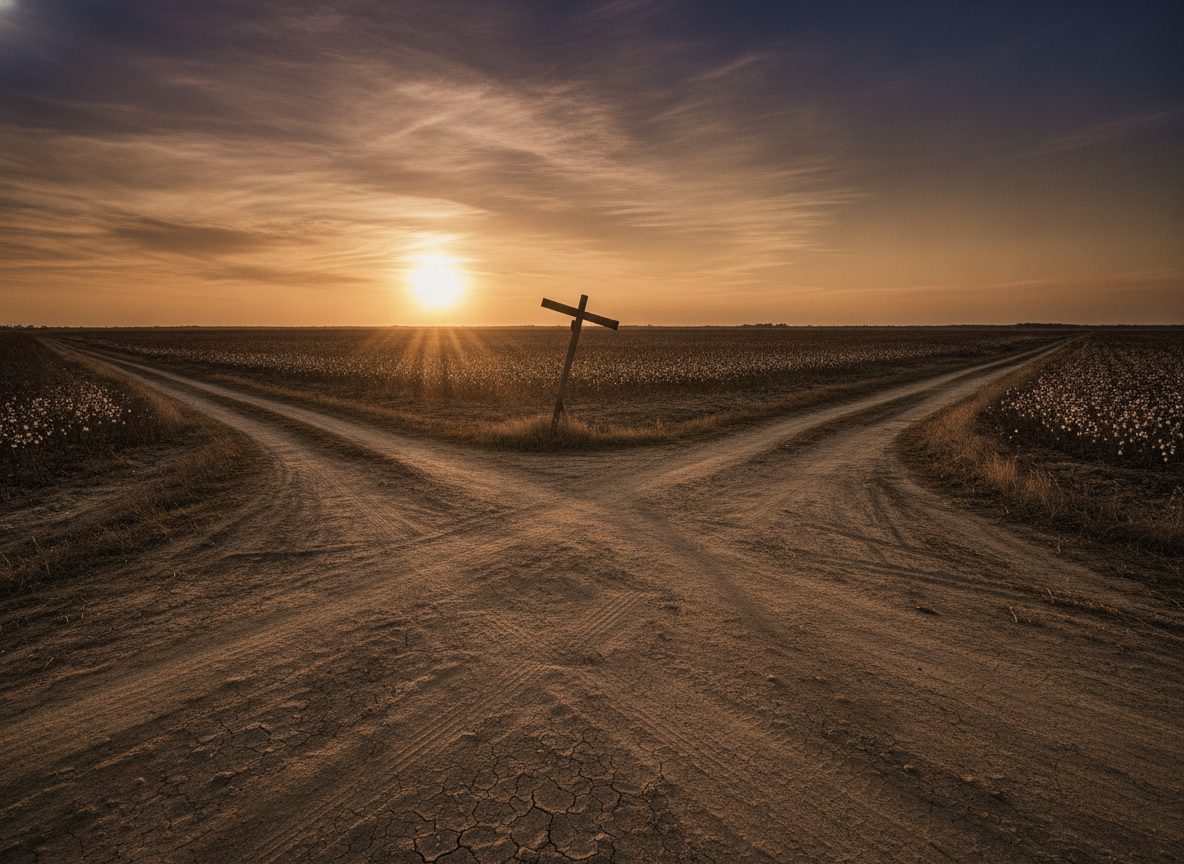
The crossroads at dusk, the setting of the myth that trailed him.From the Delta to the Whole World
The Story
Robert Johnson's story is really two stories: the short, hard life of a working musician, and the long afterlife of the recordings that outlived him by generations.
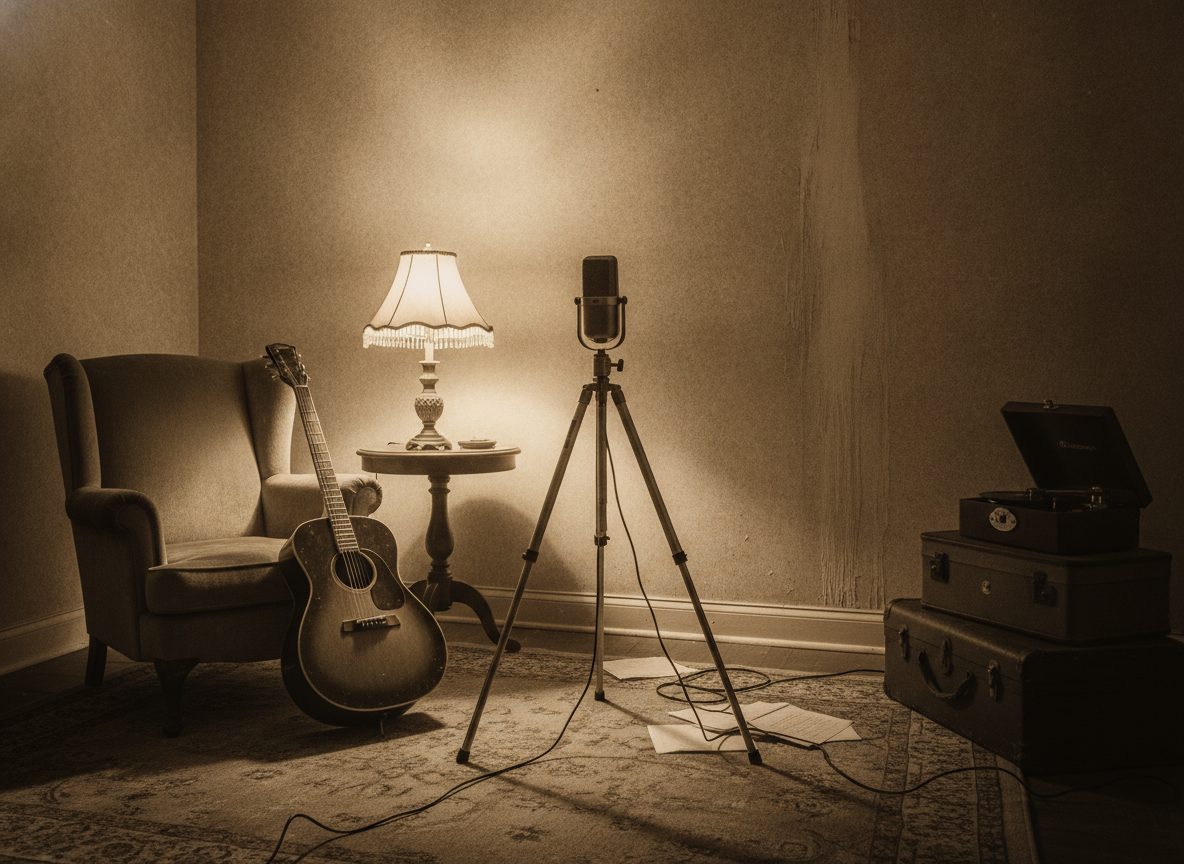
A hotel room turned studio: how nearly all of it was captured.
c. 1911
Born in the Mississippi Delta
Robert Leroy Johnson was born around 1911 in Hazlehurst, Mississippi, and grew up moving around the Delta. He came of age around the plantations and juke joints of the Robinsonville area, where he first took up the guitar.
early 1930s
Learning from the older masters
He watched and absorbed the local bluesmen Son House and Willie Brown, who reportedly thought little of his early playing. Researchers credit a lesser-known guitarist, Ike Zimmerman, with helping him develop in and around Hazlehurst during this period.
c. 1932
He comes back transformed
When Johnson reappeared, his playing had leapt forward so dramatically that the older musicians were stunned. That sudden mastery, and his own teasing about it, is the seed of the legend that he met the devil at a crossroads and traded his soul for the gift.
1936
The San Antonio sessions
In November 1936, Johnson recorded for the American Record Corporation in a room at the Gunter Hotel in San Antonio, Texas. Over three days he cut most of his best-known songs, including "Cross Road Blues," "Sweet Home Chicago," and "Come On in My Kitchen."
1937
The Dallas sessions
In June 1937 he recorded again, this time in Dallas. These two sessions, in San Antonio and Dallas, produced all twenty-nine of his known songs. Only one, "Terraplane Blues," was anything like a regional hit in his lifetime.
1938
Death at twenty-seven
Johnson died on August 16, 1938, near Greenwood, Mississippi, at twenty-seven. The cause was never officially recorded; the most repeated account is that he was poisoned. His exact burial place remains disputed to this day.
1961
The rediscovery
Columbia's King of the Delta Blues Singers gathered his recordings on LP and reached a new generation of young musicians in the folk and blues revival. Dylan, Clapton, Richards, and many others traced their inspiration straight back to it, and Johnson's long afterlife began.
1990
The Complete Recordings
A two-disc box set collecting every surviving take won a Grammy and sold in numbers Johnson never saw in life. He was inducted into the Rock and Roll Hall of Fame in 1986, cementing his place as a foundational figure.
Four Recordings, One Education
Start Here
Johnson's catalog is small and remarkably consistent, so a handful of songs opens the whole world. These four show the range: the haunted, the rolling, the fierce, and the tender. Listen in order.
01 · The Legend
"Cross Road Blues" · 1936
The song that fed the myth, though its words are really about a man stranded at a junction as night falls. A rippling slide figure and a rising, pleading vocal make it the essential Robert Johnson performance.
02 · The Standard
"Sweet Home Chicago" · 1936
The most covered song he wrote, a rolling, hopeful blues that became a jukebox and bar-band standard for generations. This is the source, cleaner and stranger than the countless versions that followed.
03 · The Dread
"Hell Hound on My Trail" · 1937
His darkest, most unsettled recording: a restless, shifting guitar and a lyric about being pursued, unable to stop moving. If any song sounds like the anxiety at the center of his legend, it is this one.
04 · The Tender One
"Come On in My Kitchen" · 1936
Quiet, intimate, almost spoken, with a slide that murmurs alongside the voice. It shows the gentler, more vulnerable side of Johnson that the crossroads myth tends to bury.
The Recorded Legacy
The Albums 3 to start with
Johnson made no albums; he made twenty-nine songs across two sessions. Everything below is a later compilation of those recordings. The blue-topped card is the best place to begin, and the box set holds everything that survives.
1961
King of the Delta Blues Singers
The Columbia LP that started the rediscovery. Sixteen tracks that reached Dylan, Clapton, and the Stones and turned a nearly forgotten bluesman into a founding legend. The single best place to begin.
The follow-up volume that gathered the remaining sides Columbia had held back, including "Sweet Home Chicago" and "Love in Vain." Together the two volumes were most listeners' introduction for decades.
Everything that survives, both takes of every song, in one Grammy-winning box set. If Johnson takes hold of you, this is the whole catalog and the definitive document of his brief recorded life.
Two short paths through a small catalog: a First Listen of the signature songs to bring you in, and a Deep Cuts set for when you want to hear how wide his twenty-nine songs really range. Hit the button on either card to play it.
Robert Johnson recorded alone, one man with a guitar in a hotel room. But he did not come from nowhere. He learned from the older Delta masters, absorbed the records of his day, and passed his songs to a younger generation who carried them into the electric era. This is the human chain he sat in the middle of.
The juke joints and street corners where the songs were traded and carried forward.
Son HouseMentorThe fierce, preaching Delta bluesman Johnson watched as a young man; a direct model for his slide playing and delivery
Willie BrownMentor / partnerSon House's playing partner, another older musician Johnson learned beside; Johnson name-checks him in "Cross Road Blues"
Ike ZimmermanTeacherA little-recorded guitarist credited by researchers with helping Johnson develop rapidly around Hazlehurst; left almost no recordings of his own
Johnny ShinesTraveling companionRambled and played with Johnson across the country and later gave firsthand accounts of the man behind the myth
Robert Jr. LockwoodProtegeLearned directly from Johnson, who was close to his mother; the one guitarist who could genuinely claim to have studied the style at the source
Elmore JamesTorchbearerTurned Johnson's "I Believe I'll Dust My Broom" into the electric blues standard "Dust My Broom," carrying the songs into the amplified age
The Roots of the Sound
Influences
Johnson built his style from the Delta masters he saw in person and the records he wore out on jukeboxes and phonographs. These are the artists whose fingerprints are on his twenty-nine songs.
Delta Slide
Son House
The preaching intensity and bottleneck slide that a young Johnson studied firsthand; the closest thing to a direct musical father.
Robert Johnson died in 1938 and gave no interviews, so there is no footage of him speaking. What exists instead is a body of film and video that weighs the legend against the record. Here is a good place to start, with a search link if you want to keep digging.
Video Essay · Polyphonic
The Truth About the Devil and the Crossroads
A clear, careful look at where the crossroads legend actually came from, how it attached itself to Johnson, and what the historical record really supports. A useful counterweight to the myth.
For full-length documentaries, including the 2019 Netflix film ReMastered: Devil at the Crossroads and the earlier Can't You Hear the Wind Howl?, browse the many Robert Johnson documentaries collected here: Robert Johnson documentaries on YouTube ↗
The Rabbit Hole
Going Deeper
Once the twenty-nine songs have you, the trail runs in every direction, back into the Delta and forward into rock and roll.
The alternate takes. The Complete Recordings pairs both takes of most songs side by side. Hearing how little he varied a performance reveals just how deliberate and finished his playing already was.
The covers. follow the songs outward: Cream's "Crossroads," the Rolling Stones' "Love in Vain," Elmore James's "Dust My Broom," Led Zeppelin's borrowings from "Traveling Riverside Blues." His catalog is a map of early rock.
The Delta context. go back to Son House, Charley Patton, and Skip James to hear the world Johnson came out of, and forward to Muddy Waters and Elmore James to hear where it went next.
The scholarship. books like Elijah Wald's Escaping the Delta and Bruce Conforth and Gayle Dean Wardlow's Up Jumped the Devil separate the documented life from the accumulated legend.
The Way to Listen
Do yourself one favor: put on King of the Delta Blues Singers from start to finish, on headphones, with nothing else going on. These are old, hissing recordings, and they only open up when you give them your full attention. Sit with the quiet ones as closely as the famous ones.