How a Mississippi preacher torn between the pulpit and the juke joint became one of the founding voices of the Delta blues, vanished into obscurity for decades, and was pulled back into the light to electrify a new generation.
The Short Version
Who Is He?
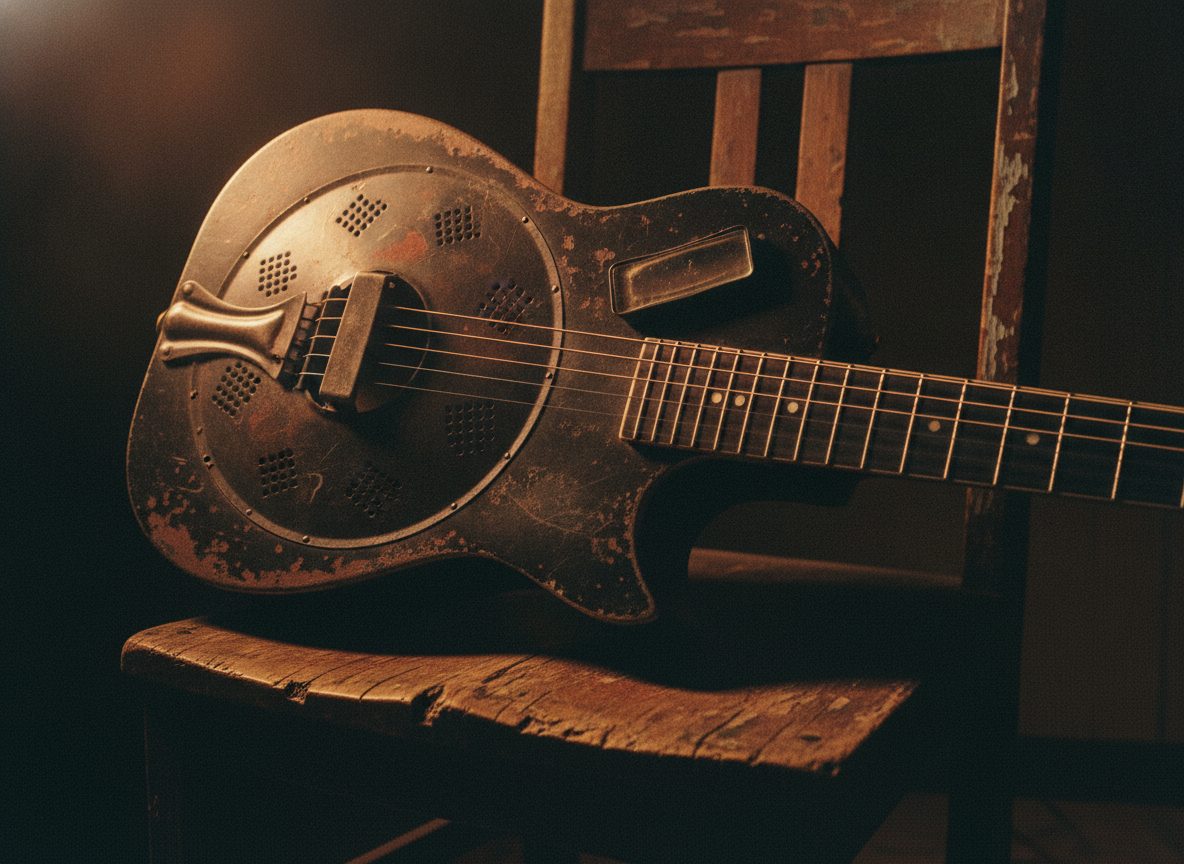
Son House (born Eddie James House Jr. near Lyon, Mississippi, in 1902) is one of the primal forces of the Delta blues. He played with a ferocity that few could match: a steel-bodied guitar slashed with a slide, a stomping rhythm, and a huge, cracked voice that carried the cadence of the preacher he once was and never entirely stopped being.
Two things make him singular. First, the intensity: House did not play the blues so much as testify it, and his recordings feel less like performances than confessions wrung out of a man. Second, the reach: he was a mentor and peer to the giants who shaped everything after him, and his fingerprints are on the blues that flowed down to rock and roll.
He recorded for Paramount in 1930, for the Library of Congress in the early forties, then disappeared for twenty years before folk-revival fans found him again in 1964. To understand where the blues comes from, you start here.
The steel-bodied resonator and the slide, the raw tools of the Delta sound.From the Pulpit to the Juke Joint and Back
The Story
House's life was a long tug of war between the church and the blues, between salvation and the Saturday night. That tension is the engine of his music, and it runs through every chapter of a story that nearly ended in silence.
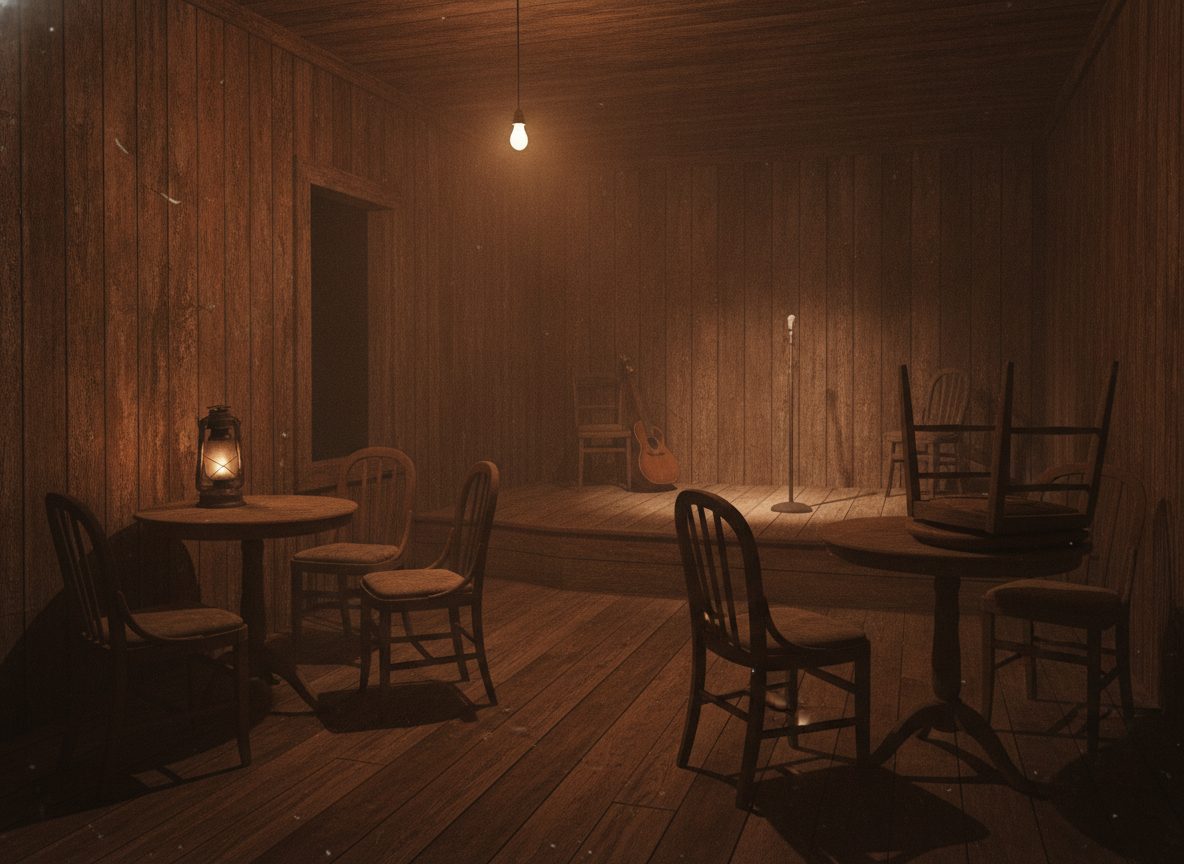
The juke joint on a Saturday night, the other church of the Delta.
1902–1927
The young preacher
Raised on the church, House became a Baptist preacher as a young man and long saw the blues as the devil's music. He came to the guitar late, in his mid-twenties, already carrying the fervor of the pulpit into every note.
1930
The Paramount sessions
Traveling with Charley Patton, House cut a handful of sides for Paramount, among them "Preachin' the Blues" and "Dry Spell Blues." Fierce and hypnotic, they are now cornerstones of the Delta canon, though they sold poorly at the time.
1941–1942
The Library of Congress
Folklorist Alan Lomax found House in Mississippi and recorded him for the Library of Congress, capturing him at the height of his powers on songs like "Death Letter" in embryo and "Government Fleet Blues." Then the trail went cold.
1943–1963
The vanished years
House drifted north to Rochester, New York, left music almost entirely, and worked ordinary jobs. For two decades he was a name on old records, presumed by many to be long gone.
1964
The rediscovery
A trio of young blues enthusiasts tracked House down in Rochester and coaxed him back to the guitar. Rusty at first, he quickly regained his fire and became a star of the folk-revival circuit.
1965
Father of Folk Blues
Signed to Columbia, House recorded the sessions released as Father of the Delta Blues, definitive latter-day versions of "Death Letter," "Grinnin' in Your Face," and "John the Revelator" that introduced him to the world all over again.
1974–1988
The final years
Declining health ended his performing in the mid-seventies. He died in Detroit in 1988, by then widely honored as a founding father of the blues and an inspiration to the rock musicians who had studied his records.
Four Songs, One Education
Start Here
House's catalog is small but towering. These four performances are the fastest way to feel the force of the man, from the slashing slide of "Death Letter" to the a cappella sermon of "Grinnin' in Your Face." Watch in order.
01 · The Landmark
"Death Letter Blues"
The essential Son House. A relentless slide-guitar figure, a stomping pulse, and a lyric of grief and loss delivered with terrifying conviction. If one song makes the case for the man, this is it.
02 · The Sermon
"Grinnin' in Your Face"
Voice and hand claps, nothing else. A stark warning about false friends that plays like a field sermon. Jack White has called it his favorite song of all time, and it shows why House needed no band at all.
03 · The Spiritual
"John the Revelator"
The preacher rises to the surface. A thundering gospel call and response that shows how thin the line was, for House, between the blues and the church that shaped him.
04 · The Root
"Preachin' Blues"
The song at the very heart of his story, the man caught between the pulpit and the juke joint, sung by someone who lived that split. A direct line back to the 1930 Paramount sessions.
The Landmark Records
The Albums 3 to start with
House's recorded legacy comes in three great waves: the pre-war 78s, the Library of Congress field recordings, and the 1965 comeback. These three collections gather them. The rust-topped card is the best place to begin.
1965
Father of the Delta Blues: The Complete 1965 Sessions
The comeback masterpiece and the ideal entry point. Recorded for Columbia after his rediscovery, it holds the definitive "Death Letter," "Grinnin' in Your Face," and "John the Revelator," House at full, roaring power.
Alan Lomax's field recordings, cut on a porch and in a country store in Mississippi. Rawer and more intimate than any studio, these are House in his native element, decades before the wider world caught up.
A well-chosen survey of the pre-war and rediscovery material in one place, an easy way to hear the range of House's slide work and preaching voice across the arc of his career.
Two setlists: a First Listen of the signature performances to bring you in, and a Deep Cuts set of the pre-war sides and field recordings for when you want to sink into the roots. (Ideally, though, hear these collections whole.) Hit the button on either card to search it out.
House was a largely solo performer, but his story is bound up with the Delta circle he came from, the labels and folklorists who caught him on record, and the young men who brought him back.
The Mississippi Delta, the flat country that grew the blues.
Charley PattonDelta mentor and peerThe towering first star of the Delta blues, who brought House along to the 1930 Paramount session and shaped the world House stepped into
Willie BrownGuitar partnerHouse's closest musical companion for years, a second guitar behind him on records and at countless Delta dances and juke joints
Paramount RecordsPre-war labelCut House's first sides in 1930, the fierce 78s that became foundational Delta blues despite selling poorly in the Depression
Alan LomaxFolklorist, Library of CongressSought House out in Mississippi in 1941 and 1942 and preserved his field recordings for the national archive
Waterman, Spiro & PerlsThe 1964 rediscoverersThe young blues devotees Dick Waterman, Phil Spiro, and Nick Perls, who tracked House down in Rochester and returned him to the stage
The Delta Circle
Influences
House stood at a crossroads of the Delta blues, learning from the men beside him and passing the fire down to those who followed. These are the peers who shaped him and the giants he shaped in turn.
Mentor
Charley Patton
The founding star of the Delta blues and the man who pulled House toward Paramount. His growling voice and percussive guitar set the template House built on.
As a young man Johnson watched House and Willie Brown play the Delta dances. He absorbed House's slide and drive, then carried the Delta blues to its most haunted extreme.
Raised in the same Delta country, Muddy drank in House's slide style before heading north to Chicago, where he plugged the blues in and lit the fuse for rock and roll.
The rediscovered House was a vivid talker, happy to reminisce about Patton, the Delta, and the long years away from music. The filmed footage from his folk-revival years is the best window into the man.
Interview · Archive
House, In Conversation
In festival footage and television appearances from the mid-sixties, House speaks about learning the guitar late, running with Charley Patton, and the pull between the church and the blues.
Interview · Performance
The Filmed Portraits
Documentaries and concert films from the folk revival capture House up close, talking and playing, his enormous voice and slashing slide undimmed by the years away. Search YouTube for the performances and conversations.
Once the landmark recordings have you, House opens onto the whole world of the pre-war Delta and the folk revival that saved it.
The Paramount 78s. the fierce 1930 sides, "Preachin' the Blues," "Dry Spell Blues," "My Black Mama," the raw bedrock of everything House became.
The Library of Congress recordings. Alan Lomax's early-forties field sessions, House at his most unguarded, cut far from any studio in the heart of the Delta.
The wider Delta circle. the records of Charley Patton and Willie Brown, the world House came from, and Robert Johnson and Muddy Waters, the world he helped create.
The rediscovery live sets. concert and festival recordings from 1964 onward, where a man in his sixties plays with the force of the young preacher he had been.
The Way to Listen
Do yourself one favor: put on Father of the Delta Blues and let "Death Letter" run into "Grinnin' in Your Face." Play it loud, in a quiet room. House is not background music, he is a man testifying, and he repays your full attention.