Post-Punk • Gothic Art-Rock • Nick Cave & the Bad Seeds
How a wild Australian post-punk frontman grew into one of the most powerful songwriters alive, moving from violent gothic blues to some of the most devastating music ever made about grief and faith.
The Short Version
Who Is This?
Nick Cave is an Australian singer, songwriter, and author who has fronted Nick Cave and the Bad Seeds for over forty years. He is one of the most powerful and literary songwriters in rock, a preacher-poet whose music runs on love, violence, God, grief, and redemption, delivered in a deep, dramatic baritone.
Two things make him singular. First, the range of intensity: he can be terrifying, tender, funny, and devastating, sometimes across a single album, moving from thunderous gothic blues to hushed piano ballads. Second, the writing: steeped in the Bible, old murder ballads, and literature, his lyrics are among the most vivid and serious in popular music.
His later work, made in the wake of terrible personal loss, has reached a depth of feeling few artists ever approach. If you want songwriting that takes the biggest subjects head-on and holds nothing back, start here.
Preacher-poet at the piano: the later, quieter mode.From Gothic Blues to Grief and Grace
The Story
Nick Cave's story is a long deepening: from wild young provocateur to an artist of almost unbearable emotional weight.
1983
The Bad Seeds begin
After his ferocious post-punk band The Birthday Party burned out, Cave formed the Bad Seeds, a shifting collective that would become the vehicle for his entire career.
1988
Tender Prey
An early peak, opening with "The Mercy Seat," a harrowing death-row epic that became one of his signature songs and a favorite of Johnny Cash.
1994
Let Love In
A tighter, more accessible gothic-rock record with "Red Right Hand" and "Do You Love Me?," widely regarded as one of the great Bad Seeds albums.
1996
Murder Ballads
His commercial breakthrough, a darkly funny album of killing songs featuring duets with Kylie Minogue and PJ Harvey. Grim, theatrical, and strangely irresistible.
1997
The Boatman's Call
A stark turn inward: spare, confessional piano ballads about love and loss, including "Into My Arms." Proof he could devastate with quiet as easily as with noise.
2013
Push the Sky Away
A hushed, hypnotic reinvention with collaborator Warren Ellis that opened the most acclaimed chapter of his career, trading rock for atmosphere and space.
2016-2019
Skeleton Tree and Ghosteen
After the death of his teenage son, Cave made two shattering, ambient masterpieces about grief. They are among the most profound records anyone has made about loss.
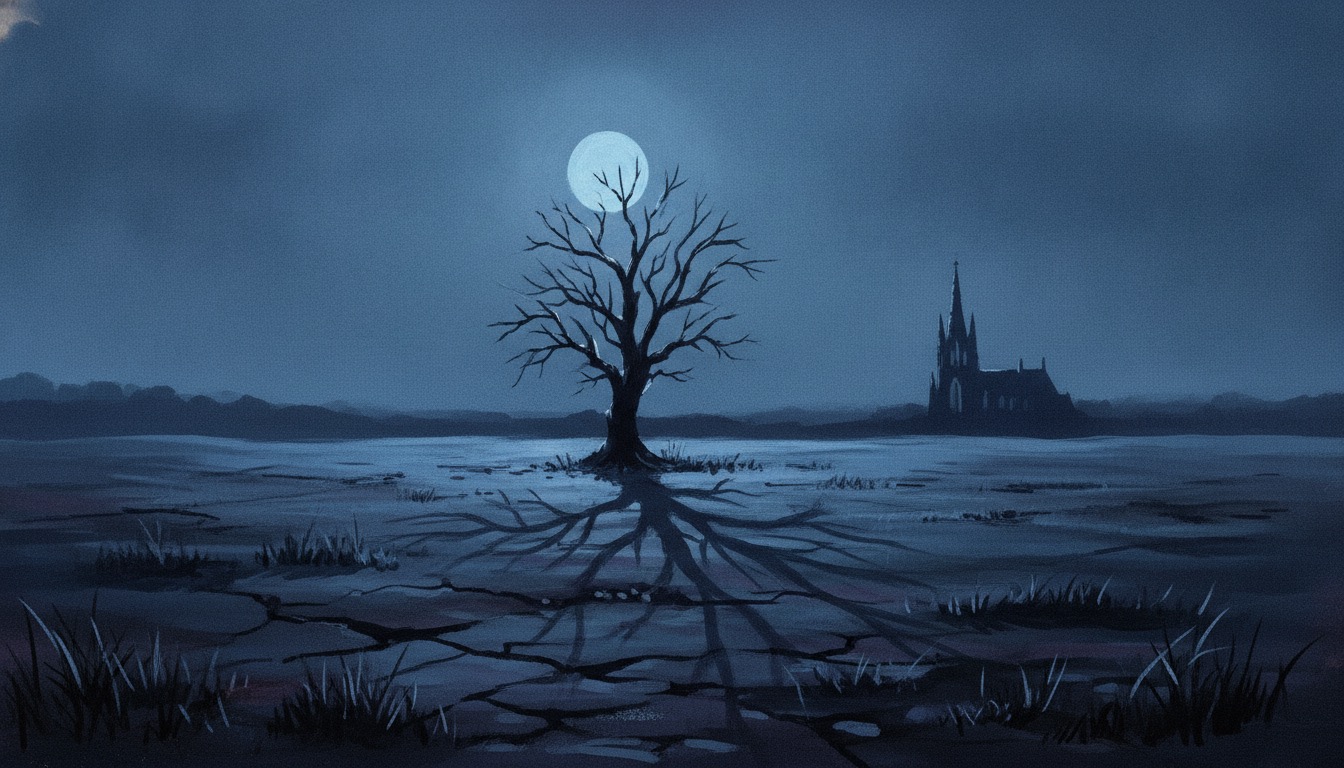
The biblical, gothic landscape of his imagination.Three Songs, One Education
Start Here
Three songs across the arc: the harrowing early epic, the gothic signature, and the tender piano ballad. Listen in order.
01 · The Epic
"The Mercy Seat" — 1988
A relentless, spiraling monologue from a man in the electric chair. One of his defining songs, later covered by Johnny Cash, and a perfect introduction to his intensity.
02 · The Signature
"Red Right Hand" — 1994
A menacing, organ-driven portrait of a shadowy figure, and his most recognizable song thanks to films and television. Gothic storytelling at its most seductive.
03 · The Tender Side
"Into My Arms" — 1997
A spare, aching piano ballad and one of the most beloved love songs of its era. The quiet, devotional Nick Cave that balances all the darkness.
The Studio Catalog
The Albums 6 to start with
A catalog that moves from gothic thunder to hushed devastation over four decades. The gold-topped cards mark the best entry points; the moss-green marks the early era.
1988
Tender Prey
An early peak opening with "The Mercy Seat." Wild, biblical, and intense, the sound of the Bad Seeds finding their full power.
A shattering, ambient double album about grief and love after the death of his son. Widely hailed as a masterpiece, and one of the most profound records of its decade.
One curated YouTube Music playlist gathering the essentials across four decades, from gothic thunder to hushed grief. (Ideally, though, spend time with these albums whole.) Hit the button below to play it.
Essentials
Across the Catalog · 12 tracks
The Mercy SeatTender Prey
DeannaTender Prey
Red Right HandLet Love In
Do You Love Me?Let Love In
Where the Wild Roses GrowMurder Ballads
Henry LeeMurder Ballads
Into My ArmsThe Boatman's Call
(Are You) The One That I've Been Waiting For?The Boatman's Call
Nick Cave is the constant at the center of an ever-changing band. The Bad Seeds have featured many extraordinary musicians over the decades, but in recent years the crucial partner has been multi-instrumentalist Warren Ellis, whose swirling, textural playing defines the sound of Cave's late masterpieces.
The voice is the first thing you notice: a deep, theatrical baritone that can preach, croon, whisper, or howl, always sounding like it means every word. He is a genuine frontman in the old sense, commanding and unpredictable, capable of terrifying an audience one moment and moving it to tears the next.
The writing is the heart of it. Cave is steeped in the Bible, in old folk and murder ballads, and in literature, and he writes about the largest subjects, love, death, violence, and God, without a trace of irony or hedging. Few songwriters take such big swings, and fewer still connect the way he does.
His later work carries a terrible authority. After the death of his son in 2015, Cave made music of almost unbearable honesty about grief, and he began writing directly to fans through his Red Hand Files, turning his own suffering into a kind of public ministry. It has made him not just a great artist but, for many listeners, an essential one.
Novelist and screenwriter as well as songwriter.The Roots of the Sound
Influences
Cave draws on the darkest and most literary corners of songwriting, from biblical folk to art-rock. Here are four touchstones.
The Poet
Leonard Cohen
Cohen's literary, sacred-and-profane songwriting is the clearest model for Cave's own blend of the poetic, the erotic, and the religious.
Dylan's example, that a rock songwriter could be a serious poet drawing on the whole American folk tradition, opened the ground Cave has worked ever since.
Cash's grave, moralizing baritone and his gift for songs of sin and redemption are a deep influence; Cash later returned the favor by covering "The Mercy Seat."
The Velvets' fusion of literary lyrics, drone, and menace helped make room for a band like the Bad Seeds, dark and arty and utterly uncommercial by design.
Cave is a rare thing: a rock star who is also a genuinely profound and generous talker. Two conversations, one warm, one about grief.
Interview · The Late Show
Stories and Songs
A warm, funny conversation with Stephen Colbert, in which Cave tells the story of singing with Johnny Cash and reflects on the joy and mystery of making music.
A deep, moving conversation about how the loss of his son reshaped his life and his art, and how music became a way through the grief. Essential context for the late albums.
Cave's world extends far beyond the Bad Seeds albums.
Skeleton Tree and the film — the 2016 grief album and its companion documentary One More Time with Feeling are a devastating pair.
Grinderman — his raw, feral side project is the loud, funny counterweight to the solemn late Bad Seeds records.
The Red Hand Files — his ongoing project answering fan questions with startling candor is a window straight into how he thinks.
The other work — his novels, his screenplay for The Proposition, and his soundtracks with Warren Ellis are all worth the trip.
The Way to Listen
Start with The Boatman's Call for the tender side, then brace yourself and go straight to Ghosteen. Between them you will hear the full range of why Nick Cave is regarded as one of the great songwriters alive.