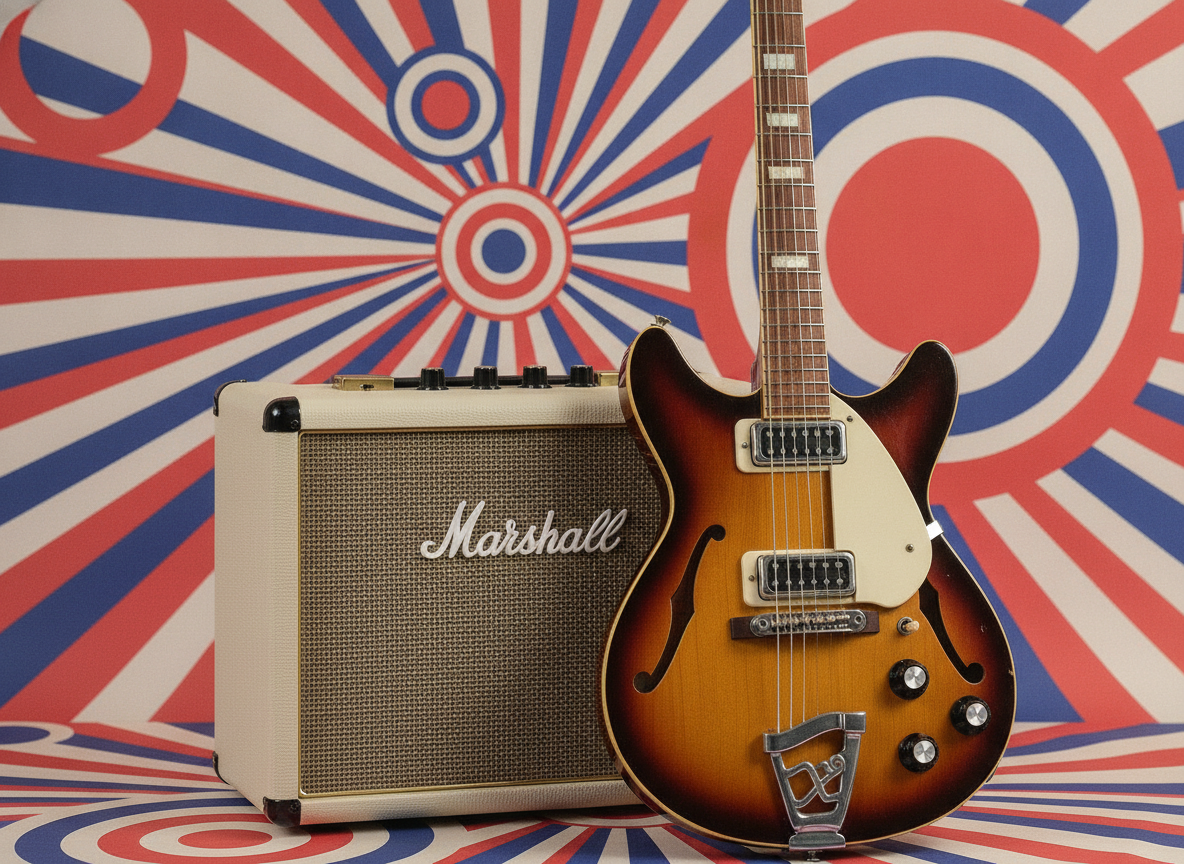
The London band led by brothers Ray and Dave Davies, who helped invent the hard rock riff and then turned to some of the most detailed character writing and concept albums in English pop.
The Short Version
Who Are They?
The Kinks formed in Muswell Hill, north London, in 1963, built around the songwriting of frontman Ray Davies and the guitar of his younger brother Dave Davies. They emerged during the British Invasion alongside the Beatles and the Rolling Stones and became one of the defining British bands of the 1960s.
Two things set them apart. First, the sound: the distorted, power-chord riff of their 1964 hit "You Really Got Me" is often cited as a foundational moment for hard rock and later punk. Second, the writing: from the mid-1960s onward, Ray Davies moved toward closely observed songs about English life and full concept albums, giving the band a body of work distinct from its Invasion peers.
The Kinks recorded and toured for more than three decades before disbanding in 1996, and were inducted into the Rock and Roll Hall of Fame in 1990.
Muswell Hill and 1960s London, the world the band's songs are drawn from.From a North London Riff to the Concept Album
The Story
The Kinks moved from raw beat-group hits to intricate English songwriting and ambitious concept records, changing shape across the decade and beyond.
The distorted guitar sound of the early singles helped define a new kind of rock.
1963–1964
Formation and the breakthrough
Ray and Dave Davies formed the group with bassist Pete Quaife, adding drummer Mick Avory. After two early singles flopped, "You Really Got Me" reached number one in the UK in 1964, powered by Dave Davies's fuzzed guitar riff.
1964–1965
The early hits
A run of driving singles followed, including "All Day and All of the Night" and "Tired of Waiting for You." A US touring ban in 1965 kept the band out of America for several years and pushed their focus back toward Britain.
1966–1967
The English turn
With Face to Face and Something Else by The Kinks, Ray Davies developed a more observational style, writing character portraits and scenes of everyday English life. The singles "Sunny Afternoon" and "Waterloo Sunset" date from this period.
1968–1969
The concept albums
The Kinks Are the Village Green Preservation Society and Arthur (Or the Decline and Fall of the British Empire) were unified album-length works. Commercially modest at the time, they are now among the band's most admired records.
1970
Return to the charts
"Lola" became a major international hit and returned the band to wide attention, anchoring the album Lola Versus Powerman and the Moneygoround, Part One.
1971–1976
The theatrical era
Signing to RCA, the Kinks pursued a run of story-driven, stage-influenced concept albums and elaborate live shows, expanding the lineup with a horn section during these years.
1977–1996
Arena rock and the finish
The band found renewed success as a harder-edged arena act, especially in the United States, with albums such as Low Budget. They continued recording and touring until disbanding in 1996.
Four Songs, One Education
Start Here
The Kinks catalog spans raw beat music and refined songwriting. These four tracks map the range, from the foundational riff to the later English portraits. Watch in order.
01 · The Landmark
"You Really Got Me" (1964)
The two-chord riff that reached number one in Britain and is widely credited as an early template for hard rock. The essential Kinks starting point.
02 · The Follow-Up
"All Day and All of the Night" (1964)
A second hit built on the same hard riffing formula, cementing the band's early sound and its influence on later guitar rock.
03 · The Turn
"Sunny Afternoon" (1966)
A UK number one that marked the band's shift toward character-based English songwriting, with a wry, music-hall lilt in place of the early distortion.
04 · The Masterpiece
"Waterloo Sunset" (1967)
Often ranked among the finest British singles of the era, a detailed London scene set to a gentle, chiming arrangement. Ray Davies's songwriting at its peak.
The Landmark Records
The Albums 6 to start with
The Kinks released more than twenty studio albums. These six trace the arc from beat group to concept-album craft. The blue-topped card is the best place to begin.
1965
The Kink Kontroversy
The band's third album, a transitional record that pairs the early R&B-driven sound with the first signs of Ray Davies's more reflective songwriting, including "Till the End of the Day."
The pivot toward observational songwriting, a set of self-contained character sketches that includes the hit "Sunny Afternoon" and points the way to the concept albums ahead.
The Kinks Are the Village Green Preservation Society
A unified album-length work and a perfect place to start. Overlooked on release, it is now considered the band's masterpiece and one of the great English concept records.
Two YouTube Music setlists: a First Listen of the signature songs to bring you in, and a Deep Cuts set of the album tracks and later favorites for when you want to sink in. (Ideally, though, hear these albums whole.) Hit the button on either card to play it.
At its core the Kinks were the two Davies brothers and a rhythm section, the classic 1960s lineup that made the band's most enduring records.
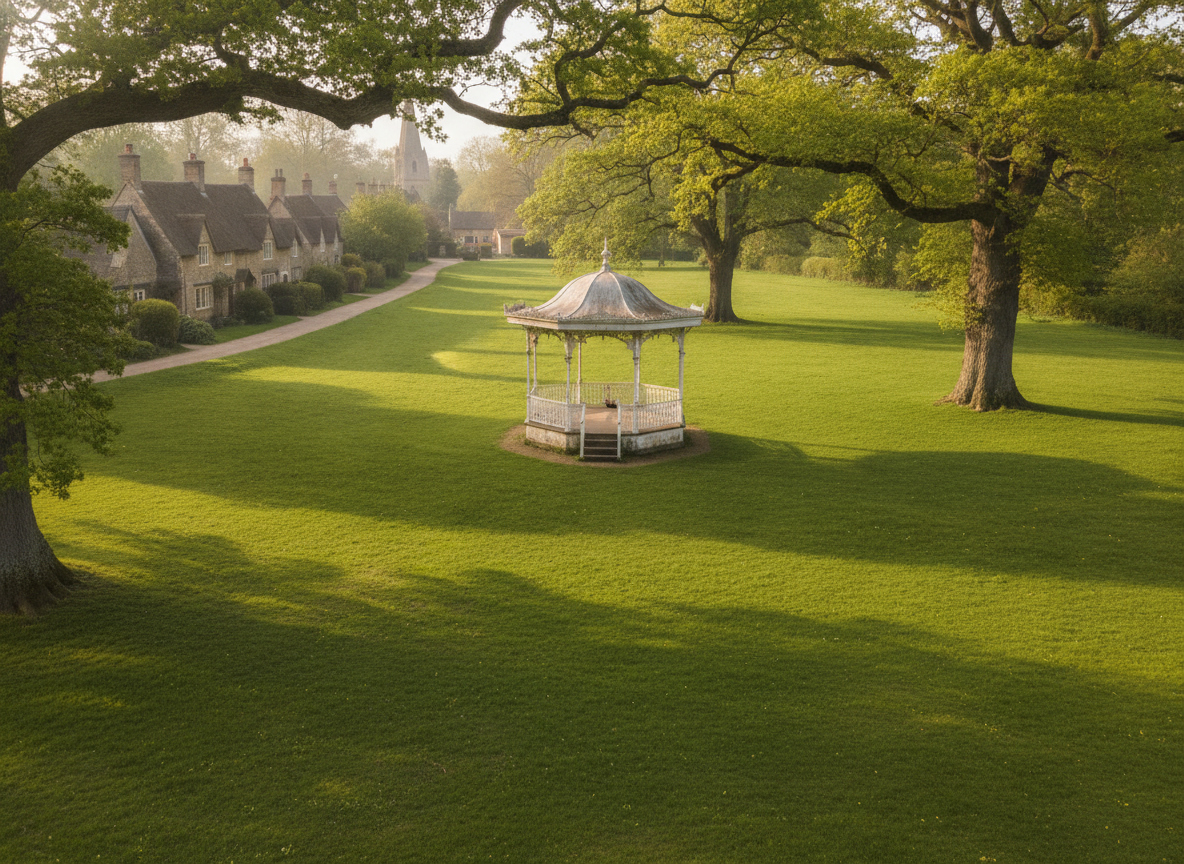
The English pastoral imagery that runs through the band's later work.
Ray DaviesVocals / rhythm guitarThe frontman and principal songwriter, whose observational writing shaped nearly the entire catalog
Dave DaviesLead guitar / vocalsRay's younger brother, whose distorted guitar tone on the early singles helped define the band's sound and sang lead on "Death of a Clown"
Mick AvoryDrumsThe band's drummer through the classic era and beyond, one of the longest-serving members
Pete QuaifeBassA founding member who played on the 1960s albums through Village Green before leaving the band in 1969
The Roots of the Sound
Influences
The Kinks began as an R&B and rock and roll covers band, drawing on American blues and the first wave of rock, before folding in the English music-hall tradition. Here is where it started.
Rock and Roll
Chuck Berry
A foundational influence on the band's early sound, whose guitar style and song structures shaped the group's first singles and live set.
An acoustic and folk-blues touchstone whose fingerstyle playing was an early model for Ray Davies, bridging American blues and the English acoustic tradition.
Ray and Dave Davies have spoken often about the band's history, their songwriting, and their long working relationship. Their conversations fill in the story behind the records.
Interview · Archive
Ray Davies, In Conversation
Ray Davies reflects on the band's catalog and remastered recordings, walking through the songs and the era that produced them.
Interview · More
More Conversations
Both brothers have given extended interviews over the decades about the band's music and its history. Search YouTube for more filmed conversations.
Once the landmark albums have you, the Kinks catalog opens into decades of concept records, live sets, and reissues.
The RCA years. the ambitious theatrical concept albums of the early 1970s, including Muswell Hillbillies, reward listeners who want the band at its most conceptual.
The arena era. late-1970s and early-1980s records such as Low Budget and Give the People What They Want show the harder-rocking band that found a large American audience.
The deluxe reissues. expanded editions of the 1960s albums collect single versions, mono mixes, and outtakes alongside the original records.
The solo work. Ray Davies and Dave Davies each recorded solo albums and, in Ray's case, staged autobiographical shows that expand on the band's story.
The Way to Listen
Do yourself one favor: play The Kinks Are the Village Green Preservation Society from start to finish, then Something Else by The Kinks. Heard whole, the character songs and English detail come into focus in a way the singles alone cannot show.